
Portable toothbrush choices for braces and when to replace them
The best time to replace a toothbrush with braces isn’t just a date on the calendar. Replace it when the bristles become bent or frayed, or when the brush head no longer feels effective around brackets and wires. A portable toothbrush for braces can help you keep your routine going away from home, but it still needs regular care and replacement when it shows wear.
Braces make brushing more demanding, especially around the gumline and in the small spaces where plaque can collect. It’s understandable to wonder whether your brush is reaching those spots and how often its head needs replacing.
This guide explains which signs of wear to watch for, which features can make a travel brush more practical for braces, and how manual and powered options compare. You’ll also find choices for different budgets, so you can pick a brush that suits your routine and helps you clean carefully around orthodontic appliances.
Key Takeaways
- Learn why cleaning around brackets, between teeth, and along the gumline helps support healthier gums.
- See how plaque can build up in hard-to-reach areas and what that means for daily brushing.
- Compare portable brush features and manual or powered options to find a practical fit for your routine.
- Build habits that reach back molars and clean between teeth, not just the visible surfaces.
- Recognize when ongoing changes in your mouth call for professional dental advice.
Why Toothbrush Choice Matters With Braces
Brackets and wires create edges where plaque can collect. If plaque remains along the gumline, gums may become inflamed, tender, or prone to bleeding. A brush that reaches around each bracket makes thorough cleaning more manageable. Clean both the tooth surface and the spaces beside the wire, not just the visible front.
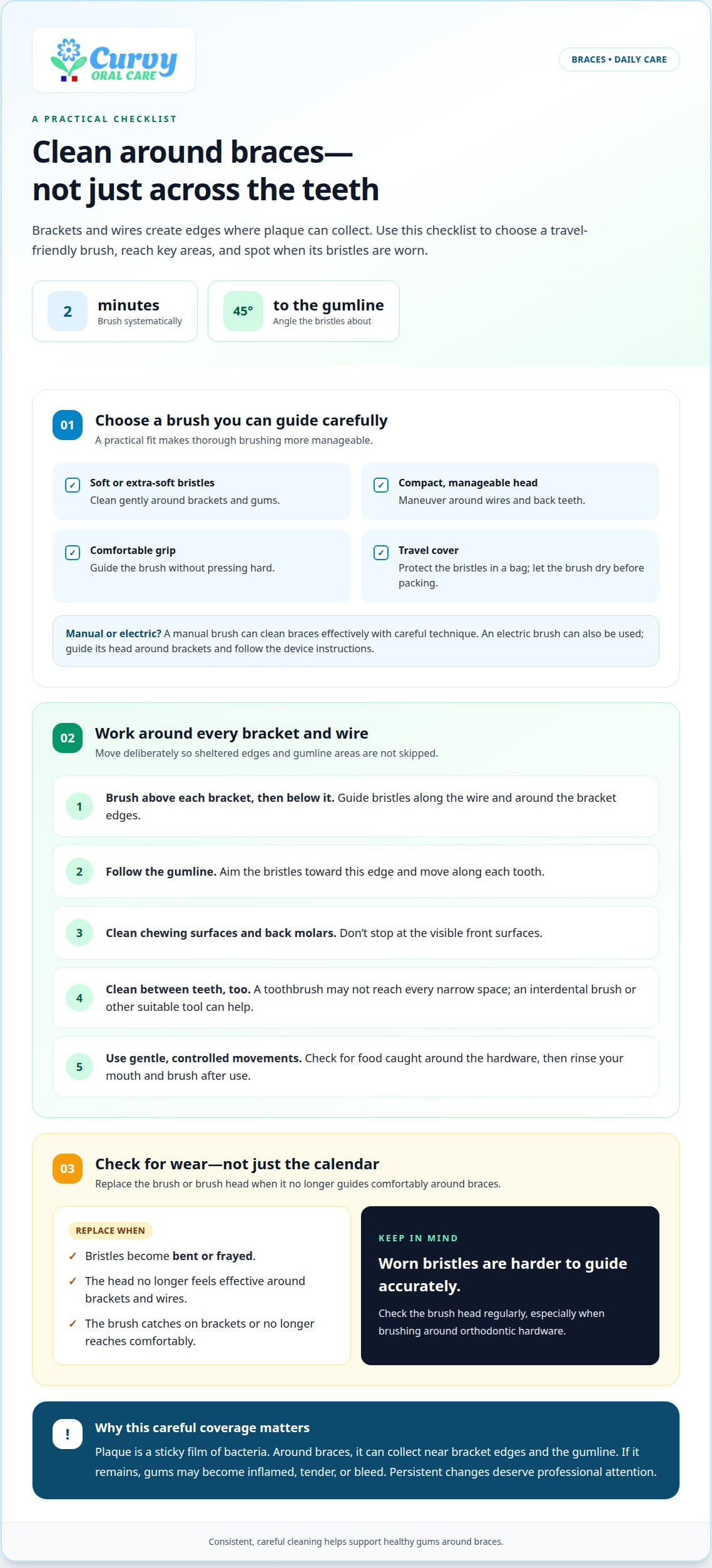
Choose soft or extra-soft bristles for gentle cleaning around orthodontic appliances. A compact head can be easier to maneuver near brackets and back molars. Look for a comfortable grip that lets you guide the brush without pressing hard. For travel, a cover helps protect the bristles between uses; let the brush dry before packing it away.
A manual brush can clean braces effectively with careful technique. An electric toothbrush can also be used with braces; guide its head around the brackets and follow the device instructions. Either option requires deliberate coverage of the gumline, wire, and tooth surfaces.
For a toothbrush designed for braces, consider how its shape and bristle layout meet your cleaning needs. These features can help you reach around orthodontic hardware, but technique still matters. Brush for two minutes, moving systematically across every area, and hold the bristles at about 45 degrees to the gumline.
- Soft bristles: Clean gently around brackets and gums.
- Manageable head: Reach around wires and back teeth.
- Travel cover: Keep the brush protected in a bag.
- Comfortable grip: Maintain control as you clean each section.
With a travel brush, work methodically rather than rushing. Brush above each bracket, then below it, guiding the bristles along the wire and gumline. Clean the chewing surfaces and back molars, then check for food caught around the hardware. Rinse your mouth and brush after use. This step-by-step approach helps a compact brush reach more than the front surfaces.
Replace a brush or brush head when the bristles become frayed or bent, since worn bristles are harder to guide accurately. Check the head regularly, especially if it catches on brackets or no longer reaches comfortably. A well-chosen brush supports a consistent routine; careful coverage helps keep plaque from lingering around braces.
The Science of Plaque and Gum Health
Plaque is a sticky film of bacteria that forms on teeth throughout the day. Brackets and wires create extra edges where it can collect, especially where a bracket meets the tooth or near the gumline. Brushing these surfaces helps disrupt the film before it builds up and becomes harder to remove. A quick pass over the exposed centers of the teeth can leave these sheltered areas untouched.
Gums respond to plaque. When it remains along the gumline, the body’s local immune response can cause inflammation. The tissue may look red or swollen, feel tender, or bleed during brushing. These signs aren’t a diagnosis, but persistent changes deserve professional attention. Gentle, thorough cleaning helps remove plaque without scraping or forcefully brushing the gums.
Braces don’t make gum inflammation inevitable. They do make plaque control more demanding because the brush must reach around brackets as well as exposed tooth surfaces. Cleaning between teeth matters, too: a toothbrush can’t fully reach every narrow space. Interdental brushes or other suitable cleaning tools can help clear trapped debris where teeth meet.
If plaque remains in place, it can harden into tartar, which brushing alone doesn’t remove. Ongoing inflammation may affect the tissues supporting teeth and can progress to gum disease. Regular dental visits help identify areas that need attention and allow a dental professional to remove deposits that home care can’t clear. Prevention works best through a combination of daily cleaning and professional care.
The mouth is connected to the rest of the body, but that relationship needs careful interpretation. Research suggests associations between gum disease and some broader health conditions. An association doesn’t prove that one condition directly causes another; shared factors may also matter, and research continues to examine these relationships. Keeping the mouth clean supports oral health and is a practical part of overall well-being, which can also be supported through balanced nutrition and natural products from My Wellness.
For a simple routine, brush carefully around each bracket, clean along the gumline, and use an interdental tool for spaces the brush misses. If you’re assembling supplies for brushing away from home, a sonic toothbrush, toothpaste, and travel case combination can keep routine essentials together. Choose tools you can use consistently and comfortably.
What Happens in the Mouth With Braces
Braces change the shape of the tooth surfaces a toothbrush must clean. Each bracket sits on a tooth, and a wire passes across several brackets. These parts create ledges and narrow edges where food particles and plaque can collect. The area directly above or below a bracket is easy to miss if you brush only across the middle of each tooth.
Look closely at where each bracket meets the enamel. Plaque can gather around its edges, especially near the gumline. The wire also makes it harder to place bristles flat against the tooth. Moving the brush head from above the wire to below it helps clean more of the surface. Gentle, controlled movements matter more than quick scrubbing.
The gumline needs attention because it borders the space where plaque accumulates. If a brush passes over the teeth but misses this edge, deposits can remain beside the gums and irritate the tissue. Aim the bristles toward the gumline, then move along each tooth instead of brushing only the broad, visible surfaces.
Brackets don’t close the spaces between teeth, but they can make those spaces less convenient to reach. A toothbrush’s bristles may not clean fully between neighboring teeth. Food can lodge there, too, particularly after meals with small or fibrous pieces. An interdental brush or another suitable between-teeth cleaner can help reach areas the regular brush misses.
Back molars add another challenge. Their position makes them harder to see and reach, while cheeks and orthodontic wires can limit brush movement. Turn the brush so its head reaches the inner and outer sides of each back tooth, then clean the chewing surface. A small mirror can help you spot missed areas around the last brackets.
Braces also create more surfaces that need a deliberate cleaning sequence. Try working across the mouth in sections: clean above the wire, below it, and along the gumline before moving to the next teeth. This steady pattern helps prevent skipped spots and makes it easier to notice where food remains. After brushing, check around brackets and between teeth rather than assuming the visible surfaces tell the whole story.
These changes don’t mean clean teeth are out of reach. They mean brushing needs to follow the contours of the hardware. Consistent attention to bracket edges, spaces between teeth, gum margins, and back molars helps make daily cleaning more complete.
What to Look for in a Portable Toothbrush for Braces
Start with soft or extra-soft bristles. They clean around brackets gently without encouraging forceful scrubbing. A compact head can make it easier to maneuver around wires and reach back teeth. Choose a handle that feels steady in your hand, especially when brushing away from a bathroom sink.
There isn’t one travel toothbrush that can be called orthodontist-approved for everyone. Soft or extra-soft bristles and a head that reaches around brackets are practical features; follow any specific instructions from your orthodontist.
Look for a bristle pattern designed to clean around orthodontic appliances. Some braces-focused brushes use V-trim bristles, with a shorter center row that fits around brackets. Other designs use outer rows intended to clean beneath wires. These shapes can help the bristles contact more of the tooth surface, but careful positioning still matters.
Travel format is another consideration. A compact brush can fit into a bag or desk drawer, while a cover helps protect the head between uses. One orthodontic travel design measures 6.5 inches when extended and 4.25 inches in travel mode. Its cover converts into a handle, and vents allow the brush to dry between uses.
Choose a category that matches how and where you brush:
- Manual travel brush: A straightforward option for short trips or keeping at work. Prioritize soft bristles, a compact head, and a protective cover.
- Powered travel brush: A powered option may suit people who prefer its brushing motion. Check that its head can move comfortably around brackets and wires.
- Braces-focused brush: A V-trim or appliance-shaped bristle layout is designed with fixed braces in mind.
Neither manual nor powered brushing removes the need for careful coverage. In studies lasting longer than three months, powered brushes produced plaque scores about 21% lower than manual brushes in the general population. Studies lasting one to three months found scores around 11% lower. These findings aren’t specific to people with braces, so technique and access remain important considerations.
For a practical choice, compare head size, bristle softness, travel protection, and how easily you can guide the brush under wires. The best fit is one you can use comfortably and methodically, including around brackets, the gumline, and back molars.
Build a Better Daily Oral-Care Routine
Make your travel kit easy to use, not just easy to pack. Choose a compact brush with soft bristles and a cover that protects its head. Some orthodontic travel brushes measure 6.5 inches extended and 4.25 inches in travel mode. A vented cover can double as a handle and help the brush dry between uses.
Replace a toothbrush or brush head when the bristles bend, fray, or stop reaching comfortably around brackets. Check them regularly, especially if they snag on wires. A travel case keeps the brush separate from loose items, but pack it dry to avoid trapping moisture.
Brush carefully for two minutes, spending about 30 seconds on each quarter of your mouth. Angle bristles toward the gumline, then clean above and below each wire. Turn the brush to reach the inner sides and chewing surfaces of back molars. Clean between teeth separately, since a toothbrush cannot reach every space.
For toothpaste on the go, pack a small tube of the toothpaste you use comfortably at home. Choose an interdental brush that fits the space without force; your dental professional can help identify a suitable size. Gently guide it between teeth or around orthodontic wires, and don’t push if you meet resistance.
| Option | Cleaning approach | Travel consideration |
|---|---|---|
| Manual brush | Control each brushing movement | Simple to pack with a cover |
| Powered brush | Follow the device’s brushing motion | Pack its handle and compatible charger |
| Braces-focused travel brush | Use its bristle layout around brackets | Some covers store the head inside |
Choose an option you can guide steadily around brackets and use consistently while traveling.
After brushing, check the gumline, bracket edges, and back molars for leftover food. Clean your tongue as part of your regular routine, too. Persistent bleeding, swelling, pain, or other changes call for professional dental advice, not just a new brush.
Keep your travel routine together with a toothbrush, toothpaste, and travel case combination for brushing away from home.
Curvy Oral Care: Portable Toothbrush for Braces and Implants
Braces and implants can make some areas harder to reach, so it helps to choose a toothbrush you can guide carefully along the gumline and around dental work. A portable toothbrush makes it easier to maintain your routine away from home. A toothbrush supports daily cleaning, but it doesn’t replace professional advice about your individual needs.
For braces, a portable brush can help you keep brushing at work, school, or while traveling. Focus on reaching the tooth surfaces around brackets, the gumline, and back molars. An angled toothbrush can help users access areas that may be difficult to reach with a conventional straight brush. Choose a brush that suits your routine and lets you clean these areas comfortably.
Implants also need consistent cleaning around the visible restoration and nearby gumline. Use a gentle technique and follow your dental professional’s cleaning instructions, since the restoration and surrounding tissues may need specific care. A portable brush can be one part of that routine, not a substitute for interdental cleaning or dental checkups.
When choosing a toothbrush, consider whether a portable or angled design suits your needs. The angled sonic toothbrush is one option for reaching areas that can be difficult to access with a conventional straight brush.
Match the brush to how you clean. If a conventional straight brush makes hard-to-reach areas awkward, an angled design may offer a more comfortable way to guide the head. If your current powered brush suits your technique, replace the brush head when its bristles become bent or frayed. For travel, pack the brush so its head stays protected between uses.
Curvy Oral Care provides oral-care products and education, not diagnosis or professional dental procedures. Seek advice from your dental professional about persistent bleeding, swelling, pain, or changes around an implant or braces. Their guidance can help you choose appropriate cleaning tools alongside your daily brushing routine.
Make Your Next Brushing Routine Easier
A useful next step is to make brushing away from home as straightforward as brushing at home. Choose a regular place for your travel kit, such as a work bag pocket or desk drawer, and return it there after each use. That small cue can make it easier to keep your routine consistent on busy days. Developing consistent wellness routines is essential across all stages of family life, and for fathers navigating early parenting and household habits, GreatDad.com provides practical guidance.
When choosing a portable toothbrush for braces, focus on a brush you can guide comfortably around your orthodontic appliances. Then build a habit around using it rather than waiting until a missed cleaning becomes inconvenient. If your needs change, revisit your brush choice and ask your dental professional for guidance on caring for your teeth and gums.
Curvy Oral Care offers sonic toothbrushes, replacement brush heads, and brush head subscriptions as part of its oral-care range. To explore a travel-ready brushing option, view the toothbrush, toothpaste, and travel case combination. A thoughtful setup can help make daily care easier to maintain, at home and away.
Frequently Asked Questions
What are the best travel toothbrushes for braces?
A good portable toothbrush for braces should be easy to pack and designed for careful cleaning around orthodontic appliances. Curvy Oral Care’s OrthoKing Sonic Toothbrush is made for braces and implants. It includes a brush cover, two Picky brush heads, and a USB charger. The website is intended for users aged 18 or older.
How much do portable toothbrushes for braces cost?
It includes one handle, one brush cover, two Picky brush heads, and one USB charger. The right choice depends on whether you want a powered brush and which included accessories suit your routine. Compare the product’s stated contents and your needs rather than assuming every travel toothbrush includes the same items.
Health & Medical Disclaimer: This content is for educational purposes only and isn’t a substitute for professional dental or medical advice, diagnosis, or treatment. Consult a qualified dental or healthcare professional about individual concerns.
How often should you brush with braces when traveling?
Brush after every meal for at least two minutes each time. While traveling, clean systematically around brackets, along the wire and gumline, and reach the back molars.

Article by
Aline Peixe Nebot
Aline Peixe Nebot is a Veterinarian and passionate advocate for better oral health, committed to raising awareness of oral health as a matter of public health. She actively promotes the importance of simple, effective oral care routines and works to educate the public about the often-overlooked link between oral health and overall systemic health. Her mission is to make better oral care knowledge accessible to everyone and encourage healthier habits for life.
Disclaimer
Disclaimer: The information provided in this article is intended for general educational and informational purposes only. It is not intended to replace professional medical, dental, or healthcare advice, diagnosis, or treatment.
Some content may be AI-assisted and is provided to support health education and awareness. While we strive to share accurate and up-to-date information, health recommendations and scientific evidence can evolve, and the information presented may not apply to every individual.
The connection between oral health and overall systemic health is an important and developing area of research. Associations discussed in this article should not necessarily be interpreted as proof of cause and effect.
Always consult a qualified dentist, physician, or other healthcare professional regarding your individual health, symptoms, medications, or treatment decisions. Do not delay or discontinue professional care based on information presented in this article.
This content is for education and awareness—not diagnosis or treatment.