
How to Choose a Toothbrush for Cleaning Behind Wisdom Teeth
Does brushing behind your wisdom teeth feel like guesswork, especially with braces or crowded teeth? A toothbrush for cleaning behind wisdom teeth should have a small head and soft bristles. A single-tuft brush with an angled neck can also help target a hard-to-reach tooth. Gentle, precise brushing matters more than forcing a large brush into a tight space.
It’s easy to focus on the teeth you can see and miss the back molars, gumline, or a partly erupted tooth beneath a fold of gum. These spots can trap plaque and food, making them harder to clean thoroughly. The right brush and a careful technique can make your routine more controlled, not more complicated.
This guide explains how to choose among small-headed, angled, and electric brushes, and how to clean around emerging wisdom teeth, braces, and crowded teeth. You’ll also learn when tenderness or swelling warrants professional advice, so you can care for your gums without brushing aggressively.
Key Takeaways
- Choose a small-headed, soft-bristled brush to improve access to back molars and sensitive gum areas.
- Use gentle, controlled strokes around partly erupted teeth instead of pushing the brush beneath gum tissue.
- With braces or crowded teeth, consider a single-tuft brush to target narrow, hard-to-reach spaces.
- Pair careful brushing with cleaning between teeth and along the gumline to address spots a toothbrush can miss.
- Seek dental advice for persistent pain, swelling, or bleeding rather than trying to brush through it.
Why Cleaning Behind Wisdom Teeth Matters
- Check whether each wisdom tooth has fully emerged. Wisdom teeth commonly arrive between ages 17 and 25, and some stay partly covered by gum tissue. That flap can create a sheltered pocket where food and bacteria collect. A tooth that looks mostly visible may still have a surface or gumline that’s difficult to reach, so include the very back of your mouth in your daily brushing routine.
- Clean the exposed tooth and nearby gumline gently. Use a small-headed, soft-bristled brush and make controlled circular motions over the visible surfaces. Angle the bristles toward the gumline without forcing them beneath the tissue. A toothbrush for cleaning behind wisdom teeth should help you reach the back molars while giving you careful control, especially if a regular brush head feels too large.
- Pay attention to the gum flap as well as the tooth’s chewing surface. Food trapped beneath the tissue can be difficult to dislodge and may contribute to irritation. Carefully brush the accessible area with soft bristles. Don’t poke, scrape, or push forcefully beneath the flap. If the area remains difficult to clean, ask a dental professional to show you a safe technique.
- Keep plaque from building up around the back molars. Plaque is a sticky film of bacteria that can collect on teeth and along the gums. If it remains, nearby gum tissue can become inflamed, tender, or swollen. Brushing only the visible front surfaces misses this hidden area. Take a moment to guide the brush behind the last molar and along the gumline on each side.
- Notice discomfort and changes rather than brushing harder. Persistent pain around a wisdom tooth, ongoing swelling, or repeated irritation calls for professional dental advice. Some people have four wisdom teeth, fewer, or none, so focus on the teeth present rather than assuming there’s one in every back corner. Healthy gums support a healthy mouth, while research continues to explore links between oral health and overall well-being.
The Science of Wisdom Teeth and Oral Health
Wisdom teeth are the third molars, positioned at the back of the dental arch. Their location and direction vary from person to person. Some emerge upright, while others tilt toward a neighboring tooth or remain beneath the gum or bone. These differences affect how much of each tooth is visible and how easily a brush can reach its surfaces.
A partly covered tooth isn’t automatically a problem, but its position can make it harder to monitor and clean. A tooth angled toward the molar in front may create a narrow space between them. A tooth that remains embedded in bone may never appear in the mouth. Regular dental visits give a professional the opportunity to assess changes in tooth position and discuss symptoms.
The relationship between oral health and general health is an active area of study. Research has reported associations between gum conditions and some broader health concerns, but an association doesn’t establish that one condition causes another. Shared factors may contribute to both, and researchers continue to investigate possible biological pathways. Maintaining oral health matters for the mouth itself; brushing doesn’t guarantee wider health outcomes.
Wisdom teeth can emerge in different ways. A partly visible crown may sit beneath a fold of gum tissue, while another tooth may be fully exposed but hard to reach because of its angle. These create different access challenges. If a tooth’s position changes, discomfort develops, or the area becomes hard to keep clean, a dental professional can assess the anatomy and recommend appropriate care.
For everyday brushing, choose tools that support steady control and suit your mouth. A sonic toothbrush may fit a routine if you prefer a powered brush; a sonic toothbrush and toothpaste travel case is one available format. The product does not determine which surfaces you reach, so careful positioning remains part of the routine. Professional advice is useful when tooth position, healing, or persistent symptoms call for guidance tailored to you.
What Happens Around Wisdom Teeth
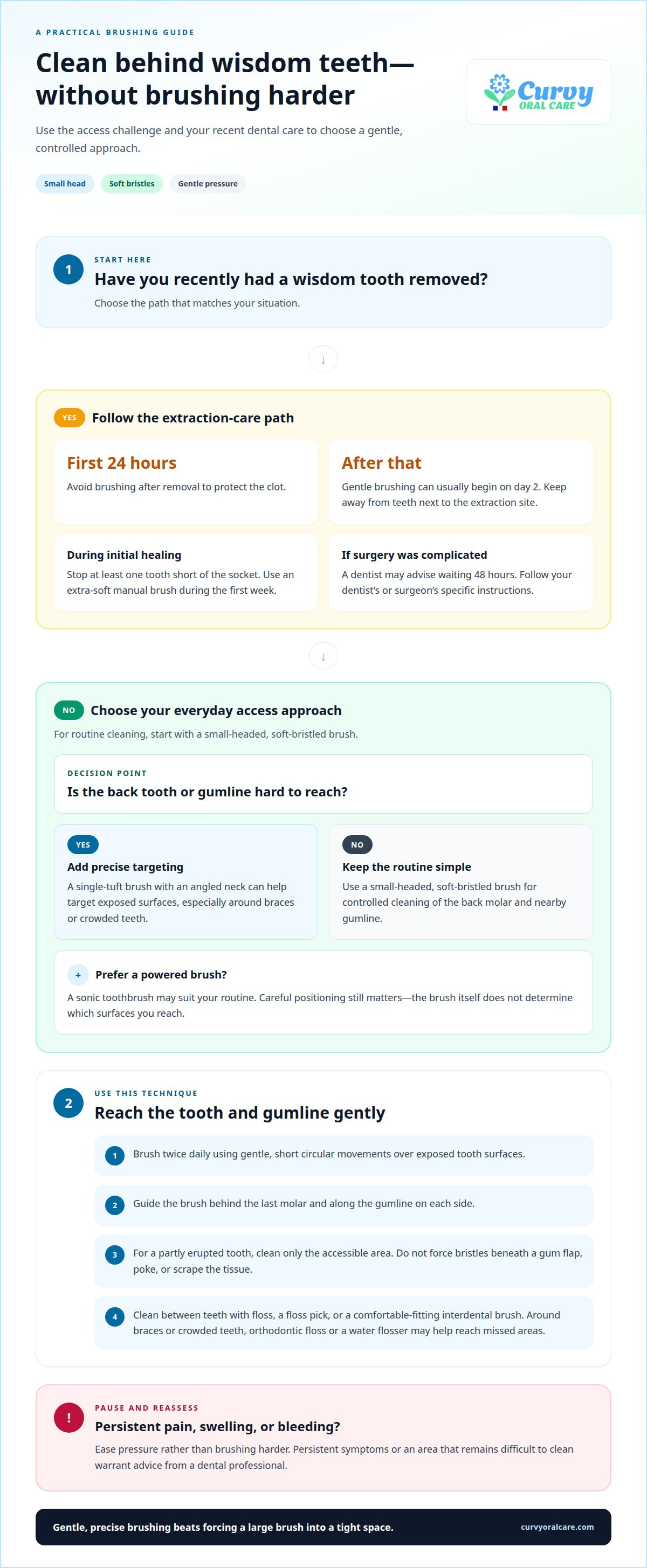
- Choose a small-headed, soft-bristled toothbrush for routine cleaning. After wisdom tooth surgery, use an extra-soft manual brush during the first week. Avoid brushing for 24 hours after removal to protect the clot. After that, follow your dentist’s instructions for restarting brushing, especially if the extraction was complicated.
- Clean behind wisdom teeth twice daily as part of your regular brushing routine. Use gentle, short circular movements along the tooth and gumline. For an erupting tooth, a single-tuft brush with an angled neck can help target exposed surfaces. Don’t force bristles beneath a gum flap or scrape tissue to remove trapped food.
- Keep brushing away from extraction sockets during initial healing. Gentle brushing can usually begin on day 2, while avoiding teeth next to the extraction site. After complicated surgery, a dentist may advise waiting 48 hours. During initial healing, stop at least one tooth short of the socket, and follow your surgeon’s specific instructions.
- Clean between teeth carefully with floss, a floss pick, or an interdental brush that fits comfortably. Around braces or crowded teeth, orthodontic floss or a water flosser can help reach areas a regular brush may miss. After an extraction, keep these tools away from the socket until your post-operative instructions allow cleaning there.
- Use light pressure to avoid irritating your gums. Brushing too firmly or pushing a brush beneath gum tissue can cause soreness or bleeding, particularly around a tender, erupting tooth. If discomfort starts, ease the pressure and adjust the angle rather than scrubbing harder. Persistent bleeding, pain, or swelling needs a dental assessment.
- Choose a practical brush that suits your reach and budget. In the United States, a standard manual toothbrush with a small head and soft bristles is a straightforward option; an electric brush isn’t essential for reaching back teeth. Ask a dentist about persistent difficulty cleaning, repeated gum irritation, or pain around a wisdom tooth.
What You Can Do to Clean Behind Wisdom Teeth
- Set up for visibility before brushing. Stand near a mirror, use good lighting, and turn your head slightly toward the side you’re cleaning. This can make the last molar easier to see and help you guide the brush instead of relying on guesswork. Choose a head that fits behind the tooth comfortably without pressing your cheek or stretching your jaw.
- Work on one tooth at a time. Clean the chewing surface, then reposition the brush to reach the side facing your cheek and the side facing your tongue. Use slow, controlled movements, and pause to adjust your grip if the handle catches against your cheek. The aim is deliberate contact with each surface, not vigorous scrubbing.
- If you use an electric toothbrush, guide its head gradually from surface to surface and let it provide the brushing motion. Avoid sweeping quickly across several teeth or pushing the head into your gums. A powered brush may make positioning at the back easier, but you still need to direct it toward the surfaces you intend to clean.
- For braces or crowded teeth, divide the area into smaller targets. Brush around the back molar first, then clean around nearby brackets and the wire. A single-tuft brush can reach a small surface that the main brush head can’t approach easily. For spaces between teeth, use a suitable interdental method without forcing it through a tight gap.
- After an extraction, protect the healing area by following the care instructions from your dental professional. Don’t direct an electric brush or other cleaning tool onto the socket unless your clinician has said it’s appropriate. Clean other accessible areas as instructed, and ask for clarification if you’re unsure how close to brush.
- Notice when your routine isn’t working. Repeatedly missing the same surface, persistent discomfort, or swelling around a wisdom tooth are reasons to seek dental advice. A dentist can examine tooth position, gum tissue, and the space behind the molar, then demonstrate a technique suited to that area. Don’t use extra pressure to make up for poor access.
Build a Better Daily Oral-Care Routine
- Brush twice daily, morning and evening, and include the back molars in both sessions. Follow the tooth contours instead of rushing across the visible fronts. At the back, open your mouth slightly and move your cheek aside to make room for the brush. Use a soft-bristled head and light pressure along each tooth’s gumline.
- Clean between teeth once a day with a method that fits your mouth. Floss can curve around the sides of neighboring molars, while an interdental brush may suit a wider gap. If braces make cleaning awkward, use orthodontic floss or a water flosser. Move carefully around the wisdom tooth, and don’t force a tool into tight spaces.
- Clean your tongue as part of the same routine. Brush it gently from back to front, or use a tongue cleaner and rinse the tool. This adds a simple step beyond cleaning your teeth and gums. If reaching the back of your tongue triggers gagging, start closer to the tip and gradually move farther back as comfortable.
- Choose meals and snacks that support a balanced routine. Drinking water with meals helps rinse away loose food, while frequent sugary snacks can leave more residue for plaque bacteria. After eating sticky foods, rinse with water if brushing isn’t practical. Focus on consistent daily habits rather than trying to make up for them later with forceful brushing.
- Keep regular dental visits and describe specific trouble spots, such as a gum flap or the space behind a crowded molar. A dentist can check whether plaque remains where your brush misses and demonstrate an appropriate cleaning method. For routine examinations and clinical guidance, providers like dentalscotland.com offer comprehensive dental care to help maintain your oral health. Seek advice sooner for persistent bleeding, swelling, pain, or a noticeable change around a wisdom tooth.
- Check your brush head as part of your routine. Replace it when the bristles look worn or splayed, since damaged bristles may be harder to guide precisely around back teeth. Keep a spare head available so replacement doesn’t disrupt your routine.
Curvy Oral Care: Portable Toothbrush for Braces and Implants
A portable toothbrush can be useful for people managing a more involved daily cleaning routine. Braces, implants, and back molars can each create areas that need extra attention. A suitable toothbrush can support consistent brushing, but it can’t replace careful technique or professional advice about your mouth.
If orthodontic brackets make brushing awkward, choose a brush you can guide around the teeth and gumline. Curvy Oral Care’s toothbrush for braces is one option for brushing around orthodontic appliances. Move deliberately around brackets and toward the back teeth. Clean between teeth separately with a method recommended for your needs.
A portable brush may suit a routine that happens away from home as well as at home. Reach the outer, inner, and chewing surfaces, then pay attention to the gumline behind the last molar. Don’t push bristles beneath gum tissue or into an extraction socket. Follow your dental professional’s instructions during healing or when an implant needs specific care.
An electric brush, including a sonic toothbrush, may also be an option for daily cleaning. The key is deliberate placement: guide the brush head across each surface rather than relying on the device alone to reach hidden areas. If you’re unsure how to brush around an implant or healing site, get individual advice from your dental professional.
Brush heads wear with use, so check them regularly and replace them when the bristles look worn or splayed. Choose a head that fits your toothbrush. A fresh head supports controlled brushing, but doesn’t make forceful pressure appropriate.
Think of toothbrushes as tools for building a routine, not as treatments for gum problems or substitutes for dental care. Persistent pain, swelling, bleeding, or difficulty cleaning around a wisdom tooth deserves professional attention. For everyday brushing, choose a brush you can comfortably guide to the back of your mouth and use gently along the gumline.
For advice about choosing a toothbrush or caring for braces and implants, consult your dental professional, or reach out to a comprehensive practice like Damansara Dental Studio for personalized guidance on managing tricky oral care needs.
Make Your Next Brush Count
Your daily routine doesn’t need to be complicated to be thoughtful. Notice how easily you can guide the brush around your back teeth, and adjust your grip or angle when access feels awkward. Choosing a toothbrush for cleaning behind wisdom teeth is a practical step, but consistent, gentle technique is what turns a tool into a habit. Let comfort and control guide your choice.
Pay attention to changes as your mouth and routine evolve. Braces, a newly emerging tooth, or healing after dental work can change which areas are easy to reach. If pain, swelling, or bleeding persists, seek advice from a dental professional instead of trying to solve the problem by brushing harder. Small, steady choices support care without adding pressure.
Ready to make your routine easier to maintain? Explore a sonic toothbrush and travel case as one option for your daily oral-care setup. Keep moving forward with patient, attentive habits, one brushing session at a time.
Frequently Asked Questions
What toothbrush head works best for cleaning behind wisdom teeth?
Choose a head you can maneuver without bumping your cheek or forcing your jaw wide open. A compact shape can make the brush easier to control at the back of your mouth. Try approaching the last molar from slightly different angles, then keep the position that lets you clean its back edge comfortably. If access remains difficult, a dental professional can assess your tooth position and suggest an approach.
Are single-tuft or end-tuft toothbrushes effective for cleaning behind back molars?
A single-tuft brush can help target a particular spot, such as a surface partly blocked by a neighboring tooth or orthodontic appliance. Use the small tuft for that area, then return to your regular brush for the rest of your mouth. If you’re unsure which surface you’re missing, ask a dental professional to demonstrate the placement for your teeth rather than brushing blindly.
Can an electric toothbrush reach behind wisdom teeth better than a manual toothbrush?
Either type can work if you can position it steadily at the back of your mouth. An electric brush may suit someone who finds it easier to guide a powered handle than to make repeated manual strokes. A manual brush may feel simpler to maneuver in a tight space. Choose based on comfort and control, then check that you’re reaching the surfaces you intend to clean.
Health & Medical Disclaimer: This information is for educational purposes and isn’t a substitute for professional dental or medical advice, diagnosis, or treatment. Seek advice from a dental professional about persistent pain, swelling, bleeding, or other ongoing oral-health changes.

Article by
Aline Peixe Nebot
Aline Peixe Nebot is a Veterinarian and passionate advocate for better oral health, committed to raising awareness of oral health as a matter of public health. She actively promotes the importance of simple, effective oral care routines and works to educate the public about the often-overlooked link between oral health and overall systemic health. Her mission is to make better oral care knowledge accessible to everyone and encourage healthier habits for life.
Disclaimer
Disclaimer: The information provided in this article is intended for general educational and informational purposes only. It is not intended to replace professional medical, dental, or healthcare advice, diagnosis, or treatment.
Some content may be AI-assisted and is provided to support health education and awareness. While we strive to share accurate and up-to-date information, health recommendations and scientific evidence can evolve, and the information presented may not apply to every individual.
The connection between oral health and overall systemic health is an important and developing area of research. Associations discussed in this article should not necessarily be interpreted as proof of cause and effect.
Always consult a qualified dentist, physician, or other healthcare professional regarding your individual health, symptoms, medications, or treatment decisions. Do not delay or discontinue professional care based on information presented in this article.
This content is for education and awareness—not diagnosis or treatment.