
What Cleans Teeth in Natural Sulfate-Free Toothpaste?
SLS makes toothpaste foam, but foam isn’t what cleans your teeth. A natural cavity protection toothpaste without sulfates can still clean through brushing and other cleansing ingredients. Hydroxyapatite toothpaste offers an enamel-focused option.
If you prefer less foam or find some toothpastes irritating, choosing an SLS-free formula can feel like a better fit. The key is understanding what replaces SLS and which ingredients support your oral-care goals. Hydroxyapatite makes up about 97% of tooth enamel, and toothpaste containing it is one option for people looking for enamel-focused care.
Here, you’ll learn how brushing and toothpaste work together, why some people avoid SLS, and what to consider when comparing natural ingredients for cavity protection. We’ll also explain where hydroxyapatite fits, so you can choose a routine that feels comfortable and keeps gumline cleaning, hard-to-reach areas, and consistent daily care in focus.
Key Takeaways
- Foam is not what removes plaque; brushing technique and consistent cleaning matter more.
- Learn how hydroxyapatite fits among enamel-focused toothpaste ingredients and what it can and can’t tell you about a formula.
- Understand why SLS is added to toothpaste and why some people prefer to avoid it.
- Compare toothpaste options by their ingredients and your oral-care needs, not just by how much they foam.
- Build a more thorough routine by paying attention to the gumline, spaces between teeth, and hard-to-reach back molars.
Does SLS-Free Toothpaste Still Clean Your Teeth?
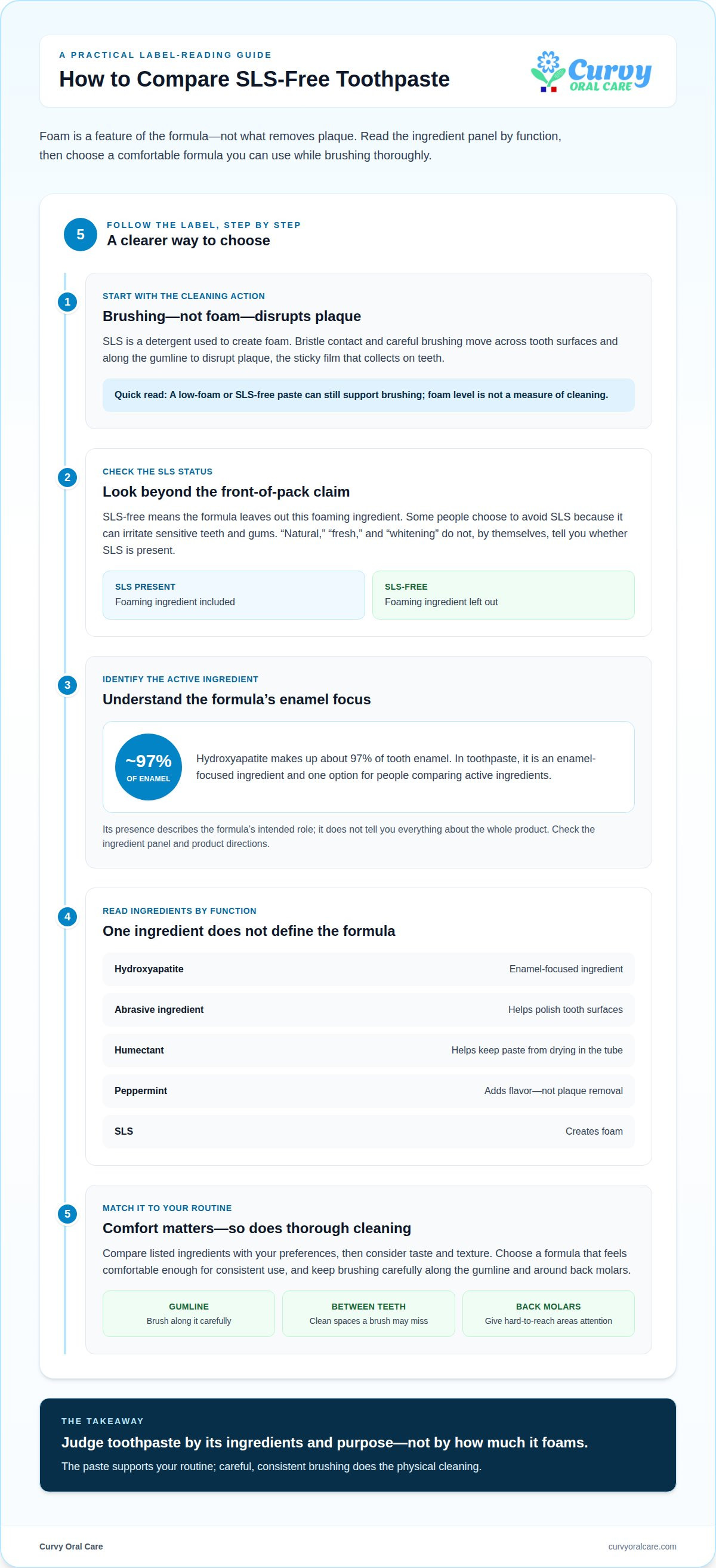
Yes. Toothpaste can clean teeth without sodium lauryl sulfate, or SLS. SLS creates foam, but foam isn’t what removes plaque. Brushing moves bristles across tooth surfaces and along the gumline, disrupting the sticky film. Toothpaste adds ingredients for flavor, texture, polishing, or enamel support. Leaving out SLS changes the foaming ingredient, not brushing’s basic cleaning action.
Cavity protection is a separate question from foam. Some toothpastes contain fluoride; others are fluoride-free and may use different active ingredients, such as hydroxyapatite. These options differ in their approach to cavity protection, not in whether a toothbrush can physically clean teeth. The ingredient list helps explain a formula’s intended role, but no ingredient replaces careful brushing.
Hydroxyapatite is an enamel-focused ingredient used in some fluoride-free formulas. It’s an option for people comparing active ingredients, while fluoride-containing formulas use fluoride for enamel support. These are distinct approaches. Don’t assume that “SLS-free,” “natural,” or “whitening” tells you which active ingredient a toothpaste contains. Read the ingredient panel alongside the product claims.
Other ingredients serve different purposes. Peppermint adds flavor, and an abrasive ingredient can help polish tooth surfaces. Whitening toothpaste may focus on surface stains, which is different from identifying an active ingredient intended for enamel support. Neither a strong mint flavor nor abundant foam tells you whether a formula suits your cavity-protection preferences.
| Toothpaste option | SLS | Active ingredient approach | What to compare |
|---|---|---|---|
| SLS-free with fluoride | Absent | Fluoride | Ingredient statement and formula purpose |
| SLS-free with hydroxyapatite | Absent | Hydroxyapatite | Enamel-focused claims and directions |
| SLS-free, fluoride-free formula | Absent | Depends on the listed ingredients | Named active ingredients and intended use |
Choose by matching the listed active ingredients to your preferences, then consider taste and texture. A comfortable formula is one you can use consistently while brushing thoroughly.
SLS-free describes the absence of a foaming ingredient, not a child-specific cleaning method. For fluoride-free options, review the active ingredients and the product’s age and use directions. Ask a dental professional about a child’s individual cavity-protection needs.
With any formula, brush along the gumline and reach the back molars and other difficult spots. Cleaning between teeth also matters because a toothbrush may not reach every space. Toothpaste supports your routine; consistent, careful brushing helps spread its ingredients across the areas you’re cleaning.
Natural toothpaste ingredients
Toothpaste combines ingredients with different roles: cleaning, texture, flavor, and enamel support. Reading the label by function helps you distinguish active ingredients from flavorings such as peppermint and polishing agents.
Ingredients for Plaque and Cavities
Plaque is a sticky film that collects on teeth, especially near the gumline and between teeth. Toothpaste ingredients support brushing, but the ingredient list alone doesn’t show how well you reach those areas. Hydroxyapatite is an enamel-focused ingredient; it makes up about 97% of tooth enamel. Its role differs from flavorings or texture ingredients, which shape the brushing experience rather than provide that enamel focus.
Natural Ingredient Functions
Ingredients serve different functions in a formula. An abrasive ingredient helps polish tooth surfaces, while a humectant helps keep toothpaste from drying out in the tube. Peppermint supplies flavor, not plaque removal. Sodium lauryl sulfate creates foam in some formulas, but foam is a sensory feature, not a measure of cleaning. These different roles show why one ingredient can’t represent the whole product.
Natural Ingredient Concerns
“Natural” doesn’t describe one standard formula or guarantee that every ingredient suits every mouth. Sodium lauryl sulfate can irritate sensitive teeth and gums, so some people prefer to avoid it. Flavoring ingredients, including peppermint, can also affect comfort while brushing. Check the full ingredient panel instead of relying on a single claim on the front of the package.
When choosing a natural cavity protection toothpaste without sulfates, check both its SLS status and active ingredients. Hydroxyapatite toothpaste is an enamel-focused option; its presence says more about the formula’s intended role than labels such as “fresh,” “clean,” or “whitening.” Whitening toothpaste may focus on surface stains, while an abrasive ingredient contributes polishing. Flavor and foam don’t identify a formula’s active ingredient.
A natural cavity protection toothpaste without sulfates can still contain ingredients for flavor, texture, and polishing. Read the label by function: identify active ingredients, note flavorings such as peppermint, then consider texture and polishing ingredients. This makes comparisons more practical and helps you find a formula that fits your preferences.
Curvy Oral Care’s toothpaste and travel-case combination is one option to explore as you build a routine around toothpaste and consistent brushing.
What Is SLS (Sodium Lauryl Sulfate) in Toothpaste?
Sodium lauryl sulfate, often shortened to SLS, is a detergent used in toothpaste to create foam. It helps spread the paste through the mouth, but foam itself doesn’t remove plaque. Brushing technique and bristle contact do the cleaning. An SLS-free formula leaves out this foaming ingredient while using other ingredients for flavor, texture, or cleaning.
Choosing an SLS-free toothpaste doesn’t mean choosing just one type of formula. Compare active ingredients, flavorings, texture, and stated purpose. For example, whitening toothpaste may focus on surface stains, while another formula may feature hydroxyapatite for an enamel-focused routine. These differences matter more than how much a toothpaste foams.
Research has examined whether SLS relates to recurrent aphthous ulcers, commonly called canker sores. A preliminary study on sodium lauryl sulfate and recurring ulcers was published in 1994. A systematic review later examined four clinical trials. In one study discussed in this context, participants averaging roughly 18 sores per three months saw significant improvement after switching to an SLS-free formula. These findings may help explain why some people choose alternatives, but they don’t establish that SLS causes every person’s sores.
Dry mouth calls for a separate comparison. SLS-free means sodium lauryl sulfate is absent; it doesn’t, by itself, mean a toothpaste treats dry mouth. Read the ingredient panel and the product’s stated purpose. If brushing feels uncomfortable or mouth dryness persists, discuss it with a dental professional rather than assuming that removing one ingredient addresses the cause.
For a useful product comparison, place options side by side and assess the same criteria:
- SLS: Is sodium lauryl sulfate listed?
- Active ingredients: Does the formula identify an enamel-focused ingredient, such as hydroxyapatite?
- Purpose: Is the product positioned for whitening, sensitivity, or another specific need?
- Feel: Do the flavor and texture make brushing comfortable enough to maintain?
This approach compares formulas without relying on brand rankings or foam. It also helps distinguish an ingredient’s role from a product’s overall purpose. Peppermint, for example, affects flavor; it doesn’t replace examining active ingredients or brushing well along the gumline.
How much do sulfate-free cavity-protection toothpastes cost in the United States? Prices vary with tube size, formula, and retail format, so compare the price per ounce when available. Ingredient choices and the product’s intended use can also affect the price.
Reasons to avoid sodium lauryl sulfate in toothpaste
Sodium lauryl sulfate, or SLS, creates foam during brushing. Some people avoid it because it can irritate sensitive teeth and gums. If a toothpaste leaves your mouth uncomfortable, checking its ingredient list for “sodium lauryl sulfate” is a practical first step. Choosing an SLS-free formula changes the foaming ingredient, not the need to brush carefully.
Recurring canker sores are another reason people consider SLS-free toothpaste. A preliminary study on sodium lauryl sulfate and recurrent aphthous ulcers was published in 1994. A systematic review examined four clinical trials on the subject. In a study discussed in this context, participants averaging roughly 18 canker sores per three months saw significant improvement after switching to an SLS-free formula. These findings offer a reason to consider a change if sores recur, but they don’t establish SLS as the cause of every person’s canker sores.
Comfort matters because brushing needs to be a consistent habit. If foam or irritation makes brushing unpleasant, an SLS-free option may feel easier to use. Its absence doesn’t mean the toothpaste cleans by itself. Bristles still need to reach the gumline, tooth surfaces, and back molars, where plaque can collect.
“Natural” and “artificial” aren’t reliable shortcuts for judging comfort. Read the label for specific ingredients, then notice how your mouth feels during and after brushing. Sodium lauryl sulfate may be one ingredient to avoid, but another flavor or component could also affect your experience. Comparing formulas can help you identify a toothpaste that fits your routine.
A brand name alone doesn’t tell you whether a formula contains SLS. For example, seeing Sensodyne on a tube doesn’t replace checking that product’s ingredient panel. Formulas can differ, so look for the full ingredient name rather than assuming every product under one brand has the same ingredients.
- Check the label: Look for sodium lauryl sulfate, not just “SLS-free” wording.
- Notice comfort: Track whether a formula seems to irritate your gums or sensitive teeth.
- Keep brushing thoroughly: Clean the gumline and back molars, even with a low-foam toothpaste.
The clearest reason to avoid SLS is personal comfort, especially if brushing seems irritating or recurrent canker sores are a concern. Choosing an alternative removes this foaming ingredient while keeping the focus on steady brushing and thorough plaque removal.
How much fluoride should toothpaste contain for cavity prevention?
For fluoride-containing toothpaste, 1450 ppm is a commonly referenced concentration for cavity protection. Ppm means parts per million, a way to express the amount of an ingredient in a formula. This figure helps interpret a label; it doesn’t determine whether a fluoride-free toothpaste suits your preferences or needs. The ingredient list and product directions provide important context.
Fluoride and hydroxyapatite represent different approaches to enamel care. A toothpaste label may identify fluoride and state its concentration in ppm. A fluoride-free formula may instead feature hydroxyapatite. These labels describe ingredients, not every factor affecting a person’s cavity risk or daily oral-care routine.
Read the ingredient panel and active-ingredient information together. Look for “fluoride” and, when listed, its concentration. A label showing 1450 ppm identifies the amount using that measure. If you prefer a fluoride-free formula, check that the ingredient list matches that preference and review the named active ingredients. Words such as “natural,” “whitening,” or “SLS-free” don’t tell you whether fluoride is present.
Choosing between formulas is a personal decision. Consider which active ingredients you want, whether the taste and texture feel comfortable, and whether the directions fit your routine. A fluoride-free label alone doesn’t explain a product’s full approach to cavity protection. Hydroxyapatite is one enamel-focused ingredient to look for when comparing fluoride-free options.
Technique matters with any toothpaste. Brush gently along the gumline, then move over each tooth surface, including the back molars. Clean between teeth with an appropriate method, since a toothbrush may not reach those spaces well. This routine gives attention to areas that are easy to overlook during a quick brush.
For personal guidance, a dental professional can consider your cavity history, current dental concerns, and ingredient preferences together. That discussion can help you compare formulas without treating one label detail as the whole decision. For children, caregivers can ask about age-appropriate product directions and routines tailored to the child’s needs.
If you’re comparing enamel-focused products, consider the ingredients and directions that fit your preferences. Explore the toothpaste-and-travel-case option as part of a consistent brushing routine.
All toothpastes with the ADA Seal of Acceptance contain fluoride, offering another label detail to consider alongside the listed active ingredients.
Curvy Oral Care: Toothpaste
Curvy Oral Care offers toothpaste featuring hydroxyapatite for readers exploring enamel-focused oral care. When comparing toothpaste ingredients after learning about SLS, focus on the formula’s active ingredients and how comfortably it fits your daily brushing routine.
Toothpaste is one part of prevention, not a substitute for thorough cleaning. Brush gently along the gumline, reach the back molars, and clean between teeth with an appropriate method. These habits help address plaque in places a quick pass over visible surfaces can miss.
Curvy Oral Care’s toothpaste may suit readers seeking a hydroxyapatite option as they consider their ingredient preferences. For persistent irritation, bleeding, or other oral-health changes, seek advice from a dental professional. Contact Curvy Oral Care if you have questions about its toothpaste.
Make Your Next Brush a More Considered One
Your oral-care routine is built through small choices repeated every day. Choose toothpaste that matches your ingredient preferences, then give equal attention to how you brush. A gentle, thorough approach supports cleaner teeth and healthier gums, including along the gumline and around hard-to-reach areas.
If you’re considering a natural cavity protection toothpaste without sulfates, use the ingredient label and your comfort while brushing to guide your decision. Curvy Oral Care also offers sonic toothbrushes, replacement brush heads, and brush head subscriptions to help build a routine that’s easier to maintain.
Explore Curvy Oral Care’s toothpaste option as you choose products that fit your daily care. Consistent, comfortable habits are a practical place to start. Keep caring for your mouth, one thoughtful brush at a time.
Frequently Asked Questions
What Else Should You Look For in an SLS-Free Toothpaste?
Check the use directions, flavor, and any ingredients you prefer to avoid. If a toothpaste is intended for a specific need, such as whitening or sensitivity, make sure its label clearly describes that purpose. You can also compare how the formula feels during brushing. To assess comfort, change one product at a time rather than altering several parts of your routine together.
What is natural toothpaste?
“Natural toothpaste” is a broad label, so it doesn’t tell you how to use a product or whether it matches your preferences. Read the full ingredient panel, including flavorings, and follow the package directions. If you have a known allergy or sensitivity, look for the relevant ingredient rather than relying on the word “natural.” A dentist or pharmacist can help interpret unfamiliar ingredients when needed.
Why avoid SLS in toothpaste?
Whether to avoid SLS depends on your preferences and how a formula fits your routine. If you try a toothpaste without it, keep your brushing schedule and technique steady while you assess the change. Note which product you used and any differences you notice. If discomfort or mouth sores persist, seek professional advice instead of repeatedly switching products without guidance.
What toothpaste ingredients help prevent cavities naturally?
Hydroxyapatite is an ingredient used in some enamel-focused toothpastes. To evaluate a product, look for the named active ingredient and read what the manufacturer says it is intended to do. Don’t treat flavorings or polishing ingredients as substitutes for an active ingredient. Your dental history and current oral-health needs also matter, so discuss ingredient choices with a dental professional if cavity prevention is a concern.
Is fluoride-free toothpaste effective at preventing cavities?
“Fluoride-free” describes the absence of an ingredient, not a formula’s effectiveness. Assess the product’s named active ingredients and evidence for its specific intended use. Your history of cavities, oral-care habits, and dental needs also shape how suitable a routine may be. A dental professional can help weigh those factors and explain what to monitor at regular checkups.
What evidence supports hydroxyapatite toothpaste for cavity protection?
When reviewing evidence, look at what researchers measured, who participated, and whether the tested toothpaste matches the formula you’re considering. A study measuring changes in early enamel lesions addresses a different outcome from one measuring new cavities over time. These details help put results in context. Ask a dental professional to interpret research alongside your oral-health history.
Which toothpastes are sulfate-free and cavity-protecting?
Look for products that clearly identify both their SLS status and the active ingredient intended to support enamel or cavity care. A sulfate-free label describes only one formula characteristic. Compare complete ingredient panels and directions rather than choosing based on flavor or packaging. If you have particular oral-health concerns, use them as criteria when discussing toothpaste options with a dental professional.
How can I identify sodium lauryl sulfate in toothpaste ingredient lists?
Look for the complete phrase “sodium lauryl sulfate” in the ingredient list; the word “sodium” alone isn’t enough. Toothpaste may contain other ingredients with sodium in their names, so don’t treat every sodium compound as SLS. If the package uses a shortened term or the list is difficult to read, consult a pharmacist or dental professional before deciding whether the formula meets your preferences.

Article by
Aline Peixe Nebot
Aline Peixe Nebot is a Veterinarian and passionate advocate for better oral health, committed to raising awareness of oral health as a matter of public health. She actively promotes the importance of simple, effective oral care routines and works to educate the public about the often-overlooked link between oral health and overall systemic health. Her mission is to make better oral care knowledge accessible to everyone and encourage healthier habits for life.
Disclaimer
Disclaimer: The information provided in this article is intended for general educational and informational purposes only. It is not intended to replace professional medical, dental, or healthcare advice, diagnosis, or treatment.
Some content may be AI-assisted and is provided to support health education and awareness. While we strive to share accurate and up-to-date information, health recommendations and scientific evidence can evolve, and the information presented may not apply to every individual.
The connection between oral health and overall systemic health is an important and developing area of research. Associations discussed in this article should not necessarily be interpreted as proof of cause and effect.
Always consult a qualified dentist, physician, or other healthcare professional regarding your individual health, symptoms, medications, or treatment decisions. Do not delay or discontinue professional care based on information presented in this article.
This content is for education and awareness—not diagnosis or treatment.