
Ultra Soft Replacement Brush Heads for Sensitive Teeth and Gums
Gentler brushing starts with the right brush head and a light touch. Ultra soft replacement brush heads for sensitive teeth can feel more comfortable against tender gums, but pressing harder won’t make cleaning more effective. Replace a toothbrush head every 3 months.
If brushing makes your teeth or gums uncomfortable, it’s understandable to look for a softer option. But softness is only part of the picture: how you guide the brush along the gumline and around hard-to-reach teeth matters, too. Oral health is part of overall health, and research continues to explore links between the mouth and the rest of the body. An association doesn’t prove that one causes the other.
Here, you’ll learn what to look for in a replacement head, how to brush gently while still removing plaque, and what to consider when caring for sensitive teeth, gums, or areas of recession. We’ll also cover how brush-head softness relates to gum care and whitening, so you can build a comfortable routine without overlooking the gumline or back molars.
Key Takeaways
- Choose a soft, comfortable brush head, then use a light touch rather than pressing harder to clean.
- Guide the bristles along the gumline and give attention to back molars and other hard-to-reach areas.
- Replace your toothbrush head every 3 months, or sooner if the bristles become visibly worn.
- Brushing can help remove plaque and surface debris, but a brush head alone doesn’t change the natural shade of teeth.
- If sensitivity, gum recession, or bleeding persists, seek advice from a dental professional; an angled toothbrush may help you reach tricky areas.
Ultra-soft replacement heads for sensitive teeth and gums
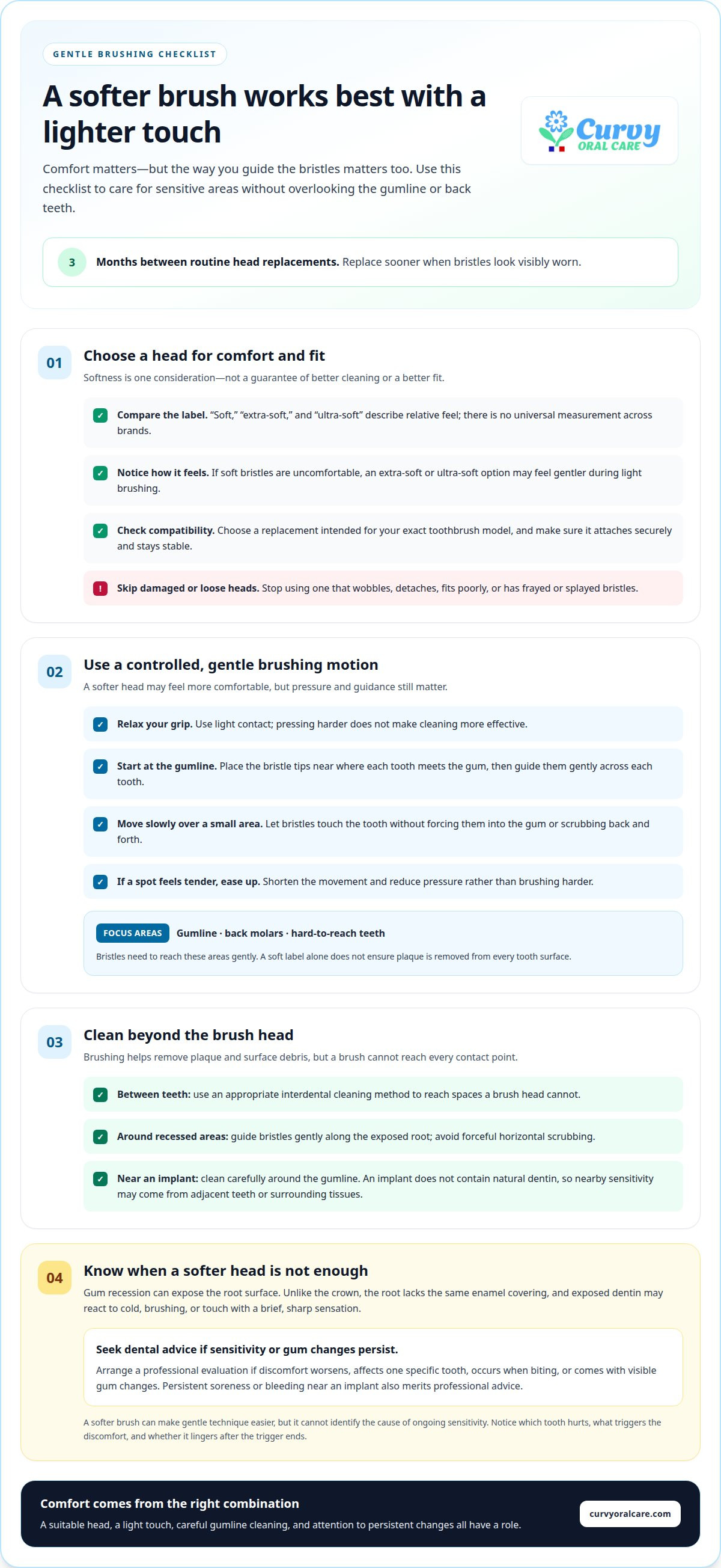
Ultra-soft bristles can feel gentler on tender teeth and gum tissue. When choosing ultra soft replacement brush heads for sensitive teeth, also check compatibility, bristle condition, and your brushing technique.
Ultra-Soft Bristle Options
Ultra-soft bristles flex readily against tooth surfaces and the gumline. That softer feel may suit people who find firmer brushing uncomfortable, especially around sensitive areas. Check the product label for its bristle description, then inspect the head before use. Frayed or splayed bristles can feel rough, even if the head was originally ultra-soft.
Technique still matters. Place the bristle tips near the gumline and guide the brush gently across each tooth rather than scrubbing back and forth. If you reach a tender spot, ease the pressure instead of pushing harder. Ultra-soft bristles can improve comfort, but they don’t replace cleaning between teeth or reaching the back molars.
Comparing Bristle Softness Levels
Labels such as soft, extra-soft, and ultra-soft describe relative feel, but there’s no universal measurement across brands. Compare the wording on each package and notice how the bristles feel during gentle brushing. If soft bristles irritate you, an extra-soft or ultra-soft option may feel more comfortable. Choose a head you can use gently and consistently.
A softer label doesn’t automatically mean better plaque removal. Cleaning depends on guiding bristles along tooth surfaces and the gumline, including near the back teeth. Gently brush each area and notice whether the bristles reach the gumline without discomfort. If sensitivity continues, seek dental advice rather than repeatedly changing heads without understanding the cause.
Third-Party Head Safety and Reliability
Are third-party replacement brush heads as safe and reliable as brand-name heads? A brand name alone doesn’t establish how well a head fits or performs. Check that a replacement is intended for your exact toothbrush model, attaches securely, and stays stable during use. Don’t use a head that feels loose or fits poorly.
Inspect the connection and bristles before brushing. For example, stop using a head if it wobbles, detaches, or has damaged bristles. Follow the toothbrush maker's compatibility guidance, and compare replacement heads by fit, construction, and clear product information, not by softness claims alone. Dental professionals recommend replacing a toothbrush head every 3 months; replace it sooner if the bristles become visibly worn.
Gentle brushing for gum recession and dentinal hypersensitivity
See a dentist if sensitivity persists, worsens, or affects one specific tooth. Pain when biting, visible gum changes, or discomfort near a fixed implant also warrants professional evaluation. A softer brush alone may not address the cause.
Gum recession exposes more of a tooth’s root surface. Unlike the crown, the root lacks the same enamel covering, so cold drinks, brushing, or touch may trigger a brief, sharp sensation. Dentinal hypersensitivity describes discomfort when exposed dentin reacts to stimuli. A gentle brush can reduce unnecessary friction, but it can’t identify why sensitivity began.
Use a controlled approach at the gumline. Hold the brush with a relaxed grip, place the bristles where each tooth meets the gum, and move slowly across a small area. Let the bristles contact the tooth without forcing them into the gum. If brushing the lower front teeth feels uncomfortable, ease your grip and shorten the movement instead of scrubbing harder.
Recession and sensitivity can have different explanations, including brushing pressure, gum changes, or a problem affecting an individual tooth. A dentist can examine the area and distinguish among possible causes. Note which tooth hurts, whether cold or touch triggers the pain, and whether discomfort lingers after the trigger ends.
A fixed implant needs a different interpretation from a natural tooth. An implant doesn’t contain natural dentin, so sensitivity nearby may come from adjacent teeth or surrounding tissues. Note whether the feeling comes from the implant area, a neighboring tooth, or the gum, and describe the location during an appointment. Don’t use extra pressure to test the area.
For daily brushing, use these practical checks:
- At a recessed area: guide the bristles gently along the exposed root; avoid forceful horizontal scrubbing.
- At a sensitive tooth: use light contact and notice whether a particular stimulus triggers discomfort.
- Near an implant: clean carefully around the gumline and contact a dental professional about persistent soreness or bleeding.
- Between teeth: use an appropriate interdental cleaning method, since a brush head cannot reach every contact point.
A softer head may make gentle technique easier, but sensitivity that persists still merits an assessment. If you’re also considering equipment for a careful routine, explore this sonic toothbrush and toothpaste combination as one product option.
How do ultra-soft brush heads compare with soft and extra-soft bristles for sensitive teeth?
“Soft,” “extra-soft,” and “ultra-soft” describe bristle feel, but labels can vary between manufacturers. Compare the package wording and how the head feels during gentle brushing. The softest label alone can’t tell you whether a brush suits your teeth, gums, or implant restoration. Consider how you hold and guide the brush, too.
Soft bristles may feel more flexible than firmer options. Extra-soft and ultra-soft bristles are marketed as gentler-feeling choices. These labels aren’t a reliable ranking across brands, so compare products from the same manufacturer where possible. Look at the bristle description and head shape together, rather than choosing by the word “ultra” alone.
For sensitive teeth, comfort can help you avoid pressing harder to compensate for discomfort. Try a gentle pass over one tooth, then adjust your grip if the bristles bend heavily against it. Even soft bristles need careful direction: guide them over tooth surfaces and near the gumline. Don’t scrub repeatedly at a tender spot.
The brush head’s shape and size also affect how easily you can reach each area. A compact head may be easier to guide around a back molar or implant crown, while a larger head may cover more surface at once. Neither shape is automatically best. Check that you can maneuver the bristles around the gumline without forcing the handle or twisting your wrist.
With fixed implants, focus on the gum tissue around the restoration and the neighboring teeth. A soft label doesn’t guarantee that bristles reach every contour. Move the brush in small, controlled passes around the crown, then notice whether any surface is repeatedly missed. Clean between teeth separately, since bristles may not reach every tight contact.
Use these comparisons when choosing:
- Soft: assess whether its feel is comfortable during light brushing.
- Extra-soft: compare the manufacturer’s description and bristle arrangement.
- Ultra-soft: check that the head remains stable and easy to guide.
- Any label: inspect for splayed bristles and avoid using a damaged head.
Think of softness as one selection factor, not a measure of cleaning quality. A careful routine means reaching tooth surfaces, the gumline, and areas next to implants without excessive pressure. If two heads feel similar, compare their fit with your toothbrush handle and how easily you can guide each around back teeth. Persistent discomfort or bleeding needs dental evaluation, not simply a softer label.
What brush head features help reduce gum irritation and enamel wear?
Choose a head you can guide gently around natural teeth and fixed implants. Soft bristles, a manageable head shape, and intact bristle tips support controlled brushing, but no single feature prevents irritation or wear. Pressure, brushing motion, toothpaste abrasiveness, and access to the gumline matter, too. A soft head used with force can still feel harsh against tender gums.
Start by checking the bristle description and head size. A smaller head may be easier to maneuver around a back molar or implant crown, especially if a larger head catches against nearby tissue. Look for clear product information about bristle tips and replacement compatibility. Labels differ, so compare descriptions within the same product range rather than assuming “extra-soft” means the same thing everywhere.
Rounded bristle tips are a feature to look for in manufacturer descriptions. They may help the ends glide across tooth surfaces instead of presenting rough, uneven edges. Inspect the head regularly: splayed or damaged bristles no longer contact surfaces evenly. Replace a head with visibly worn bristles, even if its handle still works. Wear can make gentle brushing harder to maintain.
For enamel, focus on how the brush meets the tooth. Enamel is the hard outer layer of a natural tooth, while an implant restoration has different surfaces. Use light pressure and small, controlled movements rather than forceful scrubbing. Toothpaste texture matters, too: an abrasive formula combined with heavy pressure may increase surface friction. Ask a dental professional which toothpaste suits your teeth and restoration.
Use these checks when comparing heads:
- Bristle feel: choose soft or extra-soft bristles if firmer ones irritate your gums.
- Head size: check whether you can reach around an implant crown and the back molars.
- Bristle condition: replace heads with frayed, bent, or uneven tufts.
- Fit: attach the head securely and stop using it if it wobbles during brushing.
Test your technique on one area. Rest the bristles near the gumline, guide them across the tooth, and ease pressure if they flatten. Around a fixed implant, clean the gumline and accessible crown surfaces without forcing bristles under the restoration. Brush heads can’t clean every space between teeth, so use an appropriate interdental method. Persistent irritation, bleeding, or visible changes around an implant need dental evaluation.
How often should you replace an ultra-soft toothbrush head?
Replace a toothbrush head every 3 months. Dental professionals recommend this schedule for toothbrush heads, including ultra-soft ones. Soft bristles still wear with repeated brushing, so the label doesn’t extend the replacement interval. For example, mark the change date on your calendar when attaching a new head.
Use the bristles as a visual cue between calendar reminders. Look for bent tufts, fraying, or bristles spreading outward from the head. If an ultra-soft head becomes visibly worn before the 3-month mark, replace it sooner. Worn bristles may not follow tooth contours as predictably, especially around a fixed implant crown or the gumline.
Brushing habits can affect how quickly a head looks worn. Pressing hard or scrubbing forcefully can bend bristles sooner than gentle, controlled movements. Rinse the head after brushing, shake off excess water, and store it upright to air-dry. Pay attention to a consistently damp or visibly dirty head, even if its bristles appear intact.
Build a simple replacement routine around the date, not guesswork:
- On replacement day: note the date in a calendar or oral-care reminder.
- During regular brushing: inspect for splayed, bent, or damaged bristles.
- Before a trip: check whether the current head is close to its planned change date.
- After a head becomes worn: replace it rather than trying to reshape the bristles.
A four-pack may be planned as a year’s supply when each head is used for 3 months. Treat that as a scheduling example, not a reason to keep a damaged head in use. The condition of the bristles still matters. For a fixed implant, a secure, intact head helps you guide brushing around the restoration without relying on worn tufts.
Replacement brush heads and brush-head subscriptions can make it easier to plan ahead. Set a reminder for your next change when you start using each head, then keep a compatible replacement ready. Don’t assume every replacement fits every handle. Match the head to your toothbrush model, and stop using it if the connection feels loose.
Keep the routine practical: check the bristles, record the start date, and replace the head at the recommended interval. If you’re updating your daily setup alongside your replacement schedule, explore this sonic toothbrush and toothpaste combination.
The customer’s four-pack plan is intended to last 1 year when each brush head is used for three months. Treat that as an estimate for organizing replacements, rather than a rule that overrides visible wear. When starting a head, record its date and check that the next compatible one is available before the planned change. If the bristles spread, bend, or look damaged earlier, use a fresh head and adjust the calendar reminder accordingly. This keeps the schedule responsive to the head’s condition while avoiding reliance on memory. A stored replacement is useful only if it matches the toothbrush model and connects securely; if it does not, choose a compatible head instead. Keep the same simple check each time you switch.
Curvy Oral Care: Sonic Toothbrushes
Curvy Oral Care offers sonic toothbrushes and replacement brush heads to support a consistent daily routine. When choosing a replacement, match the head to your toothbrush and replace it when the bristles are worn. For hard-to-reach back teeth or areas around implant restorations, an angled toothbrush can help guide brushing into those spots. Use gentle pressure and clean the gumline; a toothbrush doesn’t replace interdental cleaning or professional implant care.
Brush-head subscriptions offer another way to plan replacements. Choose the brush and head that fit your needs, then follow your dental professional’s guidance for care around fixed implants. Visit curvyoralcare.com to explore Curvy Oral Care’s oral-care products.
Make your next brushing choice a thoughtful one
Your toothbrush should suit a routine you can maintain comfortably. Choosing ultra soft replacement brush heads for sensitive teeth is one practical adjustment, but pay attention to how your mouth responds over time. Notice whether brushing feels manageable, whether you can clean along the gumline, and whether discomfort continues. These observations can help you explain your needs clearly at a dental visit.
Keep the next step simple: select a compatible brush head, use a gentle technique, and make professional advice part of your care when sensitivity or gum changes persist. Product choice can support a routine, but it can’t replace an individual dental assessment. For a toothbrush option to consider alongside your daily care, explore the sonic toothbrush and toothpaste combination.
Small, steady choices can make oral care feel more manageable. Listen to your mouth and give your gums the gentle, consistent attention they deserve.
Health & Medical Disclaimer: This content is for educational purposes only and isn’t a substitute for professional dental or medical advice, diagnosis, or treatment. Consult a qualified healthcare professional about personal health concerns.
Frequently Asked Questions
What are the softest replacement toothbrush heads for sensitive teeth?
Look for replacement heads labelled “ultra-soft,” which generally signals a gentler bristle feel than “soft.” Manufacturers may use softness labels differently, so compare descriptions within the same product range. Check that the head fits your toothbrush handle securely, then brush gently without pressing the bristles flat. If sensitivity persists or affects a particular tooth, arrange a dental evaluation rather than relying on softness alone.

Article by
Aline Peixe Nebot
Aline Peixe Nebot is a Veterinarian and passionate advocate for better oral health, committed to raising awareness of oral health as a matter of public health. She actively promotes the importance of simple, effective oral care routines and works to educate the public about the often-overlooked link between oral health and overall systemic health. Her mission is to make better oral care knowledge accessible to everyone and encourage healthier habits for life.
Disclaimer
Disclaimer: The information provided in this article is intended for general educational and informational purposes only. It is not intended to replace professional medical, dental, or healthcare advice, diagnosis, or treatment.
Some content may be AI-assisted and is provided to support health education and awareness. While we strive to share accurate and up-to-date information, health recommendations and scientific evidence can evolve, and the information presented may not apply to every individual.
The connection between oral health and overall systemic health is an important and developing area of research. Associations discussed in this article should not necessarily be interpreted as proof of cause and effect.
Always consult a qualified dentist, physician, or other healthcare professional regarding your individual health, symptoms, medications, or treatment decisions. Do not delay or discontinue professional care based on information presented in this article.
This content is for education and awareness—not diagnosis or treatment.