
Toothpaste and Toothbrush Bundle: How to Choose a Set That Fits Your Routine
Could a toothpaste and toothbrush bundle simplify your routine, or just give you more items to store? A bigger set isn’t automatically a better one. What matters is whether the toothbrush feels comfortable to use, the toothpaste suits your daily needs, and the brush helps you clean along the gumline and reach your back teeth.
Brushing only the visible surfaces can leave plaque around the gumline and in hard-to-reach spots. A practical pairing can make everyday care easier to keep up, but the bundle itself can’t replace good technique, cleaning between your teeth, or regular dental visits.
In this guide, you’ll learn how to judge a set by routine fit rather than item count, what to look for in a toothbrush and toothpaste, and how to brush with gumline access in mind. Consistent habits support healthy gums, an important foundation of oral health. Research into links between oral and overall health continues to evolve, and associations do not always prove cause and effect.
Key Takeaways
- Choose a toothpaste and toothbrush bundle for the essentials you’ll use, not simply the number of items it contains.
- Compare manual and sonic brush styles, then consider whether the toothpaste suits your everyday needs.
- Match everyday, travel, or multipack formats to how and where you care for your teeth.
- Use a gentle, deliberate brushing technique to reach the gumline, back molars, and other easy-to-miss areas.
- See how a set pairing a sonic toothbrush, toothpaste, and travel case can bring selected routine essentials together.
Why a Toothpaste and Toothbrush Bundle Can Make Daily Care Easier
A toothbrush-and-toothpaste bundle brings two everyday basics together. It can make shopping more straightforward and keep key supplies in one place, whether at home or in a travel bag. But a bundle is a useful starting point, not a complete oral-health plan. Its value comes from choosing components that suit your needs and using them consistently, not from how many items are in the package.
A product set brings essentials together; a preventive routine also includes careful technique, cleaning between teeth, and regular dental checkups. A convenient pairing can support daily brushing, but it can’t do the brushing for you or replace other parts of oral care.
What a toothbrush and toothpaste set can and cannot do
Brushing disrupts plaque on tooth surfaces and along the gumline. Plaque is a soft, sticky film that forms as bacteria in the mouth mix with food and saliva. If it remains around the gums, it can contribute to irritation and inflammation. Brushing helps clear accessible areas, but a brush may not clean every surface equally well, especially between closely spaced teeth.
Choose toothpaste that suits your needs and follow dental guidance for your brushing technique. The American Dental Association recommends brushing twice a day for two minutes with a soft-bristled toothbrush and fluoride toothpaste. A set can keep these basics together, but it doesn’t replace daily cleaning between teeth or routine dental checkups.
Why gumline access belongs in the decision
Don’t focus only on the broad, visible fronts of your teeth. Plaque can collect where teeth meet the gums and between teeth, while back molars and other awkward-to-reach spots can be easy to rush past. Position the brush so its bristles meet the gumline, then move methodically around your mouth using gentle pressure. An angled design may help you reach difficult areas, but technique and steady coverage still matter.
If you’re exploring an angled toothbrush for plaque removal, consider how its shape may help you access the gumline and molars. An angle is about access, not a guarantee of a particular health outcome. Look for a brush you can comfortably guide to the areas you tend to miss.
Toothbrush designs have changed over time, with different forms developed for different brushing needs. For background on the history and types of toothbrushes, see this overview. Whatever style you choose, make sure you can reach each area without scrubbing hard.
Judge a set by how well its basics fit your real routine. If the brush feels comfortable and helps you cover the gumline, back teeth, and other hard-to-reach surfaces, and the toothpaste suits your needs, the pairing may make daily care simpler. A higher item count alone doesn’t make it a better choice.
How to Evaluate a Toothbrush and Toothpaste Bundle for Your Needs
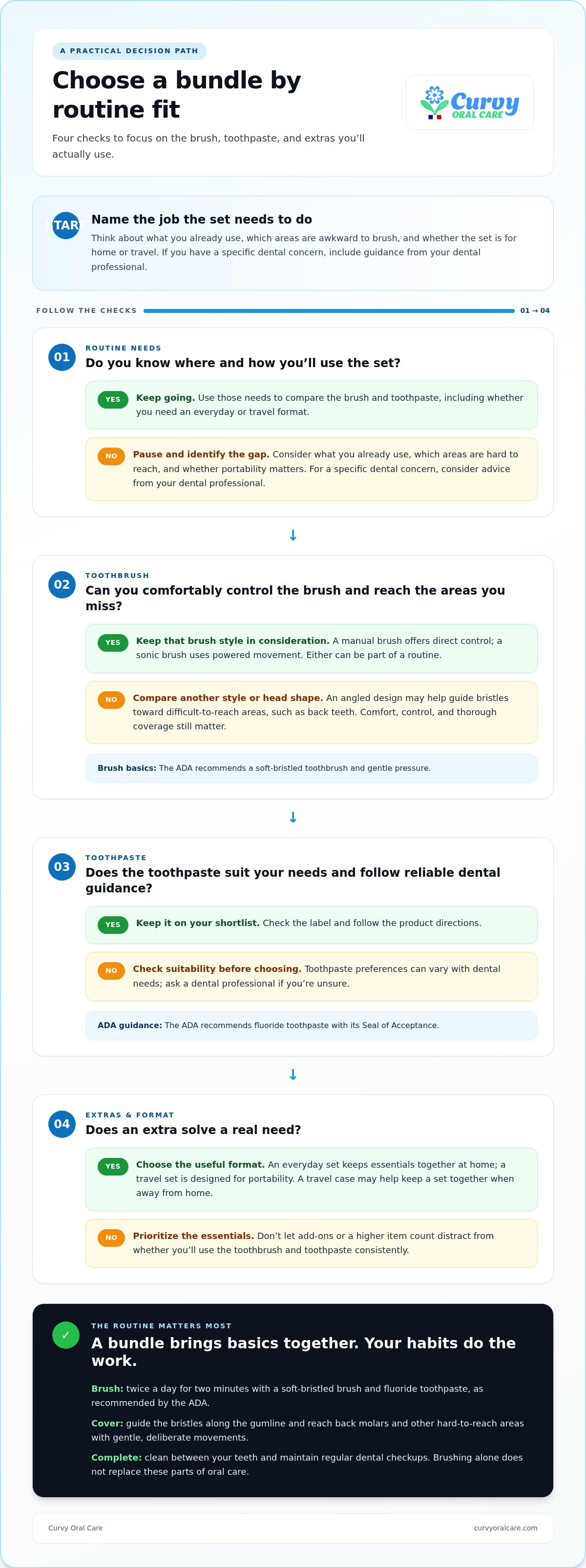
A useful set starts with your habits, not its packaging. Use this four-step process to compare options and find a toothpaste and toothbrush bundle that feels practical for your everyday routine.
- Identify your routine needs. Think about what you already use, which areas are awkward to brush, and whether you want a set for home or travel. If you have specific dental concerns, factor in advice from your dental professional.
- Assess the brush style. Consider whether you prefer a manual brush or a sonic model. Either can be part of a routine; comfort, control, and your ability to brush thoroughly are key.
- Review the toothpaste. Choose a toothpaste that matches your needs and follow reliable dental guidance. The ADA recommends fluoride toothpaste with its Seal of Acceptance.
- Consider convenience last. A travel case or other extra may be useful if it solves a real need. Don’t let add-ons distract from whether you’ll use the main items consistently.
Match the toothbrush design to your brushing habits
A manual brush gives you direct control over each movement. A sonic brush uses powered movement, which may suit someone who prefers that brushing experience. Neither is automatically the right choice for everyone. The American Dental Association recommends a soft-bristled brush and gentle pressure; its guidelines on toothbrushes offer further advice on choosing and caring for one.
Consider the brush head’s access, too. An angled design may help you guide the bristles toward areas that feel difficult to reach, such as back teeth. It doesn’t replace careful coverage: move deliberately rather than rushing or pressing harder. Pick a style you can comfortably use throughout your full brushing routine.
Choose toothpaste and bundle extras with care
Toothpaste preferences can vary with individual dental needs, so ask a dental professional for guidance if you’re unsure what’s suitable. Check the label and follow the product directions rather than assuming a particular ingredient or claim is right for everyone. A travel case can help keep a set together when you’re away from home, but it’s a convenience feature, not a health benefit.
Product fit and brushing technique matter more than bundle size. Once you’ve compared the essentials, decide whether a ready-paired set would simplify your routine. For example, a sonic toothbrush, toothpaste, and travel case bundle brings selected items together if those components suit your preferences and plans.
Toothbrush Bundle Formats Compared: Everyday, Travel, and Multipack Sets
A bundle’s format affects where and how it fits into your routine. An everyday set keeps core items together at home, a travel set is designed for portability, and a multipack provides several sets or components at once. None is automatically the better choice. Compare the practical uses and trade-offs, then choose a format you can use consistently.
| Format | Practical use | Likely advantage | Limitation |
|---|---|---|---|
| Everyday bundle | Regular brushing at home | Keeps routine essentials together | May include items you already have or won’t use |
| Travel set | Keeping oral-care items together away from home | Portable and convenient to pack | Compact storage may not suit every brush or routine |
| Multipack | Keeping additional sets or components on hand | Can provide spares for different locations or users | Needs storage, and extra items offer little value if unused |
When an everyday bundle may suit your routine
An everyday set can remove small barriers, such as searching for toothpaste or keeping a brush and paste in separate places. Choose components that fit what you already do, rather than adding extras for their own sake. If you prefer a particular brush style and will use the paired toothpaste, keeping them together may make it easier to start your usual routine. Convenience can support consistency, but it doesn’t guarantee healthier teeth or gums.
What to consider in a travel toothbrush set
For travel, think about how easily the set fits your luggage and where you’ll store it between uses. A case can help keep items together, but follow the toothbrush and toothpaste packaging guidance for cleaning, drying, and storage. Avoid packing a brush while it’s still wet in a closed case unless its product directions allow it. A travel format should make your routine easier to take with you, not change what effective daily care involves.
A multipack may suit a household or someone who wants a spare set in another location. Before choosing one, consider where each item will go, who will use it, and whether the toothpaste and toothbrush match those users’ needs. If extra components are likely to sit unused, a smaller pairing may be more practical.
Think beyond the package. A toothpaste and toothbrush bundle can make selected essentials easier to store or carry, but it doesn’t replace careful brushing, cleaning between teeth, or dental checkups. Pick the format that removes a real inconvenience from your day, then make space in your routine for the care itself, wherever you are.
Use a Toothbrush and Toothpaste Bundle as Part of a Gum-Friendly Routine
A well-chosen set can make brushing essentials easy to keep together, but healthy gums depend on how you use them and what else you include in your routine. Plaque can gather where teeth meet the gums, so brushing only the broad, visible surfaces may leave important areas untouched. Build a steady habit that reaches around the whole mouth, then complement brushing with care between teeth and regular dental visits.
A simple brushing sequence for often-missed areas
Move around your mouth in a set order so you’re less likely to skip a surface. Start with the outside of your teeth, continue along the inside, then brush the chewing surfaces. Give extra attention to the gumline and back molars, where brush access can feel less natural. Use gentle pressure and controlled movements rather than scrubbing; brushing harder doesn’t make your routine more thorough.
For a manual brush, position the bristles toward the gumline and use short, gentle strokes. With a sonic brush, guide the head slowly from tooth to tooth and follow its product instructions. Whichever style you use, pause at the back of your mouth and check that you’ve covered each tooth’s surfaces. A consistent path helps turn “I think I brushed everywhere” into deliberate coverage.
Consistent brushing cleans the surfaces you can reach; daily interdental cleaning helps care for the spaces a toothbrush can miss. Both habits matter for a gum-friendly routine. Don’t ignore persistent bleeding or other changes. If symptoms continue, seek advice from a dental professional rather than trying to address them by changing products alone.
Round out the routine beyond brushing
Clean between your teeth every day with an appropriate method, such as floss or an interdental cleaner. These spaces can hold plaque where toothbrush bristles may not reach. If you’re unsure which method suits your mouth, a dental professional can offer guidance. Add gentle tongue cleaning if it’s part of your routine, and keep regular checkups so a professional can assess your oral health and answer questions.
A toothpaste and toothbrush bundle can support the brushing part of this routine, but it doesn’t replace interdental cleaning or professional care. Think of it as one practical tool in a broader set of habits: brush methodically, reach the gumline and molars, clean between teeth, and pay attention to changes in your mouth.
If a paired set would make it easier to keep brushing essentials together, explore the sonic toothbrush, toothpaste, and travel case bundle as one option for your routine.
A Curvy Oral Care Bundle for a More Convenient Daily Routine
After comparing set formats and routine needs, decide whether a pre-paired option would make daily care simpler. The Curvy Oral Care bundle brings together a sonic toothbrush, Curvy toothpaste, and a travel case. It may suit someone who prefers these essentials together at home or wants a case to keep them organized while away. Whether the pairing fits depends on your preferences and oral-care needs.
What the promoted bundle brings together
The set combines a sonic toothbrush, Curvy toothpaste, and a travel case. The case offers a practical way to keep items together; the toothbrush and toothpaste are the daily-use essentials. The bundle doesn’t replace other parts of oral care, and its convenience doesn’t guarantee a health outcome. Think of it as a ready-paired option alongside your own brushing habits and product preferences.
Curvy Oral Care also offers angled toothbrush designs intended to help users access areas that may be difficult to reach with a conventional straight brush. The angled shape is an access feature, not a treatment or a promise to prevent gum problems. As you brush, guide the bristles carefully along the gumline and toward back teeth rather than relying on the brush design alone to cover every surface.
If you’re exploring the EMF question specifically, the EMF-free sonic toothbrush guide may offer relevant context as you consider brush options. Focus on information that helps you decide what feels suitable for your routine, and discuss individual concerns with a dental professional.
Make the bundle work within your own oral-care habits
Use the pairing as one part of a broader routine. Brush thoroughly along the gumline and across your teeth, including the back molars. Clean between teeth each day with an appropriate interdental method, since a toothbrush may not reach those spaces. Regular dental visits also let a professional assess your oral health and offer guidance tailored to you.
Pay attention to changes, too. Persistent bleeding, swelling, pain, or other significant oral-health changes deserve professional evaluation. A new toothbrush or toothpaste can’t determine what’s causing a symptom, so don’t rely on a product change instead of seeking advice.
A set is most useful when its components fit habits you can maintain. If having the essentials together feels right for you, explore the sonic toothbrush and toothpaste bundle and consider how it would fit alongside gumline brushing, interdental cleaning, and regular dental care.
Make Your Next Brush a More Thoughtful One
Your next step doesn’t need to be a major reset. Choose one habit to make more deliberate tonight: slow down at the gumline, give the back teeth your attention, or set out the tools you’ll use to clean between your teeth. Small actions are easier to repeat when they fit naturally into your day.
A toothpaste and toothbrush bundle is worth considering when its contents suit your preferences and make your routine easier to maintain. Curvy Oral Care’s angled toothbrush designs are intended to help users reach difficult areas, while the bundle brings together a sonic toothbrush, toothpaste, and travel case. These are routine tools, not substitutes for individualized dental advice or regular checkups.
Keep showing up for your oral health with gentle, thorough care, and seek professional guidance for changes that persist or concern you. If this pairing feels like a practical fit, explore the Curvy sonic toothbrush and toothpaste bundle. A consistent routine starts with choices you can comfortably keep making.
Frequently Asked Questions
Can a toothbrush and toothpaste bundle replace flossing?
No. A toothpaste and toothbrush bundle supports brushing, but a toothbrush can’t clean every space between teeth. Add daily interdental cleaning with a method that suits your mouth, and ask a dental professional for guidance if you’re unsure how to use it. Closely spaced teeth or dental appliances may affect which method feels practical. A bundle is one part of oral care, not a replacement for other habits or regular dental visits.
Is a sonic toothbrush suitable for everyday brushing?
Yes, a sonic toothbrush can be used as part of everyday brushing when you follow its instructions. Take care not to press hard or move so quickly that you skip surfaces. If you’re switching from a manual brush, give yourself time to get used to guiding the head around each tooth. If you have an oral-health concern or find brushing uncomfortable, ask a dental professional whether a particular brush style is suitable for you.
How do I choose toothpaste for a toothbrush bundle?
Choose toothpaste according to your oral-health needs and reliable dental guidance, rather than assuming a bundled option fits everyone. If you have sensitivity or a history of dental problems, ask a dental professional which type is appropriate. Read the packaging and use the toothpaste as directed. Product descriptions can explain what’s included, but marketing language alone doesn’t establish that a toothpaste is right for your situation.
Does a travel case keep a toothbrush clean?
A travel case helps carry and contain a toothbrush, but it doesn’t guarantee the brush stays clean. After use, rinse the brush and follow the care instructions for both the brush and case. Allow the brush to dry as directed before enclosing it, since storing it damp in a closed space can prevent drying. Rely on the instructions supplied with your specific items rather than assuming every case has the same care requirements.
Should I keep brushing if my gums bleed?
Bleeding can have different causes, and it isn’t possible to identify the reason from a symptom alone. Keep brushing gently and clean between your teeth, but don’t ignore bleeding that persists. Arrange a professional evaluation, especially if you also notice swelling, pain, or another change. A dental professional can assess what’s happening and advise you on appropriate care. Don’t treat a new product as a solution for unexplained symptoms.
Can oral health affect overall health?
Research has found associations between oral health and some broader health conditions, but an association doesn’t prove that one causes the other. Researchers continue to study how these relationships work. Daily oral care supports your mouth as part of your overall well-being, but it can’t answer questions about your personal health risks. Discuss those concerns with a qualified healthcare professional who understands your health history.
Health & Medical Disclaimer: This article is for informational and educational purposes only. It isn’t a substitute for professional dental or medical advice, diagnosis, or treatment. Consult a qualified dental or healthcare professional about questions or concerns regarding your health. Don’t delay seeking professional advice because of information in this article.

Article by
Aline Peixe Nebot
Aline Peixe Nebot is a Veterinarian and passionate advocate for better oral health, committed to raising awareness of oral health as a matter of public health. She actively promotes the importance of simple, effective oral care routines and works to educate the public about the often-overlooked link between oral health and overall systemic health. Her mission is to make better oral care knowledge accessible to everyone and encourage healthier habits for life.
Disclaimer
Disclaimer: The information provided in this article is intended for general educational and informational purposes only. It is not intended to replace professional medical, dental, or healthcare advice, diagnosis, or treatment.
Some content may be AI-assisted and is provided to support health education and awareness. While we strive to share accurate and up-to-date information, health recommendations and scientific evidence can evolve, and the information presented may not apply to every individual.
The connection between oral health and overall systemic health is an important and developing area of research. Associations discussed in this article should not necessarily be interpreted as proof of cause and effect.
Always consult a qualified dentist, physician, or other healthcare professional regarding your individual health, symptoms, medications, or treatment decisions. Do not delay or discontinue professional care based on information presented in this article.
This content is for education and awareness—not diagnosis or treatment.