
Toothbrush options for reaching and cleaning back teeth
A brush that cleans your front teeth comfortably may still feel awkward around your back molars. A toothbrush for hard to reach back teeth is easier to maneuver when it has a compact head and soft bristles, helping you reach the gumline without scrubbing hard.
The shape matters, too. A slim or angled brush can help guide the bristles toward the farthest molars, while a small end-tuft brush can target spots your regular brush misses. The right choice depends on where you have trouble reaching and what feels comfortable to use.
This guide explains how brush size, bristle stiffness, and head shape affect access, and when a targeted brush may help. You’ll also find practical ways to clean around back teeth and along the gumline, where plaque can collect, so your daily routine reaches beyond the surfaces you can easily see.
Key Takeaways
- Choose a brush head that feels easy to guide around your back molars and along the gumline.
- Use gentle brushing pressure and focus on the areas that are easy to miss, not just the visible tooth surfaces.
- Learn how targeted brushes can help clean specific hard-to-reach spots alongside your regular toothbrush.
- Make back-tooth care part of a routine that also includes cleaning between teeth and brushing your tongue.
- Explore whether an angled toothbrush could make it easier to reach areas that are awkward to access with a straight brush.
Why Back Teeth Matter
Back molars and the gumline are easy to miss while brushing. Cleaning them helps remove plaque that can collect around teeth and gums.
Compact-Head Toothbrushes
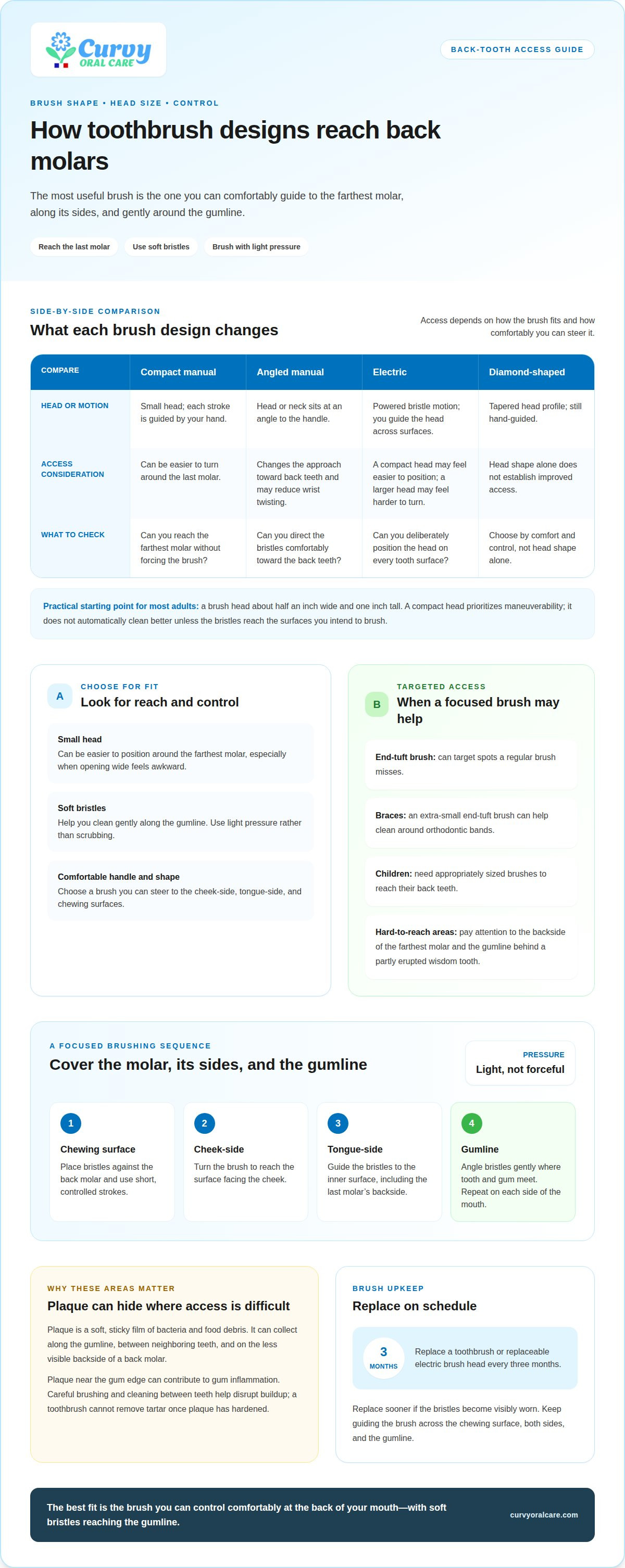
A compact-head toothbrush has a smaller brushing surface than a standard full-size head. Its smaller profile can make it easier to position the bristles around the farthest molar, especially if opening wide feels awkward. For most adults, a head about half an inch wide and one inch tall is a useful size. Compact heads prioritize maneuverability; they don’t automatically clean better unless the bristles reach the surfaces you intend to brush.
Angled-Head Toothbrushes
An angled-head toothbrush places its head or neck at an angle to the handle. This shape can help guide the bristles toward back molars without twisting your wrist as much as a straight brush may require. A compact head reduces bulk, while an angled design changes the approach. Either can improve access; the better option is the one you can control comfortably at the back of your mouth.
Features for Reaching Back Teeth
Look for a small head, soft bristles, and a shape that lets you direct the bristles precisely. The backside of the farthest molar can be especially difficult to reach, and the gumline behind a wisdom tooth may be harder to access when that tooth is partly erupted. Children need appropriately sized brushes to reach their back teeth. For people with braces, an extra-small end-tuft brush can help clean around orthodontic bands.
Brushing Back Molars and the Gumline
To clean a back molar, place the bristles against its chewing surface and use short, controlled strokes. Then turn the brush toward the cheek-side and tongue-side surfaces, including the backside of the last molar. Along the gumline, angle the bristles gently toward where the tooth and gum meet, using light pressure rather than scrubbing. Repeat on each side of the mouth. This focused technique reaches beyond the broad surfaces that are easiest to see and helps clear plaque from areas near the gums.
How Toothbrushes Reach Back Teeth
Head size, bristle softness, shape, and handle control all affect how precisely you can brush a back molar. The right fit lets you guide the bristles to each tooth surface without forcing the brush into place.
Manual Brush Features
For most adults, a head about half an inch wide and one inch tall is a useful starting point. A smaller head can turn more easily near the last molar, while soft bristles clean gently along the gumline. There is no established evidence that diamond-shaped heads reach the back of the mouth more effectively than oval- or square-shaped heads. Choose a handle you can steer comfortably, then adjust its angle to reach the cheek-side, tongue-side, and chewing surfaces.
Electric Toothbrush Maneuverability
Electric toothbrushes move their bristles through powered motion, while manual brushes rely on your hand to create each stroke. With either type, you still need to guide the head across every surface, including the back of the last molar. A compact electric head may feel easier to position in a crowded area; a larger head may cover more surface at once but feel harder to turn. Let access and control guide your choice.
| Option | Head or motion | Access consideration |
|---|---|---|
| Compact manual | Small head, hand-guided | Easy to turn around the last molar |
| Angled manual | Angled neck or head | Changes the approach toward back teeth |
| Electric | Powered bristle motion | Requires deliberate positioning on each surface |
| Diamond-shaped manual | Tapered head profile | Head shape alone does not establish improved access |
Choose a brush that lets you reach the farthest molar and keep soft bristles in contact with the gumline without awkward wrist movement.
Prices in the United States vary by brush type and features, so there isn’t one price for every toothbrush designed for hard-to-reach areas. Compare manual and electric options by head size, shape, and how comfortably you can guide them.
Replace a toothbrush every 3 months. Apply the same interval to a replaceable electric brush head, and replace it sooner if the bristles become visibly worn. A toothbrush for hard to reach back teeth still depends on steady positioning: guide it over the chewing surface, then along both sides and the gumline.
What Happens When Plaque Collects Around Back Teeth
Plaque is a soft, sticky film of bacteria and food debris that forms on tooth surfaces. Around a back molar, it can gather along the gumline, between neighboring teeth, and on the less visible backside. Those areas are easy to overlook, so plaque may remain even when your front teeth feel clean. Regular, careful cleaning helps disrupt this buildup before it hardens.
The gums respond to plaque near their edge. They may become red, tender, swollen, or bleed during brushing. This early inflammation is called gingivitis, a form of gum disease. Plaque along the gumline is a common contributor, but bleeding can have other causes, too. Don’t brush harder to compensate: use soft bristles and gentle, controlled strokes where each tooth meets the gum.
If plaque stays on teeth, minerals in saliva can harden it into tartar, also called calculus. A toothbrush can remove plaque, but not tartar; professional dental cleaning can. Tartar can provide a rough surface where more plaque accumulates, making thorough daily brushing and cleaning between teeth useful parts of prevention. A narrow gap beside a back molar is one example of an area a toothbrush alone may not fully reach.
Gum inflammation can persist or progress in some people, affecting the tissues that support teeth. That’s why gum health deserves attention alongside tooth surfaces. Research has found associations between gum disease and some conditions affecting overall health, but an association does not prove that one condition causes another. The relationship is complex, and research continues to examine how oral inflammation and whole-body health may be connected.
Keep your care practical. Brush gently along the gumline, reach the chewing and outer surfaces of each back molar, and clean between teeth with an appropriate interdental method. If bleeding, swelling, or discomfort persists, seek professional dental advice rather than trying to scrape hardened deposits yourself. Regular dental visits can identify areas needing extra attention and remove tartar that home brushing cannot clear.
Practical Ways to Clean Back Teeth
Follow a repeatable route so you don’t skip the last molars. Each time you brush, work from one side of the mouth to the other, covering the chewing, cheek-side, and tongue-side surfaces. Use a brush head small enough to turn comfortably, with soft bristles and light pressure. A focused sequence helps you notice which surface needs another pass.
For each back tooth, place the bristles on the surface before moving the handle. Brush the chewing grooves with short, controlled strokes, then turn toward the outer and inner sides. At the gumline, angle the bristles gently toward the tooth-gum edge. Avoid forceful scrubbing; pressure can bend the bristles away from the area you’re trying to clean.
A targeted end-tuft toothbrush has an extra-small head for spots a regular brush may not reach easily. Use it alongside your usual toothbrush, not instead of brushing all your teeth. Place its bristle tip against one specific area, such as the backside of the farthest molar, and make small movements along the tooth and gumline.
An end-tuft brush can also help clean around orthodontic bands, implants, and furcations. A furcation is where the roots of a multi-rooted tooth divide. For braces, guide the small head around each band and nearby tooth surface. Around an implant, carefully brush the accessible edges. Use a gentle touch and follow any personalized cleaning instructions from your dental professional.
- Brush the outer surface of each back molar, moving from the gumline toward the chewing edge.
- Turn the brush to clean the tongue-side surface, especially behind the last molar.
- Use short strokes across chewing grooves, then check each side for missed areas.
- Use an end-tuft brush for a specific tight spot, such as around an orthodontic band.
- Clean between teeth separately, since toothbrush bristles may not reach every contact point.
Brush twice daily and follow the same route each time. If a molar remains difficult to reach, adjust your mouth position or brush angle instead of pushing harder. Persistent bleeding, swelling, or pain around a back tooth deserves professional attention. A toothbrush for hard-to-reach back teeth can improve access, but careful positioning and consistent technique make each brushing session more thorough.
Build a Daily Routine That Reaches Every Area
A useful routine is one you can follow without rushing. Pair brushing with another regular habit, such as getting ready for bed, and keep your oral-care tools together in an easy-to-reach place. A consistent setup reduces the chance of forgetting an area when you’re tired or short on time. If you use braces or have dental work, keep any personalized cleaning instructions handy.
Think of your routine as several complementary tasks, not one long brushing session. A toothbrush cleans accessible tooth surfaces, while interdental cleaning reaches the narrow spaces between them. Use floss or another suitable interdental cleaner gently, following each tooth’s shape rather than snapping into the gum. If a tool feels difficult to handle, a dental professional can suggest an approach that suits your mouth and dexterity.
Include your tongue in the routine, too. Gently brush its surface with your toothbrush or use a tongue cleaner, then rinse the tool. This step cleans the tongue itself rather than trying to compensate by brushing your teeth harder. Choose toothpaste and oral-care products that suit your preferences and needs, and keep them close to your toothbrush so they’re easy to use consistently.
Make room for professional dental care, too. Regular visits allow a dental professional to assess your gums, discuss areas you find difficult to clean, and provide care that home brushing cannot. Mention specific concerns, such as a back molar that feels hard to reach or discomfort while cleaning between teeth. Persistent bleeding, swelling, pain, or other changes are also reasons to seek professional advice.
Keep replacement heads in your routine when you use an electric toothbrush. Curvy Oral Care offers replacement brush heads and brush head subscriptions for people who want a convenient way to keep replacement heads available. For a portable option that keeps brushing essentials together, explore this sonic toothbrush, toothpaste, and travel case set.
Keep your routine manageable: use tools that fit your needs, give each task its own attention, and make professional visits part of ongoing care. Small, repeatable habits help oral care feel less like a checklist and more like a practical part of looking after yourself.
Choosing a Portable Toothbrush for Braces and Implants
Brackets, wires, and implant restorations can make daily brushing more involved. A suitable toothbrush can help, but it is only one part of care: careful positioning around each tooth and along the gumline remains important. Use the brush gently and follow any personalized cleaning instructions from your dental professional.
For those who prefer powered brushing, sonic toothbrushes are another option. A powered brush changes how the bristles move, but you still guide the brush head across your teeth. Pause around each back molar and direct the head toward its outer, inner, and chewing surfaces. The goal is controlled coverage, not extra pressure or an assumption that a particular brush automatically reaches every spot.
Brush-head upkeep matters, too. Replacing a worn head helps prevent frayed bristles from interfering with careful brushing. Replacing heads every three months is a useful reminder to plan ahead rather than wait until a head looks heavily worn.
Choose a brush based on the task you need help with. Someone managing braces may value a toothbrush intended for braces, while someone with implants may want an option designed for those needs. If you prefer powered brushing, consider a sonic toothbrush. Regardless of brush type, clean around brackets or implant areas methodically, and use a separate interdental tool for spaces a toothbrush cannot reach. Persistent bleeding, swelling, or pain calls for professional dental advice, not a product change alone.
- Use a brush that fits your oral-care needs and feels manageable to guide.
- Move deliberately around back teeth, brackets, and implant areas.
- Replace worn brush heads and maintain the rest of your daily cleaning routine.
If you’re considering a toothbrush for braces, explore this toothbrush for braces as one option. For questions about toothbrush choices, ask your dental professional.
Make Your Next Brush Choice Count
Build a routine you can maintain through ordinary days, travel, and schedule changes. Notice which habits are easy to continue, then build from there. Consistency matters more than making your routine complicated.
If keeping your essentials together would support that routine, view the toothbrush and travel case set. Choose a toothbrush for hard-to-reach back teeth that fits naturally into the care you want to sustain, and keep making time for your oral health.
Frequently Asked Questions
Is an electric toothbrush better than a manual toothbrush for back molars?
Neither type is automatically better for everyone. Consider how comfortable and controlled brushing feels, especially if hand movement or coordination makes a routine challenging. A dental professional can assess your technique and whether a particular brush style suits your needs. If you use an electric brush, follow its care instructions and keep the brush head clean between uses.
Which toothbrushes are recommended by dentists for hard-to-reach teeth?
There isn’t one recommendation that fits every mouth. A dentist or hygienist can consider your tooth positions, dental work, and brushing challenges before suggesting a brush style. For example, someone with limited range of motion may need a different handle or brushing approach than someone whose main concern is an awkward tooth position. Bring your current brush to an appointment to discuss how it feels to use.
What are the risks of using a toothbrush head that is too large or bristles that are too firm?
A head that feels oversized may make brushing uncomfortable or trigger gagging at the back of the mouth. Bristles that feel too firm can cause discomfort, and pressure may flatten or fray them sooner. Notice whether you tense your jaw, avoid certain areas, or see bristles splaying outward. Those signs can prompt a conversation with a dental professional about a more comfortable brush and gentler technique.
Health & Medical Disclaimer: This content is for general educational purposes and is not a substitute for professional dental or medical advice, diagnosis, or treatment. Consult a qualified healthcare professional about personal concerns or persistent changes in your oral health.

Article by
Aline Peixe Nebot
Aline Peixe Nebot is a Veterinarian and passionate advocate for better oral health, committed to raising awareness of oral health as a matter of public health. She actively promotes the importance of simple, effective oral care routines and works to educate the public about the often-overlooked link between oral health and overall systemic health. Her mission is to make better oral care knowledge accessible to everyone and encourage healthier habits for life.
Disclaimer
Disclaimer: The information provided in this article is intended for general educational and informational purposes only. It is not intended to replace professional medical, dental, or healthcare advice, diagnosis, or treatment.
Some content may be AI-assisted and is provided to support health education and awareness. While we strive to share accurate and up-to-date information, health recommendations and scientific evidence can evolve, and the information presented may not apply to every individual.
The connection between oral health and overall systemic health is an important and developing area of research. Associations discussed in this article should not necessarily be interpreted as proof of cause and effect.
Always consult a qualified dentist, physician, or other healthcare professional regarding your individual health, symptoms, medications, or treatment decisions. Do not delay or discontinue professional care based on information presented in this article.
This content is for education and awareness—not diagnosis or treatment.