
Toothbrush for Hard-to-Reach Places: Reach Back Molars and the Gumline
What if reaching your back molars had less to do with brushing harder and more to do with where your brush can comfortably go? If you’re looking for a toothbrush for hard to reach places, you’re not alone. Back teeth sit beyond your direct view, and the gumline is easy to skim past during a rushed routine.
Pressing harder doesn’t make brushing more effective. Gentle, deliberate movements help you clean without making extra pressure the focus. This guide explains why certain areas are easy to miss, how to position bristles along the gumline, and which brush features may make access more comfortable.
We’ll also look at brush shape, including angled toothbrush designs, and how it works alongside good technique. The American Dental Association recommends holding the brush at a 45-degree angle toward the gums and using gentle, short strokes. A well-chosen toothbrush can support that approach, but it cannot fully clean the spaces between teeth, so interdental cleaning remains part of a complete daily routine.
Key Takeaways
- Back molars, crowded areas, and the gumline can be easy to miss because they’re harder to see and reach comfortably.
- Use light pressure and controlled movements to guide the bristles across tooth surfaces and along the gumline.
- A toothbrush for hard to reach places may make positioning easier, but brush design works best alongside a steady technique.
- Follow a repeatable route around your outer, inner, and chewing surfaces, pausing at the back molars and gumline.
- Curvy’s angled manual and sonic toothbrushes are designed to help access challenging areas. Interdental cleaning is still a separate part of daily care.
Why a Toothbrush Can Miss the Back Molars and Gumline
Hard-to-reach areas are tooth surfaces that can be difficult to see, position a brush against, or clean comfortably. They may include the far sides of back molars, the narrow edge where teeth meet the gums, and crowded spots where teeth sit close together. Their position can make them easier to skim over during routine brushing, even when you’re making a careful effort.
Dental plaque is a soft, sticky film of bacteria and other material that forms on teeth and can collect along the gumline. If plaque remains there, it can irritate the gums. That’s why a thorough routine needs to reach beyond the broad, visible surfaces of the front teeth.
Gum health is also part of overall health. Research has found associations between gum disease and some health conditions, but an association alone doesn’t prove that one causes the other. Researchers continue to study these relationships.
Access depends on more than effort. Brush-head size and shape, the angle of approach, and how comfortably you can move the brush all play a part. A general overview of toothbrush anatomy and types can help explain how brush designs vary. For your routine, the useful choice is one you can guide steadily around your own mouth.
Why back molars are easy to overlook
Back molars sit near the end of the dental arch, where they’re harder to see directly and can be awkward to reach without changing the brush’s position. Depending on your mouth and how you hold the brush, your cheek, jaw position, or a bulky-feeling brush head may limit comfortable movement.
Check whether the brush reaches the last molar’s outer, inner, and chewing surfaces instead of assuming a quick sweep covers them all. Crowded teeth can also make some surfaces harder to approach. Brushing carefully helps clean exposed tooth surfaces, while cleaning between teeth requires a separate interdental method.
Why the gumline needs careful attention
The gumline is the narrow border where each tooth meets the gum tissue. Plaque can collect there, especially if brushing passes over the tooth without bringing the bristles close to this edge. Place the bristles gently: pushing them into the gums can feel uncomfortable and won’t make cleaning more precise.
Gum inflammation means the gum tissue is irritated and may look red, feel tender, or bleed. These signs can have different explanations and don’t establish a diagnosis on their own. Persistent bleeding or swelling deserves professional evaluation. For more on how brush design relates to cleaning, the topic of an angled toothbrush for plaque removal connects access with bristle positioning, without making brush shape a substitute for technique.
Use these areas as deliberate checkpoints: the last molars, the gumline around each tooth, and crowded spots that are easy to miss. A toothbrush for hard to reach places may help with positioning, but noticing where access breaks down is the first step toward a more consistent routine.
How Brush Position and Gentle Technique Improve Access
More pressure isn’t the answer to a missed surface. Force can make brushing uncomfortable without helping the bristles reach a spot more precisely. Instead, focus on where the bristles touch, how they’re angled, and whether you’re moving methodically across each part of your mouth.
At the gumline, tilt the bristles gently toward the edge where tooth meets gum. The American Dental Association recommends a 45-degree angle toward the gums and short, gentle strokes. Use this as a guide, adjusting for the tooth, brush, and shape of your mouth. Aim for comfortable contact rather than forcing a fixed position, and let the bristle tips do the work.
A toothbrush cleans tooth surfaces; interdental cleaning is needed to clean between teeth. Brushing the surfaces you can see is important, but it doesn’t complete the routine. Give attention to the gumline and the backs of teeth, then use an appropriate method to clean between them.
Positioning the brush along the gumline
Place the bristles where each tooth meets the gum, using light pressure. Work across a few teeth at a time, then shift along the arch so the brush doesn’t jump over a section. A steady route, such as moving from one side to the other, makes it easier to notice whether you’ve covered the gumline.
If brushing causes persistent pain or bleeding, don’t try to solve it by pressing harder or repeatedly changing the angle. Seek professional advice, especially if the symptom continues.
Reaching the inner and back surfaces
For inner surfaces, turn the brush so the bristles meet the tooth rather than stretching your wrist or pushing the handle into your cheek. At the back, reposition your hand and brush head in small adjustments. On a last molar, for example, approach the outer and chewing surfaces separately so the head can sit comfortably against each one.
Short, controlled movements help you keep track of bristle contact instead of sweeping quickly past a difficult spot. If a straight brush feels awkward to maneuver, an angled design is one option that may support access. You can explore why an angled toothbrush can improve access as you consider which shape feels manageable for your routine.
Make access a matter of placement, not force. Pause at the gumline, turn the brush for inner surfaces, and deliberately reach the last molars. A toothbrush for hard to reach places can be part of that approach, but technique and a repeatable route still matter. If you’re considering a sonic option, Curvy’s sonic toothbrush and toothpaste combination is one product pairing to explore.
What a Toothbrush for Hard-to-Reach Places Can, and Cannot, Do
Brush design can change how a toothbrush feels to maneuver, but it doesn’t determine how thoroughly you use it. A straight brush may feel familiar and predictable. An angled design may offer a different approach to surfaces that feel awkward to reach. Compare them by comfort and control: can you position the bristles where you intend without twisting your wrist uncomfortably or pressing the brush against your cheek?
Think of shape as a possible aid to positioning, not a shortcut. A toothbrush only cleans surfaces its bristles reach, and a design that feels easy to guide can’t make up for hurried brushing or missed areas. Neither a straight nor an angled brush replaces floss or another suitable interdental method. Bristles don’t fully clean the tight spaces between teeth, so include a separate way to clean those areas.
Effective plaque removal at home depends on careful brushing and other daily-care habits. A brush can help you access tooth surfaces, but your technique and consistent coverage remain central. The most useful design is one that lets you move comfortably through your routine and pay attention to the places you tend to miss.
When an angled brush head may be useful
An angled brush may help some people approach a difficult surface from a more comfortable direction. For example, if reaching the outer side of a back tooth with a straight brush makes your wrist feel strained, a different angle may make it easier to guide the bristles into place. Notice whether the brush feels manageable across different parts of your mouth, since comfort and access vary from person to person.
An angled design is an aid to access, not a treatment or a guarantee of a particular result. You still need to guide the bristles deliberately and check that you’ve covered each surface. If a brush shape feels awkward, it may not suit your routine, even if it works well for someone else.
Choosing between manual and sonic brushing
Manual and sonic brushes work differently, but neither removes the need to pay attention to placement. With a manual brush, you guide its movement yourself. A sonic brush also needs to be positioned so its bristles contact the tooth surfaces you intend to clean. Consider what feels comfortable to hold and helps you follow a steady route around your mouth.
There’s no single format that fits everyone. Choose based on comfort and control, then check that your routine includes the outer, inner, and chewing surfaces. Whichever brush you prefer, keep interdental cleaning as a separate step. Brush shape or operation is not a substitute for deliberate daily care.
A Simple Routine for Brushing Difficult Areas Every Day
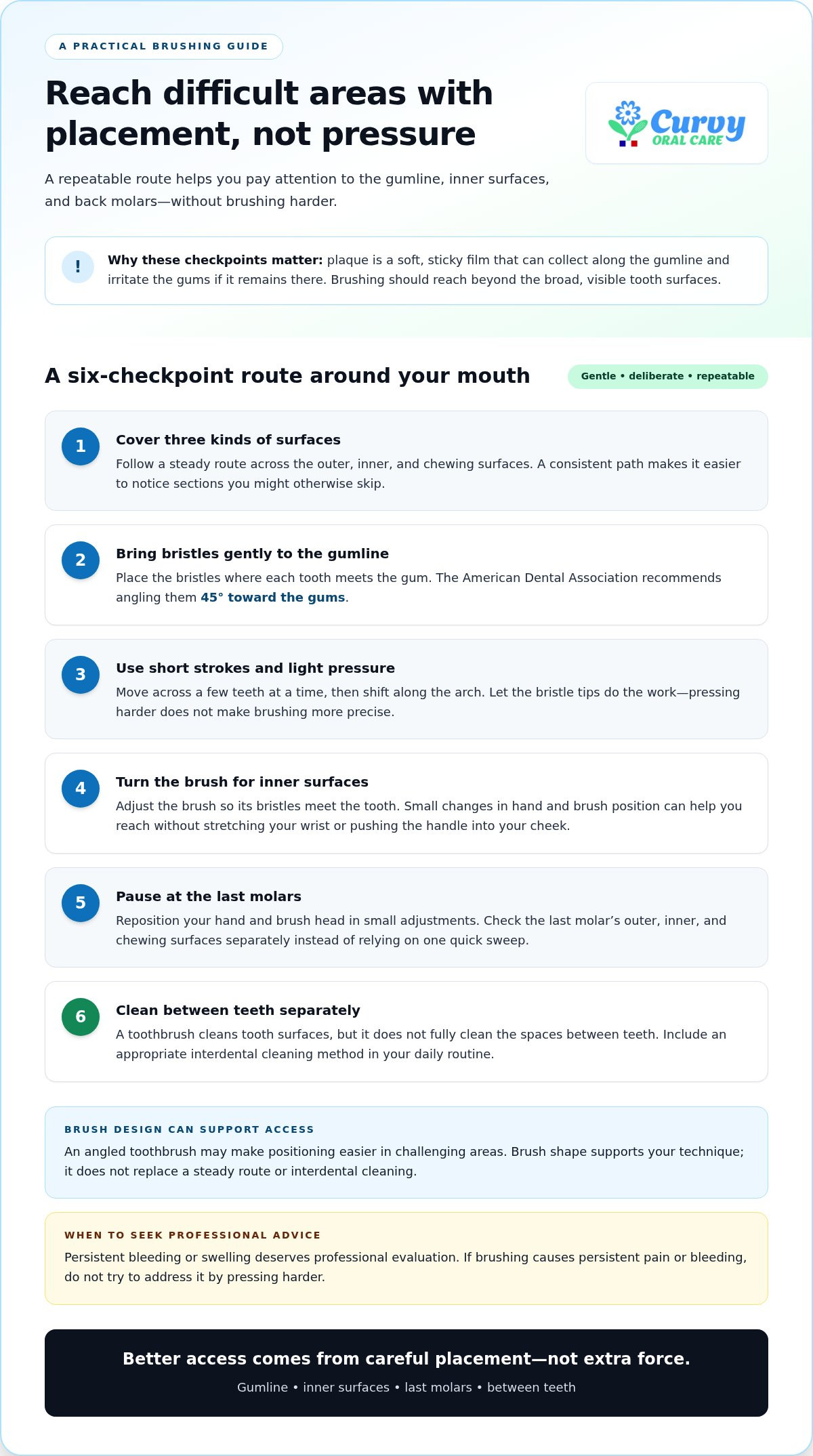
A familiar route makes it easier to notice which surfaces you’ve covered and where you need to reposition the brush. Rather than moving randomly from tooth to tooth, start in one area and work around your mouth in the same order each time. Treat the gumline and the rearmost molars as deliberate checkpoints, not afterthoughts.
A step-by-step approach to hard-to-reach surfaces
Begin on the outer surfaces and move along one side, across the front, and toward the other side. Then turn the brush to reach the inner surfaces before finishing with the chewing surfaces. At each section, angle the bristles comfortably toward the gumline and use gentle, controlled movements. This sequence helps prevent hurried skips without requiring a strict timer.
- Start at one side and follow the outer surfaces to the other.
- Reposition the brush for inner surfaces, especially behind the front teeth.
- Brush the chewing surfaces, then check the last molars on both sides.
- Use a lighter grip if your hand tends to press or your reach feels awkward.
For a back molar, adjust the brush head and your jaw position until the bristles sit against the surface. Don’t stretch to the point of strain or push the brush into your cheek. Small changes in grip or approach can make contact easier to maintain. If a toothbrush for hard to reach places feels easier to maneuver, it can support this routine, but the same deliberate route still matters.
Brushing is one part of daily care. Use floss or another suitable interdental cleaning method for spaces between teeth, since a toothbrush can’t clean those spaces fully. Tongue cleaning is a separate habit you can add to your routine; it isn’t a function of the toothbrush.
When brushing difficulty or gum changes persist
Some awkwardness may improve with a more comfortable brush position, but ongoing symptoms shouldn’t be managed by changing technique alone. Seek professional dental advice for persistent bleeding, swelling, pain, or receding gums. These signs don’t establish a diagnosis by themselves. A dental professional can assess what’s happening and offer guidance suited to your mouth.
Regular dental visits complement home prevention. They give you an opportunity to discuss areas you find difficult to clean, ask for personalized brushing guidance, and have changes in your oral health evaluated. If discomfort makes it hard to brush a particular area, mention that rather than avoiding it indefinitely.
In short: brush outer, inner, and chewing surfaces, pause at the gumline and back molars, then clean between teeth and your tongue separately.
To bring an angled sonic toothbrush and toothpaste into your routine, explore Curvy’s sonic toothbrush and toothpaste combination.
How Curvy's Angled Toothbrush Fits Into a More Complete Routine
A toothbrush is one part of daily oral care, and its shape can influence how comfortably you reach different areas. Curvy Oral Care offers angled manual and sonic toothbrushes designed to help users access areas that may be difficult to reach with a conventional straight brush. The design supports positioning; it doesn’t promise a particular health outcome.
Using brush design as support, not a shortcut
Whichever brush you choose, work carefully across the outer, inner, and chewing surfaces, and make a deliberate pass along the gumline. An angled design may feel easier to maneuver toward a back tooth for some users. It still depends on gentle pressure, considered placement, and a routine that doesn’t skip surfaces. A brush can support access, but it can’t do the work of consistent brushing for you.
Curvy’s angled manual and sonic options offer different formats within this access-focused design. Comfort and ease of use are personal. Notice whether you can guide the brush without straining your hand or pushing it against your cheek. For a broader look at technique and access, see the angled toothbrush guide from gumline to molars.
Small habits that support lasting oral care
The American Dental Association recommends brushing twice a day with a soft-bristled toothbrush and using a technique that reaches the teeth and gumline. Choose toothpaste suited to your needs and follow its directions. After brushing, clean between teeth with floss or another suitable interdental method. A toothbrush can’t replace this step because its bristles don’t fully clean the spaces between teeth.
Tongue cleaning is another separate habit you can add. Regular dental visits complement home care and give you a chance to discuss your brushing technique or areas that remain difficult to clean. If bleeding, swelling, pain, or gum recession persists, seek professional dental advice rather than trying to diagnose the cause yourself.
Small habits add up: brush consistently, clean between teeth, include your tongue, and keep up with dental visits. Prevention starts with a routine you can repeat comfortably. To explore an angled sonic option alongside toothpaste, view Curvy’s sonic toothbrush and toothpaste combination.
Make Your Next Brushstroke More Intentional
Your next step doesn’t have to be a complete routine overhaul. Choose one spot you often rush past, such as the gumline behind a back tooth, and approach it calmly at your next brushing. That small adjustment can help turn awareness into a habit.
If you’re considering a toothbrush for hard to reach places, focus on whether its shape feels comfortable to guide, not on expecting the brush to do the work for you. The right tool fits into a gentle, repeatable routine and makes careful brushing feel manageable.
Explore an angled sonic toothbrush and oral-care essentials as you shape a routine that works for you. Keep showing up for your oral health, one thoughtful brush at a time.
Frequently Asked Questions
Can a toothbrush reach the back molars?
Yes. Position the head against each surface and follow a deliberate route. Try brushing the chewing surface first, then adjust to reach the outer and inner sides. Access can vary with your mouth and brush design, and pressing harder won’t fix an awkward angle. If you consistently can’t reach an area comfortably, ask a dental professional to demonstrate a suitable approach.
Is an angled toothbrush better for hard-to-reach places?
An angled toothbrush may help some people position the bristles toward a difficult surface, but it isn’t automatically the best fit for everyone. Consider whether you can hold it comfortably, guide it with control, and use it consistently without force. The phrase toothbrush for hard to reach places describes an access goal, not a guaranteed result. Brush shape also doesn’t replace cleaning between teeth with an appropriate interdental method.
Can a toothbrush clean between teeth?
A toothbrush cleans tooth surfaces, but it generally can’t fully clean the tight spaces between teeth. Add floss or another suitable interdental cleaning method to your daily routine, guiding it carefully rather than snapping it against the gums. If you have closely spaced teeth, dental work, or difficulty handling floss, a dental professional can help you choose an approach that fits your mouth and dexterity.
Should I keep brushing if my gums bleed?
Continue cleaning gently rather than scrubbing or avoiding the area, but arrange professional advice if bleeding persists. Bleeding can have different causes, so it isn’t enough on its own to diagnose a condition. Seek dental guidance for ongoing changes, especially if you also notice swelling, pain, or gum recession. A professional can assess the symptoms and help you adjust your routine without relying on guesswork.
Do I still need to floss if I use a sonic toothbrush?
Yes. Sonic brushing doesn’t make interdental cleaning unnecessary. The brush can clean tooth surfaces, while the spaces between teeth need their own cleaning approach. Include floss or another suitable interdental tool in your routine, even if you use a sonic model. If floss is hard to manage or doesn’t seem to fit comfortably, ask a dental professional about options that suit your teeth and dexterity.
How often should I replace a toothbrush or brush head?
Follow the replacement guidance provided by the toothbrush or brush-head manufacturer, and replace it sooner if the bristles look visibly worn or splayed. Worn bristles may be harder to position effectively against tooth surfaces. Replacement needs can differ with your brushing habits and the product you use, so avoid assuming every brush follows the same schedule. Your dental professional can offer advice tailored to your routine and oral-health needs.
Health & Medical Disclaimer: This content is for educational purposes only and is not a substitute for professional dental or medical advice, diagnosis, or treatment. Consult a qualified healthcare professional with questions about your health.

Article by
Aline Peixe Nebot
Aline Peixe Nebot is a Veterinarian and passionate advocate for better oral health, committed to raising awareness of oral health as a matter of public health. She actively promotes the importance of simple, effective oral care routines and works to educate the public about the often-overlooked link between oral health and overall systemic health. Her mission is to make better oral care knowledge accessible to everyone and encourage healthier habits for life.
Disclaimer
Disclaimer: The information provided in this article is intended for general educational and informational purposes only. It is not intended to replace professional medical, dental, or healthcare advice, diagnosis, or treatment.
Some content may be AI-assisted and is provided to support health education and awareness. While we strive to share accurate and up-to-date information, health recommendations and scientific evidence can evolve, and the information presented may not apply to every individual.
The connection between oral health and overall systemic health is an important and developing area of research. Associations discussed in this article should not necessarily be interpreted as proof of cause and effect.
Always consult a qualified dentist, physician, or other healthcare professional regarding your individual health, symptoms, medications, or treatment decisions. Do not delay or discontinue professional care based on information presented in this article.
This content is for education and awareness—not diagnosis or treatment.