
The Best Plaque Removing Toothbrush: A 2026 Guide to Total Oral Health
What if the reason you're still seeing plaque at your dental checkup isn't how long you brush, but the physical shape of your bristles? You've likely felt the frustration of brushing twice daily only to have your hygienist point out "missed spots" around your back molars or along the gumline. Finding the best plaque removing toothbrush isn't just about raw power; it's about reaching the areas where traditional straight brushes simply can't go. When plaque sits undisturbed, it hardens into tartar and can lead to inflammation that research suggests may be linked to wider health concerns.
We know that choosing between manual and sonic options feels overwhelming, especially if you're worried about recession from brushing too hard. You deserve a routine that feels effective rather than like a guessing game. This 2026 guide reveals how the intersection of sonic technology and ergonomic geometry transforms your daily habit. You'll learn how to disrupt biofilm with precision, protect your delicate gum tissue, and establish a simple routine that supports long-term health. We're moving beyond basic cleaning to a proactive approach that keeps your mouth feeling fresh and your dental reports clean.
Key Takeaways
- Understand why plaque is a persistent biofilm and how traditional straight brushes often miss critical "hidden zones" like the gumline and back molars.
- Discover how a high-performance plaque removing toothbrush uses sonic vibrations to create micro-bubbles that reach deep into the gingival margin.
- Learn why tilting your brush at a 45-degree angle is the gold standard for gum health and how ergonomic design can simplify this technique.
- Explore the benefits of the Curvy Y Angled Sonic Toothbrush, which combines patented geometry with EMF-free technology for a safer, more effective clean.
- Shift from a reactive to a proactive routine that supports whole-body health by preventing inflammation before it starts.
Understanding Dental Plaque: Why Your Current Brush Might Be Missing the Mark
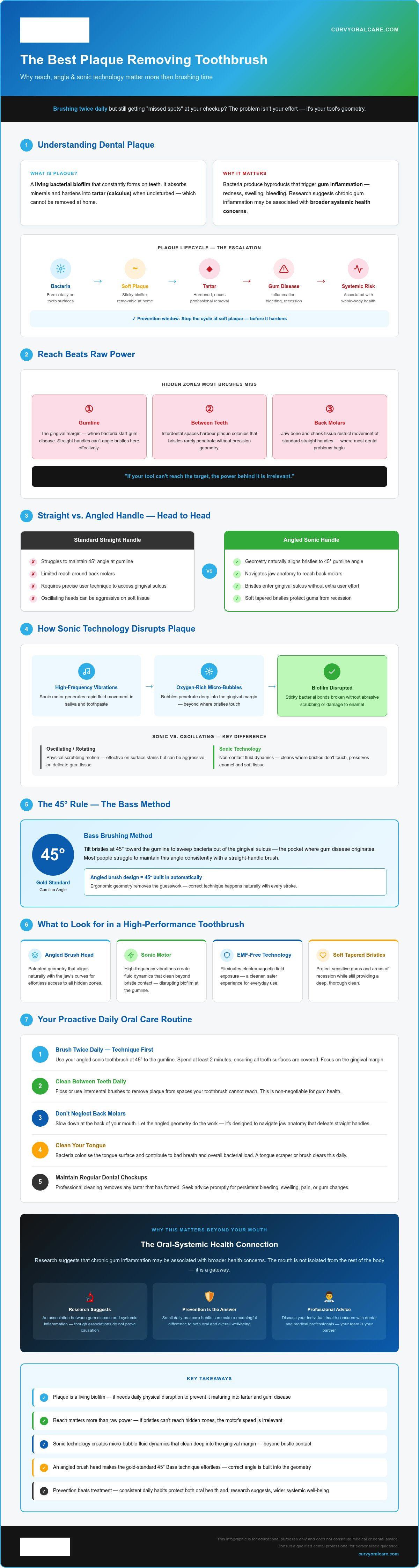
Plaque isn't just a film that appears after a meal; it's a sophisticated, sticky biofilm of bacteria that constantly forms on your teeth. Think of it as a living ecosystem that requires physical disruption to stay under control. If you don't break up this colonial structure every day, it absorbs minerals from your saliva and hardens into tartar, also known as calculus. Once plaque reaches this stage, no amount of home brushing can remove it. You're then left waiting for a professional dental cleaning to scrape away the buildup.
The Problem with Plaque Biofilm
Bacteria within this biofilm are far from idle. They produce metabolic byproducts that trigger your body’s inflammatory response, leading to redness, swelling, and bleeding gums. Finding an effective plaque removing toothbrush is about more than just surface level cleaning; it's about disrupting the bacteria that hide at the gumline. This isn't just a localized issue. Research suggests that chronic gum inflammation is associated with broader wellness concerns, as the mouth serves as a gateway to the rest of the body. Plaque is a living ecosystem that requires physical disruption to prevent it from maturing into a threat to your oral and systemic well-being.
Why Reach Matters More Than Power
It's a common misconception that a faster motor automatically makes for a better plaque removing toothbrush. In reality, even the highest frequency vibrations are ineffective if the bristles never make contact with the bacteria. This is where the status quo fails. Straight handled brushes often struggle to navigate the anatomical curves of the human jaw, especially in the hidden zones. These areas include the gingival margin, the spaces between teeth, and the notoriously difficult back molars.
The back molar challenge is where most dental problems begin because the jaw bone and cheek tissue limit the movement of a standard straight brush. If your tool can't reach the target, the power behind it is irrelevant. To see how to navigate these tricky areas, you can follow an Effective Plaque Removal at Home: Step-by-Step Guide. Precision always beats raw force when it comes to long term oral health.
The Science of Precision: How Angled Sonic Technology Disrupts Plaque
High-frequency sonic vibrations do more than just move bristles across a surface. They create non-contact fluid dynamics that traditional brushes can't replicate. These vibrations churn your saliva and toothpaste into oxygen-rich micro-bubbles. This process allows a high-quality plaque removing toothbrush to reach deep into the gingival margin, which is the small gap between your teeth and gums where bacteria thrive. It's about cleaning where the bristles don't even touch.
Contrast this with mechanical oscillating brushes that rely on a physical scrubbing motion. While effective at removing surface stains, oscillating heads can be quite aggressive on delicate soft tissue. Sonic technology uses high-frequency disruption to break apart the sticky bonds of biofilm. It's a smarter way to clean that preserves your enamel while ensuring the gumline stays healthy and free of irritation.
The 45-Degree Advantage
The Bass Method is the gold standard of brushing techniques. It requires you to tilt your bristles at a 45-degree angle toward the gumline to sweep away hidden bacteria. Most people find it difficult to maintain this precise tilt with a standard straight handle. An angled brush head solves this geometric puzzle by naturally aligning with your mouth's anatomy. It ensures that the bristles reach into the sulcus, the pocket where gum disease often starts. You can read more about Why Use an Angled Toothbrush? The Science of Reaching Every Surface to see how this design changes your results.
Safe Sonic Vibrations
Precision in frequency is just as important as the angle. The right sonic speed disrupts plaque biofilm without causing discomfort or damaging dental work. We recommend using soft, tapered bristles to protect those with receding gums while still providing a deep clean. Safety also extends to the motor itself. The next evolution in oral care involves EMF-free sonic toothbrushes. These devices eliminate electromagnetic field exposure, providing a cleaner experience for your body and your teeth.
Investing in the most advanced plaque removing toothbrush technology ensures you're taking the best possible care of your daily health.
Key Features of a High-Performance Plaque Removing Toothbrush
When you're searching for a high-performance plaque removing toothbrush, the technical specs often overshadow the physical design. But a powerful motor is useless if the handle is difficult to hold. Ergonomics are the foundation of good technique. A non-slip, comfortable grip allows you to maintain the precise 45-degree angle needed to clean the gumline without your hand cramping or the brush slipping. Control is what separates a thorough clean from a rushed one.
Bristle quality is the next pillar of effectiveness. Tapered, soft bristles are the gold standard for modern oral care. They're designed to slip under the gumline safely, mimicking the precision of a professional dental tool. Hard bristles are a relic of the past; they often lead to gum recession and enamel wear. To keep your plaque removing toothbrush at peak performance, you must follow the 3-month rule. Once bristles fray, they lose their ability to reach into the tight crevices where biofilm hides.
Manual vs. Sonic: Which is Better for Plaque?
Manual angled brushes provide tactile feedback and total control over pressure. This is often helpful for those with extreme sensitivity who need to feel every movement. However, a sonic angled brush is the undisputed leader for efficiency. While a manual user might achieve 300 strokes per minute, a sonic motor delivers thousands of vibrations that disrupt plaque through fluid dynamics. It's the difference between a hand saw and a power tool. Both get the job done, but one does it with significantly less effort and much greater consistency.
The Role of EMF-Free Innovation
Most electric toothbrushes use motors that emit electromagnetic fields (EMFs) directly inside your mouth. While these levels are often low, proactive health means minimizing unnecessary exposure whenever possible. Curvy Oral Care prioritizes EMF-free motors to ensure your non-toxic routine stays truly clean. Along with BPA-free plastics, this focus on material safety represents the modern standard for personal care. You shouldn't have to trade systemic safety for oral hygiene. Choosing a tool that values both performance and biological safety is a simple way to support your long-term wellness.
Maximizing Your Results: A Daily Routine for a Plaque-Free Smile
Owning a high-performance plaque removing toothbrush is only half the battle. The other half is how you apply it to your daily life. Most people treat brushing as a chore to be finished quickly, but effective oral care is a precision skill. To truly disrupt biofilm, you must shift your focus from scrubbing the visible surfaces to cleaning the areas where bacteria actually hide.
Follow these four steps to optimize your results:
- The 45-Degree Tilt: Position your bristles at an angle toward the gumline. This allows the sonic vibrations to sweep under the gingival margin rather than just bouncing off the enamel.
- Quadrant Pacing: Divide your mouth into four sections. Spend 30 seconds on each, giving equal attention to the front, back, and biting surfaces.
- Zero Pressure: Let the motor do the work. Pressing too hard can lead to gum recession and actually stops the bristles from vibrating at their intended frequency.
- Tongue Maintenance: Bacteria don't just live on teeth. Gently clean your tongue to remove residual microorganisms that can migrate back to your gums.
The Two-Minute Rule
Duration is non-negotiable for biofilm disruption. It takes a full 120 seconds for sonic vibrations to create the micro-bubbles necessary for a deep clean. Short sessions leave behind mature colonies of bacteria that quickly harden into tartar. Using a tool with built-in haptic pacing ensures you don't cut your routine short. This consistency creates a psychological anchor for your morning and night, transforming a basic task into a powerful health habit. When you commit to the full two minutes, you're investing in your systemic well-being one quadrant at a time.
Cleaning Beyond the Visible
The lingual surfaces, or the side of your teeth facing the tongue, are often the most neglected areas. Plaque accumulates here just as easily as on the front, yet it remains out of sight. You must also navigate the brush head to the very back of the wisdom tooth area, where the jawbone often makes access difficult. If you notice your gums bleeding, don't stop brushing. This is a signal from your body that inflammation is present and you need to be more thorough, not less. Consistent, gentle cleaning in these "hidden zones" is the only way to reverse early inflammation.
To make this routine automatic, many users switch to a Y angled sonic toothbrush that naturally handles the 45-degree tilt for you.
Why the Curvy Y Angled Sonic Toothbrush is the Modern Choice
The evolution of oral hygiene has arrived at a critical junction. We've identified that the biggest obstacle to a healthy mouth isn't usually a lack of effort, but a lack of access. Standard straight brushes force your wrist into awkward positions to reach the "hidden zones" where bacteria thrive. The Y Angled Sonic Toothbrush Emf Free was engineered specifically to bridge this gap. It's not just another gadget; it's a precision tool designed to make professional-grade cleaning accessible in your own bathroom. By combining sonic power with a patented physical tilt, it stands as the premier plaque removing toothbrush for those who value long-term wellness.
Patented Geometry for Total Access
Traditional brushes require you to manually calculate a 45-degree angle while navigating around your cheeks and tongue. This is physically difficult, especially at the very back of the mouth. The unique "Y" shape of the Curvy brush head allows it to wrap around the molars, ensuring that the bristles reach the gumline on both the cheek and tongue sides simultaneously. You'll notice the difference immediately. The sensory experience is one of total coverage rather than a series of missed spots. The Curvy Y Angled brush turns a difficult technique into an effortless habit. It removes the guesswork from your routine and replaces it with the confidence that you've reached every anatomical curve.
A Subscription to Better Health
We've learned that even the most effective plaque removing toothbrush fails when the bristles become frayed or overloaded with bacteria. Our subscription model removes the mental burden of tracking replacement dates. By receiving fresh brush heads on a regular schedule, you ensure your cleaning efficiency never dips. This automated delivery system is a cost-effective way to maintain a high standard of care for the entire family. It reflects our core mission: making oral health a simple, proactive part of your whole-body wellness strategy. You don't have to worry about the 3-month rule because the solution arrives at your door exactly when you need it.
Investing in your oral health today is the most practical step you can take for your future well-being. Prevention is always more comfortable and more affordable than waiting for a problem to develop. By choosing a tool that prioritizes precision, material safety, and consistency, you're protecting more than just your smile. You're supporting your body's natural defenses and ensuring a cleaner, healthier tomorrow. Take the first step toward a transformative routine and experience the precision of a brush built for the way your mouth is actually shaped.
Take Control of Your Long-Term Oral Wellness
Transforming your oral care routine is one of the most proactive steps you can take for your daily health. We've explored how effective cleaning isn't just about raw power; it's about anatomical access and disrupting stubborn biofilm in those difficult hidden zones. By combining a patented 45-degree angled head with advanced EMF-free motor technology, you remove the guesswork from your morning and night. This approach ensures your gumline and back molars receive the precise attention they need to stay healthy. Choosing the right plaque removing toothbrush means you're making a commitment to whole-body wellness that pays dividends at every dental checkup.
Maintaining this high standard is effortless with flexible subscription plans that deliver fresh bristles exactly when they're required. It's time to move past the limitations of traditional straight handles and embrace a smarter, more effective way to brush. Upgrade to the Y Angled Sonic Toothbrush for a deeper clean and experience the satisfaction of a truly thorough routine. Your future self will thank you for the consistent, science-backed habits you begin today.
Frequently Asked Questions
What is the best type of toothbrush for removing plaque?
A sonic toothbrush with an angled head is the most effective plaque removing toothbrush available today. The high-frequency vibrations disrupt biofilm through fluid dynamics, while the angled design ensures you reach the gumline and back molars. This combination addresses both the biological and geometric challenges of oral hygiene. It's significantly more efficient than a manual straight brush, which requires perfect manual dexterity to achieve similar results.
Can a sonic toothbrush remove tartar once it has hardened?
No, a sonic toothbrush cannot remove tartar, also known as dental calculus, once it has hardened on the teeth. Tartar is a mineralized deposit that bonds strongly to the enamel and requires professional dental tools to scrape away safely. The primary role of a high-performance brush is prevention. It disrupts the soft biofilm daily so it never has the chance to absorb minerals and solidify into tartar.
Why is an angled toothbrush better for plaque removal than a straight one?
An angled toothbrush is superior because it naturally aligns with the anatomy of your mouth and the 45-degree tilt recommended by dentists. Straight handles often force the wrist into uncomfortable positions, making it difficult to reach the lingual surfaces and back molars. The patented angle of a Curvy brush automates the correct technique, ensuring that bristles reach deep into the gingival margin where traditional straight brushes often fail.
How often should I replace my plaque-removing toothbrush head?
You should replace your toothbrush head every three months to maintain peak cleaning efficiency. Over time, bristles become frayed and lose the stiffness required to physically disrupt plaque colonies. Worn bristles also harbor bacteria and can become abrasive on gum tissue. Utilizing a subscription plan is the easiest way to ensure you always have a fresh, effective plaque removing toothbrush head ready exactly when the old one reaches its expiration.
Is a sonic toothbrush safe for people with sensitive or receding gums?
Yes, sonic toothbrushes are highly safe and often recommended for those with sensitive or receding gums. Unlike oscillating brushes that use a mechanical scrubbing motion, sonic technology uses high-frequency vibrations that are gentle on soft tissue. When paired with soft, tapered bristles and light pressure, a sonic brush effectively removes plaque without the aggressive friction that can exacerbate gum recession or cause discomfort during your daily routine.
Does a plaque-removing toothbrush help with bad breath?
Effective plaque removal is a primary defense against bad breath, also known as halitosis. Most mouth odors are caused by volatile sulfur compounds produced by bacteria living in plaque biofilm and on the tongue. By using a high-performance plaque removing toothbrush to clean the gumline and back molars, you eliminate the source of these odors. Consistently disrupting these bacterial colonies keeps your mouth feeling fresh and your breath neutral.
What is an EMF-free toothbrush and why does it matter?
An EMF-free toothbrush uses a motor designed to emit zero or negligible electromagnetic fields during operation. Since you hold an electric toothbrush inside your mouth, very close to sensitive tissues and the brain, many proactive users prefer to minimize unnecessary radiation exposure. Curvy Oral Care prioritizes this technology to offer a non-toxic oral care experience. It represents a modern, safety-first approach to wellness that doesn't compromise on cleaning power.
How long does it take to see results from a better plaque removal routine?
You'll likely notice a "dentist-clean" feeling in your mouth immediately after the first session with a sonic angled brush. Within two weeks of consistent use, most people observe a visible reduction in gum redness and minor bleeding. Long-term results, such as healthier reports during professional checkups, typically become evident within six months. Consistency is the key to transforming your oral health and supporting your body's overall inflammatory balance.

Article by
Aline Peixe Nebot
Aline Peixe Nebot is a Veterinarian and passionate advocate for better oral health, committed to raising awareness of oral health as a matter of public health. She actively promotes the importance of simple, effective oral care routines and works to educate the public about the often-overlooked link between oral health and overall systemic health. Her mission is to make better oral care knowledge accessible to everyone and encourage healthier habits for life.
Disclaimer
Disclaimer: The information provided in this article is intended for general educational and informational purposes only. It is not intended to replace professional medical, dental, or healthcare advice, diagnosis, or treatment.
Some content may be AI-assisted and is provided to support health education and awareness. While we strive to share accurate and up-to-date information, health recommendations and scientific evidence can evolve, and the information presented may not apply to every individual.
The connection between oral health and overall systemic health is an important and developing area of research. Associations discussed in this article should not necessarily be interpreted as proof of cause and effect.
Always consult a qualified dentist, physician, or other healthcare professional regarding your individual health, symptoms, medications, or treatment decisions. Do not delay or discontinue professional care based on information presented in this article.
This content is for education and awareness—not diagnosis or treatment.