
Stop Bleeding Gums: How to Choose a Toothbrush and Brush Gently
What if brushing harder is the last thing bleeding gums need? If you’ve noticed blood while brushing, it’s natural to wonder whether your technique or toothbrush is to blame. A stop bleeding gums toothbrush routine starts with less pressure, not more, but bleeding can also have other contributors, including plaque buildup and gum inflammation.
Small changes can make daily care gentler and more thorough. A soft-bristled brush and careful cleaning along the gumline can help remove plaque without scrubbing. Still, bleeding that keeps happening deserves attention, even when you brush gently.
This guide explains common reasons gums bleed without trying to diagnose the cause, how to choose a toothbrush, and how to clean the gumline and hard-to-reach areas with a light touch. You’ll also learn when persistent bleeding or other changes are a reason to seek professional advice. The aim is simple: build a routine that cleans effectively, cares for your gums, and helps you know when to ask for expert guidance.
Key Takeaways
- Bleeding can have several possible contributors, so treat it as a signal to pay attention, not a diagnosis.
- A soft-bristled manual or sonic toothbrush can support a gentle routine without harder scrubbing.
- A practical stop bleeding gums toothbrush routine includes gumline care, interdental cleaning, and tongue cleaning.
- Cleaning back molars and other hard-to-reach areas matters for thorough plaque removal.
- Ongoing bleeding, swelling, pain, or other changes are reasons to seek professional dental advice.
Bleeding Gums and Toothbrushes: What the Symptom Can, and Cannot, Tell You
You rinse your toothbrush and spot pink or red in the sink. It can be unsettling, but it isn’t a reason to blame yourself or immediately assume the worst. Bleeding gums are a symptom with several possible contributors, not a diagnosis. How often it happens, how long it continues, and whether you notice other changes all matter.
Plaque is a common contributor. This sticky film can collect where teeth meet the gums, including in spots a quick brush may miss. When plaque irritates the gum tissue, it can become inflamed and bleed more easily. But plaque isn’t the only possible explanation, and seeing blood doesn’t tell you exactly what’s happening.
Why gums may bleed during brushing
Brushing with too much pressure can irritate delicate gum tissue. Inconsistent cleaning, on the other hand, may leave plaque along the gumline and between teeth, where a toothbrush’s bristles may not reach well. Hormonal changes, certain medicines, and other health factors can also play a role. Gingivitis is one possible plaque-related cause, but a symptom alone can’t confirm it.
Notice the context without trying to diagnose yourself. Does bleeding happen in one area or across the mouth? Is it occasional or persistent? Have you changed your brushing habits or started a medication? These details can help you describe what you’re noticing to a dental professional. An article can explain common contributors, but it can’t determine the cause for an individual reader.
When a toothbrush change is not the whole answer
A soft-bristled brush and a lighter touch may reduce avoidable irritation, especially if you’ve been scrubbing. That’s a useful adjustment, not a guaranteed fix. The idea of a “stop bleeding gums toothbrush” can sound like a simple solution, but no toothbrush can identify why gums are bleeding or replace an assessment when symptoms persist.
A toothbrush supports daily cleaning; a dental professional evaluates bleeding and its possible causes. An angled adult toothbrush with soft bristles may help you reach the gumline or back molars more deliberately, but brush shape doesn’t diagnose or treat a health concern.
If bleeding continues despite gentle brushing, or you notice swelling, pain, loose teeth, or another notable change, seek professional advice. A brush adjustment can support your routine, while an evaluation helps clarify what may be behind the symptom and what care is appropriate.
How Plaque at the Gumline Can Contribute to Bleeding
Think of your mouth as a set of small cleaning zones, not just a row of visible tooth fronts. Plaque can collect at the narrow border where each tooth meets the gum, between neighboring teeth, and around the back molars. These spots are easy to pass over when brushing follows the same broad strokes across the surfaces you can see.
Plaque that remains near the gumline can irritate nearby tissue and contribute to bleeding. A glimpse of blood can’t tell you how much plaque is present or establish why a particular area is bleeding. A dental professional can assess persistent symptoms and advise on care suited to your mouth.
From plaque buildup to gum irritation
Gingivitis is the term for gum inflammation. Plaque is one common contributor, but the word describes a general process, not a conclusion about an individual’s symptoms. The American Dental Association’s overview of gingivitis offers additional background. A professional assessment matters if bleeding continues, because symptoms need to be considered alongside an examination and your oral-health history.
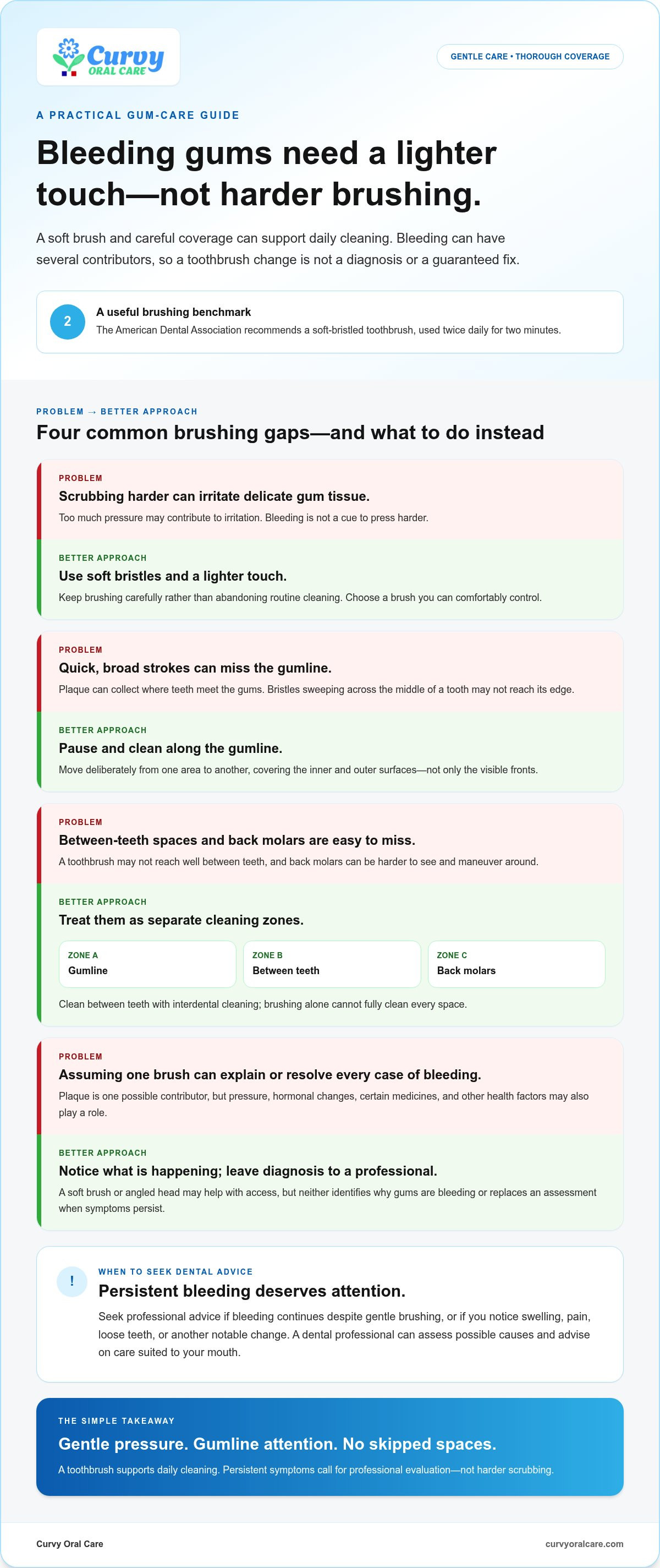
Coverage is the practical challenge. Bristles that sweep across the middle of a tooth may not reach its edge near the gum or the narrow contact area beside another tooth. Back molars can be harder to see and maneuver around, so they’re easy to miss even when brushing feels thorough. Pause briefly as you move from one area of your mouth to another, and check that you’ve cleaned inner and outer surfaces, not only the fronts.
Brushing addresses accessible tooth surfaces and the gumline, but it can’t fully clean every space between teeth. Interdental cleaning is a separate part of care. A smile that looks clean in the mirror doesn’t necessarily mean less-visible areas have been cleaned.
The oral-systemic connection, explained carefully
Gum health belongs within a broader picture of well-being. Research into oral and general health continues to evolve, and associations identified in studies do not, on their own, show that one condition causes another. Daily oral care is a practical way to look after your mouth, while personal health questions belong with qualified professionals.
For a more deliberate approach to hard-to-reach spots, an angled brush head may help guide bristles toward the gumline and back molars. It’s an access aid, not a substitute for careful coverage or interdental cleaning. If you’re putting together brushing essentials, you can explore the Y Angled Sonic Toothbrush.
Choosing a Toothbrush to Clean Gently Without Missing the Gumline
A toothbrush should help you clean thoroughly without turning brushing into a scrub. The American Dental Association recommends a soft-bristled toothbrush, used twice daily for two minutes. Manual and powered brushes can both be effective. Choose one you can control comfortably and use to cover every area, including the gumline and back teeth.
Bleeding isn’t a cue to press harder, and it doesn’t mean you should abandon routine cleaning. Use a lighter touch and keep brushing carefully. Bristle softness and brush-head access are different considerations: soft bristles can feel gentler, while a suitable head shape may make certain areas easier to reach. Neither makes careful technique optional.
Soft bristles and controlled pressure
Soft bristles are a useful choice when you want a gentler brushing experience. Hold the brush without gripping it tightly, then guide it across the teeth with small, controlled movements. Let the bristle tips do the work. Avoid forceful back-and-forth scrubbing, which can irritate gum tissue and make it harder to brush with precision.
The goal isn’t to make the brush feel powerful against your gums. Move steadily from one area to the next, allowing time for the bristles to reach tooth surfaces near the gumline. A stop bleeding gums toothbrush routine means gentle, consistent cleaning, not a special brush that promises to end bleeding.
Brush-head access: gumline, spaces, and back molars
A brush can only clean the areas you guide it to. The front surfaces are easy to see, but plaque can also collect along the gumline and around back molars. Position the brush so the bristles reach the edges where teeth meet gums, and take care not to rush the less-visible sides. A compact head may be easier for some people to maneuver in the back of the mouth.
Here’s a quick comparison. These are practical differences, not a ranking; either style still depends on gentle pressure and complete coverage.
Soft-bristled manual brush: You control the movement and pressure directly. It can work well if you brush deliberately and reach each area.
Soft-bristled sonic brush: The powered brush provides its own movement. Guide it carefully along each tooth and the gumline rather than pressing or scrubbing.
Spaces between teeth need separate attention because a toothbrush may not clean them fully. Interdental cleaning complements brushing; it isn’t a reason to skip the gumline or the backs of the molars. If a straight brush feels awkward to position, an angled toothbrush may help you guide the brush head toward those areas. Curvy’s angled brush head is designed to reach the gumline and back molars. It’s an access option, not a treatment for bleeding or a substitute for professional advice.
A Gentle Daily Routine for Bleeding Gums and Plaque Control
When you notice blood, it can be tempting to skip brushing or scrub harder to “get everything clean.” Neither response is ideal. Keep up your daily care, but use a gentle touch and pay attention to the places plaque can hide. If bleeding persists or comes with other changes, arrange professional advice rather than relying on a change in routine alone.
For anyone seeking a stop bleeding gums toothbrush routine, the goal is steady, complete cleaning, not a quick fix. The American Dental Association recommends brushing twice a day for two minutes with a soft-bristled toothbrush. Use the following sequence to make your routine easier to repeat:
- Brush gently along the gumline. Hold a soft-bristled brush comfortably and guide it around the edge where each tooth meets the gum. Use controlled movements rather than forceful scrubbing. Work across the front, back, and chewing surfaces instead of focusing only on what you see in the mirror.
- Give less-visible areas deliberate attention. Move from one part of the mouth to the next so you don’t miss the inner surfaces or the back molars. Pause to reposition the brush where the cheek or tongue makes access awkward. An angled head may help you guide bristles toward harder-to-reach areas, but technique still matters.
- Clean between your teeth separately. Bristles don’t reach every tight space. Use an appropriate interdental cleaning method, following guidance from your dental professional if you’re unsure what suits you. Move carefully and avoid forcing a cleaning tool into a space.
- Clean your tongue. Gently brush or use a tongue cleaner across its surface as part of your routine. This adds another simple step to whole-mouth care.
- Keep regular dental visits. Checkups allow a dental professional to assess your oral health and offer advice based on your needs. Mention bleeding that continues, even if you’ve adjusted your brushing.
Brush every surface with a gentle, repeatable method
Consistency makes it easier to notice whether you’re routinely missing a spot. Try following the same path each time, such as starting on the outside surfaces, moving to the inside, then finishing with the chewing surfaces. Keep pressure light and make sure your brush reaches the gumline and back teeth. Don’t stop routine cleaning solely because you see blood; persistent bleeding deserves professional attention.
Clean between teeth and support the routine
Pair daily brushing with interdental cleaning, tongue cleaning, and regular dental care. Choose products you can use comfortably and maintain the routine morning and evening. A complete daily routine combines gentle twice-daily brushing, gumline and back-molar coverage, cleaning between teeth, tongue care, and regular dental visits. To add an angled brush to your routine, explore the Y Angled Sonic Toothbrush.
When to Seek Dental Advice, and How a Toothbrush Fits In
A toothbrush is part of daily oral care, not a way to identify the cause of a symptom. If bleeding keeps occurring, arrange a dental evaluation rather than relying on a brush change alone. A professional can consider what you’re experiencing alongside an examination and your oral-health history.
Symptoms that deserve professional attention
Seek dental advice for persistent bleeding or if you notice swelling, ongoing pain, persistent bad breath, receding gums, tooth mobility, or another significant change. These signs can have different explanations and don’t confirm a particular condition. If you’re unsure what to report, note when you first observed the change, whether it’s ongoing, and what else you’ve noticed.
Bring those observations to your appointment and mention relevant changes in your health or oral-care routine. This gives the dental professional useful context without asking you to diagnose yourself. If symptoms are concerning, contact a qualified dental or healthcare professional for advice tailored to your situation.
A toothbrush can support care, not replace it
The Y Angled Sonic Toothbrush has an angled head designed to help reach areas such as the gumline and back molars. It can support access during routine brushing, but it doesn’t diagnose or treat the reason for bleeding and can’t replace professional evaluation. Choose tools that help you clean comfortably, then seek expert guidance when symptoms persist or change.
Keep your next step simple: maintain careful daily care and arrange an evaluation if bleeding continues or you notice other changes. If you’d like to add an angled toothbrush to your routine, explore the Y Angled Sonic Toothbrush.
Make Your Next Brush a Thoughtful Choice
Your next step doesn’t need to be dramatic. Choose an oral-care routine you can keep up with, and pay attention to changes rather than expecting a new brush to explain or resolve them. A stop bleeding gums toothbrush approach is about supporting careful daily cleaning, not promising a quick fix. If bleeding persists or symptoms change, make professional dental advice part of your plan.
The Y Angled Sonic Toothbrush has a patented angled brush head designed to reach difficult areas, soft bristles, and an EMF-free design. These features support access and brushing technique, not treatment. Curvy Oral Care offers oral-care tools to support everyday routines.
Explore the Y Angled Sonic Toothbrush as one option for your routine. Keep taking small, steady steps, and seek expert guidance when your gums need more than daily care.
Frequently Asked Questions
Is it normal for gums to bleed when I brush?
Occasional bleeding can have different contributors, including plaque-related irritation or brushing pressure, so one episode doesn’t identify a cause. Frequent or persistent bleeding shouldn’t be treated as simply normal. Note whether it happens in the same area, after a change in your routine, or alongside another symptom. Those details can help a dental professional understand what you’ve observed without you needing to interpret the cause yourself.
Can a new toothbrush stop bleeding gums?
A new brush can’t determine or treat the reason your gums bleed. Soft bristles and light pressure may reduce avoidable irritation, but no brush guarantees that bleeding will stop. If you’re considering a stop bleeding gums toothbrush, think of it as a daily-care tool, not a remedy. Choose a brush that feels manageable for your mouth and habits, and seek advice from a dental professional if bleeding persists.
What happens if my gums bleed only when I floss?
Bleeding during flossing can have several explanations, and an article can’t establish which applies to you. Check that you’re guiding the floss carefully rather than snapping it down onto the gum. Continue cleaning between teeth consistently instead of abandoning the habit, and consider asking a dental professional to demonstrate a suitable technique. Seek advice if bleeding persists, worsens, or appears with other changes in your mouth.
Can medication affect bleeding gums?
Some medications may affect bleeding. Don’t stop, skip, or change a prescribed medicine based on something you read online. If gum bleeding starts or continues, tell both your dentist and the healthcare professional who prescribed your medication, especially if you noticed a change after beginning treatment. They can consider your health history and decide whether any follow-up is appropriate. Keep taking medication as prescribed unless your clinician advises otherwise.
What vitamin deficiency can cause bleeding gums?
A deficiency in vitamins such as C or K can be one possible contributor, but bleeding gums alone can’t show that you have a deficiency or identify which one. Nutrition is only one part of the picture. If you’re concerned about your diet or have ongoing symptoms, discuss both with a qualified healthcare professional. Avoid starting supplements based only on bleeding, since an assessment can help determine whether testing or another approach is appropriate.
When should I see a dentist about bleeding gums?
Arrange a dental evaluation if bleeding is persistent or occurs with swelling, pain, persistent bad breath, receding gums, tooth mobility, or another significant change. These signs don’t establish a diagnosis, and this article can’t assess your individual situation or its urgency. If you’re uncertain, contact an appropriate dental or healthcare professional and describe what you’ve noticed, when it began, and any related changes.
Health & Medical Disclaimer: This article is for general educational purposes only and is not a substitute for professional dental or medical advice, diagnosis, or treatment. Consult a qualified professional about persistent symptoms or concerns about your health.

Article by
Aline Peixe Nebot
Aline Peixe Nebot is a Veterinarian and passionate advocate for better oral health, committed to raising awareness of oral health as a matter of public health. She actively promotes the importance of simple, effective oral care routines and works to educate the public about the often-overlooked link between oral health and overall systemic health. Her mission is to make better oral care knowledge accessible to everyone and encourage healthier habits for life.
Disclaimer
Disclaimer: The information provided in this article is intended for general educational and informational purposes only. It is not intended to replace professional medical, dental, or healthcare advice, diagnosis, or treatment.
Some content may be AI-assisted and is provided to support health education and awareness. While we strive to share accurate and up-to-date information, health recommendations and scientific evidence can evolve, and the information presented may not apply to every individual.
The connection between oral health and overall systemic health is an important and developing area of research. Associations discussed in this article should not necessarily be interpreted as proof of cause and effect.
Always consult a qualified dentist, physician, or other healthcare professional regarding your individual health, symptoms, medications, or treatment decisions. Do not delay or discontinue professional care based on information presented in this article.
This content is for education and awareness—not diagnosis or treatment.