
Sonic Toothbrush Guide: Best for Gum Health 2026
What if the key to a cleaner-feeling mouth isn’t brushing harder, but reaching the spots you’ve been missing? Plaque can collect along the gumline and behind back molars, while aggressive scrubbing may irritate gums. Sonic toothbrushes can make brushing feel gentler, but vibration alone doesn’t ensure every area gets attention.
If you’ve noticed bleeding while brushing, struggled to reach the back of your mouth, or wondered about electromagnetic fields (EMFs) near your head, those concerns deserve clear, practical answers. This guide explains what to look for in a sonic toothbrush for gum health, including brush-head access, brushing technique, and EMF-free design. Current evidence hasn’t established that low-level EMF exposure from household devices is harmful under normal use, so EMF-free features are best understood as a product-design preference, not proof that other brushes are unsafe.
You’ll also learn how an angled design, such as the one used in Curvy’s Y Angled Sonic Toothbrush, may help you reach difficult areas, and why consistent gumline care matters. The goal is a comfortable routine that supports healthier gums and a cleaner mouth, without relying on pressure or overlooking the places that need care.
Key Takeaways
- Compare sonic toothbrushes by how comfortably they help you clean the gumline, back molars, and other hard-to-reach areas.
- Learn why soft bristles and a gentle brushing technique matter more than scrubbing harder.
- Understand what EMF-free design means and how to weigh it alongside current evidence about everyday exposure.
- Explore how an angled brush design may support access, including Curvy’s Y Angled Sonic Toothbrush.
- Build a practical routine that makes room for consistent brushing and other essential oral-care habits.
Why the Right Sonic Toothbrush is a Vital Wellness Tool
A toothbrush does more than polish the surfaces you can see. Its shape, bristles, and the way you guide it affect whether you clean along the gumline and reach the back molars, where plaque can be easy to overlook. Choosing among sonic toothbrushes is about more than vibration or a fresh, clean feeling. It’s about building a routine that supports healthy gums through consistent, careful cleaning.
The mouth is part of the body, not separate from it. Research suggests gum disease, also called periodontal disease, is associated with some broader health conditions. An association doesn’t prove that one causes the other, and scientists continue to investigate these relationships. Gum health deserves attention in its own right. Think of your gums as the foundation of a house: they support the teeth, and looking after that foundation is essential to a healthy mouth.
The Science of the Oral-Systemic Connection
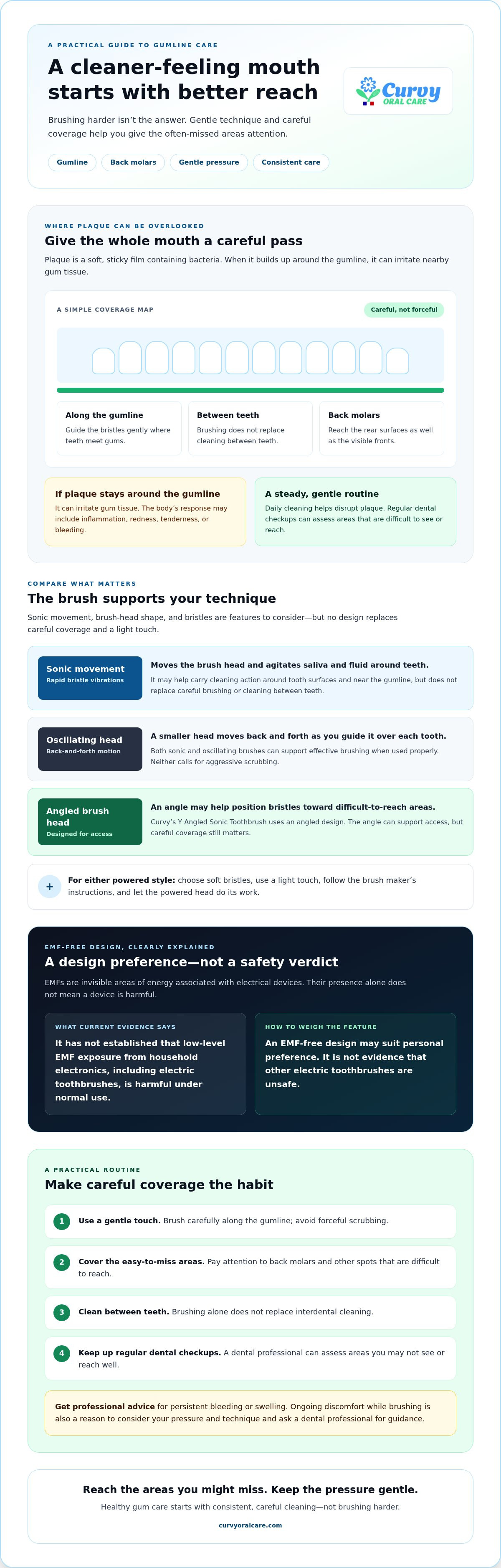
Plaque is a soft, sticky film that forms on teeth. It contains bacteria, and when it builds up around the gumline, it can irritate nearby gum tissue. The body’s response to that irritation is inflammation, which may show up as redness, tenderness, or bleeding. Daily cleaning helps disrupt plaque, while regular dental checkups give a professional a chance to assess areas you may not be able to see or reach well.
What Happens in the Mouth: The Plaque Challenge
Back molars have broad chewing surfaces and sit far behind the front teeth. Their position can make them awkward to brush, especially if the brush head or handle is difficult to maneuver. A straight brush isn’t automatically ineffective, but its shape may not suit every mouth or brushing angle. Brushing only the visible faces of your teeth can leave plaque behind at the gumline, between teeth, or around those rear surfaces.
Electric designs vary in how they move and clean. For a neutral overview of the different types and electric toothbrush technology, consider how the brush’s movement works alongside your technique. An angled head, like the one on Curvy’s Y Angled Sonic Toothbrush, is designed to help position the bristles toward difficult-to-reach areas. The angle can support access, but careful coverage still matters.
Focus on preventing buildup rather than reacting to discomfort. Brush gently along the gumline, give the back molars attention, and clean between teeth as part of your routine. Persistent bleeding or swelling deserves professional evaluation. It isn’t something to diagnose or dismiss based on brushing alone.
EMF-Free Sonic Technology: Balancing Power with Safety
A powered brush should help you clean consistently, not tempt you to scrub harder. Sonic toothbrushes use rapid bristle vibrations to move the brush head and agitate saliva and fluid around the teeth. This movement may help carry cleaning action around tooth surfaces and near the gumline, but it doesn’t replace careful brushing or cleaning between teeth. The term “sonic” describes the brush’s movement, not a guarantee of a particular result.
Electric brushes can also use small heads that rotate or oscillate, moving back and forth as you guide them over each tooth. For individuals exploring broader dental technology, innovative systems from makers like UNIQE focus on rapid, automated cleaning designed to simplify oral hygiene. Neither design requires aggressive scrubbing. Use a light touch, follow the brush maker’s instructions, and let the powered head do its work rather than pressing it forcefully against your gums.
Understanding EMFs in Oral Care
Electromagnetic fields, or EMFs, are invisible areas of energy associated with electrical devices. They’re part of everyday life, and their presence doesn’t by itself mean a device is harmful. Current evidence hasn’t established that low-level EMF exposure from household electronics, including electric toothbrushes, is harmful under normal use.
Curvy Oral Care prioritizes EMF-free designs as a product feature for people who prefer that approach in their daily routine. It’s reasonable to value the peace of mind a design choice offers while keeping the distinction clear: choosing an EMF-free brush is a personal preference, not evidence that other electric toothbrushes are unsafe. A comfortable brush should feel controlled and gentle, not jarring. If brushing causes ongoing discomfort, consider your pressure and technique, and ask a dental professional for guidance.
Sonic Vibrations vs. Oscillating Heads
Sonic brushes vibrate rapidly; oscillating brushes move a smaller head back and forth. Both types can support effective brushing when used properly. Some people find steady vibration easier to use with a light touch, but sonic technology isn’t automatically gentler or better for sensitive gums or receding gumlines. Soft bristles, low pressure, and careful positioning matter with either design. Follow your dental professional’s advice if you have specific gum concerns.
Design can also affect how easily you reach different areas. Curvy’s Y Angled Sonic Toothbrush EMF-Free combines sonic movement with an angled design intended to help users position the brush toward difficult-to-reach areas. Consider how a brush feels in your hand and whether its head helps you guide bristles along the gumline without pressing harder. If you’re comparing a brush with a coordinated toothpaste option, you can also explore the sonic toothbrush and toothpaste combo.
Key Features to Compare: Essential Buying Criteria
A toothbrush can have impressive settings and still be awkward to use. Compare sonic toothbrushes by how well their shape, bristles, upkeep, and charging fit your routine. Start with a practical test: can you guide the brush comfortably along the gumline and around the back teeth without pushing or twisting your wrist?
The Angle of the Brush Head
Back molars sit far behind the front teeth, making their outer surfaces tricky to reach with some straight brush designs. A thoughtfully angled brush head may make it easier to position bristles toward the gumline and rear teeth. Curvy’s angled brushes are designed with access in mind, including a 45-degree reach. Whatever the design, guide the bristles gently toward the gumline rather than relying on the handle angle alone.
Bristle Softness and Precision
Soft bristles are a practical choice for everyday brushing, particularly if your gums feel tender. Firm bristles and excessive pressure can irritate gums and contribute to tooth surface wear over time. Tapered bristle tips may help reach narrow spaces around teeth, but no toothbrush replaces cleaning between teeth. Aim for a brush that feels comfortable and controlled, not painful. Ask a dental professional for advice if brushing causes persistent sensitivity or bleeding.
Check the head, too. A smaller or angled shape may be easier to maneuver around crowded areas and the far side of the back molars. Curvy’s angled sonic toothbrush is one option designed to help users reach areas that can be difficult to access with a conventional straight brush.
Think about everyday upkeep. Battery life and charging affect convenience, especially if you travel or have limited outlet space. Check how the brush charges, whether it comes with a travel-friendly charging option, and what the manufacturer says about battery care. Don’t assume that more settings or longer battery life means better cleaning. Comfort and consistent coverage matter more.
Brush heads need regular replacement. The American Dental Association recommends changing toothbrushes or powered brush heads every three to four months, or sooner if bristles become frayed. A replacement-head subscription may make it easier to remember, but check its schedule and make sure the heads fit your brush. For a paired brush-and-toothpaste option, you can also view the sonic toothbrush and toothpaste combo.
The Curvy Collection: Standout Products for Every User
Choosing a toothbrush is personal. The right fit depends on who’s brushing, which areas are hard to reach, and whether you prefer powered or manual cleaning. Curvy Oral Care offers sonic toothbrushes, angled manual brushes, toothbrushes for kids, replacement heads, toothpaste, and sonic parts. Compare these options based on what suits your routine and helps you clean beyond the most visible tooth surfaces.
The Y Angled Sonic Toothbrush for Adults
The Y Angled Sonic Toothbrush is Curvy’s option for adults who want powered brushing with an angled design. Its 45-degree angle is intended to help users position the bristles toward the gumline and maneuver around difficult-to-reach areas, including back molars. That design can support access, though good coverage still depends on guiding the brush carefully around the mouth.
The model is described as EMF-free, a design feature for people who prefer to limit EMF exposure in their daily routine. This preference shouldn’t be confused with evidence that ordinary electric toothbrushes are harmful. Current evidence hasn’t established harm from low-level household EMF exposure under normal use. Review the details of the Y Angled Sonic Toothbrush as one option to compare for your needs.
Options for Kids and Manual Brushers
For children, an age-appropriate toothbrush can make brushing easier to learn and repeat. Curvy offers toothbrushes for kids, as well as manual angled options. An adult can help a child brush thoroughly, especially along the gumline and around back teeth, until the child can manage the routine reliably. Choose a brush that feels comfortable in the child’s hand and follow its product guidance.
Prefer a non-electric brush? An angled manual toothbrush is an alternative for people who want a shaped handle or head to help guide their brushing. The angle doesn’t replace technique: use gentle pressure, move methodically, and make sure every tooth surface gets attention. A brush should make the routine feel manageable, not painful.
Keep the routine supplied. Replaceable heads and brush-head subscriptions can help you stay on top of brush-head changes. The American Dental Association recommends replacing toothbrushes and powered brush heads every three to four months, or sooner if the bristles are frayed. Curvy also sells toothpaste, including a brush-and-toothpaste combo for shoppers who want to consider those products together.
To compare one of those options, explore the sonic toothbrush and toothpaste combo and check the product details against your preferences and brushing needs.
Practical Prevention: Your New Daily Brushing Routine
Even the best toothbrush depends on how you use it. Sonic toothbrushes can feel different from manual brushes, but the basics remain: clean every tooth surface, use a light touch, and give the gumline careful attention. The American Dental Association recommends brushing twice a day for two minutes with a soft-bristled toothbrush.
A Better Daily Routine
- Divide your mouth into sections. Spend about 30 seconds on each quarter of your mouth. Move gradually from tooth to tooth so you don’t rush past the back teeth.
- Position the bristles at the gumline. Hold the brush at roughly a 45-degree angle toward the gumline. With a powered brush, guide the head slowly along each surface instead of scrubbing back and forth. Follow the manufacturer’s instructions for your specific model.
- Cover every surface. Brush the outside, inside, and chewing surfaces of each tooth. At the back molars, open your mouth enough to maneuver the brush head, then guide it around the outer and inner edges. An angled head may help with positioning, but take the time to check that you’ve covered the area.
- Clean between teeth and your tongue. Brushing doesn’t fully clean the tight spaces between teeth, so use an appropriate interdental cleaner, such as floss, as part of your routine. Gently brush or use a tongue cleaner on the tongue to remove surface debris and support fresher breath.
Keep your pressure gentle. If the bristles splay while you brush, ease up. More force doesn’t mean a more thorough clean, and scrubbing can irritate gums.
Maintenance and Professional Care
Brush heads wear down with use. The American Dental Association recommends replacing toothbrushes and powered brush heads every three to four months, or sooner if the bristles become frayed. Worn bristles may not clean as effectively, so check the head regularly and order a compatible replacement before it’s overdue. A brush-head subscription can be a useful reminder, but follow the product’s replacement guidance and inspect bristles between changes.
Home care and dental visits work together. Regular checkups allow a dental professional to assess your oral health and offer advice tailored to your needs. Seek professional guidance for persistent bleeding, swelling, pain, or other ongoing changes rather than trying to solve them by brushing harder.
Small habits add up: brush gently twice a day, clean along the gumline, reach the back molars, and clean between teeth. A steady routine is a practical way to support healthier gums and a healthier smile over time.
Make Gum Health Part of Your Daily Routine
The best toothbrush is one you can use comfortably and consistently. As you compare sonic toothbrushes, look beyond vibration: consider whether the brush helps you reach the gumline and back molars, and whether its bristles feel gentle. A 45-degree angle toward the gumline is a widely recommended brushing technique, while an angled brush may make that position easier to reach. Curvy’s EMF-free design is another feature to consider if it brings you added peace of mind, though current evidence hasn’t established that low-level EMF exposure from household devices is harmful under normal use.
Keep the routine simple: brush gently twice a day, clean between your teeth, and follow your dental professional’s advice. Research suggests gum health may be associated with overall health, but associations don’t prove cause and effect. Caring for your gums is worthwhile in its own right, and small daily habits can support a healthier mouth over time.
Ready to compare a brush-and-toothpaste option for your routine? Explore the sonic toothbrush and toothpaste combo, then choose the oral-care habits that feel manageable for you. A gentler, more consistent routine is a positive step toward a healthier smile.
Frequently Asked Questions
Are sonic toothbrushes safe to use every day?
Yes, sonic toothbrushes can generally be used every day when you follow the product instructions and brush gently. The American Dental Association recommends brushing twice daily with a soft-bristled toothbrush. Let the powered brush do the movement rather than pressing hard or scrubbing. If brushing causes persistent discomfort, bleeding, or sensitivity, adjust your pressure and ask a dental professional for advice.
What makes a toothbrush "EMF-free" and why does it matter?
“EMF-free” is a product-design claim used to describe a brush intended to limit electromagnetic field emissions, for example through its motor design. Curvy Oral Care identifies its sonic toothbrushes as EMF-free. Current evidence hasn’t established that low-level EMF exposure from household electronics is harmful under normal use, so this feature is a preference for added peace of mind, not proof that other electric toothbrushes are unsafe.
Can an angled toothbrush really reach back molars better than a straight one?
An angled brush head may make it easier to position bristles around back molars and along the gumline, especially if a straight brush feels awkward to maneuver. It can improve access, but it doesn’t guarantee plaque removal or replace careful technique. Move methodically around the outer, inner, and chewing surfaces of each back tooth. If an area remains difficult to clean, ask a dental professional for guidance.
How often should I replace my sonic toothbrush head?
Replace a powered brush head every three to four months, or sooner if its bristles become frayed, as recommended by the American Dental Association. Worn bristles may be less effective at cleaning, so check the head regularly rather than waiting for a scheduled reminder. A compatible replacement-head subscription may help you keep track, but follow the manufacturer’s guidance for your specific brush.
Is a sonic toothbrush safe for children?
A sonic toothbrush can be suitable for a child if it’s designed for their age and used according to the manufacturer’s instructions. Choose a comfortable brush with soft bristles, and supervise brushing while your child learns to cover every tooth surface gently. An adult can help reach back teeth and the gumline. If you’re unsure which brush fits your child’s needs, ask their dental professional.
Do I still need to floss if I use a sonic toothbrush?
Yes. Brushing, whether powered or manual, doesn’t reliably clean the tight spaces between teeth. Clean between your teeth daily with floss or another interdental cleaner that suits your mouth. This complements brushing by addressing areas the brush head can’t easily reach. If you’re not sure which method or tool is appropriate, ask a dental professional to demonstrate options for your specific needs.
What should I do if my gums bleed when I first start using a sonic brush?
Use a soft-bristled head, lighten your pressure, and guide the brush gently along the gumline rather than scrubbing. Bleeding can have several causes, so don’t assume it’s simply an adjustment to a new brush. If it persists, or you also notice swelling, pain, or other changes, arrange a professional dental evaluation. A dental professional can assess your gums and help you adjust your cleaning technique.
Can I use a sonic toothbrush with sensitive teeth or receding gums?
You may be able to, but choose soft bristles and use a light touch. Sensitivity or receding gums can have different causes, and brushing harder won’t resolve them. Guide the brush carefully without pressing its head into the gumline, and follow any personalized advice from your dental professional. If discomfort continues or worsens, seek professional guidance before changing your routine or relying on a particular brush to solve the problem.
Health & Medical Disclaimer: This content is for general educational purposes only and isn’t a substitute for professional dental or medical advice, diagnosis, or treatment. Consult a qualified dental or healthcare professional about any concerns, symptoms, or questions regarding your health. Don’t delay or disregard professional advice based on information in this article.

Article by
Aline Peixe Nebot
Aline Peixe Nebot is a Veterinarian and passionate advocate for better oral health, committed to raising awareness of oral health as a matter of public health. She actively promotes the importance of simple, effective oral care routines and works to educate the public about the often-overlooked link between oral health and overall systemic health. Her mission is to make better oral care knowledge accessible to everyone and encourage healthier habits for life.
Disclaimer
Disclaimer: The information provided in this article is intended for general educational and informational purposes only. It is not intended to replace professional medical, dental, or healthcare advice, diagnosis, or treatment.
Some content may be AI-assisted and is provided to support health education and awareness. While we strive to share accurate and up-to-date information, health recommendations and scientific evidence can evolve, and the information presented may not apply to every individual.
The connection between oral health and overall systemic health is an important and developing area of research. Associations discussed in this article should not necessarily be interpreted as proof of cause and effect.
Always consult a qualified dentist, physician, or other healthcare professional regarding your individual health, symptoms, medications, or treatment decisions. Do not delay or discontinue professional care based on information presented in this article.
This content is for education and awareness—not diagnosis or treatment.