
Sonic Toothbrush for Periodontal Pockets: Buying Guide
Can a deep cleaning sonic toothbrush for periodontal pockets clean the deeper spaces that may form around teeth with gum disease? A sonic toothbrush can support daily plaque removal along the gumline, but it cannot clean deep periodontal pockets or replace professional care. If your gums bleed or feel inflamed, it’s understandable to look for a tool that helps you brush thoroughly without pressing harder.
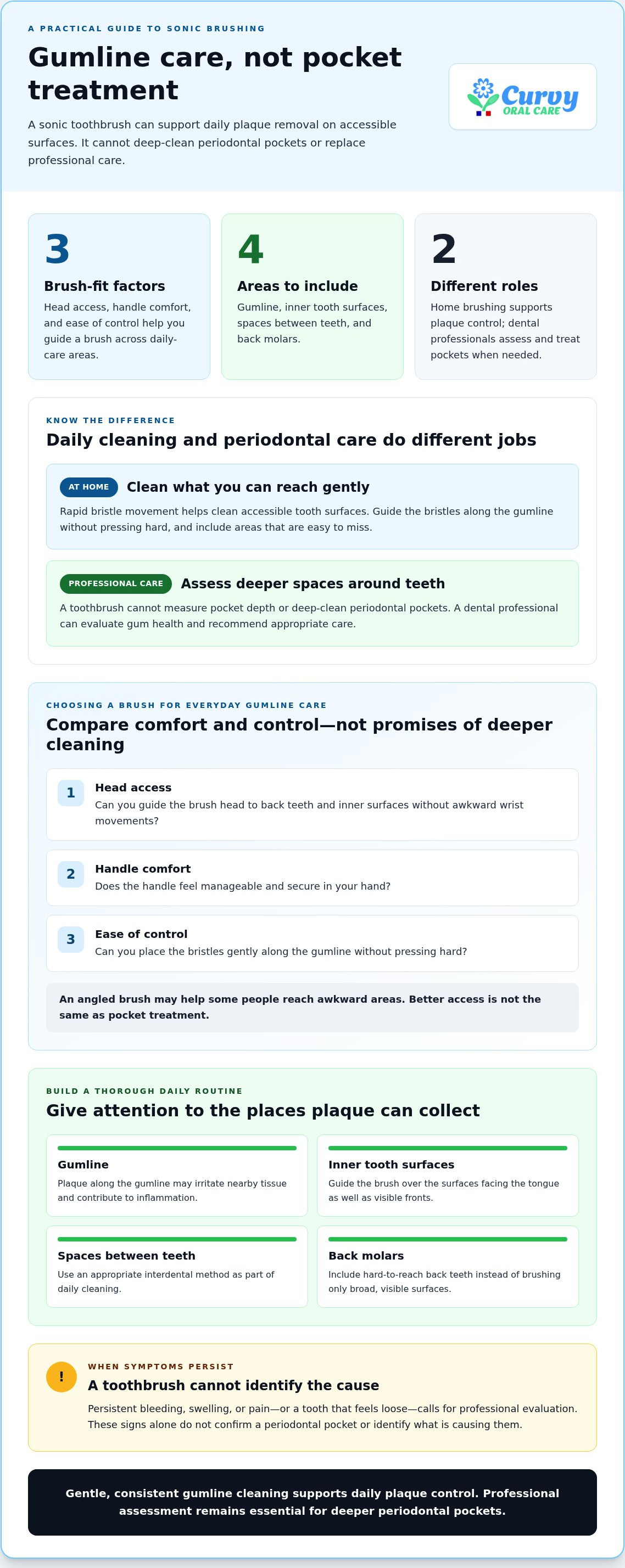
Daily brushing and professional periodontal care have different roles. Brushing helps disrupt plaque on accessible tooth surfaces and around the gumline. A dental professional can assess your gums and treat periodontal pockets when needed. This guide explains what sonic brushing can and can’t do, how to compare brushes for comfort and access, and how to clean the gumline and hard-to-reach areas, including back molars. The aim is a practical routine that supports healthy gums, not a promise that a toothbrush can treat gum disease.
Key Takeaways
- A deep cleaning sonic toothbrush for periodontal pockets can support daily gumline care, but it cannot clean or treat deep pockets.
- Compare brush-head access, handle comfort, and ease of control to find a toothbrush that fits your routine.
- Use gentle technique and pay attention to the gumline, back molars, and other areas that are easy to miss.
- An angled sonic toothbrush may help you reach difficult areas during everyday brushing, but it is not a substitute for professional periodontal care.
- Persistent bleeding, swelling, or pain calls for professional evaluation, not just a change in toothbrush.
Can a Sonic Toothbrush Deep-Clean Periodontal Pockets?
No. A sonic toothbrush can clean accessible tooth surfaces and the gumline, but it cannot deep-clean periodontal pockets or replace professional treatment. Toothbrush bristles are not a substitute for professional care in deeper spaces around the teeth. A brush supports daily plaque control; a dental professional evaluates gum health and treats periodontal pockets when appropriate.
This distinction is important if your gums bleed or feel swollen. A toothbrush can support a consistent home-care routine, but it cannot identify the cause of symptoms or measure the depth of a pocket. Persistent changes deserve professional evaluation.
What does a periodontal pocket mean?
Gum tissue meets each tooth around a small space. A periodontal pocket is a deeper space that can develop when periodontal disease affects the tissues supporting the teeth. It is not something you can reliably identify by looking at your gums or brushing.
A dental professional evaluates these spaces as part of an assessment. Plaque, a sticky film of bacteria, can collect near the gumline. If it is not regularly disrupted, it can contribute to gum inflammation. Bleeding gums alone do not confirm a periodontal pocket or identify its cause, so persistent changes should be assessed professionally.
Can a sonic toothbrush clean below the gumline?
Not deeply. No toothbrush should be treated as a way to deep-clean periodontal pockets. Sonic brushes vibrate rapidly, but that motion does not make bristles reach far into a pocket or remove deposits that require professional care. This overview of what a sonic toothbrush is explains how it differs from other toothbrush types.
Used gently and correctly, a toothbrush can clean tooth surfaces and the accessible gumline during everyday brushing. Angling the bristles toward the gumline helps you focus on this plaque-prone margin. An angled brush may also help some people reach awkward areas, but better access is not the same as pocket treatment.
A deep cleaning sonic toothbrush for periodontal pockets is best understood as a daily-care tool, not a treatment device. If bleeding continues, gums are swollen, pain persists, or a tooth feels loose, seek professional evaluation rather than brushing harder or relying on a different brush. Keep brushing gently and consistently while arranging advice. A dental professional can assess what is happening and recommend appropriate care.
How Sonic Brushing Relates to Plaque, Gumline Care, and Periodontal Health
A sonic toothbrush uses rapid bristle movement to help clean accessible tooth surfaces. Its motion does not carry bristles deep into periodontal pockets, but it can support a careful routine at the gumline, where plaque often collects. Technique and consistency matter more than expecting a toothbrush to reach beneath gum tissue.
Why plaque control at the gumline matters
Plaque is a sticky film of bacteria that forms on teeth and can build up where teeth meet the gums. When plaque remains along the gumline, it may irritate the surrounding tissue and contribute to inflammation. Gum inflammation can show up as redness, tenderness, or bleeding. These signs do not identify the cause or confirm a particular condition on their own.
Brushing only the broad, visible fronts of your teeth can leave important areas out. Include the gumline, the surfaces facing the tongue, the spaces between teeth, and the back molars. A powered brush may feel different from a manual one, but you still need to guide it over each area. Gentle, consistent gumline cleaning helps make daily plaque control more complete.
What research says about oral health and overall health
The mouth is part of the body, and researchers are studying how oral health may relate to overall health. Studies have found associations between gum disease and some health conditions, but an association does not prove that one causes the other. Other factors may contribute, and research continues to examine these relationships. The National Institute of Dental and Craniofacial Research explains the basics of Periodontal (Gum) Disease, including how gum changes can develop.
For questions about how oral health relates to a medical condition or treatment, speak with a qualified healthcare professional. Regular dental visits also help assess gum health in ways a toothbrush cannot.
Think of sonic brushing as support for daily cleaning, not a shortcut to professional pocket care. Brush gently along the gumline, and clean between teeth with an appropriate interdental method. If you’re building a routine around a sonic brush, a sonic toothbrush and toothpaste combination brings two everyday oral-care essentials together.
A deep cleaning sonic toothbrush for periodontal pockets cannot replace professional assessment or treatment. Its role is to help with accessible daily brushing, alongside consistent gumline care and appropriate dental follow-up.
How to Compare Sonic Toothbrushes for Daily Gumline Care
Choose a sonic toothbrush for its fit in your hand and how easily you can guide it, not because you expect extra power to clean deeper pockets. A comfortable brush that you can control makes it easier to cover the gumline, inner tooth surfaces, and back molars. These are practical selection criteria. Claims about clinical outcomes require appropriate evidence.
| What to compare | What to consider |
|---|---|
| Head access | Can you guide the head to back teeth and inner surfaces without awkward wrist movements? |
| Handle comfort | Does the handle feel manageable and secure in your hand? |
| Ease of control | Can you place the bristles gently along the gumline without pressing hard? |
| Routine fit | Does the brush feel practical for regular use and replacement-head upkeep? |
Which brush design helps with hard-to-reach areas?
Toothbrush shape can affect how easily you approach a particular spot. An angled design may help some people position the head around the gumline or reach behind the back molars. Curvy Oral Care’s EMF-free angled sonic toothbrush is designed to help with access. It is not designed to deep-clean pockets. Whichever shape you choose, guide the bristles carefully across the gumline, inner surfaces, and back teeth.
What features matter more than aggressive brushing?
More pressure does not mean more thorough brushing. Scrubbing forcefully can irritate gums, and a faster-feeling brush does not mean its bristles reach beneath gum tissue. Focus on a light touch and steady coverage. Mayo Clinic notes that an electric toothbrush may be more effective at removing plaque for some people, but choosing a product alone cannot establish or treat periodontal problems.
Use a practical test for any brush: can you comfortably guide it over every tooth surface without rushing or bearing down? A “deep cleaning sonic toothbrush for periodontal pockets” is not a brush that treats pockets. No brush design replaces professional assessment or care when it is needed. If gum concerns persist, seek dental advice and keep your home routine gentle and consistent.
How to Use a Sonic Toothbrush Gently Around the Gumline
A sonic brush works best as part of a steady, gentle routine, not as a tool to press into your gums. Follow the brush maker’s instructions, let the brush do its work, and guide it carefully over every tooth surface. The goal is to clean accessible areas without scrubbing or irritating tender tissue.
A gentle brushing sequence for teeth and gumline
Try this simple sequence, adjusting it to the instructions for your brush:
- 1. Start at the gumline. Hold the bristles at a gentle angle toward where each tooth meets the gum. Move slowly from tooth to tooth, pausing briefly rather than pushing or scrubbing.
- 2. Cover every tooth surface. Brush the outer, inner, and chewing surfaces. The inner sides can be easy to rush, so take care around the front teeth as well as the wider back teeth.
- 3. Reach the back molars. Guide the brush head behind the last teeth and along their gumline. If a straight handle makes this awkward, an angled design may make it easier to approach the area.
- 4. Keep the pressure light. Let the bristles contact the teeth and gumline gently. More force will not clean periodontal pockets and may make brushing uncomfortable.
Take your time and aim for even coverage. If brushing causes discomfort or sensitivity, do not press harder. Seek professional advice about the cause and the best technique for you.
When daily brushing is not enough
A toothbrush does not clean effectively between every tooth. Add interdental cleaning, using a method suited to your needs, to reach spaces the brush may miss. Cleaning your tongue can also be part of a complete daily routine. Regular dental visits give a professional the opportunity to assess your gums and advise you on care that fits your mouth.
Persistent bleeding, swelling, ongoing pain, or teeth that feel loose deserve professional evaluation. These signs do not reveal a diagnosis on their own, and changing your brush or technique cannot confirm or treat periodontal pockets. A deep cleaning sonic toothbrush for periodontal pockets is not a substitute for assessment or for any treatment a professional recommends.
For everyday brushing, focus on gentle contact, complete coverage, and consistency. If you’re choosing a brush and toothpaste for your routine, explore the sonic toothbrush and care set.
Choosing a Sonic Toothbrush for Periodontal-Pocket Concerns
Choose a sonic toothbrush for comfortable, controlled daily brushing, not because it promises to treat gum disease. An angled design may help you position the brush around hard-to-reach areas, such as the back molars or inner tooth surfaces. That access can be useful if those spots are awkward to brush with a conventional straight brush. It does not mean the bristles can clean or treat deep periodontal pockets.
Who may find an angled sonic brush useful?
An angled sonic brush may suit people who want another way to reach areas they tend to miss during routine brushing. Consider whether you can guide the head gently along your gumline, around the back teeth, and across inner surfaces without twisting your wrist uncomfortably. Curvy Oral Care offers EMF-free angled sonic toothbrushes. These are design features, not evidence that a toothbrush treats periodontal concerns.
Before choosing, focus on the basics:
- Comfort: The brush should feel manageable in your hand.
- Control: You should be able to place the head carefully without pressing hard.
- Routine fit: Choose a brush you can use consistently and maintain with replacement brush heads.
A soft touch and thorough coverage matter more than a promise of extra force or speed. If a brush feels awkward, you may rush or skip areas. Prioritize a design that helps you follow a calm, repeatable routine.
What should you do about ongoing gum symptoms?
Persistent bleeding, swelling, bad breath, pain, gum recession, or teeth that feel loose are reasons to seek professional evaluation. These changes do not confirm a diagnosis on their own, but a dental professional can assess your gum health and determine whether treatment is needed. Do not try to solve ongoing symptoms by brushing harder or relying on a new toothbrush.
Home care and professional care have different roles. A brush helps you clean accessible tooth surfaces as part of daily hygiene; it cannot examine your gums, measure periodontal pockets, or provide professional treatment. A “deep cleaning sonic toothbrush for periodontal pockets” is a toothbrush for routine home care, not a device that deep-cleans pockets.
Keep the routine simple: brush gently, clean between teeth with an appropriate method, and maintain regular dental visits. Consistency supports everyday oral hygiene, while checkups help address concerns that brushing alone cannot resolve. View the sonic toothbrush, toothpaste, and travel case set.
Build a Routine That Supports Healthy Gums
A sonic toothbrush can make daily brushing feel more manageable, but it cannot deep-clean periodontal pockets. Choose a brush you can guide comfortably, clean gently along the gumline, and do not overlook back teeth or inner surfaces. Brush twice a day, clean between teeth, and maintain regular dental visits as part of a consistent routine.
If you’re considering a deep cleaning sonic toothbrush for periodontal pockets, keep its role clear. Curvy Oral Care offers EMF-free angled sonic toothbrushes designed to help reach difficult areas. That can support everyday access, but it does not replace professional evaluation or periodontal treatment. Persistent bleeding, swelling, pain, bad breath, or gum recession are reasons to seek dental advice.
For a practical addition to your home-care routine, explore the sonic toothbrush, toothpaste, and travel case set. Small, gentle habits add up. Choose a brush that helps you reach the areas you tend to miss, and keep up with professional dental care.
Frequently Asked Questions
Can a sonic toothbrush clean periodontal pockets?
No. A sonic toothbrush cannot deep-clean periodontal pockets or replace professional treatment. It can help brush accessible tooth surfaces and along the gumline as part of daily care, but its bristles do not reach deeply into pockets to remove deposits. A “deep cleaning sonic toothbrush for periodontal pockets” is best understood as a home-care tool, not a treatment device. A dental professional can assess pocket depth and recommend care if needed.
Is a sonic toothbrush good for gum health?
A sonic toothbrush can be part of a gum-conscious routine if you use it gently and cover the gumline and all tooth surfaces. Its vibrations do not guarantee better results, and brushing technique still matters. Clean between teeth as well, since a toothbrush may not reach those spaces effectively. If you have ongoing gum concerns, a dental professional can assess them and help tailor your home-care routine.
What is the difference between brushing and periodontal deep cleaning?
Brushing is daily home care that disrupts plaque on accessible tooth surfaces and near the gumline. Periodontal deep cleaning is professional care that addresses plaque and hardened deposits below the gumline in deeper pockets. A dental professional evaluates your gums and decides whether treatment is appropriate. A toothbrush can support your routine before or after professional care, but it cannot do the same job.
Can brushing too hard make bleeding gums worse?
Yes. Pressing hard or scrubbing can irritate gum tissue and may make bleeding worse. Use a gentle touch, guide the brush carefully, and follow the instructions for your toothbrush. Bleeding can also have other causes, including gum inflammation, so do not assume pressure is the only explanation. If bleeding continues or comes with swelling or pain, seek professional advice rather than brushing more forcefully.
How should I brush around the gumline with a sonic toothbrush?
Follow the brush maker’s instructions and guide the bristles gently along the gumline without scrubbing. Work across the outer and inner tooth surfaces, then clean the chewing surfaces and behind the back molars. Move slowly enough to cover each area, and use light pressure. Brush twice a day as part of your regular routine, and clean between teeth with an appropriate interdental method.
What happens if periodontal pockets are left untreated?
Periodontal pockets can be associated with ongoing inflammation and damage to the tissues that support teeth. If periodontal disease progresses, supporting tissue and bone may be affected, and teeth can become loose or be lost. These outcomes are not inevitable, and symptoms alone cannot show whether pockets are present. A dental professional can assess gum health and discuss treatment options. Persistent bleeding, swelling, bad breath, pain, or loose teeth merit evaluation.
Health & Medical Disclaimer: This article is for general educational purposes only and is not a substitute for professional dental or medical advice, diagnosis, or treatment. If you have persistent symptoms or concerns about your oral health, consult a qualified dental or healthcare professional.

Article by
Aline Peixe Nebot
Aline Peixe Nebot is a Veterinarian and passionate advocate for better oral health, committed to raising awareness of oral health as a matter of public health. She actively promotes the importance of simple, effective oral care routines and works to educate the public about the often-overlooked link between oral health and overall systemic health. Her mission is to make better oral care knowledge accessible to everyone and encourage healthier habits for life.
Disclaimer
Disclaimer: The information provided in this article is intended for general educational and informational purposes only. It is not intended to replace professional medical, dental, or healthcare advice, diagnosis, or treatment.
Some content may be AI-assisted and is provided to support health education and awareness. While we strive to share accurate and up-to-date information, health recommendations and scientific evidence can evolve, and the information presented may not apply to every individual.
The connection between oral health and overall systemic health is an important and developing area of research. Associations discussed in this article should not necessarily be interpreted as proof of cause and effect.
Always consult a qualified dentist, physician, or other healthcare professional regarding your individual health, symptoms, medications, or treatment decisions. Do not delay or discontinue professional care based on information presented in this article.
This content is for education and awareness—not diagnosis or treatment.