
Sonic Toothbrush for Dental Implants: Home Care Guide
Nearly 50 percent of dental implant patients develop peri-implant mucositis, which is early stage gum inflammation around an implant, within just five years. It is a startling statistic for an investment designed to last a lifetime. You've likely wondered if your current routine is enough to protect that new smile, or if the high frequency vibrations from a sonic toothbrush for dental implants care might actually loosen the post. It is completely normal to feel protective of your dental work, especially when the stakes for your long term health are so high.
We agree that your oral care needs to be as precise as the surgery that gave you your smile. This guide will show you exactly how to protect your investment using modern technology and better brushing habits. Research suggests that a healthy "biological seal" around your implant is vital for your whole body well being. We will explore why sonic vibrations are safe for titanium, how to reach hidden plaque behind the post, and how to build a simple routine for healthy, non bleeding gums. You can maintain a confident smile and protect your health with the right daily choices.
Key Takeaways
- Learn how sonic fluid dynamics disrupt plaque biofilm in the hard-to-reach spaces around your implant crown where traditional bristles cannot reach.
- Discover why using a sonic toothbrush for dental implants care is a safe, effective way to protect your investment without risking the stability of the post.
- Identify the essential features of an implant-safe brush, including ultra-soft bristles and pressure sensors that prevent gum recession.
- Master a simple, step-by-step technique for cleaning the gumline and back molars using an angled brush head and non-abrasive toothpaste.
- Understand how consistent daily biofilm management supports the long-term health of your implants and contributes to your overall systemic well-being.
What is a Sonic Toothbrush for Dental Implants Care?
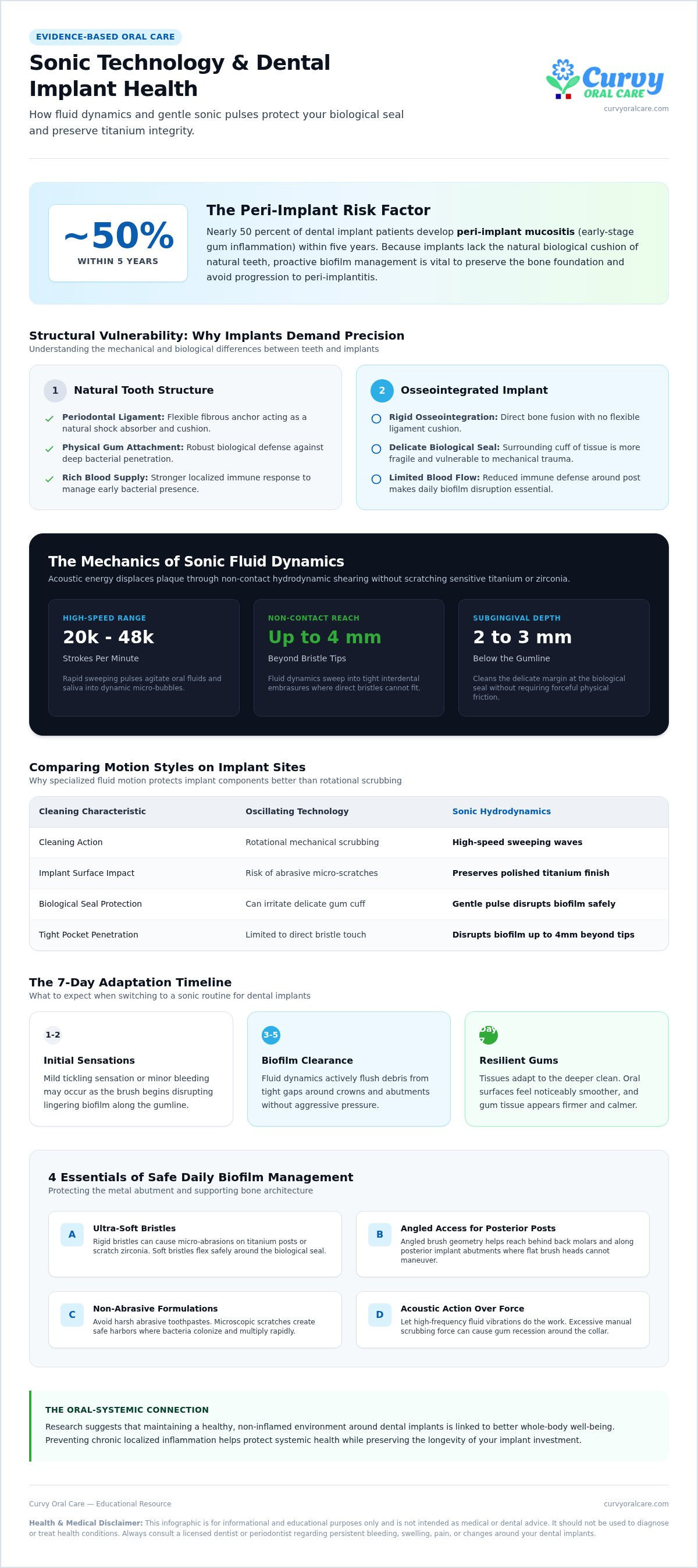
Sonic technology is more than just a high speed vibration. It is a precise method of cleaning that uses high frequency movements, typically between 20,000 and 48,000 strokes per minute, to create "fluid dynamics." This process pushes water and toothpaste into the tiny gaps where physical bristles cannot reach. When you commit to a sonic toothbrush for dental implants care, you aren't just scrubbing surfaces. You are using acoustic energy to disrupt bacteria around the delicate junction where the implant meets your gum.
Implants are fundamentally different from natural teeth. While your original teeth are anchored by a flexible periodontal ligament, osseointegrated dental implants are fused directly to the jawbone. This lack of a natural "cushion" makes the surrounding gum tissue, known as the biological seal, more vulnerable to irritation from aggressive manual scrubbing. Sonic technology respects this seal by cleaning through gentle vibrations rather than mechanical force. Research suggests that maintaining a healthy environment around your implants is linked to better whole body health. By preventing inflammation in the mouth, you are supporting your overall systemic well being.
Sonic vs. Oscillating: Which is Safer for Implants?
Oscillating brushes use a rotating, "scrubbing" motion that can sometimes feel too aggressive on sensitive implant sites. In contrast, sonic pulses utilize high speed sweeps that clean through hydrodynamic shearing. This means the brush disrupts plaque up to 4mm beyond the actual bristle tips. Many specialists prefer this gentler approach because it effectively removes biofilm without risking micro-abrasions on the titanium or zirconia surfaces. It is a smarter, safer way to maintain a clean environment around your investment.
The Importance of Peri-Implant Health
If plaque accumulates at the gumline, it can lead to peri-implantitis. Think of this as gum disease specifically for implants. Unlike natural gum disease, peri-implantitis can progress quickly because the blood supply around an implant is more limited. Inflammation can lead to bone loss, which eventually threatens the stability of the post. Daily prevention is your best defense. By using a specialized tool like the Y-angled sonic toothbrush, you can ensure plaque doesn't hide in hard-to-reach areas like the back molars.
Transitioning from a manual brush to a sonic toothbrush for dental implants care takes about a week. You might notice a slight tickling sensation or even minor bleeding if plaque has been lingering. Don't be discouraged. This is simply your gums adjusting to a deeper level of clean. By day seven, your mouth will likely feel smoother and your gums more resilient. It is a necessary evolution for anyone looking to protect their long term dental investment.
The Science of Sonic Vibrations and Implant Biofilm
Bacteria don't treat titanium the same way they treat natural enamel. Titanium surfaces are biocompatible, which is excellent for bone integration, but they also offer a perfect foundation for bacterial biofilm to take hold. This sticky layer of plaque can be more difficult to manage because implants lack the natural biological defenses found in the periodontal ligament of a real tooth. Effective sonic toothbrush for dental implants care relies on a phenomenon known as fluid dynamics. As the brush vibrates at high frequencies, it agitates the saliva and water in your mouth, creating micro-bubbles that can disrupt plaque up to 2 or 3 millimeters below the gumline.
Maintaining the smooth finish of the implant abutment is critical. If you use abrasive tools or harsh scrubbing, you can create microscopic scratches in the metal. These scratches become "safe harbors" where bacteria can hide and multiply. According to FDA guidance on dental implants, consistent daily cleaning is the only way to ensure the long term success of the device and prevent complications like bone loss. Non abrasive cleaning preserves the integrity of the implant surface, making it harder for biofilm to attach in the first place.
Disrupting Biofilm Without Mechanical Trauma
Sonic waves offer a unique "non-contact" cleaning effect. This is vital for protecting the delicate "cuff" of gum tissue that surrounds the implant post. Unlike natural teeth, which have a strong physical attachment to the gums, the tissue around an implant is more like a gentle seal. High intensity mechanical heads or aggressive manual brushing can easily tear or irritate this cuff. Gentle sonic pulses allow you to break up the biofilm without the need for heavy physical pressure, keeping the soft tissue intact and healthy.
Systemic Health and the Oral Connection
The health of your implants doesn't just affect your smile; it impacts your entire body. Research is investigating the relationship between peri-implant health and heart health, as chronic inflammation in the mouth can place a constant burden on your immune system. By practicing proactive care, you keep the overall bacterial load in your body lower. Studies have found an association between poor implant hygiene and broader systemic wellness, emphasizing that your mouth is the gateway to your general health. Using a complete sonic care system helps you maintain this balance. Investing in a high quality sonic toothbrush for dental implants care is a simple, daily step toward supporting your whole body well being.
Choosing the Best Sonic Toothbrush for Your Implants
Selecting the right sonic toothbrush for dental implants care isn't just about picking the most powerful motor on the shelf. It's about finding a tool that balances biofilm disruption with structural safety. Your implants are a significant investment; treating them with a generic, high intensity brush can actually do more harm than good. You need a device designed for the unique anatomy of a restored smile.
Look for these essential features when making your choice:
- Ultra Soft Bristles: Hard or even medium bristles can cause gum recession. This exposes the titanium collar of your implant, creating a trap for bacteria.
- Pressure Sensors: You shouldn't have to guess how hard to press. A sensor ensures you don't apply excessive force that could stress the bone to implant bond.
- EMF Free Motors: Standard electric motors generate electromagnetic fields. For users with metal in their mouths, choosing low radiation options is a proactive health choice.
Practical evidence supports this approach. For example, clinical research on sonic toothbrush efficacy around implants shows that these tools significantly reduce bleeding and probing depths compared to manual alternatives. It is a science backed way to keep your gums resilient.
Why Angle Matters More Than Power
Precision beats power every time. The dental industry teaches the "45 degree rule," where bristles are tilted toward the gumline to sweep away plaque. However, straight handled toothbrushes make this angle nearly impossible to maintain, especially around bulky implant crowns. An angled head naturally guides the bristles into that critical gap. This is especially important for posterior implants. The back of the mouth is the most common site for implant failure because plaque hides behind the post where straight brushes can't reach. Access is the key to longevity.
EMF-Free Sonic Technology: A Modern Requirement
Many users are becoming increasingly aware of the impact of electromagnetic fields (EMF) on their long term wellness. When you have titanium posts in your jaw, you are essentially carrying metal that can interact with the fields produced by standard electric motors. Curvy Oral Care prioritizes EMF free technology to provide a safer, non toxic experience. This isn't just about cleaning your teeth; it's about reducing the total environmental burden on your body.
If you want to dive deeper into this topic, read The EMF-Free Sonic Toothbrush: A Complete Guide to Non-Toxic Oral Care. Selecting a tool that respects your body's biology is the ultimate way to ensure your sonic toothbrush for dental implants care routine is truly effective. You deserve a routine that protects your smile without compromising your overall health standards.
Step-by-Step: How to Clean Implants with a Sonic Brush
You've chosen the right technology; now you need to master the technique. Effective sonic toothbrush for dental implants care requires a shift in your daily mindset. You aren't scrubbing a floor; you are guiding a precision tool to disrupt a delicate biological film. Follow these steps twice daily to ensure your investment remains secure and your gums stay resilient.
- Step 1: Apply a pea sized amount of Curvy Natural Toothpaste Powered By Hydroxyapatite. This non abrasive formula cleans the implant surface without creating microscopic scratches where bacteria love to hide.
- Step 2: Position the angled brush head at the gumline. Ensure the bristles are making contact with the "cuff" of the gum surrounding the implant post.
- Step 3: Let the vibrations do the heavy lifting. Don't use a back and forth scrubbing motion. Simply glide the brush slowly along the teeth, spending about five seconds on each surface.
- Step 4: Pay special attention to the interproximal spaces. These are the gaps between your implant and your natural teeth where plaque accumulation is most common.
- Step 5: Gently clean your tongue and the roof of your mouth. This reduces the total bacterial load in your mouth, which supports your overall systemic health.
The 45-Degree Technique for Implant Posts
Visualizing the angle is the secret to success. You want the bristles tilted at a 45 degree angle toward the gumline. This position allows the sonic pulses to flush out debris from the shallow pocket around the implant. It's easy to focus on the surfaces people see, but you must spend extra time on the lingual surfaces. These are the tongue side areas where saliva pools and plaque hardens into tartar more quickly. Using an angled head makes reaching these "blind spots" much simpler.
Complementary Tools for Your Routine
While a sonic brush is your primary defense, it doesn't work in isolation. Interdental brushes or specialized floss can help clear out larger debris from wide gaps that sometimes exist around implant crowns. Using these tools in combination with your sonic routine ensures that no area is left uncleaned. A proactive approach today prevents inflammation tomorrow. To get started with a professional grade setup, consider the complete sonic care kit to ensure your sonic toothbrush for dental implants care routine is as effective as possible. Consistent habits are the foundation of a healthy smile.
Optimizing Your Implant Routine with Curvy Oral Care
A successful sonic toothbrush for dental implants care routine isn't just about the technology inside the handle. It's about how that technology interacts with the unique geometry of your mouth. Most oral care tools haven't evolved in decades, clinging to straight handles that force you to contort your wrist to reach difficult spots. Curvy Oral Care has moved past this stagnant design. By focusing on ergonomic precision, we've created a tool that makes the "perfect" brushing technique feel like second nature rather than a chore.
The secret lies in combining high tech sonic pulses with a shape that actually fits the human jaw. When you aren't fighting your toothbrush to reach the back of a titanium post, you're more likely to be consistent. Consistency is the single most important factor in preventing the biofilm buildup that leads to implant failure. By making the process efficient and comfortable, we help you transition from a reactive mindset to a proactive one. You don't have to wait for your gums to bleed to know you need a better routine.
The Curvy Advantage: Access and Safety
Standard straight brushes frequently bridge across the contours of your teeth, leaving the most vulnerable areas untouched. This is a major problem for posterior implants. The back molars are the hardest to reach and the most common site for peri-implantitis because plaque hides in the "blind spots" of the post. The Y Angled Sonic Toothbrush EMF Free solves this by naturally guiding the bristles into the gumline at the correct angle. You also get the added peace of mind that comes with EMF free technology. For those with metal dental work, reducing daily electromagnetic exposure is a smart, modern health choice that respects your body's overall biology.
Building the Foundation for Whole-Body Health
Your oral health is a window into your general well being. Research suggests that chronic inflammation in the gums may be linked to broader systemic issues, including heart health. By maintaining a clean, non inflamed environment around your implants, you're supporting your immune system every single day. Our subscription service ensures you never have to worry about using frayed, bacteria laden bristles. Fresh brush heads every three months are essential for maintaining the gentle, effective cleaning power your implants require.
A lifetime with your dental implants is entirely possible with the right habits. While daily home care is the foundation, remember to maintain regular dental checkups so your specialist can monitor the stability of your bone and tissue. Start your new routine today. By choosing tools that prioritize both access and safety, you are taking a simple, practical step toward long term wellness and a confident, healthy smile. Consistent, gentle care is the ultimate secret to protecting your dental investment for years to come.
Secure Your Smile's Future with Precision Care
Your dental implants are a significant investment in your quality of life. Protecting that investment requires moving beyond traditional, straight handled tools that frequently miss the most vulnerable areas of your gumline. By utilizing fluid dynamics to disrupt biofilm and an angled head to reach hidden plaque, you can maintain a healthy biological seal for years to come. Precision cleaning is the only way to ensure your gums stay resilient and your smile stays secure.
Choosing a specialized sonic toothbrush for dental implants care ensures you are using the right frequency and pressure to protect your dental work. Our system combines an EMF free motor with ultra soft bristles to provide a non toxic, gentle experience that respects your body's biology. It is time to stop struggling with outdated methods and start using a routine designed for modern dental needs. Your health is worth the evolution.
Upgrade your implant care with the Y-Angled Sonic Toothbrush.
You have the power to protect your smile every single day. Take the first step toward better oral health and total body wellness right now. We are here to help you maintain that confident smile for a lifetime.
Frequently Asked Questions
Can I use a sonic toothbrush immediately after getting a dental implant?
You should wait for professional clearance before using any powered device on a new surgical site. Usually, a soft manual brush is used during the initial healing phase of the first two weeks. Once osseointegration is stable and your surgeon confirms the site is healed, a sonic toothbrush for dental implants care is ideal for long-term maintenance. Always follow your specific post-operative instructions before introducing vibrations to the area.
Will the vibrations from a sonic toothbrush loosen my implant post?
No, sonic vibrations operate at frequencies that are entirely safe for osseointegrated implants. Research confirms that these high-frequency movements don't induce micro-motion or disrupt the bond between the titanium post and your jawbone. In fact, the fluid dynamics created by a sonic brush are often gentler than the mechanical scrubbing of a manual brush. This technology protects the delicate biological seal around the post while effectively disrupting stubborn bacterial biofilm.
How often should I replace the brush head on my sonic toothbrush?
You should replace your brush head every three months to maintain peak performance. Frayed bristles lose their ability to effectively disrupt plaque and can become a breeding ground for bacteria. For implant patients, using a fresh, soft-bristled head is critical to avoid irritating the sensitive gum tissue around the post. A subscription service is a practical way to ensure you always have a clean, effective brush head ready for your daily routine.
Is it better to use a manual or sonic brush for implants?
A sonic brush is generally superior because it removes plaque more effectively from hard-to-reach areas. While manual brushes require perfect technique to reach the gumline, a sonic brush uses hydrodynamic shearing to disrupt bacteria even beyond the reach of the bristles. For those with posterior implants, an angled sonic brush provides the necessary access to the back of the post where traditional manual brushes often fail to reach effectively.
Why do my gums bleed around my implant when I use an electric brush?
Bleeding is typically a sign of peri-implant mucositis, which is a reversible early-stage gum inflammation caused by lingering plaque. It isn't the brush causing the bleeding; it is the bacteria that the brush is finally starting to disrupt. If you consistently use a gentle sonic routine with soft bristles, the inflammation should subside within a week. If bleeding, swelling, or pain persists beyond seven days, you should consult your dental professional for a thorough evaluation.
What kind of toothpaste is best to use with a sonic brush for implants?
Use a non-abrasive toothpaste, preferably one powered by hydroxyapatite. Traditional whitening toothpastes often contain gritty particles that can scratch the smooth surface of your implant abutment. These scratches create microscopic hiding spots for bacteria to thrive. A hydroxyapatite formula supports the health of your gums and cleans the implant surface safely. This ensures your daily routine doesn't accidentally compromise the longevity of your dental work through unnecessary mechanical wear.
Can a sonic toothbrush reach under a dental bridge or All-on-4?
Yes, the fluid dynamics of a sonic brush are particularly effective for cleaning under bridges and All-on-4 restorations. The high-frequency vibrations agitate saliva and water, creating micro-bubbles that flush out debris from the narrow gaps between the restoration and your gums. Using an angled brush head further improves this access. It allows the bristles to sweep under the edges of the prosthetic where traditional straight brushes struggle to fit.
How do I know if my sonic toothbrush is EMF-free?
You should check the manufacturer's specifications for a dedicated EMF-free motor design. Standard electric toothbrushes often generate electromagnetic fields that some users prefer to avoid, especially when they have metal implants in their jaw. Curvy Oral Care specifically engineers its sonic toothbrush for dental implants care line to be EMF-free. This focus on non-toxic technology ensures your oral care routine supports your whole-body wellness without adding unnecessary environmental exposure.
Health & Medical Disclaimer: The information provided in this article is for educational purposes only and is not intended as medical or dental advice, diagnosis, or treatment. Always seek the advice of your dentist or other qualified healthcare provider with any questions you may have regarding a medical condition. If you experience persistent bleeding gums, swelling, pain, tooth mobility, or mouth sores that do not heal, please seek professional dental advice immediately.

Article by
Aline Peixe Nebot
Aline Peixe Nebot is a Veterinarian and passionate advocate for better oral health, committed to raising awareness of oral health as a matter of public health. She actively promotes the importance of simple, effective oral care routines and works to educate the public about the often-overlooked link between oral health and overall systemic health. Her mission is to make better oral care knowledge accessible to everyone and encourage healthier habits for life.
Disclaimer
Disclaimer: The information provided in this article is intended for general educational and informational purposes only. It is not intended to replace professional medical, dental, or healthcare advice, diagnosis, or treatment.
Some content may be AI-assisted and is provided to support health education and awareness. While we strive to share accurate and up-to-date information, health recommendations and scientific evidence can evolve, and the information presented may not apply to every individual.
The connection between oral health and overall systemic health is an important and developing area of research. Associations discussed in this article should not necessarily be interpreted as proof of cause and effect.
Always consult a qualified dentist, physician, or other healthcare professional regarding your individual health, symptoms, medications, or treatment decisions. Do not delay or discontinue professional care based on information presented in this article.
This content is for education and awareness—not diagnosis or treatment.