
Sonic Toothbrush for Braces: 2026 Buyer’s Guide
What if reaching behind your braces mattered more than choosing the toothbrush with the most power? Brackets and wires create small spaces where plaque can collect, so brushing may leave food around your hardware, irritation along the gumline, and concerns about white spots after treatment. A sonic toothbrush for braces and orthodontic care can support your routine, but brush angle and careful coverage matter too.
If brushing feels like a daily obstacle course, you’re not alone. The goal isn’t to scrub harder. It’s to clean gently and deliberately around brackets, between teeth, along the gumline, and all the way to the back molars. Plaque left behind can contribute to gum inflammation, so consistent, careful cleaning is an important part of protecting your oral health.
This guide explains how to compare relevant features, use a sonic brush with braces, and position the brush without pressing against wires. It also covers options such as Curvy Oral Care’s Orthoking, with its soft end-tuft brush head, and practical habits for a more efficient routine. Your orthodontist can help tailor these steps to your braces and needs.
Key Takeaways
- Learn why brackets and wires can shelter plaque, and how consistent cleaning supports gum health and helps reduce the risk of white spots.
- Compare features when choosing a sonic toothbrush for braces and orthodontic care, including soft bristles and a brush head suited to cleaning around orthodontic hardware.
- Use a deliberate brushing angle to reach around brackets, along the gumline, and behind the back molars.
- Compare features such as orthodontic-specific brush heads and EMF-free technology to find an option that fits your preferences.
- Explore how the Orthoking’s angled design and end-tuft brush head may help you target hard-to-reach areas during your daily routine.
The Orthodontic Challenge: Why Standard Brushing Fails with Braces
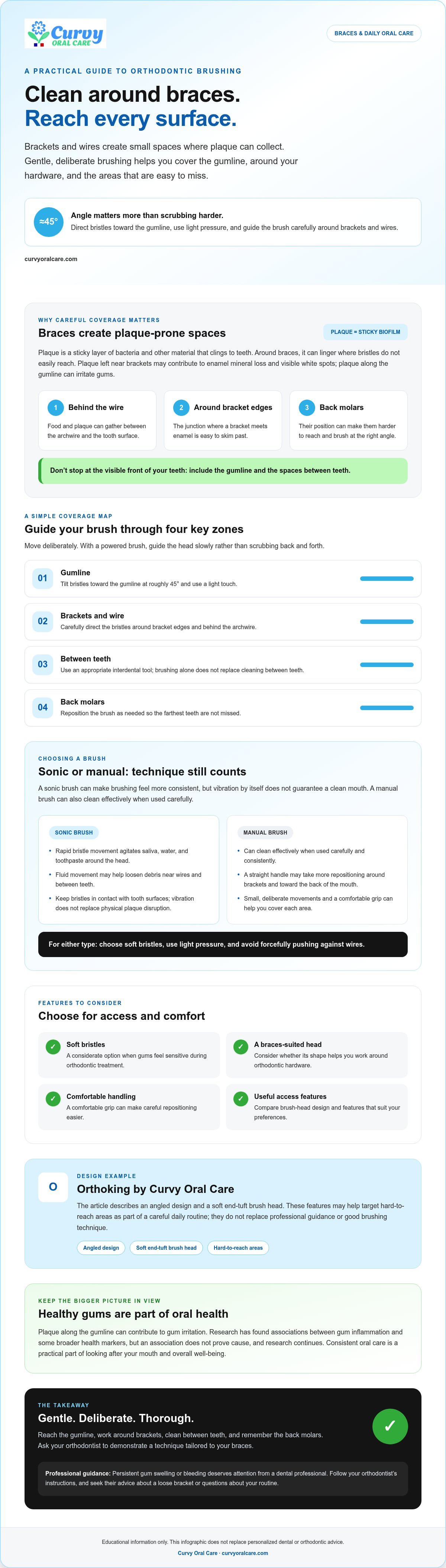
Brackets and archwires don’t make brushing impossible, but they add surfaces and tight spaces where plaque can collect. Plaque is a sticky biofilm, a layer of bacteria and other material that clings to teeth. Around braces, it can linger where bristles don’t easily reach, making careful, consistent technique especially important.
If plaque stays around a bracket, acids produced by bacteria can remove minerals from the enamel. This process, called demineralization, may leave white spots that can remain visible after braces are removed. Plaque along the gumline can also irritate the gums. In some people, ongoing irritation is associated with swollen or enlarged gum tissue, sometimes called gingival enlargement. Persistent swelling or bleeding deserves attention from a dental professional.
The Hidden Areas Where Plaque Accumulates
Pay attention to small spaces, not just the visible front of each tooth:
- Behind the archwire: Food and plaque can gather between the wire and tooth surface.
- At the bracket edge: The junction where a bracket meets enamel is easy to skim past.
- Around the back molars: Their position already makes them less accessible, and braces can make it harder to angle a brush head into the area.
Clean the gumline and between teeth, too. Brushing only the visible surfaces may leave plaque in these less obvious places.
Why Manual Brushing Can Feel Difficult
A conventional straight-handled brush may require extra repositioning to clean around protruding brackets and reach the back of the mouth. It also takes practice to direct bristles toward the gumline at roughly a 45-degree angle, rather than brushing only across the tooth surface. If your hand or jaw gets tired, it’s tempting to rush or stop before covering every area. Small, deliberate movements and a comfortable grip can help. Ask your orthodontist to demonstrate a technique for your appliance.
Electric brushes have a history that includes designs for orthodontic patients; the history of electric toothbrushes offers a broader overview of how these tools have developed. Whatever brush you choose, access, gentle technique, and regular cleaning all matter. A toothbrush designed for braces is one option to discuss with your orthodontist as you build a routine for hard-to-reach areas.
Gum inflammation is local, but the mouth is part of the body. Research has found associations between gum inflammation and some broader health markers, though an association doesn’t prove that one causes the other, and research continues. A consistent sonic toothbrush for braces and orthodontic care routine can help you target plaque-prone spots as part of everyday oral care, but it doesn’t replace professional advice.
Sonic Technology vs. Manual Brushing for Orthodontic Care
A sonic brush can make brushing feel more consistent, but vibration alone doesn’t guarantee a clean mouth. Manual brushes can also clean effectively when used carefully. With a powered brush, the bristles move rapidly while you guide the head slowly across each tooth, bracket, and gumline instead of scrubbing back and forth.
Sonic vibrations create rapid bristle movement that agitates saliva, water, and toothpaste around the brush head. This fluid movement may help loosen food debris near wires and in spaces between teeth, but it isn’t a substitute for placing bristles against tooth surfaces. Plaque still needs to be physically disrupted, and brushing doesn’t replace cleaning between teeth with an appropriate interdental tool.
The Science of Gentle, Effective Brushing
Sonic brushes vibrate; oscillating-rotating brushes move their heads in a different pattern. Neither type is automatically better or gentler for every person. If your gums are sensitive during orthodontic treatment, choose a soft-bristled head and use light pressure. Let the bristles reach around brackets and along the gumline without forcefully pushing against wires. Gentle brushing is part of daily care, but no brush is a reason to ignore a loose bracket or your orthodontist’s instructions.
Evidence supports powered brushes as a useful option, though findings aren’t specific to every sonic model or type of braces. A Cochrane systematic review found that powered brushes reduced plaque and gingivitis compared with manual brushes across the studies reviewed. Technique and coverage still matter.
Technology That Helps You Keep a Routine
Braces add surfaces to clean, so a steady routine matters. Brush twice a day, aiming for two minutes unless your dental professional recommends otherwise. A built-in timer can help you avoid stopping early. Divide your attention across the front, back, and chewing surfaces, then carefully revisit around brackets and the gumline. A pressure sensor, if included, can alert you when you’re pressing too hard. Treat it as a prompt to ease up, not a guarantee against gum problems or recession.
Choosing a sonic toothbrush for braces and orthodontic care is one way to support a thorough routine, especially if the brushing motion feels easier to manage. For more background on EMF-free brush design, see this guide to EMF-free sonic toothbrushes. If you’re building a travel-ready routine, you can also explore this sonic toothbrush and toothpaste travel set.
The Angle Advantage: Why Design Matters for Braces
A powerful motor can’t clean a spot the brush head can’t comfortably reach. With braces, brackets project from the tooth surface, while wires cross the path of the bristles. A straight-handled brush can work, but reaching around this hardware may require repeated adjustments to your wrist and brush position. Design matters because access affects how easily you can clean consistently.
Back molars make the challenge clear. They sit far behind the front teeth, and their cheek-side surfaces can be awkward to reach without bumping the handle or head against brackets. An angled neck changes the approach: it may help you position the bristles toward the tooth surface instead of pushing the brush straight into the hardware. Curvy Oral Care describes its patented angled design as a way to improve access to difficult spots, but no brush angle replaces careful, tooth-by-tooth coverage.
Navigating Around Brackets and Wires
To clean around brackets, guide the bristles gently toward the tooth above and below the archwire. An angled brush head may make this position easier to find and help reduce awkward contact between the head and brackets. It won’t automatically tuck bristles beneath a wire or clean every surface. Pause at each bracket and adjust the head so the bristles contact the enamel. The Orthoking toothbrush for braces is a purpose-designed option to consider when comparing brush access and orthodontic-specific features.
Protecting the Gumline During Treatment
The gumline deserves the same precision. The sulcus is the shallow groove where the tooth meets the gum. Plaque can collect at this margin, so angle the bristles gently toward it rather than scrubbing hard or forcing them under the gum. A commonly taught brushing approach uses an angle of about 45 degrees toward the gumline; your orthodontist can show you how to adapt it around your appliance.
Good access can make it easier to clean plaque-prone areas consistently. That may support gum health, but an angled head can’t guarantee that bleeding will stop. Use light pressure and clean all sides of the teeth, including where the wire meets the brackets. If you notice persistent bleeding or swelling, ask your dentist or orthodontist for advice.
Practical tip: At the back of the mouth, turn the brush so its bristles can reach the outer surface and very back edge of each terminal molar, the last tooth in the row. Move slowly, then repeat on the other side. A thoughtfully angled sonic toothbrush for braces and orthodontic care can make positioning feel more manageable, while consistent technique does the essential work.
Choosing Your Braces-Safe Sonic Toothbrush: Key Features for 2026
A useful toothbrush is one you can position comfortably around brackets, wires, and the gumline. Compare practical features first: a soft brush head, easy access to awkward areas, and controls that suit your mouth. Modes and EMF-free design may also matter to your preferences, but neither replaces gentle technique or advice from your orthodontist.
- Soft, tapered, or orthodontic-specific bristles: Look for bristles that can reach around bracket edges without heavy pressure. Follow the manufacturer’s guidance on brush-head compatibility.
- Useful brushing modes: If a model offers Clean, Sensitive, or Massage settings, a gentler setting may feel more comfortable when your teeth or gums are sore. Modes vary by brush, so check its instructions and ask your orthodontist if you’re unsure.
- Replacement-head plan: Worn bristles may be less effective at cleaning. Curvy Oral Care’s brush-head subscriptions are described as providing fresh heads every three months; follow the replacement guidance for the brush you choose.
EMF-Free Design: A Preference, Not a Proven Health Benefit
Some shoppers prefer oral-care products marketed as EMF-free as part of a broader interest in product materials and design. That preference can guide a purchase, but it’s important to separate marketing language from established health evidence. The information here doesn’t establish that reducing electromagnetic exposure from an electric toothbrush protects the brain or makes daily brushing safer. Focus on features you can assess, such as bristle softness, access, and ease of use. Curvy Oral Care offers EMF-free angled sonic toothbrushes, but the choice should reflect your needs rather than fear about ordinary devices.
Toothpaste and Enamel Support
Braces make it especially important to clean around brackets, where plaque can linger. Choose toothpaste appropriate for your needs and ask your dental professional what they recommend during orthodontic treatment. Hydroxyapatite is a mineral found in teeth and is used in some toothpastes; consider product claims about enamel support alongside guidance from your dentist or orthodontist. It doesn’t replace careful cleaning or professional care. You can read about hydroxyapatite toothpaste as one option for your routine.
A sonic toothbrush for braces and orthodontic care should make thorough brushing manageable, not encourage you to press harder. If you’d like to compare a toothbrush and toothpaste option for your routine, explore this sonic toothbrush and toothpaste set.
The Orthoking Solution: Precision Cleaning for Your Orthodontic Journey
Braces add surfaces and tight spaces to your daily cleaning routine. A brush designed with orthodontic needs in mind may make it easier to approach those areas carefully. Curvy Oral Care’s Orthoking is a sonic toothbrush created for people with braces, implants, or sensitive gums. Its soft end-tuft brush head is designed to help target smaller areas around orthodontic hardware. The brush delivers up to 28,000 vibrations per minute, though effective cleaning still depends on gentle pressure and careful positioning.
Angled brush designs can also help you direct the bristles toward hard-to-reach areas, including the back molars. Think of the angle as a way to improve access, not as a shortcut. Move deliberately around each bracket and along the gumline.
What Makes Orthoking Different?
The Orthoking combines sonic brushing with a soft, end-tuft head intended for precision around braces. Rather than assuming any powerful brush will reach every surface, consider whether the head and handle make it comfortable to clean above and below wires, around brackets, and at the back of your mouth. Curvy Oral Care also offers a brush-head subscription designed to provide fresh heads every three months. Check the product guidance for replacement advice specific to your brush.
Your Daily Orthodontic Routine
Keep the steps simple and repeatable. Brush twice daily, using light pressure, and make sure your routine reaches beyond the visible front surfaces:
- Angle toward the gumline: Direct the bristles gently toward the gum margin, using an angle your orthodontist recommends.
- Clean around brackets: Brush carefully above and below the archwire so the bristles contact the tooth around each bracket.
- Reach the back molars: Turn the brush as needed to clean the outer, inner, and chewing surfaces of the last teeth.
- Clean between teeth and your tongue: Use an appropriate interdental cleaner for spaces a toothbrush can’t reach, and include gentle tongue cleaning.
For a travel-ready option to support your brushing routine, take a look at this sonic toothbrush and toothpaste travel set. Keep up with regular dental and orthodontic visits, too. If bleeding or swelling persists, ask a dental professional for advice.
Braces are part of a longer oral-care journey. A suitable brush, gentle technique, and consistent attention to brackets, gumline, and back molars can make daily cleaning more manageable. The best sonic toothbrush for braces and orthodontic care is one that fits your needs and helps you maintain those habits; your orthodontist can help you choose.
Make Your Braces-Care Routine Easier to Keep
Braces make careful cleaning more demanding, but your routine doesn’t need to feel complicated. Keep three essentials in mind: use gentle, deliberate technique around brackets, clean along the gumline and reach the back molars, and replace brush heads according to their care guidance. These habits support healthy gums and help you care for your teeth throughout orthodontic treatment.
A sonic toothbrush for braces and orthodontic care should fit your needs and make thorough brushing feel manageable. Curvy Oral Care’s options include EMF-free technology, a patented angled design intended to improve access, and subscription options for replacement brush heads. These are features to compare, not substitutes for sound technique or your orthodontist’s recommendations.
Explore the sonic toothbrush and toothpaste travel set as one option for your routine. Keep up with daily care, and ask your dental professional for guidance whenever your gums or braces need extra attention. Small, consistent steps can help you feel more confident caring for your smile.
Frequently Asked Questions
Can I use a sonic toothbrush with traditional metal braces?
Yes, a sonic toothbrush can generally be used with traditional metal braces. Choose a soft-bristled head, use gentle pressure, and guide it carefully around brackets, wires, and the gumline. The best sonic toothbrush for braces and orthodontic care is one you can maneuver comfortably while reaching all tooth surfaces. Ask your orthodontist whether a particular brush or technique suits your appliance and treatment plan.
Will a sonic toothbrush loosen my brackets or wires?
Normal, gentle brushing with a sonic toothbrush isn’t generally expected to loosen brackets or wires, but avoid pressing the head forcefully against orthodontic hardware. Let the bristles contact the teeth around each bracket instead of scrubbing the wire. If a bracket feels loose or a wire shifts, stop brushing that area and contact your orthodontist for advice. Don’t try to repair or adjust the appliance yourself.
How often should I replace the brush head on my orthodontic sonic toothbrush?
Curvy Oral Care recommends fresh brush heads every three months through its subscription option. Check the care instructions for your specific toothbrush, and replace its head sooner if bristles become frayed or damaged. Worn bristles may not clean as effectively, especially around brackets and along the gumline. If you’re unsure which replacement head fits your brush, confirm compatibility before ordering.
Is a sonic toothbrush better than a manual brush for braces?
Not necessarily. Both manual and electric toothbrushes can be used with braces; careful technique and thorough coverage matter most. A powered brush may make brushing feel easier or more consistent, while a manual brush can also clean well when used deliberately. Whichever you choose, clean above and below brackets, along the gumline, and around the back molars. Your orthodontist can suggest an approach suited to your needs.
What is an EMF-free sonic toothbrush, and why is it recommended?
EMF-free is a product design claim used by Curvy Oral Care for its toothbrushes. Some people prefer this feature, but it shouldn’t be presented as a proven health benefit or a medical recommendation. There isn’t enough information here to conclude that reducing electromagnetic exposure from a toothbrush improves health. For a braces-friendly choice, also consider soft bristles, comfortable handling, and whether you can reach difficult areas.
How do I clean the back molars effectively with braces?
Move slowly and turn the brush head so the bristles reach the outer, inner, and chewing surfaces of each back molar. Open your mouth comfortably, and use a gentle angle rather than forcing the handle past your brackets. Spend extra time on the last tooth at each side, where access can be awkward. Clean between teeth with an appropriate interdental tool as recommended by your dental professional.
Can children with braces use the Orthoking or a mini sonic toothbrush?
Children with braces should use a toothbrush that fits comfortably and is appropriate for their age and appliance. Curvy Oral Care describes the Orthoking as designed for braces, while its product range also includes a mini sonic toothbrush for kids. That doesn’t confirm the mini model is suitable for every child with braces. Ask the child’s orthodontist to check product suitability and follow the manufacturer’s instructions.
What should I do if my gums start bleeding while using a sonic brush with braces?
Use a light touch and check that you’re guiding the bristles gently along the gumline rather than pressing or scrubbing. Plaque near the gums can contribute to irritation, but bleeding can have different causes and can’t be diagnosed from a symptom alone. If bleeding persists, or you notice swelling, pain, or another change, contact your dentist or orthodontist for an assessment and personalized advice.
Health & Medical Disclaimer: This content is for informational and educational purposes only. It isn’t a substitute for professional dental or medical advice, diagnosis, or treatment. Consult a qualified dental or medical professional about your individual needs, and seek professional advice for persistent bleeding, swelling, pain, or other significant changes in oral health.

Article by
Aline Peixe Nebot
Aline Peixe Nebot is a Veterinarian and passionate advocate for better oral health, committed to raising awareness of oral health as a matter of public health. She actively promotes the importance of simple, effective oral care routines and works to educate the public about the often-overlooked link between oral health and overall systemic health. Her mission is to make better oral care knowledge accessible to everyone and encourage healthier habits for life.
Disclaimer
Disclaimer: The information provided in this article is intended for general educational and informational purposes only. It is not intended to replace professional medical, dental, or healthcare advice, diagnosis, or treatment.
Some content may be AI-assisted and is provided to support health education and awareness. While we strive to share accurate and up-to-date information, health recommendations and scientific evidence can evolve, and the information presented may not apply to every individual.
The connection between oral health and overall systemic health is an important and developing area of research. Associations discussed in this article should not necessarily be interpreted as proof of cause and effect.
Always consult a qualified dentist, physician, or other healthcare professional regarding your individual health, symptoms, medications, or treatment decisions. Do not delay or discontinue professional care based on information presented in this article.
This content is for education and awareness—not diagnosis or treatment.