
Rechargeable sonic toothbrush long battery life Best Practices and Expert Advice
A rechargeable sonic toothbrush with long battery life can make travel simpler and reduce charging interruptions at home. Battery life varies widely: basic models may last around 7 days per charge, standard models typically last 16–30 days with twice-daily use, and some premium models run for more than 40 days. For a practical benchmark, look for at least 30 days per charge.
That difference matters when you’re packing for a trip, keeping up a brushing routine, or deciding whether a higher-priced model is worth considering. Battery performance is only part of the picture, though: charging habits, brushing settings, and replacement-head costs also shape everyday value. This guide explains how battery life affects travel and daily oral care, shares straightforward ways to maintain battery performance, and compares what to consider across basic, standard, and premium toothbrush tiers. You’ll come away with a clearer sense of which features fit your routine, so you can choose a toothbrush that’s convenient to use and support consistent care along the gumline and between teeth.
Key Takeaways
- Match battery capacity to your travel habits and brushing routine so charging is easier to plan.
- Learn how brushing settings and charging habits can affect battery performance over time.
- Use a built-in timer to support a complete brushing routine; the American Dental Association recommends brushing for 2 minutes.
- Compare ongoing brush-head needs alongside the toothbrush’s upfront cost when weighing value across price tiers.
- Choose a toothbrush that makes it easier to brush consistently, including along the gumline and around hard-to-reach areas.
1. How does long battery life improve travel and daily oral care?
A longer-lasting toothbrush battery means fewer charging interruptions at home and less equipment to pack for travel. Some sonic toothbrushes operate for up to six weeks per charge, while a 70-day battery requires roughly five charges per year. Those runtimes can simplify trip planning, especially when you’re moving between hotels or staying somewhere with limited outlet access.
Your brushing routine affects how often you need to charge. Brushing twice a day or more can use more power than brushing once daily. Consider how you actually brush before relying on a runtime estimate. If you share a handle, include the other person’s brushing sessions too, since every use draws from the same battery.
How long does a rechargeable sonic toothbrush take to charge fully? It depends on the model, battery capacity, charger, and how depleted the battery is. Follow the product instructions for its full-charge estimate. A USB-C connector alone doesn’t determine charging time.
Are rechargeable sonic toothbrushes with long battery life compatible with U.S. outlets? Compatibility depends on the charger’s input rating and plug. For U.S. outlets, use a charger rated for that electrical supply. A USB-C cable may still need a compatible power adapter.
USB-C can simplify packing if your toothbrush supports it and you already carry compatible equipment. Before traveling, check whether the handle charges through a USB-C port or a separate charging stand. A compact case can protect the handle and keep its brush head separate from other belongings. Pack the matching charger if your trip may last longer than the remaining charge.
Travel convenience should support a thorough routine, not cut it short. Brush carefully around the gumline and back molars, even when your bathroom setup changes. Plaque, a sticky film of bacteria, can collect along the gumline. If it remains there, it can irritate the gums and contribute to inflammation. Angle the bristles toward the gumline and move slowly across each area instead of brushing only visible surfaces.
Before leaving, check the battery indicator, pack the correct charging equipment, and put the brush in a clean case. These simple steps make it easier to maintain your routine away from home. Consistent daily care, including attention to the gumline, helps keep travel from disrupting your oral-health routine.
2. Battery lifespan maintenance and degradation
A sonic toothbrush battery may gradually hold less charge. Compare its current runtime with how it performed when new. A shorter interval between charges may indicate battery wear, but frequent use and intensive settings also draw power. Note when charging becomes more frequent, then consider whether your routine or selected mode has changed.
Brushing settings matter. Deep-clean modes can drain a sonic toothbrush battery faster than gentle or standard settings. Choose a mode that suits your routine rather than automatically selecting the most intensive option. A standard mode may use less power while still allowing you to focus carefully on the gumline and back molars.
Charging advice can differ by battery design, so follow the toothbrush maker’s instructions first. The maintenance guidance for this topic recommends allowing the battery to deplete before recharging, and charging only when necessary to help preserve battery health. In practice, avoid plugging in the handle after every short use if it still has ample charge.
Avoid leaving a toothbrush on its charger continuously unless the manufacturer’s instructions call for it. Remove the handle after charging when instructed, rather than treating the charging stand as permanent storage. If the manual specifies a different routine, follow its guidance for that model.
Build a simple charging routine around how you use the toothbrush. Check the charge indicator before a trip, and recharge when the battery is low or the instructions call for it. If the handle has been unused for a while, review the manual before charging. Keep the charger dry and use the supplied or compatible charging equipment.
Pay attention to temperature and storage, too. Keep the handle away from direct heat, such as a sunny windowsill, and don’t leave it in a hot car. Store the toothbrush in a dry place after cleaning, and don’t wrap a damp handle tightly inside a travel case. These steps help protect the device without changing its intended charging routine.
To spot a lasting change, compare performance under similar conditions. Use the same brushing mode, maintain the same daily routine, and note how often charging is needed. If runtime drops noticeably despite those consistent habits, consult the product instructions for troubleshooting. A battery that no longer holds a useful charge may need professional support or replacement, depending on the model.
For travel, organize the handle and its accessories so charging remains easy to manage. A sonic toothbrush travel setup can keep your brushing essentials together, while a planned recharge before departure reduces last-minute packing stress. Keep battery care simple: select an appropriate mode, charge when needed, and follow the specific manual.
3. Brush timers and low-battery alerts
A timer helps you give each brushing session enough attention. The American Dental Association recommends brushing for 2 minutes, and a toothbrush timer can make that duration easier to track. Instead of guessing when to stop, start the timer and brush methodically across every area, including the gumline and back molars.
Some electric toothbrushes signal when to move to another part of the mouth. Treat each signal as a reminder to shift focus, not proof that an area is clean. For example, divide your brushing into four sections: upper right, upper left, lower right, and lower left. Use the full two minutes to cover tooth surfaces without rushing.
A timer supports good technique, but can’t replace it. Hold the brush so its bristles reach the gumline, then guide it across the teeth with controlled movements. Pay attention to the inside surfaces and back teeth, not just the visible fronts. If the timer ends while you’re still working through a difficult area, finish carefully rather than brushing harder.
Low-battery alerts help you plan a recharge before the toothbrush stops working. Indicators vary by model: a handle might show a light, display a symbol, or change its vibration. Read the instruction manual so you know what your specific toothbrush’s signal means.
Respond to an alert with a simple routine. Check the charge indicator after brushing, then put the handle on its charger when the battery is low and the instructions call for charging. Before traveling, check the indicator and pack the compatible charger if needed. This brief check can prevent an unexpected interruption to your usual morning or evening brushing.
Don’t confuse a low-battery alert with a brush-head reminder. The battery signal refers to power; a head reminder means it’s time to replace the brush head. If the bristles look worn or the handle’s reminder appears, follow the toothbrush manufacturer’s replacement guidance. Keeping the two cues separate makes maintenance easier to manage.
Pair the timer with a consistent brushing pattern. Start on one side of your mouth, move through each section, and include the gumline and hard-to-reach teeth. When the two-minute timer ends, consider whether you covered every area. Use the battery indicator to plan charging, not to shorten brushing or make up for missed surfaces.
Timers and alerts are practical prompts, not substitutes for daily care. Brush twice daily, clean between teeth, and follow your device’s instructions. If you notice persistent gum bleeding or other changes, seek professional dental advice rather than relying on a toothbrush signal to assess your oral health.
4. Balancing purchase price with replacement-head costs
In the United States, sonic electric toothbrushes typically range from $21 to $62 on the market, with a median of about $42. This aggregate market range was collected on October 23, 2026; it isn’t a price for any particular seller or model.
Compare ongoing costs as carefully as the handle’s purchase price. Replacement heads are a recurring expense, especially when they use a specific attachment system, and can affect how affordable a toothbrush feels over time.
Before choosing a model, note the handle’s price, the cost of compatible replacement heads, and the recommended replacement schedule. Then consider whether the battery life, charging setup, and brushing features suit your routine. A lower upfront price doesn’t automatically mean lower long-term spending if replacement heads cost more.
Compatibility matters. A brush head that doesn’t fit your handle isn’t a practical replacement, so identify the exact head type before comparing costs. Check whether the toothbrush uses proprietary heads or a broader compatible design. Keep the model name and head type together in your notes, especially if people at home use different handles.
Battery performance can contribute to everyday value, but it doesn’t eliminate the need to replace worn heads. A toothbrush may last longer between charges and still need regular head changes. Compare battery life as a convenience feature, then evaluate replacement-head costs separately. This gives you a clearer view of the trade-off instead of treating fewer charging sessions as savings on brush heads.
For a useful comparison, make a table with one row per toothbrush model. Record the price, compatible head cost, stated battery runtime, and replacement guidance. Use the same categories for each option. This makes the comparison fair and helps reveal what matters most to your household, from travel convenience to ongoing head availability.
Don’t keep a worn brush head just to delay buying a replacement. Frayed bristles can make controlled brushing less comfortable, particularly along the gumline and around back molars. Follow your toothbrush’s replacement guidance and include that schedule in your purchase decision. A practical choice balances a manageable handle price, suitable battery performance, and access to replacement heads for regular care.
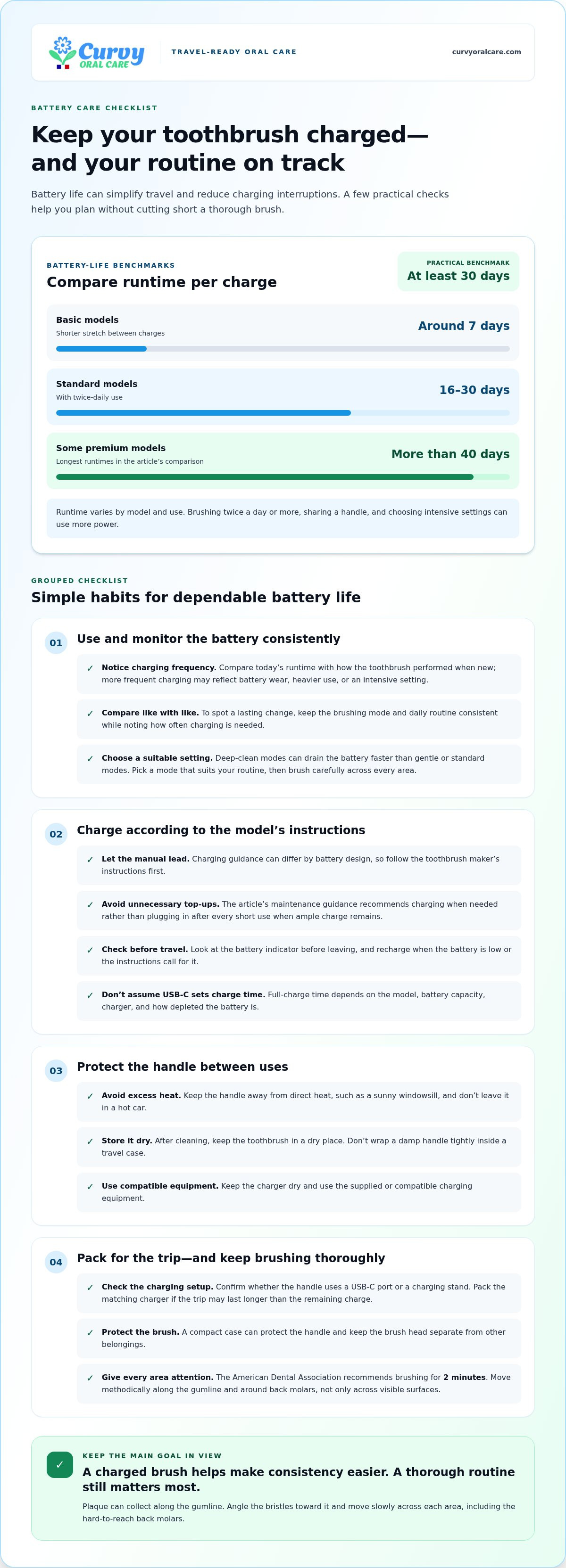
5. Battery-life benchmarks across basic, standard, and premium sonic toothbrushes
Battery benchmarks are useful only when you compare similar usage conditions. First, check whether the stated runtime assumes one user or more, and whether it reflects the brushing mode you expect to use. Then compare the estimate with your own routine. A rechargeable sonic toothbrush with long battery life should fit your habits, not just look impressive in a product description.
Which rechargeable sonic toothbrushes have the longest battery life? Premium models may offer longer runtimes, but category benchmarks alone can’t identify a specific model as the leader. Compare each product’s stated runtime, usage assumptions, and charging method to find the right fit for your routine.
To compare days or weeks per charge, look for a model-specific estimate and its stated conditions. A runtime based on lighter use may not match a household that shares one handle or selects intensive modes. If a listing gives only a broad claim, consult the manufacturer’s instructions to understand the expected use rather than treating the number as a guarantee.
Battery chemistry is another comparison point, but runtime doesn’t reveal it. Which sonic toothbrushes use lithium-ion batteries versus NiMH batteries? It depends on the model. Look for the battery type in the specifications or manual, and compare it separately from charge duration. Don’t assume two brushes use the same chemistry because their advertised runtimes look similar.
Cleaning modes and brushing performance also need separate consideration. Deep-clean modes can draw more power than gentler settings, while sonic toothbrushes operate at 30,000–40,000 strokes per minute. That operating figure doesn’t show whether a person brushes thoroughly. Consider how comfortably you can guide the brush over each surface, especially around the gumline and back molars.
Warranty terms can help you assess long-term value, but read the coverage details. A warranty may distinguish manufacturing defects from ordinary battery wear, and its terms determine what battery support applies. Check the coverage period, exclusions, and service process rather than relying on warranty length alone.
Build a comparison around your priorities: expected runtime under your usage pattern, battery type, charging setup, useful modes, and warranty terms. This gives you a more practical way to choose a rechargeable sonic toothbrush with long battery life than ranking models by a single headline claim. If travel organization matters too, explore the sonic toothbrush travel case option as part of planning your daily essentials.
Premium rechargeable sonic toothbrushes are the strongest candidates, provided their runtime estimates match your expected usage and brushing mode.
Curvy Oral Care: Sonic Toothbrushes
Curvy Oral Care offers sonic toothbrushes for people building a consistent daily brushing routine. If reaching the gumline, back molars, or other difficult spots is a challenge, its angled toothbrushes are designed to help you access those areas. Battery convenience can make a routine practical, while careful brushing helps clean beyond the visible tooth surfaces.
Replacement brush heads and brush-head subscriptions support ongoing toothbrush maintenance. Choose a brush style that suits your needs, follow its care instructions, and keep up with regular brushing and interdental cleaning. Curvy Oral Care products are part of daily oral care, not a replacement for professional dental advice. Visit curvyoralcare.com to explore its sonic toothbrushes and related oral-care products.
Make Your Next Brush Routine Easier to Keep
Choose a rechargeable sonic toothbrush with long battery life that fits your routine, then make brushing a steady part of your day. A reliable habit supports more than clean teeth: oral health is part of overall health, and healthy gums are an important foundation for a healthy mouth. Research has found associations between oral health and some broader health conditions, but an association alone doesn’t prove that one causes the other. The science continues to develop, so keep daily prevention practical and consistent.
Build a routine that goes beyond the toothbrush. Clean between your teeth, brush your tongue, and keep regular dental visits. Pay attention to persistent bleeding, swelling, pain, or other changes, and seek professional advice rather than trying to diagnose the cause yourself.
If a travel case would help you keep your brushing essentials organized, explore the sonic toothbrush travel case option. Keep making small, thoughtful choices that support a comfortable, consistent oral-care routine.
Frequently Asked Questions
How does long battery life improve travel and daily oral care?
Longer battery life means fewer charging interruptions on trips and during busy weeks at home. Before packing, check the toothbrush’s charge indicator and bring its matching charger or cable if your trip could outlast the remaining charge. At home, a predictable charging routine can help prevent a dead handle from disrupting brushing. Battery convenience supports the habit, but careful brushing still needs to cover every tooth surface.
What battery life benchmarks should you expect from top sonic toothbrushes?
Battery-life benchmarks range from about a week for some basic models to more than 40 days for some premium models. Standard models typically provide 16–30 days with twice-daily use. Use each toothbrush’s stated usage conditions to make a fair comparison, since different brushing frequencies can change real-world runtime. A longer estimate can be useful, but it isn’t a measure of cleaning quality by itself.
What is the best electric toothbrush overall?
There isn’t one best electric toothbrush for everyone. Look for a model that feels comfortable, is easy to guide along the gumline, and suits your charging habits. Consider whether its brush heads are easy to replace and whether its instructions make daily use clear. If you have braces, implants, sensitive gums, or other specific concerns, discuss suitable brushing tools with your dental professional.
What routines maximize sonic toothbrush battery lifespan?
Follow the charging instructions for your exact toothbrush, since battery care varies by model. Use a standard or gentle setting for routine brushing if it meets your needs, and choose intensive modes selectively. Keep a note of charging dates; if charging becomes more frequent, compare your usage settings before assuming the battery has changed. Store the handle according to its manual.
Which sonic toothbrush features influence battery performance?
Brushing mode and frequency affect how quickly a toothbrush uses its charge. Deep-clean modes can drain the battery faster than gentle or standard settings. Battery chemistry and charging design also vary between models, so runtime claims aren’t interchangeable. A low-battery indicator helps you plan charging, while a timer supports brushing duration; neither feature alone tells you how effectively you’ve cleaned your teeth.
How can I extend the battery life of a rechargeable sonic toothbrush?
Use the charging routine in the manufacturer’s manual rather than applying one rule to every toothbrush. Select a brushing mode that fits your needs, avoid unnecessary charging, and remove the handle from its charger when instructed. Keep the charging area clean and dry, and store the handle away from direct heat. If runtime changes, compare your mode and usage habits before troubleshooting.
Do rechargeable sonic toothbrush batteries degrade, and can they be replaced?
Yes, battery performance can decline over time, and whether the battery can be replaced depends on the toothbrush’s design. Check the product manual for battery replacement instructions and approved service options. Don’t open a sealed handle or attempt an improvised repair, since that can damage the device. If the battery no longer holds a useful charge, follow the manufacturer’s guidance for that model.
Which rechargeable sonic toothbrushes have the longest battery life?
Some premium models last more than 40 days per charge, and the longest runtime mentioned is 70 days.

Article by
Aline Peixe Nebot
Aline Peixe Nebot is a Veterinarian and passionate advocate for better oral health, committed to raising awareness of oral health as a matter of public health. She actively promotes the importance of simple, effective oral care routines and works to educate the public about the often-overlooked link between oral health and overall systemic health. Her mission is to make better oral care knowledge accessible to everyone and encourage healthier habits for life.
Disclaimer
Disclaimer: The information provided in this article is intended for general educational and informational purposes only. It is not intended to replace professional medical, dental, or healthcare advice, diagnosis, or treatment.
Some content may be AI-assisted and is provided to support health education and awareness. While we strive to share accurate and up-to-date information, health recommendations and scientific evidence can evolve, and the information presented may not apply to every individual.
The connection between oral health and overall systemic health is an important and developing area of research. Associations discussed in this article should not necessarily be interpreted as proof of cause and effect.
Always consult a qualified dentist, physician, or other healthcare professional regarding your individual health, symptoms, medications, or treatment decisions. Do not delay or discontinue professional care based on information presented in this article.
This content is for education and awareness—not diagnosis or treatment.