
Quiet Vibrating Toothbrush: How to Find a Calmer, Comfortable Clean
What if a calmer toothbrush made your daily routine easier to stick with without compromising a thorough clean? A quiet vibrating toothbrush may feel less intrusive, but low noise alone doesn’t tell you whether a brush suits you or supports effective brushing.
If the buzz feels distracting against your teeth, or quietness claims seem impossible to compare, you’re not alone. Toothbrush sound and sensation can vary with motor design, brush-head contact, and the way you hold the brush. A louder sound doesn’t automatically mean a more effective clean.
This guide explains what can make an electric toothbrush noisy and offers a practical way to compare sound and comfort. You’ll also learn how brush shape and brushing technique can help you reach the gumline, spaces that are easy to miss, and back molars. The goal is to find a brush that feels comfortable enough for consistent use while helping you care for the areas that matter.
Key Takeaways
- Choose a quiet vibrating toothbrush by weighing its sound, vibration feel, and how comfortable it is to use consistently.
- Decibel readings are useful for comparison only when the measurement conditions are described and similar.
- Consider brush shape and access as well as sound, especially when brushing along the gumline and reaching back molars.
- Use a calm setting and gentle technique to make brushing feel more comfortable without altering the toothbrush.
- Curvy’s sonic angled toothbrush is designed to help reach areas that can be difficult to access with a conventional straight brush.
Why a Quiet Vibrating Toothbrush Can Make Brushing Feel Easier
A toothbrush can clean effectively and still feel unpleasant to use. For some people, the sound or vibration is a small annoyance. For others, it can make brushing feel intrusive enough to put off. Comfort is personal, and choosing a quiet vibrating toothbrush may make the routine feel more manageable.
Electric brushes use different mechanisms, including sonic and oscillating-rotating movements. The Electric Toothbrush Overview describes these broad types, but knowing the mechanism won’t tell you exactly how a particular brush will feel. People experience sound and vibration differently, so your own comfort matters alongside product descriptions.
When does toothbrush noise become a practical concern?
Context can shape how noticeable a brush feels. In a shared bathroom, an early-morning brushing session may feel disruptive. A hum or vibration that’s comfortable for one person may feel distracting or intense to someone with sensory sensitivities. Even the same person might find it easier to tolerate in a quiet room than when tired or stressed.
If brushing feels unpleasant, keeping up with the routine can become harder. Instead of judging yourself, notice what could make the experience more comfortable. A calmer setting or a brush that feels better in use may help brushing fit more easily into your day. These adjustments may change your experience, but they don’t change the device’s measured sound.
Does quieter automatically mean a better clean?
No. Sound level describes a listening experience, not how well you brush. Cleaning depends on coverage, technique, and consistency. A quiet brush can still miss areas, while a louder one can be used effectively. Sound preference is personal; it isn’t a measure of brushing effectiveness.
Healthy gums need attention beyond the visible fronts of teeth. Plaque can collect along the gumline and between teeth, and the back molars can be awkward to reach. Guide the brush deliberately around each tooth rather than rushing across the surfaces you can see. Clean between teeth with an appropriate interdental method as part of your routine, too.
For a practical look at reaching the gumline and back teeth, see this angled toothbrush guide to plaque and gumline care. Choose a brush that feels comfortable and lets you reach the areas that need attention. If brushing regularly causes pain or your gums keep bleeding, seek advice from a dental professional.
What Makes a Vibrating Toothbrush Sound or Feel Loud?
A powered toothbrush makes sound as its motor moves the brush head. Some sound travels through the air, while some vibration can be felt through the handle or, when the head touches your teeth, through your mouth. These experiences are related but not identical. A brush can seem noisy in a quiet room yet feel comfortable in your hand, or make a modest hum that feels unpleasant once it reaches your teeth.
Decibels, written as dB, describe sound level. They offer a way to compare readings, but they can’t capture every factor behind personal comfort, such as pitch, vibration sensation, or sensitivity to particular sounds. There’s no single decibel number that determines whether a quiet vibrating toothbrush will feel quiet to you.
How should readers interpret decibel readings?
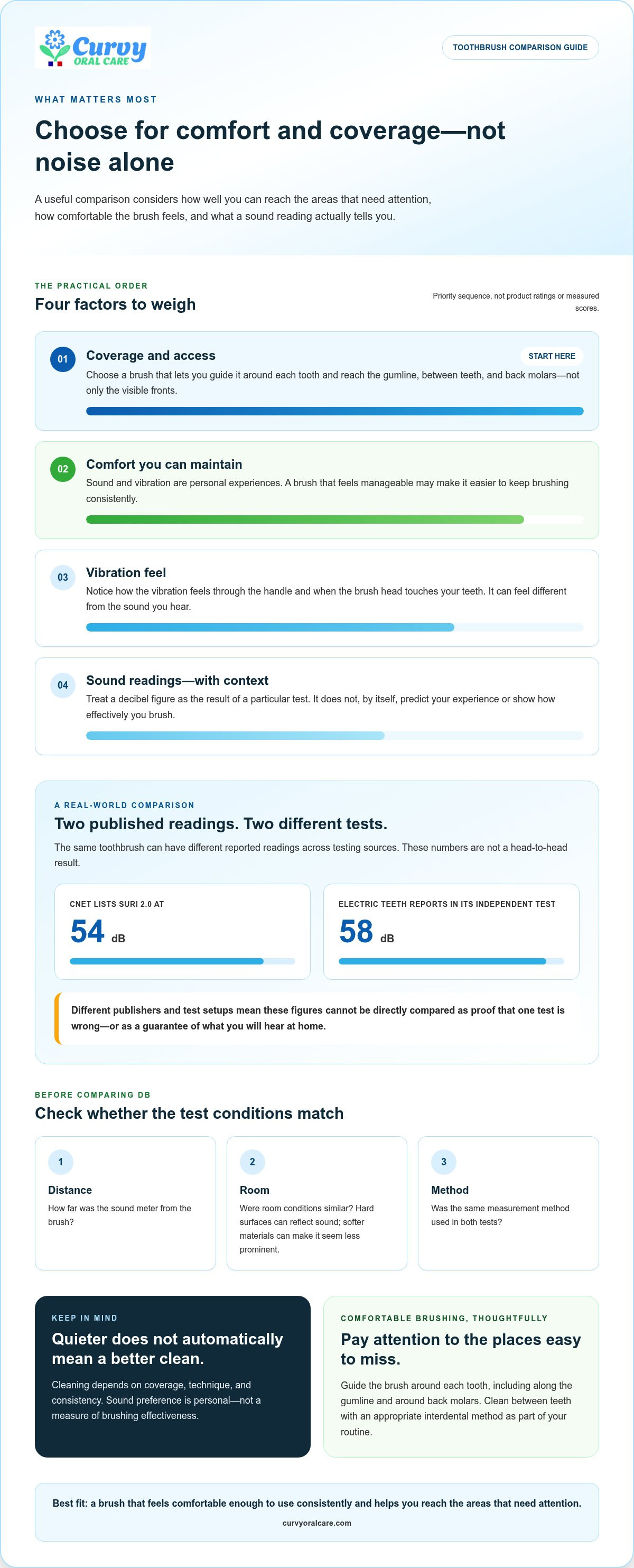
Treat a published reading as the result of a particular test, not a universal rating for every unit or bathroom. For example, CNET lists the SURI 2.0 at 54 dB, while Electric Teeth reports 58 dB in its independent test. Those figures are results from different publishers, not a guarantee of what you’ll hear at home or proof that one test is wrong.
For a fair comparison, look for details about measurement distance, room conditions, and testing method. A reading taken close to the brush in a reflective bathroom may not match one taken farther away in a room with soft furnishings. Decibel readings from different setups aren’t directly comparable unless the distance, room, and method are sufficiently alike. Without that context, a number can look precise while telling you little about how two brushes compare.
Why can one toothbrush feel louder than another?
Room acoustics can shape what reaches your ears. Hard surfaces may reflect sound and make it more noticeable, while the sound can seem less prominent in a room with softer materials. Contact matters, too: a brush resting against a surface or its head touching teeth may sound or feel different from a brush running freely in the air. These details can influence perception, but they don’t establish a fixed change in measured noise.
Brush condition is another variable. A worn head or a damaged brush may sound or vibrate differently from what you’re used to. That change alone doesn’t identify a fault, but it’s sensible to inspect the brush and follow its care instructions. If it appears damaged, stop using it and follow the manufacturer’s guidance.
When comparing models, notice both the audible hum and the sensation through the handle or teeth. If keeping your routine essentials together is useful, Curvy’s sonic toothbrush and toothpaste combo brings those items together without making a claim about sound level.
How to Compare Quiet Vibrating Toothbrushes Without Guesswork
A low sound reading can catch your eye, but it shouldn’t make the whole decision for you. To compare brushes fairly, separate what a test measures from what you experience during daily brushing. Look at sound evidence, vibration feel, brush shape, and how easily you can reach the gumline. Then weigh those details against the routine you can comfortably maintain.
Which details make a noise comparison useful?
Check whether a sound reading explains the distance from the brush, the room, and the measurement method. Compare numbers only when those conditions are described and sufficiently alike. Also distinguish a brand’s own claim from an independent test result or a personal review. Words such as “quiet” and “loud” describe someone’s impression, not a universal experience.
| What to compare | What to look for |
|---|---|
| Sound evidence | Is the number from a described test, a brand claim, or an individual impression? Are the distance, room, and method stated? |
| Vibration feel | Does the sensation through the handle or at the teeth feel comfortable to you? Sound ratings can’t answer this. |
| Brush shape | Can you hold and guide the brush comfortably around your mouth? |
| Gumline access | Can you position the head along the gumline and reach back teeth without awkward handling? |
This comparison keeps a single number in perspective. If two sound tests use different rooms or microphone distances, treat them as separate observations rather than a reliable head-to-head result. And if a review says a brush feels loud, take that as context about one person’s experience, not a promise of how it will feel to you.
How should sound fit into toothbrush selection?
Think about the full brushing experience. A comfortable handle and a brush head you can guide into difficult areas matter alongside sound. Consider whether you can use the brush consistently and clean deliberately, rather than rushing because its sensation bothers you. A pleasant sound profile can support comfort, but it can’t replace effective technique or careful coverage.
As you compare, picture your actual routine: reaching the inner surfaces, following the gumline, and cleaning around the back molars. A brush that feels acceptable but is awkward to position may not suit your needs as well as one you can guide with control. Likewise, a lower reported reading doesn’t establish that a model cleans better. Choose for sound, feel, access, and fit together.
Curvy’s sonic toothbrush has an angled design intended to help reach difficult areas. Explore the sonic toothbrush and toothpaste combo as an option if access is high on your list. The goal isn’t to find a number that guarantees comfort; it’s to choose a brush you can use carefully and consistently.
How to Make Electric Brushing More Comfortable and Consistent
You don’t need to change or interfere with a toothbrush to make brushing feel more manageable. Small adjustments to your setting, timing, and technique can help you focus on cleaning rather than bracing for the sensation. These steps won’t necessarily reduce the brush’s measured sound, but they may make the experience easier to fit into your day.
What can readers adjust without modifying the toothbrush?
If the sound may disturb someone nearby, try brushing in a different room or at a time that works better for your household. Choose a setting where you feel less rushed, and hold the handle comfortably rather than gripping it tightly. Place the brush gently against each area instead of pressing harder. Follow the manufacturer’s care instructions, and don’t open, cover, or alter the device.
Keep the technique simple and steady. Move the brush around your mouth methodically, giving attention to the gumline, inner surfaces, and back molars. If the sensation feels distracting, pause briefly, reset your grip, and continue when you’re comfortable. Household materials aren’t a reliable substitute for a brush’s intended design, so avoid wrapping or covering it to try to mute the sound.
How can comfort support a complete oral-care routine?
A comfortable brushing experience can make it easier to build a routine you can repeat. Aim to brush twice a day with fluoride toothpaste, using gentle pressure and taking care around the gumline. Plaque is a sticky film of bacteria that can collect where teeth meet gums. If it remains there, it can irritate gum tissue, so cleaning only the visible tooth surfaces isn’t enough.
Make the rest of your routine count, too. Clean between your teeth with an appropriate interdental method, since a toothbrush may not reach the spaces between teeth well. Clean your tongue as part of your daily care if it suits you, and keep up with regular dental checkups. These habits work together. A comfortable brush doesn’t replace thorough coverage or cleaning between teeth.
If you’re adjusting your routine and still notice persistent bleeding, swelling, pain, or another significant change, arrange an evaluation with a dental professional. Those signs can have different explanations, and a professional can assess what’s going on. You don’t need to solve persistent discomfort by changing your brushing technique alone.
Curvy’s sonic toothbrush and toothpaste can be part of your routine. Explore Curvy’s toothbrush and toothpaste combo. A calmer-feeling routine starts with practical choices, then builds through gentle, consistent care of the gumline, tooth surfaces, and spaces between teeth.
Choosing a Sonic Toothbrush That Fits Your Routine
The best fit isn’t decided by a sound reading alone. Consider how the brush sounds in your usual setting, how its vibration feels in your hand and against your teeth, and whether you can guide it comfortably around your mouth. A quiet vibrating toothbrush is a personal preference, not a shortcut to judging cleaning performance. Your routine, comfort, and ability to reach the areas that need attention belong in the decision, too.
What does an angled sonic brush bring to the comparison?
Brush shape is worth considering alongside sound. An angled design is intended to help users access areas that can be difficult to reach with a conventional straight brush. That can be useful as you work around the gumline or position the brush near back teeth, but the shape doesn’t make a claim about noise or guarantee a particular result. Careful positioning and brushing technique still matter.
Curvy’s angled sonic toothbrush combines sonic brushing with a shape designed to help reach difficult areas. Consider it as one option if access is high on your list. Its shape and purpose are separate from how quiet or comfortable any brush may sound or feel to you.
How can readers take a low-pressure next step?
Before choosing, pause and name your priorities. Is the sound noticeable enough to disrupt your routine? Does the vibration feel comfortable? Can you guide the head along the gumline and around the back molars without awkward handling? Those answers can help you weigh product information against your day-to-day experience, rather than relying on a single rating or someone else’s impression.
Once you have a brush that feels workable, focus on using it consistently and thoroughly. Brush twice a day with fluoride toothpaste, clean between teeth with an appropriate interdental method, and include tongue cleaning if it suits your routine. Pay attention to the gumline, where plaque can collect and irritate the gums. Keep regular dental checkups, and seek professional advice for persistent bleeding, swelling, pain, or other significant changes. A toothbrush supports daily care; it doesn’t replace professional evaluation.
If you’re looking for a set to support your daily routine, explore Curvy’s sonic toothbrush and toothpaste combo. Choose at your own pace, with comfort, access, and habits you can maintain guiding the decision.
Make Your Next Brush Feel More Manageable
Your next step doesn’t have to be finding a brush with a perfect sound rating. Choose a routine you can live with, then notice how the brush feels during ordinary use: Is the vibration tolerable? Can you guide it without rushing? Does brushing feel easier to return to each day? Those personal cues can help you make a more practical choice than a number alone.
A quiet vibrating toothbrush is valuable when its sound and feel work for you while still supporting careful daily brushing. Healthy gums are part of a healthy mouth, and oral health is connected with overall well-being. Research into these links continues, and associations don’t always show cause and effect. Let comfort support consistent care, and keep up with regular dental checkups. If you’re ready to consider an option for your routine, explore Curvy’s sonic toothbrush and toothpaste combo.
Small, repeatable steps matter. Find an approach that feels manageable, and give your daily oral care a calm, consistent place in your routine.
Frequently Asked Questions
Are sonic toothbrushes quieter than oscillating-rotating toothbrushes?
Not always. Sonic brushes often make a steady hum, while oscillating-rotating brushes may sound more mechanical, but design and sound vary between models. A quiet vibrating toothbrush is best judged using comparable test information and your own experience, not the brush type alone. If possible, try a brush in the setting where you’ll use it. A sound that feels subtle in one place may stand out in a quiet bathroom.
Why does my electric toothbrush sound louder when it touches my teeth?
Contact can change how vibration travels, so the brush may sound or feel different once the head touches your teeth. The sensation can also vary depending on where the head rests and how firmly you hold the handle. Try placing it gently rather than pressing. If the sound changes suddenly or the brush seems damaged, stop using it and follow the manufacturer’s care guidance.
Can a vibrating toothbrush feel uncomfortable even if its sound is low?
Yes. Sound and physical sensation are distinct, so a quiet motor can still feel intense through the handle or teeth. If the vibration bothers you, try a relaxed grip and gentle placement, and pause briefly if you need to reset. Don’t force yourself through pain. If discomfort continues or affects your ability to brush, ask a dental professional whether a different brush style or technique may suit your needs.
Do electric toothbrushes get louder as they age?
They can sound different over time, but a change doesn’t automatically mean the toothbrush has a fault. A worn brush head, accumulated residue, or damage may affect its sound or feel. Check the brush and head according to the manufacturer’s instructions, and replace the head when directed. If the handle is damaged or the sound changes sharply, stop using it and consult the manufacturer’s guidance rather than opening or altering the device.
What should I do if brushing makes my gums bleed?
Use gentle pressure and a soft-bristled brush, but don’t ignore bleeding that continues or returns. Plaque near the gumline can irritate gum tissue, and bleeding can have more than one cause, so it isn’t possible to identify the reason from this symptom alone. Keep cleaning carefully and arrange a dental evaluation for persistent bleeding, swelling, pain, or other changes. A dental professional can assess your gums and recommend appropriate care.
Is a quiet toothbrush a good choice for someone with sensory sensitivity?
It may be, if its sound and vibration feel more manageable to you, but “quiet” claims don’t predict everyone’s experience. Consider the pitch and tactile sensation as well as the advertised sound level. If possible, try the brush in a calm setting before relying on it for your routine. If brushing remains difficult, a dental professional can help you explore a comfortable approach while keeping daily cleaning on track.
This article is for educational purposes only and is not a substitute for professional dental or medical advice, diagnosis, or treatment. Consult a qualified dental or medical professional about individual health concerns.

Article by
Aline Peixe Nebot
Aline Peixe Nebot is a Veterinarian and passionate advocate for better oral health, committed to raising awareness of oral health as a matter of public health. She actively promotes the importance of simple, effective oral care routines and works to educate the public about the often-overlooked link between oral health and overall systemic health. Her mission is to make better oral care knowledge accessible to everyone and encourage healthier habits for life.
Disclaimer
Disclaimer: The information provided in this article is intended for general educational and informational purposes only. It is not intended to replace professional medical, dental, or healthcare advice, diagnosis, or treatment.
Some content may be AI-assisted and is provided to support health education and awareness. While we strive to share accurate and up-to-date information, health recommendations and scientific evidence can evolve, and the information presented may not apply to every individual.
The connection between oral health and overall systemic health is an important and developing area of research. Associations discussed in this article should not necessarily be interpreted as proof of cause and effect.
Always consult a qualified dentist, physician, or other healthcare professional regarding your individual health, symptoms, medications, or treatment decisions. Do not delay or discontinue professional care based on information presented in this article.
This content is for education and awareness—not diagnosis or treatment.