
Kids toothbrush for plaque: Compare options by age, skill, and fit
The best kids toothbrush for plaque is one your child can hold comfortably and use gently along the gumline and around every tooth. Aim for two minutes of brushing; manual and powered brushes can both clean effectively when used twice a day for two minutes. A soft-bristled brush, small head, and 45-degree angle toward the gums help make each pass more thorough.
A toothbrush can look right on the shelf yet feel awkward in a child’s hand. That matters: children need a brush they can manage, plus guidance until they can brush well on their own. A powered brush may be easier for some children to use, while a manual brush can work well with steady technique and adult support.
This guide compares manual, powered, and angled toothbrushes by age, motor skills, plaque-cleaning access, and budget. You’ll also learn how to reach back teeth and the gumline, when to supervise, and how to choose a brush that supports a simple, consistent routine.
Key Takeaways
- Match the brush head and handle to your child’s mouth and grip so they can reach back teeth more comfortably.
- Keep helping or supervising based on your child’s brushing skills, not age alone.
- Look for the ADA Seal of Acceptance as one way to identify brushes assessed for safety and effectiveness.
- Once teeth touch, add daily cleaning between them to reach areas a toothbrush can miss.
- Compare manual, powered, and angled brushes by your child’s comfort, technique, and ability to clean hard-to-reach spots.
How should kids brush their teeth?
Children should brush for two minutes, twice a day, with either a manual or powered toothbrush. Both can clean effectively when used consistently and correctly. According to the American Dental Association, children may find a powered toothbrush easier to use, but an electric brush isn’t essential for plaque removal.
Technique matters more than the motor. Position soft bristles at a 45-degree angle toward the gums, then make small, gentle circles. Move across the front, back, and chewing surfaces of each tooth. Plaque that remains along and around the gumline can irritate the gums, causing inflammation; ongoing buildup may contribute to gum disease and harm the tissues supporting teeth.
- Divide the mouth into sections, such as upper right and upper left.
- Brush each tooth surface with gentle, small circular motions.
- Angle the bristles toward the gumline without scrubbing hard.
- Use a timer or song to help reach two minutes.
A powered brush with a built-in timer can help a child keep track of brushing time. A manual toothbrush works, too: an adult can guide the pace and help cover each section. The key is completing the full routine, rather than brushing only the front teeth.
Evidence comparing brush types isn’t one-sided. A small study involving children ages 3 through 9 found that electric toothbrushes removed more plaque than manual brushes. However, manual and powered toothbrushes are both effective when used twice a day for two minutes. A powered brush may help a child who struggles with hand movements, while a manual brush can suit a child who handles it comfortably.
| Option | Plaque removal | May suit | What to focus on |
|---|---|---|---|
| Manual | Effective with consistent technique | Children who can guide the brush | Small circles and full coverage |
| Powered, including sonic | Can be effective; one small study found greater removal | Children who benefit from easier movement | Guide the head across every surface |
Choose the brush your child can use steadily, then help them cover the gumline and back teeth. A smaller powered brush with a child-friendly design is one option; for example, a mini sonic angled toothbrush for kids.
Children still need support while their coordination develops. The CDC recommends watching children under 6 while they brush. For ages 2 to 3, a parent should brush while the child practices; for ages 4 to 6, help and watch as they brush. Children generally lack the dexterity to brush properly alone until around age 8.
Once a child’s teeth touch, clean between them every day as well. A toothbrush cannot reach every tight space, so brushing alone may leave plaque between teeth.
What is the best toothbrush for kids?
Choose a brush that fits your child’s mouth and grip, with soft bristles and a head that reaches the back teeth. Age labels help narrow the options, but comfort and control matter, too.
Child-Sized Brushes with Soft Bristles
A child-sized manual toothbrush combines a small head with a handle suited to a smaller hand. Its compact head can maneuver around baby teeth and reach back teeth without feeling oversized. Soft bristles clean gently around teeth and gums, while a comfortable grip helps children guide the brush. Compared with an adult brush, this design prioritizes fit and easy handling over a larger head.
Alternative Children’s Toothbrush Designs
Electric toothbrushes offer a powered alternative to manual brushing; a child still needs to guide the brush across each tooth. For babies, a finger brush can clean gums and first teeth while an adult controls the movement. These designs differ in who controls the brush: a toddler may need an adult-led tool, while an older child may prefer a handle they can hold and move independently.
Age-Based Toothbrush Choices
Age ranges provide a starting point, not a substitute for checking fit. For ages 0-2, look for extra-soft bristles, a small head, and a parent-friendly handle. For ages 2-4, choose soft bristles, a small head, and an easy-to-grip handle. For ages 5-8, keep soft bristles and adult supervision in the routine; ages 9-12 still benefit from soft bristles and guidance on consistent brushing.
For a toddler, check that the brush head fits comfortably without crowding the mouth. Ask your child to hold the handle: can they keep a steady grip and reach the back teeth? A brush that slips or feels too large can make careful brushing harder. Adults can help position it and clean any missed areas.
Toothpaste amount matters alongside brush choice. For children younger than 3 years, use a smear of fluoridated toothpaste about the size of a grain of rice. Children who are 3 years or older can use a pea-sized drop. Choose the amount for your child’s age, and follow their dentist’s guidance.
Compare the options by fit first, then by the child’s ability to hold and guide the brush. If you’re also organizing essentials for travel, a toothbrush, toothpaste, and travel case set brings those items together.
ADA Seal of Acceptance
The American Dental Association (ADA) Seal of Acceptance gives families a useful way to compare toothbrushes. According to the ADA, toothbrushes carrying its Seal of Acceptance must have evidence supporting their safety and effectiveness for plaque removal and gingivitis reduction. Gingivitis means gum inflammation, often noticed as redness or bleeding. The seal offers product-specific evidence, but it doesn’t show that a brush will fit every child’s mouth or hand.
The phrase “ADA Seal of Approval” is also used in discussions of toothbrushes. Look for the ADA Seal of Acceptance on the product or packaging, then identify whether the brush is manual or powered. The ADA’s standards distinguish these types: ANSI/ADA Standard No. 119 covers manual toothbrushes, while ANSI/ADA Standard No. 120 covers powered toothbrushes. Those identifiers help clarify which kind of brush has been evaluated.
For children ages 5-8, the ADA Seal of Acceptance is a feature to look for when comparing brushes. A seal can help narrow choices, but a child still needs a head that fits and soft bristles that feel comfortable. Pair the product check with a practical test: can your child hold the handle and guide the brush to the back teeth? Adult help can fill gaps in technique.
The seal evaluates evidence about a toothbrush’s safety and effectiveness. It doesn’t guarantee that a child will brush for two minutes, reach the gumline, or use gentle pressure. These daily actions remain essential to plaque removal. For example, a well-reviewed brush left unused or moved quickly across only the front teeth won’t deliver a complete routine. Watch a brushing session and help cover missed surfaces.
Check the bristles as well as the seal. Replace a child’s toothbrush every three to four months, or sooner if the bristles become frayed. Change powered toothbrush heads at least every three months. Worn bristles may feel rough or splay outward, making it harder to brush gently around sensitive gums. Add replacement timing to the family calendar as a simple routine reminder.
Age and comfort still matter for younger children. A seal doesn’t indicate whether a brush is the right size for a toddler or whether its handle suits a child’s grip. Compare the head with the child’s mouth and consider whether an adult can guide it easily. A dentist familiar with pediatric dentistry can offer advice when a child has sensitive gums, unique needs, or difficulty brushing.
Use the ADA mark as one useful comparison point, not the whole decision. Check the seal, brush type, bristle condition, fit, and the child’s ability to manage brushing. Then observe the routine: consistent coverage along the gumline and around each tooth matters just as much as the toothbrush you choose.
Soft bristles to protect gums and teeth
The American Dental Association recommends a soft-bristled toothbrush and gentle pressure. For plaque removal, soft bristles matter more than whether you choose a manual or electric brush. Brushing too hard or using a poorly fitting brush can irritate gums and make thorough cleaning harder.
Bristle Designs and Materials
Bristle softness and layout affect how a brush contacts teeth and gums. Soft bristles bend with gentle pressure, helping clean along the gumline without harsh scrubbing. A systematic review found that multi-level or angled bristles removed more plaque than conventional flat-trimmed bristles. This design changes how the bristles meet tooth surfaces, but it doesn’t replace careful coverage.
Look at the whole brush, not just its bristle pattern. A small head can reach around a child’s back teeth, while a handle the child can grip helps guide each stroke. For an infant, a finger brush can clean gums and first teeth. As children grow, choose a child-sized brush with soft bristles and a head that fits comfortably.
Soft Bristles and Plaque Removal
Soft bristles can remove plaque without requiring force. The American Dental Association recommends soft bristles and gentle pressure, a practical combination for protecting sensitive gums and teeth. Harder scrubbing doesn’t make brushing more complete. Instead, guide the brush patiently along the gumline and across each tooth surface.
Manual and electric brushes can both clean teeth effectively. One small study of children ages 3 through 9 found greater plaque removal with electric brushes than manual brushes, but brush type doesn’t change the need for soft bristles. With a powered brush, guide the head slowly across each surface. With a manual brush, use light, controlled strokes.
To spot excess pressure, watch the bristles during brushing. If they flatten or splay against the teeth, loosen the grip and let the brush do its work. Replace a child’s toothbrush every three to four months, or sooner if its bristles are frayed. Change powered brush heads at least every three months.
A brush that isn’t suited to a child’s age can feel too large for a small mouth or difficult to hold. That can make the back teeth and gumline harder to reach. For example, an adult-sized head may crowd a toddler’s mouth. Choose a comfortable child-sized brush, then supervise brushing so gentle pressure and full coverage become part of daily hygiene.
Check the gums during brushing, too. Persistent bleeding, swelling, or discomfort deserves attention from a dental professional, not a switch to firmer bristles. A soft brush, gentle technique, and regular replacement support oral health without turning brushing into a forceful scrub.
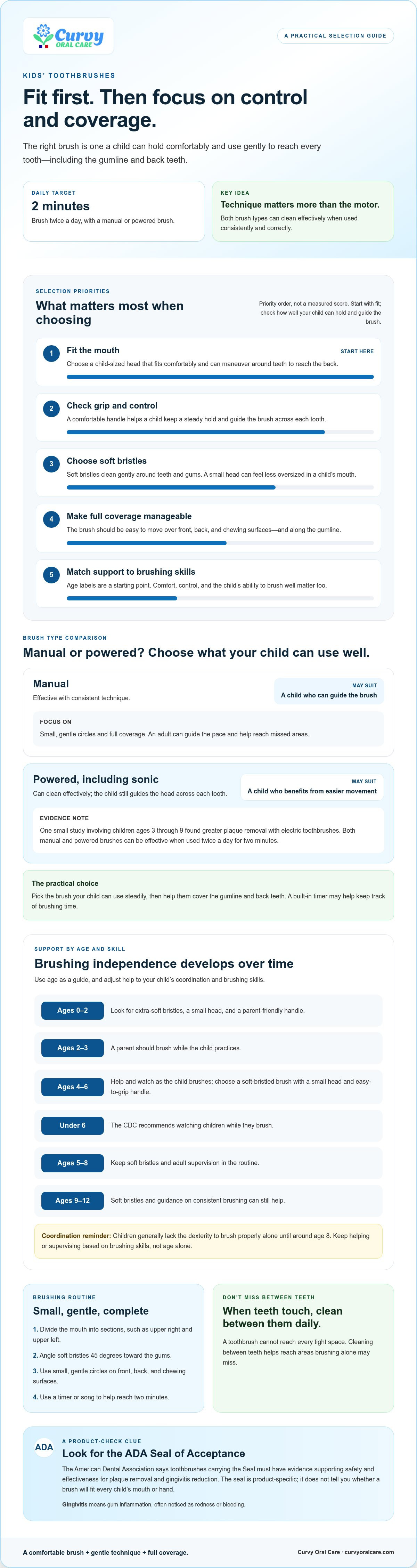
Choosing a toothbrush by age, motor skills, and budget
Choose a brush your child can hold, guide, and use consistently. Age helps narrow the options, but grip, mouth size, replacement needs, and adult support also shape the best fit.
Use age ranges as starting points: recommended children’s brushes include designs for ages 0-2, 2-4, 5-8, and 9-12. Babies and toddlers need a small head and an adult-led brushing routine. As children grow, check whether they can comfortably guide the brush around their changing teeth, including back molars.
Motor skills matter as much as the label on the handle. Children generally don’t have the dexterity or maturity to brush properly alone until around age 8. The CDC recommends watching children under 6 while they brush. Parents can observe whether a child controls the handle, reaches all tooth surfaces, and keeps brushing gentle, then help where needed.
A manual brush requires the child to move it deliberately across each tooth. A powered brush does some of the brushing motion, which may help children who find manual movements difficult. The American Dental Association says children may find a powered toothbrush easier to use. A built-in timer can also help children keep track of brushing time.
When comparing budgets, consider the whole routine, not just the initial brush. A manual brush needs replacing when worn; a powered brush also needs replacement heads. Replace children’s toothbrushes every three to four months, or sooner if the bristles fray. Change powered toothbrush heads at least every three months. Consider how easy it is to keep the right replacement on hand.
- For younger children: choose a small, soft-bristled brush that an adult can guide.
- For developing motor skills: compare handle comfort and whether a powered brush or timer makes the routine easier.
- For older children: check whether they cover back teeth and the gumline without reminders.
- For ongoing cost: account for replacement brushes or powered heads, not only the initial purchase.
Try a simple fit test: have your child hold the brush and reach the back teeth. If the handle slips or the head feels too large, choose a different fit. A dentist can also help match a brush to a child’s needs, especially when brushing remains difficult despite practice.
For families organizing brushing essentials for trips, choose a toothbrush, toothpaste, and travel case set to keep those routine items together.
Curvy Oral Care: Sonic Toothbrushes
Curvy Oral Care offers sonic and angled toothbrushes for families refining a child’s brushing routine. A sonic toothbrush may suit a child who finds powered brushing easier to manage, while an angled brush is designed to help reach areas that can be difficult to access with a conventional straight brush, such as the back teeth.
Choose based on your child’s comfort, grip, and ability to guide the brush along each tooth and the gumline. The brush is one part of daily care; gentle technique and adult supervision still matter. Curvy Oral Care also offers replacement brush heads and brush-head subscriptions to support regular replacement.
Explore Curvy Oral Care’s toothbrush options at curvyoralcare.com.
Build a Routine Your Child Can Own
Help your child build oral-care habits they can carry into adulthood. Healthy gums and clean teeth are important to overall well-being, and caring for the mouth is a practical part of daily health. Research continues to explore links between oral health and health elsewhere in the body. Associations found in studies don’t, by themselves, prove that one causes the other.
Make oral care a shared responsibility that changes as your child grows. Invite them to notice how their mouth feels after brushing, and keep regular dental visits part of their care. If you notice persistent bleeding, swelling, pain, or another change, seek professional evaluation rather than trying to resolve it by changing toothbrushes alone.
Choose supplies that suit your family’s routine and make everyday care easier to maintain. Explore the toothbrush and toothpaste travel set, and keep encouraging small, consistent steps toward a healthier mouth.
Frequently Asked Questions
Until what age should I help my child brush?
Many children need help until around age 8, but independence depends on how well they control the brush and cover every tooth. Watch a brushing session rather than relying on age alone: check whether your child misses surfaces or stops before finishing. Keep assisting if needed, and continue supervising until they can spit out excess toothpaste after brushing.
What is the best toothbrush for a 2-year-old?
Choose a brush that an adult can guide easily while the child practices holding it. Comfort matters for toddlers: notice whether you can keep a secure grip on the handle and whether the child accepts the brush without pulling away. A parent should do the cleaning at this stage. Keep the routine calm and brief enough to maintain cooperation, then praise participation rather than speed.
What is the best toothbrush for a toddler?
The best choice is a brush that fits the child’s mouth and lets a caregiver reach every tooth comfortably. If your toddler wants to brush independently, make that practice time, then finish the cleaning yourself. For example, let them hold the brush while you guide their hand, or take turns brushing. This builds familiarity without leaving the whole task to a young child.
When should you replace your child's toothbrush?
Replace a child’s brush every three to four months, or sooner if the bristles are frayed. After brushing, rinse it and store it upright to air-dry. Don’t share toothbrushes, since sharing can transfer bodily fluids and microorganisms. If a brush becomes damaged before its usual replacement time, switch to a fresh one rather than continuing with worn or misshapen bristles.
What toothbrush features help remove plaque from children's teeth?
Look for a brush that supports thorough coverage rather than relying on a product claim alone. A small head can maneuver around children’s teeth, and multi-level or angled bristles offer a different contact pattern from flat-trimmed bristles. When comparing products, look for the ADA Seal of Acceptance as evidence of safety and effectiveness for plaque removal and gingivitis reduction.
What is the best toothbrush for children by age and brushing ability?
Match the brush to the child’s mouth, grip, and ability to guide it. A child who loses track of brushing motions may find a powered brush easier to manage; another may prefer the direct control of a manual brush. Ask your child to demonstrate their usual routine, then notice whether they can reach the back teeth and keep the brush under control.
How often should children brush to control plaque?
Children should brush twice daily for two minutes each time. A consistent morning and bedtime cue, such as brushing after getting dressed and before a bedtime story, can make the habit predictable. If a child regularly rushes, try a timer or a song that lasts through the brushing session. Focus on completing the routine calmly, not brushing harder.
How should parents teach kids to brush effectively along the gumline?
Show your child where each tooth meets the gum, then demonstrate gentle brushing along that boundary. Plaque left around the gumline can irritate the gums, so cleaning only the visible centers of teeth leaves an important area untouched. Use a mirror so your child can see where the brush is going, and check the back teeth together after they practice.
Health & Medical Disclaimer: This content is for general educational purposes and isn’t a substitute for professional dental or medical advice, diagnosis, or treatment. Consult a qualified dental or healthcare professional about personal concerns. Seek professional evaluation for persistent bleeding, swelling, pain, or other significant oral-health changes.

Article by
Aline Peixe Nebot
Aline Peixe Nebot is a Veterinarian and passionate advocate for better oral health, committed to raising awareness of oral health as a matter of public health. She actively promotes the importance of simple, effective oral care routines and works to educate the public about the often-overlooked link between oral health and overall systemic health. Her mission is to make better oral care knowledge accessible to everyone and encourage healthier habits for life.
Disclaimer
Disclaimer: The information provided in this article is intended for general educational and informational purposes only. It is not intended to replace professional medical, dental, or healthcare advice, diagnosis, or treatment.
Some content may be AI-assisted and is provided to support health education and awareness. While we strive to share accurate and up-to-date information, health recommendations and scientific evidence can evolve, and the information presented may not apply to every individual.
The connection between oral health and overall systemic health is an important and developing area of research. Associations discussed in this article should not necessarily be interpreted as proof of cause and effect.
Always consult a qualified dentist, physician, or other healthcare professional regarding your individual health, symptoms, medications, or treatment decisions. Do not delay or discontinue professional care based on information presented in this article.
This content is for education and awareness—not diagnosis or treatment.