
Kids Toothbrush for Braces: A Parent's Guide
Does your child need a special kids toothbrush for braces, or does brushing technique matter more? Brackets and wires create extra places for food and plaque to collect, making the gumline, spaces beside brackets, and back teeth harder to clean. A different brush can help with access, but it won’t automatically catch every missed spot.
With braces, careful brushing and a consistent routine matter most. Manual and sonic brushes can both work as options, as long as your child can guide the bristles comfortably around the orthodontic hardware and reach all tooth surfaces. Choose a brush your child can use gently and thoroughly, with supervision if needed.
This guide explains how braces change brushing, what to compare when choosing a toothbrush, and how to build a practical routine for cleaning around brackets and along the gumline. It also covers cleaning between teeth and when to ask your child’s orthodontist or dentist for personalized advice. A repeatable sequence can make it easier to remember less visible areas, such as the inner surfaces and back molars.
Key Takeaways
- Use a steady brushing sequence to clean outer and inner tooth surfaces, chewing surfaces, and the gumline.
- Choose a kids toothbrush for braces that feels comfortable and is easy for your child to guide around brackets, with supervision as needed.
- Ask your child’s dentist or orthodontist which tools can help clean between teeth and around their braces.
- A specialized brush can support access, but careful technique and a complete daily routine matter more than brush type alone.
Why Brushing With Braces Takes More Attention
A kids toothbrush for braces is simply a toothbrush a child uses to clean teeth around brackets and wires. The label alone doesn’t guarantee a special design or make brushing effective. Focus instead on whether the brush feels manageable and whether your child can reach the areas orthodontic hardware makes harder to clean.
Brackets are attached to the teeth, and archwires run across them. Their edges and the narrow spaces around them can trap food and plaque. Plaque is a sticky film of bacteria that forms on teeth. When it builds up along the gumline, it can irritate the gums and contribute to inflammation. Brushing only the broad, visible surfaces can leave these less obvious areas untouched.
Where plaque can collect around braces
Pay particular attention to the small areas beside each bracket and the tooth surface beneath the wire. These spots are easy to miss when a child rushes or is still learning to brush independently. A specialized toothbrush is one option, but its type alone doesn’t ensure that every area gets cleaned.
The gumline needs careful attention because plaque can gather where teeth meet the gums. Spaces between teeth need cleaning beyond brushing, and back molars can be difficult to reach because they sit farther inside the mouth. Encourage your child to follow a consistent order and check each area rather than brushing only what’s easy to see. Braces don’t mean a child will develop gum disease; consistent, careful cleaning helps support a healthy routine.
Why healthy gums matter during orthodontic care
Gums support the teeth, so keeping them clean is a practical part of caring for a mouth with braces. Plaque left at the gumline may cause irritation. Redness, swelling, or bleeding can have different explanations, so don’t try to diagnose the cause at home. If these signs persist or concern you, contact your child’s dentist or orthodontist for professional advice.
Oral health also connects with general well-being, though the science needs careful interpretation. Research has found associations between some oral health conditions and broader health concerns, but an association doesn’t prove that one caused the other. For a child with braces, the daily focus is practical: clean around the hardware, along the gumline, between teeth, and around the back molars. A toothbrush designed for braces is one option to consider as part of that routine, not a substitute for good technique or guidance from a dental professional.
How to Brush Braces: A Simple Routine for Kids
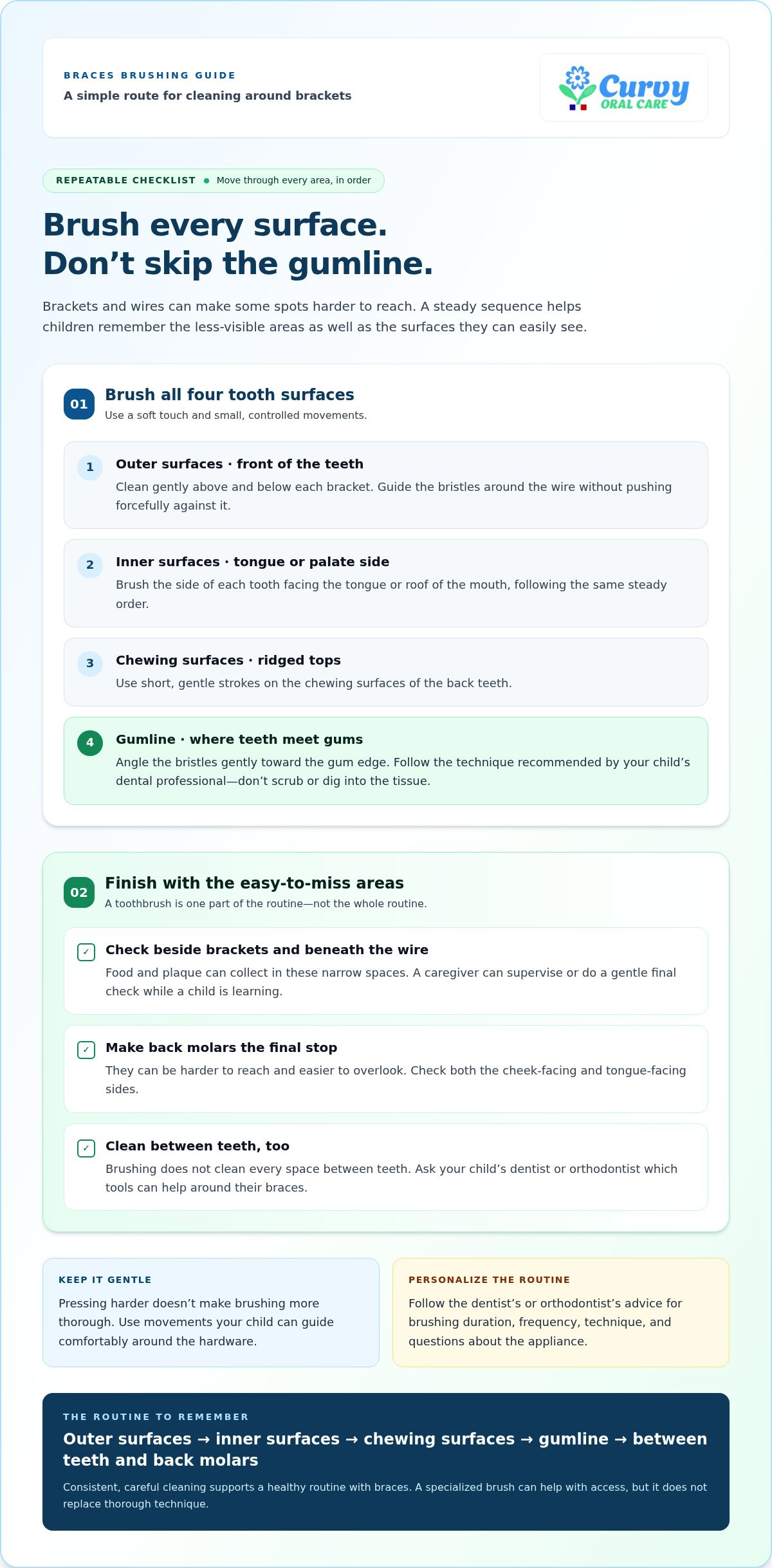
A repeatable order helps children clean all tooth surfaces instead of focusing only on the brackets they can see. Encourage your child to use a soft touch and small, controlled movements. Pressing harder doesn’t make brushing more thorough and can make the routine uncomfortable. Follow your child’s dentist or orthodontist for personalized instructions, including how long and how often to brush.
Work across every tooth surface, paying attention to the areas above and below each bracket. Finish with a gentle pass along the gumline. Following the same sequence each time can help prevent commonly missed spots.
A step-by-step brushing sequence around brackets
Use this sequence as a reminder, adjusting it to your child’s dental professional’s advice:
- Outer surfaces: Brush the front of each tooth, cleaning gently above and below the brackets. Guide the bristles around the wire without pushing forcefully against it.
- Inner surfaces: Brush the side of each tooth facing the tongue or roof of the mouth.
- Chewing surfaces: Clean the ridged tops of the back teeth with short, gentle strokes.
- Gumline: Angle the bristles gently toward where each tooth meets the gum, following the technique recommended by the dental professional.
The Children’s Hospital of Philadelphia explains proper technique for teeth brushing, including choosing a soft-bristled, small-headed brush. A caregiver can supervise or do a final check while a child is still learning. Look for missed areas beside brackets and at the back of the mouth, without turning the check into a test or a source of pressure.
Keep the gumline and back molars in the routine
Guide the bristles toward the gum edge without scrubbing or digging into the tissue. Ask the orthodontist to demonstrate the right angle and movement for your child’s braces. Back molars are easy to skip because they’re less visible and harder to reach, especially when a child rushes. Make them the final stop in the routine, checking both the cheek-facing and tongue-facing sides.
Brushing is one part of prevention, alongside cleaning between teeth and following dental guidance. A preventative oral care routine is easier to keep when the steps are simple and in the same order each time. If you’re comparing products, Curvy Oral Care’s sonic toothbrush and toothpaste travel case is one option to consider. Whatever the brush, your child still needs to reach each surface with careful technique.
Manual or Sonic Kids Toothbrush for Braces: What Matters?
There isn’t one brush type that suits every child with braces. A manual brush gives the child direct control over each movement. A sonic brush may feel easier or more engaging for some children, while others prefer the familiar feel of a manual brush. The practical choice is one your child can handle comfortably and use carefully, with caregiver help if needed.
Neither option replaces cleaning around brackets, along the gumline, and between teeth. A brush supports the routine, but your child still needs to guide it over each surface. If your child has trouble reaching certain areas or has questions about their appliance, ask their dentist or orthodontist for individual guidance.
What to look for in a braces-friendly kids’ toothbrush
Start with fit. The brush head should be manageable in your child’s mouth, and the handle should feel comfortable to hold. Check whether your child can guide the bristles around brackets without forcing them against wires or scrubbing hard. Gentle, deliberate movements make it easier to focus on each tooth surface rather than rush through the routine.
A braces-focused brush is one option to explore, not a medical recommendation or a replacement for instruction. For example, review the braces-focused toothbrush alongside your child’s needs. Consider how comfortable and practical it seems for your child, and discuss any questions about suitability with their dental professional.
When an angled or sonic brush may suit a child
An angled design may help a child position the brush in areas that feel awkward to reach with a conventional straight brush. It can make it easier to direct the bristles where the child intends, but they still need to clean carefully around the orthodontic hardware. Curvy Oral Care offers angled toothbrushes for kids, including sonic options. Compare how the brush feels to handle and whether your child can use it comfortably.
A sonic brush is another option to weigh based on comfort, ease of handling, and whether the child can follow the brushing routine. The word “sonic” alone doesn’t guarantee that a child will clean every area well or achieve a particular dental outcome. Stay nearby if they need reminders to cover all tooth surfaces, especially around brackets and the gumline. The best kids toothbrush for braces is ultimately one your child can use consistently with sound technique, alongside professional advice and cleaning between teeth.
Beyond the Toothbrush: Cleaning Between Braces and Daily Habits
A toothbrush can clean many tooth surfaces, but its bristles may not reach every space between teeth or around orthodontic hardware. That’s why choosing a kids toothbrush for braces is only one part of the routine. Ask your child’s dentist or orthodontist which between-teeth cleaning aid suits their braces and how to use it safely.
Interdental cleaning with orthodontic hardware
An interdental brush, flossing aid, or another tool recommended by a dental professional may help clean places a toothbrush misses. The right option can depend on the child’s appliance and the spaces being cleaned. Ask the professional to demonstrate how to guide the tool around the braces.
Don’t force a brush or threader between teeth, brackets, or wires. If it catches, bends a wire, or causes discomfort, stop and ask for guidance rather than pushing harder. A child may need an adult to help with the technique until they can manage it comfortably.
A realistic routine families can keep
Keep the sequence simple, then follow the brushing frequency and timing advised by your child’s dentist or orthodontist. Use this framework as a prompt, adapting it to their guidance:
- Morning: Brush with fluoride toothpaste, cleaning around the brackets and along the gumline. Clean the tongue gently if your child can do so comfortably.
- After meals, as advised: Brush when possible. If brushing isn’t practical, follow the orthodontist’s advice, such as rinsing with water.
- Evening: Brush carefully before bed and clean between teeth with the recommended tool.
Fluoride toothpaste is commonly recommended for children, but ask the dental professional which toothpaste and amount are right for your child. Regular dental and orthodontic visits help the care team monitor your child’s mouth and answer questions as treatment progresses.
Food habits can support oral health too. Offer a balanced range of foods and water, and follow the orthodontist’s advice about foods that could damage braces. These choices work alongside brushing and between-teeth cleaning, not in place of them.
Persistent bleeding, swelling, pain, or another notable change deserves professional attention. Contact your child’s dentist or orthodontist rather than trying to identify the cause at home. Keep the steps manageable and choose tools your child can use with care. Curvy Oral Care’s sonic toothbrush and toothpaste travel case is one product option to consider as part of a routine guided by your child’s dental team.
Choosing a Kids Toothbrush for Braces and Getting Help
The right brush is one your child can hold comfortably, guide around brackets, and use as part of a consistent routine. A specialized brush may support access, but it can’t replace careful technique, cleaning between teeth, or advice from your child’s dental team. Think of the brush as one tool in a broader plan for caring for teeth and gums during orthodontic treatment.
A parent’s quick checklist before choosing
Before settling on a kids toothbrush for braces, consider whether your child can grip and maneuver it comfortably. Can they guide the bristles around brackets and reach the back teeth without pressing hard? Does the brush make it manageable to follow the same sequence across outer and inner surfaces, chewing surfaces, and the gumline? A caregiver’s check can help identify which areas still need attention.
Curvy Oral Care offers kids’ manual and sonic toothbrushes, as well as angled options. An angled design may help with access, but no design guarantees a particular result. Compare options based on your child’s comfort and ability to brush gently and thoroughly, not on a promise that a brush will solve every cleaning challenge.
When brushing concerns need professional advice
Some questions are best answered by a professional who can assess your child’s teeth and orthodontic appliance. Contact your child’s dentist or orthodontist about persistent bleeding, swelling, pain, tooth mobility, or another significant change. These signs don’t identify a specific condition on their own, so avoid trying to diagnose the cause at home. The dental team can advise whether the brushing approach or cleaning tools need adjustment.
There’s no need to expect perfect brushing from the start. Support your child as they build a reliable routine, follow the dental team’s instructions, and ask for help if a part of brushing remains difficult. Consistency and careful technique matter more than finding a brush with a special label.
If you’re comparing options for your family’s routine, the sonic toothbrush and toothpaste travel case is one option to consider. Use it as part of daily oral care, alongside professional guidance and thorough cleaning.
Build a Brushing Routine Your Child Can Keep
Braces make careful brushing more demanding, but the answer isn’t necessarily a special brush. The best kids toothbrush for braces is one your child can use comfortably and consistently, with gentle technique that reaches around brackets and along the gumline. Cleaning between teeth and following the dentist’s or orthodontist’s advice complete the routine.
Curvy Oral Care offers kids’ toothbrushes and sonic toothbrushes. Its angled brush design is intended to help users reach areas that may be difficult to access with a conventional straight brush. These are options to consider as part of daily oral care, not replacements for thorough brushing or professional guidance.
To compare a sonic toothbrush and toothpaste option for your family, view the Curvy sonic toothbrush, toothpaste, and travel case combo. Consider it as one possible oral-care option alongside professional guidance and thorough daily cleaning.
Frequently Asked Questions
How should a child brush their teeth with braces?
Have your child brush gently around each bracket, along the gumline, and across the inner and chewing surfaces of every tooth. They should also clean between teeth with an aid recommended by their dentist or orthodontist. A caregiver can supervise or check for missed areas while the child is learning. Follow the child’s dental team for personalized brushing technique and timing.
Is a special toothbrush necessary for kids with braces?
No, a special brush isn’t always necessary. A child can use a manual or sonic toothbrush if they can guide it carefully around brackets and along the gumline. A braces-focused or angled brush may feel helpful for access, but it doesn’t replace good technique or cleaning between teeth. Ask the child’s dentist or orthodontist which brush and routine suit their appliance and individual needs.
Can an electric toothbrush be used with braces?
Yes, an electric toothbrush can be used with braces, as long as the child follows the orthodontist’s advice and the toothbrush manufacturer’s instructions. Guide it gently around brackets and wires rather than pressing hard. An electric brush won’t automatically reach every surface or clean between teeth, so include the gumline, back molars, and spaces between teeth in the routine.
What kind of toothbrush is best for a child with braces?
The best choice is one the child can use comfortably and consistently while reaching around brackets, along the gumline, and toward the back teeth. Manual and sonic brushes are both options; features alone can’t guarantee better cleaning. Discuss brush size, technique, and any concerns about the orthodontic appliance with your child’s dentist or orthodontist.
How often should kids with braces brush their teeth?
Follow your child’s dentist or orthodontist for personalized advice and establish a consistent daily routine. General dental guidance commonly recommends brushing twice a day, while the dental team may suggest brushing after meals to help manage food around braces. Use fluoride toothpaste as advised, clean between teeth, and allow enough time to brush carefully. Rushed or forceful brushing isn’t a substitute for thorough technique.
How can kids clean between their teeth when they have braces?
Interdental brushes or other cleaning aids may help reach spaces around braces, but the right tool depends on the child and their appliance. Ask the orthodontist to demonstrate a safe technique. Don’t force a tool between teeth or wires; stop and seek guidance if it catches or feels uncomfortable. Between-teeth cleaning adds to brushing, but doesn’t replace cleaning around brackets and along the gumline.
Should bleeding gums while wearing braces be checked?
Yes. Discuss persistent bleeding, swelling, pain, or other noticeable changes with your child’s dentist or orthodontist. Bleeding can have different causes, and it isn’t possible to diagnose the reason from an article. Avoid aggressive brushing, but don’t stop routine cleaning without professional advice. Continue to follow the oral-care guidance already provided for your child, and ask the dental team what to do next.
Health & Medical Disclaimer: This article is for general information and does not replace advice from your child’s dentist or orthodontist. Seek professional guidance about your child’s oral health and orthodontic care.

Article by
Aline Peixe Nebot
Aline Peixe Nebot is a Veterinarian and passionate advocate for better oral health, committed to raising awareness of oral health as a matter of public health. She actively promotes the importance of simple, effective oral care routines and works to educate the public about the often-overlooked link between oral health and overall systemic health. Her mission is to make better oral care knowledge accessible to everyone and encourage healthier habits for life.
Disclaimer
Disclaimer: The information provided in this article is intended for general educational and informational purposes only. It is not intended to replace professional medical, dental, or healthcare advice, diagnosis, or treatment.
Some content may be AI-assisted and is provided to support health education and awareness. While we strive to share accurate and up-to-date information, health recommendations and scientific evidence can evolve, and the information presented may not apply to every individual.
The connection between oral health and overall systemic health is an important and developing area of research. Associations discussed in this article should not necessarily be interpreted as proof of cause and effect.
Always consult a qualified dentist, physician, or other healthcare professional regarding your individual health, symptoms, medications, or treatment decisions. Do not delay or discontinue professional care based on information presented in this article.
This content is for education and awareness—not diagnosis or treatment.