
Improve Gum Health at Home: Practical Prevention Guide
What if healthier gums depended less on brushing harder and more on where and how you brush? If you’re trying to improve gum health at home, it’s easy to focus on the tooth surfaces you can see. But plaque can collect along the gumline and between teeth, and back molars are easy to miss. Bleeding or swelling may leave you wondering whether to adjust your technique or seek advice.
A gentle, thorough routine is more useful than scrubbing aggressively. Plaque buildup near the gums can contribute to inflammation, but home care isn’t a substitute for professional evaluation when changes persist.
This guide covers practical ways to clean beyond visible tooth surfaces: brushing along the gumline, cleaning between teeth, and remembering your back molars. You’ll also learn how regular dental checkups support prevention and when bleeding, swelling, pain, or other changes call for professional advice.
Key Takeaways
- To improve gum health at home, focus on gentle, consistent cleaning rather than brushing harder.
- Gum inflammation can have different causes, so symptoms alone can’t confirm a diagnosis. Persistent changes deserve professional attention.
- Brushing, interdental cleaning, and tongue cleaning each play a different role in a well-rounded routine.
- Research has found associations between gum health and overall health, but an association doesn’t prove that one causes the other.
- An angled toothbrush is an optional tool designed to help reach areas that can be difficult to access with a conventional straight brush.
Why Improving Gum Health at Home Starts With the Gumline
Do your gums sometimes feel tender, or do you notice blood while brushing? Those signs don’t reveal their cause on their own, but they’re a reason to pay attention to your routine and seek dental advice if changes persist. Healthy gums generally look firm and fit closely around the teeth. Keeping them healthy takes more than cleaning visible tooth surfaces: plaque can build up where each tooth meets the gum.
If you want to improve gum health at home, make the gumline part of everyday cleaning, not an afterthought. A toothbrush that glides across the middle of each tooth may miss the edge near the gums, spaces between teeth, and areas at the back of the mouth. Gentle, deliberate coverage matters more than extra force.
What plaque does along the gumline
Plaque is a sticky film containing bacteria that forms on teeth, including near the gumline. If it isn’t regularly removed, nearby gum tissue may become irritated and inflamed. The National Institute of Dental and Craniofacial Research explains how plaque relates to gum disease in its guide to gum disease and its prevention. This relationship helps explain why daily cleaning matters, but bleeding or tenderness isn’t a diagnosis. Symptoms can have different causes, and a dental professional can assess persistent changes.
Plaque can collect where teeth meet the gums and contribute to gum inflammation, which is why careful daily cleaning matters. A dental checkup can help clarify symptoms that don’t settle or keep returning.
Why visible tooth surfaces are not the whole story
The front surfaces are easy to see, so they often get the most attention. But plaque can remain where a brush doesn’t reach well, including the gumline, tight spaces between teeth, inner surfaces, and back molars. Those back teeth can be awkward to clean because they sit farther into the mouth. Reposition the brush to cover each area instead of rushing over the surfaces you can see.
Brushing cleans tooth surfaces, but it doesn’t fully clean between teeth. Interdental cleaning addresses those gaps. Pay attention to crowded spaces and areas where the brush head is difficult to position. An angled toothbrush is one optional tool designed to help access hard-to-reach areas. For example, an angled adult toothbrush may make it easier to position the brush around the gumline and back teeth. Technique and thorough coverage still matter, whatever brush you use.
Give gumline care a clear purpose: guide the bristles gently to the edge of the gums, cover the different sides of each tooth, and take extra care with less accessible spots. If bleeding, swelling, pain, receding gums, or other changes persist, arrange a professional evaluation rather than relying on home care alone.
How Plaque, Gum Inflammation, and Overall Health Connect
Research into oral and whole-body health asks an important question: when two health conditions occur together, does one contribute to the other, or do other influences help explain the pattern? Studies can identify associations, but an association alone cannot establish cause and effect. That distinction matters when interpreting claims about gum health and general well-being.
From plaque buildup to irritated gums
A change in your gums doesn’t identify its cause, show how extensive a problem may be, or predict what will happen next. The same visible sign can have different explanations. A dental professional can examine your mouth and consider your individual history rather than relying on symptoms alone.
Research on gum conditions also distinguishes between inflammation affecting the gums and more extensive problems involving the tissues that support teeth. These are not interchangeable findings, and symptoms alone cannot establish which, if either, is present. If changes persist, an examination offers more useful guidance than drawing conclusions from general information.
What research says about oral and whole-body health
Researchers continue to investigate links between periodontal health and wider health outcomes. The American Dental Association’s patient guidance on gum disease and general health describes reported relationships as associations, not proof that gum disease causes a particular systemic condition. Observational studies can identify patterns, but other factors may influence both oral and general health. Further research is needed to clarify how these relationships work.
Research can reveal links between gum health and overall health, but an association by itself does not prove that one condition causes another. When reading health headlines, notice whether a study observed a relationship or tested cause and effect, and whether its findings apply beyond the group studied.
Caring for your mouth is one part of overall well-being. To improve gum health at home, focus on daily oral-care habits and keep dental visits part of your preventive routine. If you have questions about how oral health relates to a medical condition, discuss them with your dentist or healthcare professional. They can put research into the context of your own health.
Which Home Gum-Care Habits Make the Biggest Difference?
No single tool does every job. Brushing removes plaque from tooth surfaces, interdental cleaning reaches spaces a brush may miss, and tongue cleaning addresses the tongue’s surface. Regular dental checkups add what home habits can’t: a professional assessment of your teeth and gums. Together, these steps make a practical routine for people looking to improve gum health at home.
Brushing technique versus brushing pressure
More pressure doesn’t mean better cleaning. Use gentle, deliberate strokes and angle the bristles toward the gumline without scrubbing hard. Cover the outer, inner, and chewing surfaces of every tooth, including the back molars. The American Dental Association recommends brushing twice daily for two minutes with fluoride toothpaste. Consistent coverage and access matter more than force.
Choose a toothbrush and toothpaste that suit your needs and feel manageable to use consistently. If you’re unsure what’s appropriate for you, ask your dental professional for personalized guidance.
Interdental cleaning, tongue care, and product choice
Clean between your teeth daily with floss or another interdental cleaner suited to your mouth. These tools target spaces a toothbrush can’t reliably reach. Clean your tongue gently as another part of your routine, but don’t treat it as a substitute for brushing or interdental care. Brush design can also support access: an angled sonic toothbrush is designed to help users reach areas that can be difficult to access with a conventional straight brush. Technique remains essential with any brush.
Daily habits
- Brushing: Cleans tooth surfaces and the gumline. Use fluoride toothpaste and gentle, thorough coverage.
- Interdental cleaning: Cleans between teeth where bristles may not reach. Choose an appropriate interdental method and use it daily.
- Tongue cleaning: Gently cleans the tongue’s surface as one additional step in oral care.
Professional evaluation
- Dental checkups: Let a dental professional assess gum health, discuss individual needs, and advise on persistent symptoms or other changes. Home care supports prevention but doesn’t replace an examination.
Keep the roles distinct: daily cleaning helps remove plaque, while checkups offer an informed view of your oral health. If brushing or interdental cleaning causes persistent bleeding, or you notice swelling, pain, recession, or other lasting changes, seek professional advice rather than trying to solve the problem by brushing harder. A gentle, complete routine is easier to maintain over time.
A Simple Daily Routine to Support Healthier Gums at Home
A routine works best when it’s simple enough to repeat. To improve gum health at home, cover all tooth surfaces, clean between teeth, and make the gumline and back molars part of your usual brushing pattern. You don’t need to brush harder or chase perfection. Careful, consistent steps matter more than an occasional marathon clean.
Build a routine you can repeat
Use this sequence as a flexible guide. If a dental professional has recommended a different approach for your needs, follow their advice.
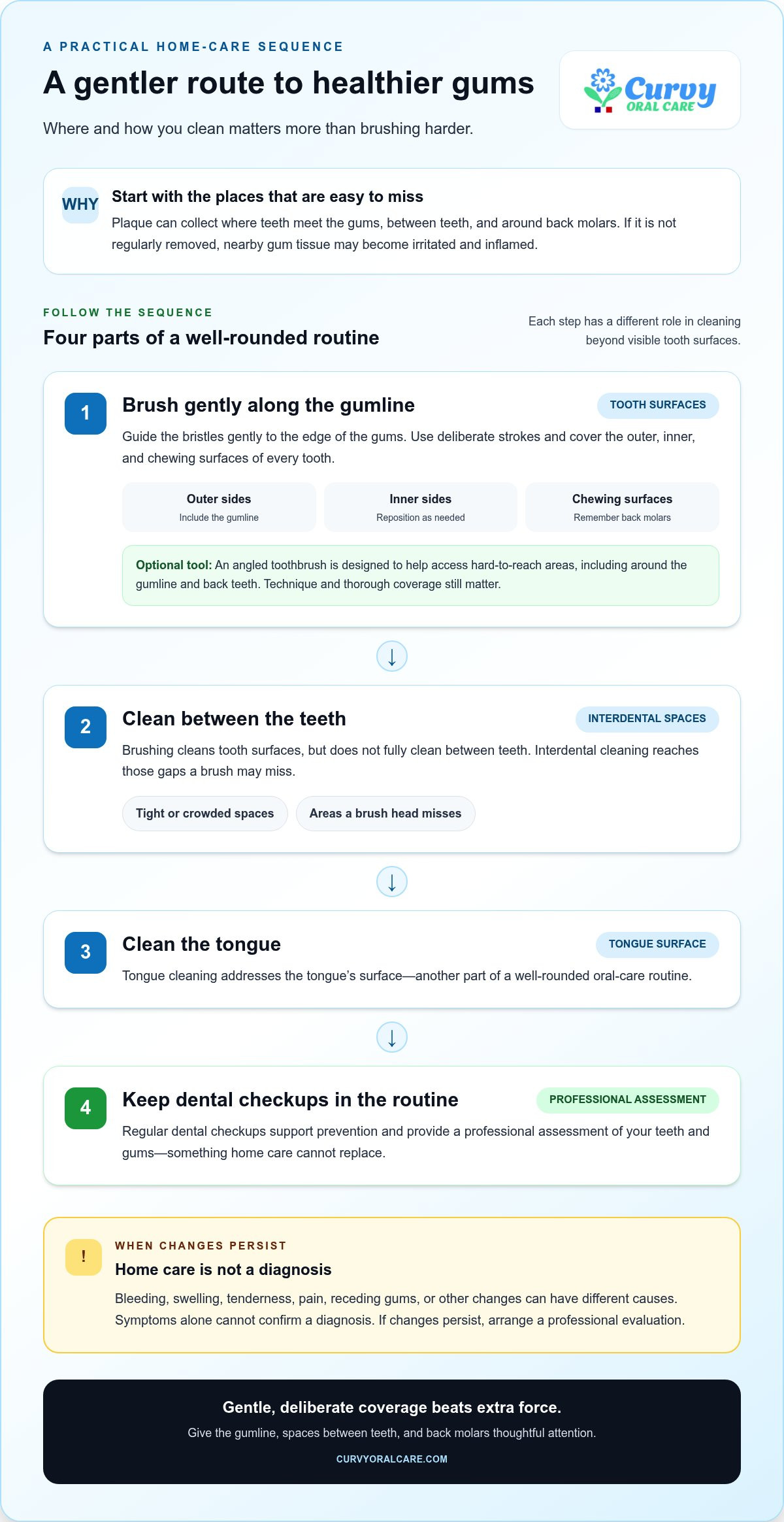
- Brush thoroughly. Brush twice a day for two minutes with fluoride toothpaste. Use gentle pressure and move across the outer, inner, and chewing surfaces, guiding the bristles along the gumline. Pause at the back molars and other spots that are easy to rush.
- Clean between your teeth. Use floss or another suitable interdental cleaner daily. Work carefully through each gap rather than relying on brushing to reach these spaces.
- Clean your tongue. Gently brush or use a tongue cleaner across its surface. This adds another step to your routine, but doesn’t replace tooth or interdental cleaning.
- Check in with your mouth. Notice changes without trying to diagnose them yourself. Keep regular dental visits so a professional can assess your oral health and offer personalized guidance.
The right brush and toothpaste are the ones suited to your needs and comfortable enough for regular use. Technique and access matter, especially around the gumline and back teeth. If you’re unsure which products fit your situation, ask your dental professional for recommendations.
Brush gently along the gumline, clean between teeth, clean your tongue, and keep regular dental checkups.
Support your routine with everyday choices
Daily habits extend beyond the bathroom sink. The American Dental Association recommends a healthy diet that limits sugary snacks and drinks. Choose balanced meals and make water a regular drink. Avoid tobacco, which is associated with gum-health risks. These choices can support general well-being, but they don’t replace brushing, interdental cleaning, or professional care. Aim for steady habits you can maintain rather than expecting any one food or product to solve gum concerns.
Know when home care needs professional advice
Home care supports daily prevention; it can’t identify the cause of symptoms. Arrange a dental evaluation if bleeding, swelling, pain, or bad breath persists. Receding gums, loose teeth, or mouth sores that don’t heal also deserve professional attention. These changes don’t confirm a particular condition, but a dental professional can examine your mouth, assess possible causes, and recommend next steps.
Make your routine easier to keep at home or while travelling with a sonic toothbrush and toothpaste travel set.
How an Angled Sonic Toothbrush Can Fit Into a Gum-Care Routine
A toothbrush is a tool, not a complete gum-care plan. Its shape and brush-head access can affect how easily you reach different parts of your mouth, but healthy habits still depend on gentle technique, cleaning between teeth, and regular dental visits. An angled sonic toothbrush may be useful if a conventional straight brush is awkward to position around the gumline or toward the back of your mouth. No brush can guarantee a particular health outcome.
When an angled brush may help with access
Think about the spots you tend to miss: the gumline behind the front teeth, inner surfaces, or the molars farthest back. Repositioning a brush to reach those areas takes attention, especially if the handle angle makes it difficult to guide the head where you want it. An angled design is intended to help users reach areas that can be difficult to access with a conventional straight brush. It’s an access feature, not a replacement for careful brushing.
With any brush, guide the bristles gently along the gumline and across each tooth surface. Avoid pressing harder to make up for a spot that’s difficult to reach. Instead, adjust your grip and angle, then move methodically from one area to the next. If you’re considering this design, explore the angled sonic toothbrush as one possible tool for your routine.
Keep the whole routine bigger than the brush
Brush choice is only one part of prevention. A toothbrush cleans tooth surfaces, but it doesn’t reliably clean between them. Use an appropriate interdental cleaner as part of your daily routine, and keep regular dental checkups so a professional can assess your oral health. If you notice persistent bleeding, swelling, pain, or other changes, seek professional advice instead of relying on a new brush to address the cause.
Build brushing into a routine that also includes thorough coverage, daily interdental cleaning, tongue care, and regular professional evaluation. A preventive oral-care guide can help keep those steps in perspective, but the most useful routine is one you can repeat without rushing or scrubbing aggressively.
If you’d like a brush designed with access in mind, consider an angled sonic toothbrush as one optional part of daily care. Keep expectations practical: a brush can help you position the head, while consistent habits and professional guidance remain central to gum health. Small, steady prevention steps are a sensible way to support healthier gums over time.
Make Your Next Oral-Care Step a Lasting Habit
Choose one part of your routine that often gets rushed and give it more attention. Maybe that means slowing down at the gumline, making time to clean between teeth, or scheduling your next dental checkup. Small, repeatable choices can help you improve gum health at home without turning daily care into a stressful project.
The right brush is a personal routine tool, not a treatment. Curvy Oral Care offers manual and sonic angled toothbrushes designed to help reach difficult-to-access areas. Whatever you choose, keep your technique gentle and your routine broader than brushing alone. If oral changes persist, let a dental professional assess them.
If a sonic toothbrush and toothpaste set would make your routine easier to maintain, explore the Y sonic toothbrush, toothpaste, and travel case combo. Choose a manageable habit and keep up with it, giving your gums steady care each day.
Frequently Asked Questions
How long does it take to improve gum health at home?
There isn’t one reliable timeline for everyone. The cause of a gum change, your oral-health needs, and how consistently you follow a routine can all affect what happens. Rather than expecting a specific turnaround, note when you first noticed the change and whether it’s improving, staying the same, or worsening. That record can help your dentist understand the pattern if you need an assessment.
Is it normal for gums to bleed when you brush or floss?
Recurring bleeding shouldn’t be ignored, though it doesn’t identify a cause by itself. Note whether it occurs in one spot or several areas, and whether you notice it during brushing, interdental cleaning, or at another time. Share those details with your dentist, along with any recent changes in your routine or oral health. This gives them useful context for assessing what’s going on.
Can brushing harder make gums healthier?
No. Harder brushing isn’t a shortcut to healthier gums. One practical sign to watch for is bristles that bend or splay soon after you start using a brush, which may mean it’s wearing quickly or being pressed too firmly. Replace a worn brush, and ask your dental professional to observe your technique if you’re unsure about pressure. Brushing should feel comfortable, not abrasive.
Can gum recession grow back naturally?
Receded gum tissue generally doesn’t grow back naturally. If you notice a tooth looking longer than before or a change near the gumline, avoid trying to correct it with aggressive brushing or home remedies. A dental professional can assess the area and explain what options, if any, are appropriate. The right approach depends on the individual cause and the condition of the surrounding teeth and gums.
Can gum disease be reversed with home care alone?
Home care can support gum health, but it can’t establish whether a gum problem has fully resolved. A change in how your gums look or feel isn’t enough to confirm that underlying concerns have cleared. Follow any care plan from your dental professional and keep scheduled reviews, even if symptoms seem better. They can assess progress and advise whether your routine or care needs to change.
Is flossing necessary if I brush carefully every day?
Brushing alone doesn’t clean every surface between teeth, so daily interdental cleaning remains a useful part of home care. If you find floss difficult to handle, ask your dental professional to demonstrate a method or suggest an alternative interdental cleaner that suits your mouth. The goal is to clean between teeth without forcing a tool into a space or causing avoidable discomfort.
When should I see a dentist about bleeding or swollen gums?
Book a dental assessment if bleeding or swelling persists, keeps returning, or comes with another lasting change. Before your visit, note when it began, where it occurs, and whether anything seems to make it better or worse. Mention persistent bad breath, pain, loose teeth, recession, or mouth sores that don’t heal. These details help the dentist assess your concerns; they don’t determine a diagnosis on their own.
Health & Medical Disclaimer: This content is for educational purposes only and isn’t a substitute for professional dental or medical advice, diagnosis, or treatment. Consult a qualified healthcare professional about personal symptoms or concerns.

Article by
Aline Peixe Nebot
Aline Peixe Nebot is a Veterinarian and passionate advocate for better oral health, committed to raising awareness of oral health as a matter of public health. She actively promotes the importance of simple, effective oral care routines and works to educate the public about the often-overlooked link between oral health and overall systemic health. Her mission is to make better oral care knowledge accessible to everyone and encourage healthier habits for life.
Disclaimer
Disclaimer: The information provided in this article is intended for general educational and informational purposes only. It is not intended to replace professional medical, dental, or healthcare advice, diagnosis, or treatment.
Some content may be AI-assisted and is provided to support health education and awareness. While we strive to share accurate and up-to-date information, health recommendations and scientific evidence can evolve, and the information presented may not apply to every individual.
The connection between oral health and overall systemic health is an important and developing area of research. Associations discussed in this article should not necessarily be interpreted as proof of cause and effect.
Always consult a qualified dentist, physician, or other healthcare professional regarding your individual health, symptoms, medications, or treatment decisions. Do not delay or discontinue professional care based on information presented in this article.
This content is for education and awareness—not diagnosis or treatment.