
How to Remove Plaque Along the Gumline With Daily Brushing
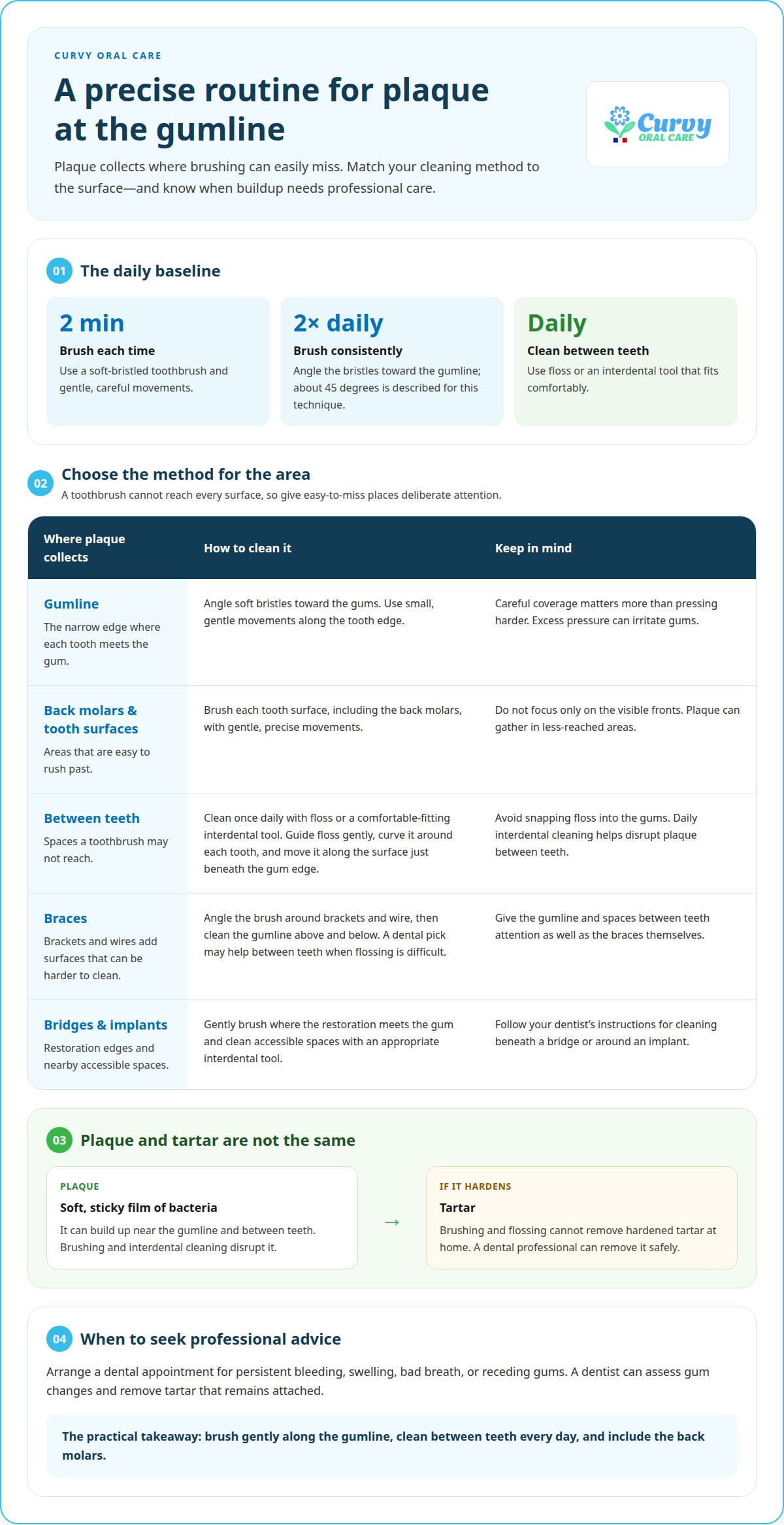
If plaque is collecting along the narrow edge where each tooth meets the gum, learning how to remove plaque along the gumline starts with brushing that edge deliberately. Angle a soft-bristled toothbrush toward the gums, use small, gentle movements, and brush for two minutes. Clean between your teeth daily, too, because a toothbrush cannot reach every surface.
Plaque is a soft, sticky film of bacteria that builds up on teeth. It can collect near the gumline and between teeth, especially in areas that are easy to rush past. If plaque stays in place, it can harden into tartar, which brushing and flossing cannot remove at home.
This article explains why plaque gathers at the gumline and how consistent brushing and flossing can disrupt it before it hardens. You’ll also find practical ways to reach tricky spots, including the back teeth, and learn when a professional dental cleaning may be needed.
Key Takeaways
- Pay attention to the gumline, spaces between teeth, and back molars, where plaque can be easy to miss.
- Use gentle, precise brushing and daily interdental cleaning to clear plaque before it hardens into tartar.
- Don’t try to scrape hardened tartar off at home; arrange a dental cleaning to have it removed safely.
- Persistent bleeding, swelling, bad breath, or receding gums are reasons to seek professional dental advice.
- An angled toothbrush may help you reach areas that are difficult to access with a conventional straight brush.
Why Plaque Along the Gumline Matters
Brush twice daily and clean between your teeth once every day to help limit gumline plaque. These habits support gum health, while dental visits can identify changes that home care cannot assess.
- Notice where plaque gathers. The gumline, spaces between teeth, and back molars are easy to miss when brushing in a hurry. Plaque is a sticky film, and bacteria use sugars and starches from food. Give extra attention to the narrow edge where each tooth meets the gum instead of brushing only the visible fronts.
- Make brushing and flossing consistent. Brush for two minutes, twice a day, with a soft-bristled toothbrush. Clean between teeth once every day with floss or an interdental tool that fits comfortably. These steps target surfaces a quick pass can miss. Gentle, careful cleaning is more effective than pressing harder.
- Consider what affects buildup. Sugary and starchy foods give oral bacteria carbohydrates to use, while tobacco use can affect gum health. Braces add surfaces that may be harder to clean. Dry mouth can also contribute, because saliva helps wash away food and bacteria. Notice which areas need extra attention during your routine.
- Choose supportive food and drink habits. Limit frequent sugary snacks and drinks, which expose teeth to carbohydrates throughout the day. Choose water, crunchy fruits and vegetables, and dairy more often. These choices complement daily cleaning and help make oral care part of broader health habits.
- Arrange dental advice for persistent changes. Bleeding during brushing or flossing, red or puffy gums, sensitivity, and receding gums can signal gum inflammation. Persistent bad breath or hard tartar along the gumline also warrants a dental appointment. A dentist can assess your gums and remove tartar that brushing and flossing cannot clear.
Oral health is part of overall health, and research continues to investigate possible links between gum conditions and broader health. An association does not, by itself, prove that one condition causes another. Keep up daily cleaning, and discuss persistent gum changes or personal health concerns with a dental or medical professional.
How Plaque Forms and Collects Along the Gumline
- Understand the first layer. Plaque is a colorless biofilm, a sticky community of bacteria on teeth. The biofilm can involve over 500 different bacteria. It starts forming as bacteria attach to tooth surfaces, including the narrow gumline edge. Brushing disrupts this layer before it thickens or hardens into tartar.
- Know what feeds the bacteria. After you eat, oral bacteria use sugars and starches from food and produce acids as they break down those carbohydrates. According to the American Dental Association, these acids can weaken enamel and increase cavity risk. That’s why the surfaces near the gums and between teeth need deliberate cleaning, not just a quick brush across visible fronts.
- Adapt cleaning around dental work. With braces, angle your toothbrush around the brackets and wire, then clean the gumline above and below them. A dental pick can help reach between teeth when braces make flossing difficult. Around bridges or implants, gently brush where the restoration meets the gum and clean accessible spaces with an appropriate interdental tool. Follow your dentist’s instructions for cleaning beneath a bridge or around an implant.
- Interrupt buildup before gums react. Plaque left along the gumline can irritate nearby tissue. Gingivitis is gum inflammation; signs can include redness, puffiness, or bleeding during brushing. Daily brushing and interdental cleaning disrupt plaque before it accumulates, while a dental professional can remove tartar that has hardened and remains attached.
- Keep the takeaway practical. Plaque research explains why a consistent routine matters: bacteria gather in a biofilm, acids affect enamel, and gumline deposits can inflame gums. Brush along the edge where each tooth meets the gum, clean between teeth, and include the back molars. For braces, bridges, or implants, use a tool and technique suited to the dental work.
Dental plaque, also called biofilm, is a colorless layer of bacteria on teeth. Because it may not be easy to see, appearance alone may not reveal its presence. “Biofilm” describes this bacterial layer, rather than a separate material or condition. At the gumline, plaque refers to buildup on tooth surfaces near the gums. Recognizing it as a layer, not just something visible, helps explain why cleaning along tooth edges matters.
What Happens When Plaque Stays Along the Gumline
- Watch for gum changes. Plaque left at the gumline can irritate nearby tissue. Gums may become red, puffy, tender, or bleed during brushing. These changes can signal gingivitis, an early form of gum disease, but only a dental professional can assess their cause. Persistent bleeding deserves a dental appointment, especially when careful cleaning hasn’t helped.
- Brush gently and thoroughly. Brush twice a day for two minutes with a soft-bristled toothbrush. Hold the bristles toward the gumline at about 45 degrees, then use small, gentle movements. Clean each tooth surface, including the back molars. Brushing harder doesn’t replace careful coverage, and excess pressure can irritate gums.
- Clean between teeth every day. A toothbrush cannot reach every space, so floss once daily. Guide the floss gently between teeth, curve it into a C shape around each tooth, and move it along the tooth surface just beneath the gum edge. Avoid snapping it into the gums. This helps disrupt plaque where bristles may not reach.
- Choose toothpaste for your needs, not as a substitute for technique. Whether toothpaste contains baking soda or fluoride, plaque removal depends on consistently brushing the gumline and other tooth surfaces. Use a small amount and brush gently. According to the American Dental Association, acids produced by oral bacteria can weaken enamel and increase cavity risk, making regular plaque removal important for teeth as well as gums.
- Leave hardened tartar to dental professionals. Plaque that remains can harden into tartar, which brushing and flossing cannot remove at home. Don’t try to scrape deposits away with household tools; rough edges can injure gum tissue or tooth surfaces. A dentist or dental hygienist can remove tartar during a professional cleaning and assess persistent gum swelling, bleeding, or recession.
Daily brushing and flossing target soft plaque before it hardens. If a spot keeps bleeding or feels swollen despite gentle cleaning, arrange a dental evaluation instead of scrubbing harder.
How to Remove Plaque and Help Prevent Tartar
- Brush twice daily for two minutes. Use a soft-bristled toothbrush and gentle, controlled movements. Hold the bristles toward the gumline at about 45 degrees, then clean the outer, inner, and chewing surfaces. Work around the back molars instead of brushing only the teeth easiest to see. This is the practical starting point for how to remove plaque along gumline areas before deposits harden.
- Choose a brush you can use precisely. A manual toothbrush and an electric toothbrush can both clean teeth. With a sonic toothbrush, guide the head slowly across each tooth and along the gumline rather than scrubbing back and forth. Follow its instructions, covering inner surfaces and back teeth. When learning how to remove plaque along gumline edges, steady positioning matters more than rushing.
- Keep the brush head in good condition. Check its bristles regularly. If they become frayed, replace the brush head so it can move comfortably along the gumline. A worn head can make careful cleaning harder, especially around back molars. Use light pressure; forceful brushing can irritate gums and does not replace thorough coverage.
- Select toothpaste thoughtfully. Toothpaste formulas vary, and some contain stannous fluoride. This guide doesn’t recommend fluoride toothpaste; discuss ingredient choices with a dental professional if you have questions about your needs. Whatever toothpaste you use, focus on brushing technique and don’t treat mouthwash as a replacement for cleaning tooth surfaces and the gumline.
- Pair brushing with daily interdental cleaning. Brush twice a day and floss between teeth once every day. Plaque between teeth can contribute to cavities, while deposits near the gums can irritate gum tissue. A clean mouth may also support fresher breath, but persistent bad breath deserves dental advice. Brushing and flossing remove soft plaque; a dentist or hygienist must remove tartar that has hardened.
A Daily Flossing and Interdental-Cleaning Routine
- Set a daily time. Clean between your teeth once every day, as Cleveland Clinic advises. Choose a time you can repeat, such as before evening brushing. Flossing reaches narrow spaces a toothbrush misses, including tooth sides near the gums. To understand how to remove plaque along gumline areas, remember that these spaces need their own cleaning step.
- Guide floss gently into each space. Use enough floss to handle it comfortably, then ease it between two teeth with a careful back-and-forth motion. Don’t snap it against the gums. Once it passes the contact point, curve the floss around one tooth in a C shape. This lets you clean the tooth’s side rather than only passing through the gap.
- Clean both tooth surfaces. Keep the floss against one tooth and move it gently up and down, just beneath the gum edge. Don’t force it. Then curve the floss around the neighboring tooth and repeat. Each gap has two tooth surfaces to clean, so move deliberately instead of stopping after one side.
- Use a water flosser methodically. A water flosser sends a stream between teeth to help clear debris from tight spaces. Follow the device instructions, aim along the gumline, and move systematically from one side of the mouth to the other. This offers another approach for cleaning along the gumline, but it does not remove hardened tartar.
- Adapt interdental cleaning to your mouth. Braces can make string floss harder to guide, while bridges and implants may need careful cleaning around their edges. A water flosser or suitable interdental tool can help reach these areas. Ask your dentist to demonstrate a technique for dental work or crowded spaces, especially if floss catches or causes discomfort.
- Keep the routine thorough, not forceful. Clean every gap, including spaces around the back molars, and use a fresh section of floss as it collects debris. Gentle daily cleaning supports gum health and helps disrupt plaque between teeth. Persistent bad breath or bleeding during flossing calls for dental advice, rather than harder or more aggressive cleaning.
Curvy Oral Care and Reaching Hard-to-Clean Areas
Curvy Oral Care offers toothbrush options designed to reach the gumline, back molars, and other awkward spots. The right brush supports a steady technique, but it does not replace daily flossing or professional dental care. Use it as part of a routine that cleans visible surfaces and the places that are easier to miss.
A conventional straight toothbrush can feel awkward to position around the back teeth or near the gumline. Curvy Oral Care’s angled toothbrushes have a patented brush head designed to reach back molars, the gumline, and spaces between teeth. The angle can make positioning the bristles simpler; careful, gentle brushing still matters. Follow the gumline and clean each tooth surface rather than relying on the brush shape alone.
Sonic toothbrushes offer another option. Move the brush head methodically across the teeth, giving attention to the gumline, inner surfaces, and molars. Don’t rush from one side to the other. The goal is a repeatable technique that comfortably covers all tooth surfaces, not a promise that a particular brush will treat or prevent gum disease.
For readers who prefer an angled manual option, an angled adult toothbrush with soft bristles is one option to consider. Use gentle pressure and guide the bristles along the edge where teeth meet gums. If a brush feels uncomfortable or a spot remains difficult to clean, a dentist can offer advice based on your mouth and dental needs.
Keeping a brush head in usable condition is part of maintaining a consistent routine. Curvy Oral Care offers replacement brush heads and brush head subscriptions. These options may suit people who want replacement heads available for their sonic toothbrush. Choose the brush and replacement schedule that fit your habits, and continue cleaning between teeth separately with floss or another appropriate interdental tool.
Curvy Oral Care’s products support daily brushing choices; they are not a substitute for professional evaluation. Persistent bleeding, swelling, pain, or receding gums call for dental advice. For help choosing an oral-care option for your routine, explore Curvy Oral Care’s toothbrushes and replacement brush heads.
Frequently Asked Questions
What is dental plaque?
Dental plaque is a soft film of bacteria that sticks to tooth surfaces. It can be difficult to see, especially near the gum margin and between neighboring teeth. Food debris may rinse away, but plaque needs to be disrupted with brushing and interdental cleaning. A dentist can point out areas that repeatedly collect plaque during an examination, helping you adjust your daily technique.
What is tartar?
Tartar is plaque that has hardened on the teeth. It can form above or below the gumline and may feel rough compared with a clean tooth surface. A toothbrush and floss cannot remove hardened deposits. During a cleaning, a dental professional uses appropriate instruments and can advise whether your home-care routine needs adjustments for specific areas.
Can You Scrape Off Hardened Plaque (Tartar)?
No. Don’t try to scrape tartar away with household tools or sharp objects. You could injure your gums or damage tooth surfaces, and a home attempt may not remove deposits beneath the gumline. A dentist or dental hygienist can remove tartar with professional instruments and check whether gum irritation or other changes need attention.
Can tartar cause dental issues?
Yes. Tartar can irritate the gums and make plaque harder to clean from the tooth surface. Gum irritation may show up as redness, swelling, or bleeding, but those signs can have different causes and need professional assessment. If deposits feel rough or your gums keep bleeding, arrange a dental visit. Hardened tartar may need professional removal, since home brushing does not clear it.
How Does Plaque Form?
Plaque forms as bacteria attach to teeth and combine with substances in the mouth to create a sticky biofilm. The bacteria use sugars and starches from food, producing acids that can weaken enamel. Frequent sugary snacks or drinks give bacteria repeated access to carbohydrates. Saliva helps clear food and bacteria, so a dry mouth can also make plaque control more challenging.
What Removes More Plaque?
Thorough brushing and daily cleaning between teeth work together because a toothbrush can’t reach every surface. A comparison reported that a water flosser used with a manual toothbrush removed 29% more plaque than string floss used with a manual toothbrush. Results can depend on technique and the areas being cleaned. A dentist can help identify an interdental tool suited to your mouth.
What are the complications of having tartar on your teeth?
Tartar can contribute to gum irritation and make thorough cleaning more difficult. If gum disease progresses, the tissues and bone supporting teeth may be affected, potentially leading to gum recession, bone loss, or loose teeth. These outcomes do not follow from every tartar deposit, and symptoms alone cannot confirm a diagnosis. Regular dental assessments help identify gum changes and remove deposits.
What is the difference between tartar and plaque?
Plaque is a soft bacterial film that daily brushing and interdental cleaning can disrupt. Tartar is plaque that has hardened and attached to teeth, so home cleaning can’t remove it. Think of plaque as a soft layer that needs regular cleaning, while tartar is a firmly attached deposit requiring professional removal. Both can collect near the gumline, so home care and dental cleanings play different roles.
The site is intended for users who are at least 18 years old; persons under 18 are not permitted to use or register. The information is provided on the Site “AS IS” for personal, non-commercial use only.
Health & Medical Disclaimer: This information is for general educational purposes only and is not a substitute for professional dental or medical advice, diagnosis, or treatment. Consult a qualified dental or healthcare professional about symptoms or personal health concerns. Seek prompt professional care for persistent bleeding, swelling, pain, or other significant oral-health changes.

Article by
Aline Peixe Nebot
Aline Peixe Nebot is a Veterinarian and passionate advocate for better oral health, committed to raising awareness of oral health as a matter of public health. She actively promotes the importance of simple, effective oral care routines and works to educate the public about the often-overlooked link between oral health and overall systemic health. Her mission is to make better oral care knowledge accessible to everyone and encourage healthier habits for life.
Disclaimer
Disclaimer: The information provided in this article is intended for general educational and informational purposes only. It is not intended to replace professional medical, dental, or healthcare advice, diagnosis, or treatment.
Some content may be AI-assisted and is provided to support health education and awareness. While we strive to share accurate and up-to-date information, health recommendations and scientific evidence can evolve, and the information presented may not apply to every individual.
The connection between oral health and overall systemic health is an important and developing area of research. Associations discussed in this article should not necessarily be interpreted as proof of cause and effect.
Always consult a qualified dentist, physician, or other healthcare professional regarding your individual health, symptoms, medications, or treatment decisions. Do not delay or discontinue professional care based on information presented in this article.
This content is for education and awareness—not diagnosis or treatment.