
How to Prevent Plaque Buildup and Understand Tartar
What if plaque prevention depends less on brushing harder and more on reaching the spots your brush can miss? To understand how to prevent plaque buildup, start with a consistent routine: according to UnitedHealthcare, brushing at least twice a day helps reduce plaque, while careful cleaning along the gumline and between teeth targets areas where it can collect.
It’s easy to mistake plaque for tartar or assume a clean-looking smile means every surface is clear. Plaque is a soft, often hard-to-see film. If it remains on teeth, it can harden into tartar, which needs professional removal. This guide explains how plaque forms, what it can look and feel like, and how it differs from tartar. You’ll also find practical habits for cleaning the gumline, spaces between teeth, and back molars, plus guidance on when to seek dental advice. Small, steady steps support gum health and everyday oral care.
Key Takeaways
- Learn how oral bacteria and food particles combine to form plaque, especially near the gumline and between teeth.
- Understand how plaque differs from tartar and why hardened deposits need professional attention.
- Build a brushing routine that reaches the gumline, back molars, and other spots that are easy to miss.
- Support a cleaner mouth with interdental cleaning, tongue care, thoughtful food and drink choices, and regular dental visits.
- Explore how an angled toothbrush may help you access difficult-to-reach areas as part of your daily routine.
What Is Dental Plaque and How Does It Form?
Dental plaque is a soft, sticky film of bacteria that develops on teeth. It forms as bacteria in the mouth mix with sugars and starches from foods such as bread, pasta, fruit, and milk. The bacteria use these carbohydrates and create a biofilm, a community of germs attached to tooth surfaces. Plaque can become noticeable in less than 24 hours, so it starts forming again soon after brushing.
Plaque collects on chewing surfaces, along the gumline, and between teeth. Uneven surfaces and narrow spaces can make it harder for saliva and a toothbrush to clear every particle. Hundreds of different types of bacteria can live in plaque. As plaque gathers near the gums, it can irritate the surrounding tissue and contribute to gingivitis, an early form of gum disease. A clean-looking front tooth doesn’t show what may remain behind a back molar or between two teeth.
Brushing reaches many tooth surfaces, but it cannot reliably clean every tight gap. Gently flossing once a day helps remove plaque and trapped food between teeth and just beneath the gumline. Curve the floss around each tooth in a C-shape, then move it carefully up and down. If floss is difficult to handle, an interdental cleaner sized for the space may help. A dental professional can advise which type suits your mouth.
Plaque can harden into tartar, also called calculus, which brushing and flossing cannot remove. A dentist or hygienist removes tartar during a professional cleaning. During an oral exam, the dental team can also check gum health, identify areas where plaque repeatedly gathers, and discuss whether dental sealants or fluoride treatments may be appropriate. Sealants cover grooves on chewing surfaces, while fluoride treatments may help slow the growth of bacteria associated with plaque.
Routine dental exams and cleanings are typically recommended twice a year, though your needs may differ. According to UnitedHealthcare, some people need cleanings every six months, while others may need them more often. Regular visits help address tartar that daily brushing and flossing leave behind and let your dentist assess changes in your gums.
See a dentist about persistent bleeding, swelling, pain, or other changes in your gums. These symptoms don’t identify a condition by themselves, but a dental exam can assess their cause and guide appropriate care.
Plaque is transparent, so it may be present even when teeth look clean. It is a bacterial film, not simply leftover food, and buildup along the gumline can contribute to gingivitis. Brushing and flossing help remove plaque, while professional cleanings address hardened tartar that home care cannot remove.
Why Plaque and Tartar Matter
Plaque is soft enough to disrupt with daily brushing and interdental cleaning. If it remains on a tooth, minerals in saliva can help it harden into tartar. The difference matters: brushing can remove soft plaque, but a toothbrush cannot safely lift hardened tartar. Pay particular attention to the gumline and behind the lower front teeth, where deposits can be easy to miss.
As plaque and tartar collect along the gums, nearby tissue can become inflamed. Gums may look red or swollen, or bleed during brushing or flossing. Bleeding is a reason to pay attention, not to stop cleaning gently. Plaque buildup can contribute to gingivitis, the early stage of gum disease. With appropriate care, gingivitis is reversible, but untreated gum disease can progress to periodontitis, which is not reversible.
Tartar also creates a rough surface where more plaque can gather. That can make cleaning around the affected tooth harder and sustain irritation at the gumline. Persistent bleeding or swelling deserves professional assessment. A dentist can examine the gums, identify tartar deposits, and recommend care based on what they see, rather than relying on appearance alone.
Consistently removing soft plaque helps reduce the chance that deposits will remain long enough to harden. Brush carefully along the gumline and clean between teeth daily, where a toothbrush may not reach. Sugary snacks and drinks can feed plaque-forming bacteria, so limiting frequent sugary choices and drinking water between meals can support a cleaner mouth. These habits do not remove tartar that has already formed.
Once tartar is present, a dental hygienist or dentist removes it with professional instruments during a cleaning. Don’t try to scrape deposits off at home with sharp tools. Scraping can injure gums or damage tooth surfaces, and may leave buildup in hard-to-reach areas. Regular dental visits let the dental team remove tartar and check whether gum changes need further attention.
Gum health also matters for overall well-being. Research is investigating relationships between gum disease and health elsewhere in the body, but an association does not prove that one condition causes another. Oral health is connected to general health, and persistent gum inflammation is worth discussing with a dental professional. A steady routine paired with professional care supports healthier gums and helps keep plaque from becoming a more difficult problem.
How to Prevent Plaque Buildup
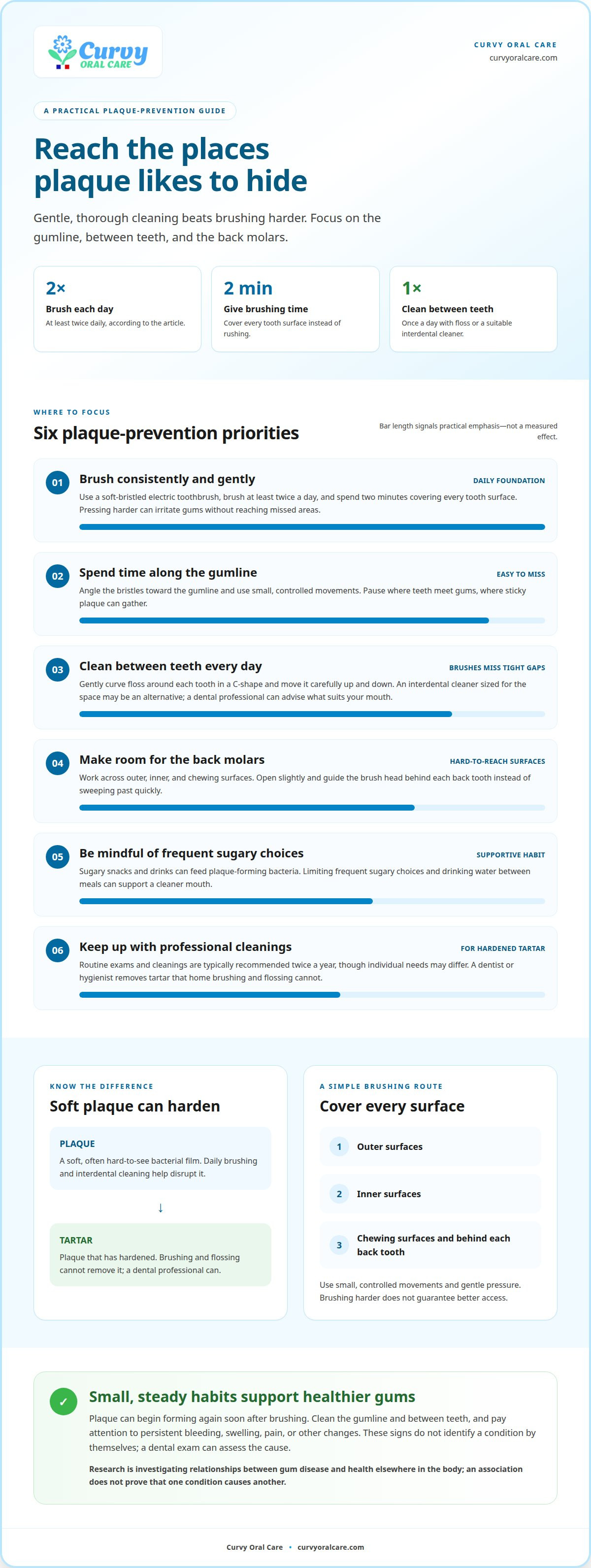
A consistent routine helps disrupt plaque before it can harden. UnitedHealthcare recommends brushing at least twice a day with a soft-bristled electric toothbrush. Spend two minutes brushing, covering every tooth surface rather than rushing over visible front teeth. Gentle, thorough cleaning matters more than pressing hard, which can irritate gums without reaching missed areas.
Angle the bristles toward the gumline and use small, controlled movements. Work across the outer, inner, and chewing surfaces, moving from one side of your mouth to the other. For back molars, open slightly and guide the brush head behind each tooth. Sticky plaque often gathers where teeth meet gums, so pause there instead of sweeping quickly past. This approach also helps clean around crowded or uneven teeth.
Brushing alone can leave plaque between teeth. Clean those spaces once a day with floss or an appropriately sized interdental cleaner. Ease floss between teeth, curve it around each tooth, and move it gently beneath the gum edge. Don’t snap it into tender gums. If floss is difficult to use, a pre-threaded flosser or water flosser may fit your routine. Choose an option you can use consistently.
Which toothpaste and mouthwash help prevent plaque? Choose a toothpaste suited to your needs that isn’t overly abrasive; a dentist can help you select one. Mouthwash isn’t a substitute for brushing or interdental cleaning, and the right type depends on your oral health needs. Ask a dental professional whether mouthwash is appropriate, especially if you have dry mouth or ongoing gum symptoms.
Food choices can support daily oral hygiene. Sugary drinks and frequent sticky snacks give plaque-forming bacteria more opportunities to use sugars. Choose water more often and limit between-meal snacking, especially on sugary foods. After brushing before bed, avoid food and drinks other than water. These simple choices complement brushing and flossing, but don’t replace either step.
Keep dental visits in your prevention routine. Some people need cleanings every six months, while others need them more often, according to UnitedHealthcare. A hygienist can remove tartar that brushing cannot, and a dentist can assess gum changes. Together, careful brushing, between-teeth cleaning, and visits suited to your needs form a practical approach to reducing plaque and supporting healthy gums.
Build a Better Daily Oral-Care Routine
A useful routine covers more than the broad, visible sides of your teeth. Brush every surface, then clean between teeth, where bristles can’t reach. Pay special attention to the gumline and back molars, particularly if those areas feel difficult to access. Use gentle pressure and a brush you can control comfortably. A thorough routine is repeatable, not punishing.
After brushing and interdental cleaning, gently clean your tongue with a toothbrush or tongue scraper. Move from the back toward the tip, rinsing the tool as needed. This clears surface debris that can contribute to breath odor. Don’t press hard or scrape until your tongue feels sore. If cleaning causes persistent discomfort, stop and ask a dental professional for advice.
Choose oral-care products to suit your mouth and needs. A soft-bristled brush can help clean near the gums without harsh scrubbing. Replace a brush head when its bristles become frayed, since worn bristles are harder to guide precisely. Toothpaste should feel comfortable and suit your needs; a dentist can advise you about specific concerns. Mouthwash may be useful for some people, but it doesn’t replace brushing or cleaning between teeth.
Food and drink choices shape the conditions plaque-forming bacteria encounter. Choose water more often than sugary drinks, and limit frequent sticky snacks between meals. Balanced meals with vegetables, fruit, and other nourishing foods support general well-being as well as oral health. If you snack in the evening, clean your teeth afterward. Once you’ve brushed before bed, stick to water.
Keep dental visits part of your routine, even when your teeth feel comfortable. A dentist or hygienist can spot tartar, assess your gumline, and recommend an appropriate schedule for exams and cleanings. They can also help tailor product choices if you have braces, sensitive gums, dry mouth, or another oral-care concern. Professional guidance complements your daily care at home.
Pay attention to changes rather than trying to diagnose them yourself. Persistent bleeding, swelling, bad breath, pain, receding gums, or loose teeth are reasons to seek professional advice. Note when a change began and where it occurs, such as bleeding near one back molar. This detail can help your dental team assess the concern. Research suggests links between oral and overall health, though associations do not establish cause and effect. Consistent care supports healthy gums and makes prevention part of everyday well-being.
Curvy Oral Care
Curvy Oral Care offers toothbrush options to support a consistent brushing routine. The aim is practical: make it easier to guide a brush around the gumline, back molars, and other areas that can be difficult to reach. A toothbrush is a daily-care tool, not a replacement for cleaning between teeth or professional dental advice.
Angled toothbrushes are designed to help users reach areas that may feel awkward to access with a conventional straight brush. The angle can help position bristles around the gumline and toward the back of the mouth. Technique still matters: move deliberately across tooth surfaces, use gentle pressure, and avoid rushing past the inner surfaces or chewing edges. An angled brush can support access, but it doesn’t guarantee that every surface is clean.
Sonic toothbrushes are another option when choosing a brush that fits your routine. What matters day to day is using the brush carefully and consistently, including along the gumline and behind the last molars. People who prefer a manual brush can also choose an angled toothbrush. The useful choice is one that feels manageable and helps you reach the areas you tend to miss.
For children, a toothbrush made for kids can make brushing easier to manage as they learn the routine. Adults with braces or implants may also need to pay close attention to spaces around dental work, where plaque can collect. A portable toothbrush for braces and implants is available for oral care away from home. Follow your dental professional’s guidance for your specific appliance or implant.
Brush heads need attention too. Frayed bristles can be harder to guide precisely, so replace a brush head when it becomes worn. Replacement brush heads and brush head subscriptions can help keep a fresh head available for regular use. These options support brushing as part of a broader routine, alongside daily interdental cleaning, tongue care, and regular dental visits.
Curvy Oral Care’s toothbrushes are optional tools for building a routine that works for your mouth. They don’t remove hardened tartar or treat gum disease, and persistent bleeding, swelling, or pain calls for professional evaluation. A dentist or hygienist can assess your gums and advise you about specific oral-health concerns. For readers looking for a brush that can help reach difficult areas, explore Curvy Oral Care’s angled sonic toothbrush as one option for daily brushing.
Frequently Asked Questions
Is there a way to prevent plaque?
You can reduce plaque with consistent daily cleaning, though plaque begins forming again after cleaning. Focus on brushing carefully and cleaning between teeth rather than brushing harder. Notice which areas are easy to skip, such as the inside of lower teeth or the last molars. Regular dental visits also help identify persistent buildup and remove hardened deposits that home care can’t clear.
Can hardened plaque fall off?
Hardened plaque, or tartar, generally needs removal by a dental professional rather than waiting for it to fall away. A loose-looking fragment doesn’t reliably mean the remaining deposit is gone. Avoid picking or scraping at it with household tools, which can injure your gums or tooth surfaces. A dentist or hygienist can examine the area and remove tartar using appropriate instruments.
Do daily routines affect plaque and tartar?
Yes. Brushing and cleaning between teeth regularly disrupt soft plaque before it has time to accumulate and harden. For example, a routine that misses the gumline or the same back molars may leave deposits in those spots. Frequent sugary snacks can also feed plaque-forming bacteria. Small habits matter: set a consistent time for cleaning and use a method that reaches the areas you tend to overlook.
What are health risks of plaque and tartar?
Plaque near the gumline can irritate gums and contribute to gingivitis, which may involve redness, swelling, or bleeding. If gum disease progresses, it can affect the tissues supporting teeth. Research has also found associations between gum disease and some broader health conditions, but an association doesn’t prove one causes the other. Seek professional advice for persistent bleeding, swelling, pain, or other changes.
What is tooth plaque made of?
Tooth plaque is a biofilm: bacteria and other microorganisms attached to tooth surfaces within a sticky layer. Saliva and tiny food particles can become part of this film. The bacteria feed on sugars and starches, so plaque may build up around teeth after meals and snacks. Because it is soft, plaque is easier to disrupt with brushing than tartar, which is hardened plaque.
What causes plaque buildup on teeth?
Plaque forms as bacteria in the mouth interact with carbohydrates in foods and drinks, including sugars in sweetened drinks and starches in bread or pasta. The film can collect in places that are harder to clean, including tight gaps, uneven surfaces, and the gumline. A routine that repeatedly misses those areas can leave more plaque behind, even if the front teeth look clean.
What is the best way to brush to prevent plaque?
Use a soft-bristled brush and clean all tooth surfaces with gentle, controlled movements. UnitedHealthcare recommends brushing at least twice a day with a soft-bristled electric toothbrush; spend about two minutes covering the mouth. Tilt the bristles toward the gumline and work methodically around each tooth. Don’t forget the inner surfaces and the chewing surfaces of your back molars.
How often should you floss to prevent plaque buildup?
Clean between your teeth once a day with floss or another suitable interdental cleaner. Slide floss gently between each pair of teeth, curve it around each tooth, and move it along the side without snapping it into the gums. If spaces are wider or floss is difficult to handle, a dental professional can advise you about alternatives, such as an appropriately sized interdental brush or water flosser.
This content is for informational purposes only and isn’t a substitute for professional dental or medical advice, diagnosis, or treatment; consult a qualified professional about personal concerns. The information is provided on the Site “AS IS” for personal, non-commercial use only. The site is intended for users who are at least 18 years old; persons under 18 are not permitted to use or register.

Article by
Aline Peixe Nebot
Aline Peixe Nebot is a Veterinarian and passionate advocate for better oral health, committed to raising awareness of oral health as a matter of public health. She actively promotes the importance of simple, effective oral care routines and works to educate the public about the often-overlooked link between oral health and overall systemic health. Her mission is to make better oral care knowledge accessible to everyone and encourage healthier habits for life.
Disclaimer
Disclaimer: The information provided in this article is intended for general educational and informational purposes only. It is not intended to replace professional medical, dental, or healthcare advice, diagnosis, or treatment.
Some content may be AI-assisted and is provided to support health education and awareness. While we strive to share accurate and up-to-date information, health recommendations and scientific evidence can evolve, and the information presented may not apply to every individual.
The connection between oral health and overall systemic health is an important and developing area of research. Associations discussed in this article should not necessarily be interpreted as proof of cause and effect.
Always consult a qualified dentist, physician, or other healthcare professional regarding your individual health, symptoms, medications, or treatment decisions. Do not delay or discontinue professional care based on information presented in this article.
This content is for education and awareness—not diagnosis or treatment.