
How to Prevent Gum Disease at Home: A Practical Daily Routine
What if your teeth feel clean but plaque remains where gum problems often begin? Brushing visible surfaces matters, but it can miss the gumline, spaces between teeth, and areas around back molars. Learning how to prevent gum disease at home starts with reaching those easy-to-overlook spots consistently, not relying on a quick-fix rinse or remedy.
If you’re unsure whether brushing alone is enough, or worried because your gums bleed, you’re not alone. Bleeding can be a sign of gum inflammation, but it doesn’t diagnose a serious condition by itself. Persistent bleeding or other ongoing changes deserve professional advice.
This guide explains how plaque affects gum health and offers a realistic daily routine, from brushing technique and cleaning between teeth to habits that support your mouth overall. You’ll also learn how to view home remedies cautiously and when to seek a dental evaluation. Small, steady steps can help you care for your gums with more confidence.
Key Takeaways
- Plaque along the gumline can irritate gums, and brushing only visible tooth surfaces may leave areas uncleaned.
- A practical routine for how to prevent gum disease at home includes gentle brushing and daily cleaning between teeth.
- Home remedies can’t replace consistent plaque removal or professional care when it’s needed.
- Choose tools that feel comfortable and help you reach difficult areas, including back molars.
- Persistent gum changes are a reason to seek advice from a dental professional.
How gum disease begins: the role of plaque at the gumline
Gum problems can start in a place that’s easy to overlook: the narrow edge where each tooth meets the gum. Dental plaque is a soft, sticky film of bacteria that continually forms on teeth. If it isn’t regularly disrupted, it can collect along the gumline and between teeth, especially in spots a quick brush misses. Learning how to prevent gum disease at home means making thorough plaque removal part of everyday care while recognizing when professional advice is needed.
What plaque does where teeth meet the gums
Plaque can gather behind and between teeth, around crowded areas, and near the back molars. Bacteria in the film can irritate nearby gum tissue and prompt inflammation. Gums may look red or swollen, or bleed during brushing, but these signs alone can’t confirm a diagnosis. Individual risk and the course of gum problems vary, so a dental professional can assess what’s happening in your mouth.
Gingivitis is inflammation of the gums and is generally considered the earlier stage of gum disease. With appropriate care, it can often be reversed. Periodontitis is more advanced: inflammation affects the tissues supporting the teeth, including the bone, and damage can occur. Not everyone with gingivitis develops periodontitis, but persistent plaque and untreated inflammation deserve attention. Periodontal disease, also known as gum disease, includes conditions affecting the gums and tooth-supporting structures.
Plaque that remains on teeth can harden into tartar, which home brushing can’t remove. Daily habits help control soft plaque and support prevention, but they don’t replace dental evaluation or professional cleaning when needed. Ongoing bleeding, swelling, tenderness, or changes in how teeth fit together are reasons to seek dental advice rather than relying on home care alone.
Why gum health is part of whole-body health
Your mouth is connected to the rest of your body, but that doesn’t mean a gum condition automatically causes a systemic illness. Research has found associations between gum disease and some health conditions, and researchers continue to investigate these relationships. An association means conditions are observed together; it doesn’t, by itself, show that one caused the other. Shared factors and two-way influences may also matter.
Healthy gums are an important part of oral health and everyday well-being. Keeping plaque under control is a practical step you can take, not a guarantee against every dental or medical condition. If you have concerns about how your oral health relates to another condition, discuss them with a qualified dental or medical professional. A dental checkup can also help identify gum changes that aren’t easy to judge at home.
How daily plaque removal supports healthier gums
Brushing the parts of your teeth you can see is a good start, but it may not reach the narrow gumline or the surfaces behind the back teeth. Plaque can remain in those overlooked spots even when your teeth feel clean. A steady, gentle routine works better than rushing or scrubbing hard. Guide the bristles across every tooth surface to disrupt buildup without irritating your gums.
Brush the gumline and hard-to-reach teeth carefully
The American Dental Association recommends brushing twice a day for two minutes with a soft-bristled toothbrush and fluoride toothpaste. Hold the brush so its bristles meet the gumline, then use small, controlled movements rather than forceful back-and-forth scrubbing. Work around each tooth, covering the outer, inner, and chewing surfaces. Slow down at the back molars, where a short reach or awkward angle can leave areas untouched.
Use a consistent route so you don’t skip sections. For example, start on the outer surfaces at one side of your mouth and move around to the other, then clean the inner surfaces and chewing surfaces. Remember the inner surfaces of your front teeth, too. Keep the pressure comfortable; pressing harder doesn’t make brushing more thorough and may irritate the gums. A soft brush you can handle easily is a sensible starting point. If reaching a particular area is difficult, brush design may help with access, but careful technique and consistent cleaning remain central.
Clean between teeth and include the tongue
A toothbrush can’t fully clean the tight spaces where teeth touch. Clean between your teeth daily with floss or another suitable interdental cleaner. Choose an option that fits the space and feels manageable; your dental professional can help you find a method that works for your mouth. Move gently to avoid snapping floss against the gums, and clean along each side of the gap rather than simply sliding through.
Interdental cleaning adds to brushing, it doesn’t replace it. Brushing cleans tooth surfaces and the gumline; floss or an appropriate interdental tool reaches between teeth. A gentle pass over the tongue can also remove surface debris and complement your routine. It isn’t a substitute for cleaning teeth or the spaces between them, but it can be a simple addition to daily oral care.
Fluoride toothpaste belongs in a routine because fluoride helps protect against tooth decay. It isn’t a shortcut for cleaning plaque away from the gumline, so pair it with thorough brushing and daily interdental cleaning. The ADA recommends fluoride toothpaste as part of home oral care; a dentist can personalize product advice to your needs.
Choose tools that make a careful routine easier to maintain. For example, an angled sonic toothbrush and toothpaste combo may suit someone looking for a brush design intended to help reach difficult spots. It’s an optional routine tool, not a replacement for deliberate technique or professional dental care.
Do home remedies prevent or treat gum disease?
A rinse or natural ingredient may sound easier than changing a daily routine, especially if your gums feel irritated. But temporary comfort isn’t proof that a remedy prevents gum disease or addresses its cause. For people wondering how to prevent gum disease at home, the foundation remains regular brushing and cleaning between teeth. These habits physically disrupt plaque; a remedy should not take their place.
Why quick fixes can distract from prevention
Some remedies have been studied as possible additions to oral care, and a few may offer temporary or complementary relief for early gum irritation. That doesn’t establish them as reliable ways to prevent or treat gum disease. A rinse may leave the mouth feeling fresher, for example, without cleaning plaque from the gumline or the tight spaces between teeth. Herbal ingredients may have properties that researchers are exploring, but they can’t remove hardened tartar.
The practical test is whether a habit helps you clean your teeth consistently. Keep your focus on brushing gently along the gumline and cleaning between teeth every day. If a dental professional recommends a mouthrinse, use it as directed and as an addition to your routine, not a replacement for brushing or interdental cleaning. Be cautious of claims that promise to reverse gum disease quickly or suggest one ingredient can do the work of daily care.
Home care supports prevention and is an important part of oral health. It can’t confirm what’s causing symptoms, remove tartar, or replace professional assessment. Established gum disease may require a dentist’s diagnosis and care tailored to the condition. Getting advice isn’t a failure of your routine; it’s how you find out whether home care alone is appropriate.
When symptoms need a professional assessment
A symptom doesn’t prove that you have gum disease, and different oral health concerns can look or feel similar. Still, changes that persist or worsen are worth discussing with a dental professional rather than trying a series of remedies and waiting indefinitely.
- Bleeding or swollen gums that keep recurring
- Persistent bad breath, pain, or gum recession
- Teeth that feel loose or have shifted
- Mouth sores that don’t heal
Seek advice if you notice these changes or another significant change in your mouth. A dentist can examine your gums, assess whether plaque or tartar is contributing, and explain the next steps. Home brushing can disrupt soft plaque, but hardened tartar and more advanced gum problems may need professional care. Keep up gentle daily cleaning while arranging an evaluation, unless a clinician advises otherwise. A steady routine is useful, but it shouldn’t become a reason to dismiss a persistent concern.
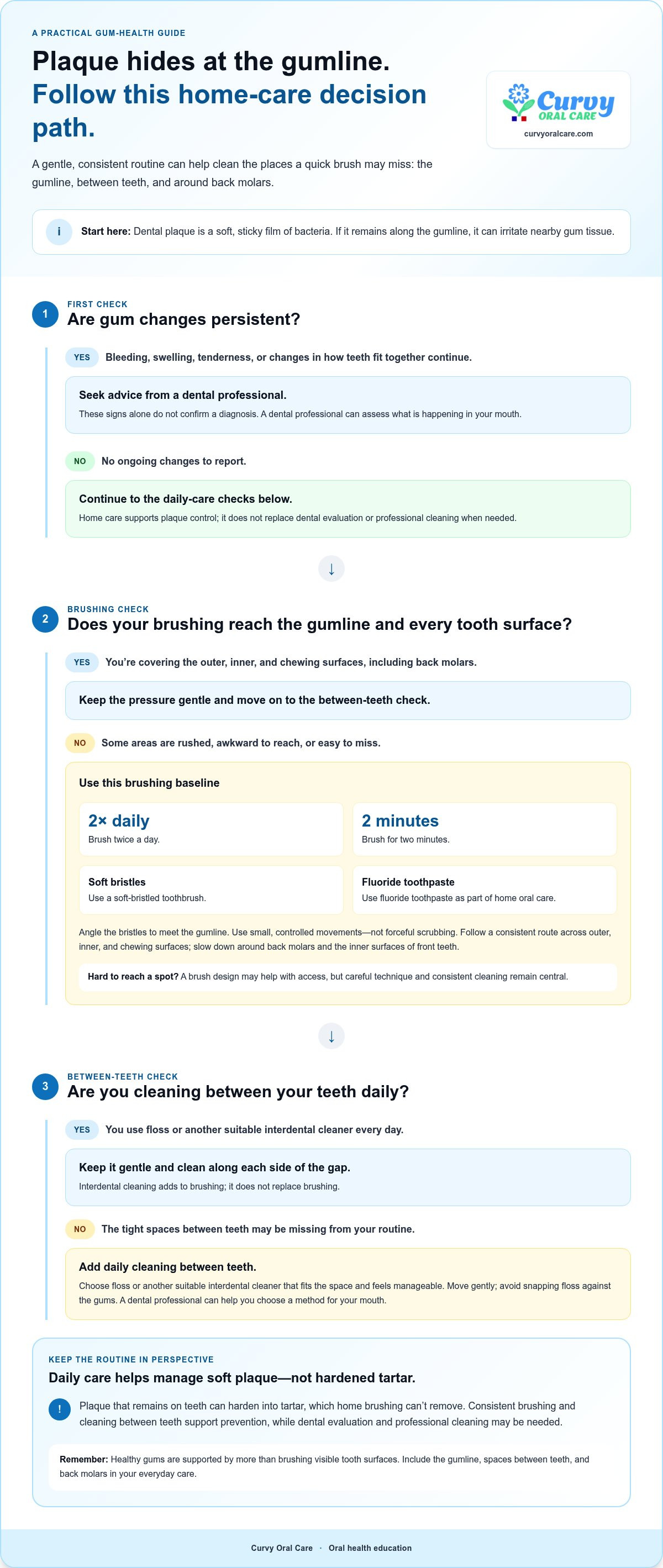
A simple at-home routine to support gum health
A routine works best when it’s easy to repeat and covers more than the front surfaces of your teeth. Brushing, cleaning between teeth, and tending to your tongue each play a different role. The sequence below gives you a practical framework for how to prevent gum disease at home, with consistent plaque removal as the priority rather than perfect technique or special products.
Build a morning and evening brushing sequence
Use the same simple pattern each time so you’re less likely to miss an area. Brush gently along the gumline and across the outer, inner, and chewing surfaces of every tooth. Give extra attention to back molars, the inside of front teeth, and any crowded or hard-to-reach spots. Small, controlled movements help you clean deliberately without scrubbing.
- Brush the teeth and gumline. Use a soft-bristled brush and fluoride toothpaste. Follow a consistent path around your mouth, including the back teeth.
- Clean between teeth. Use floss or another suitable interdental cleaner to reach spaces the toothbrush can’t access.
- Clean your tongue gently. This can complement brushing and interdental care, but it doesn’t replace either one.
Repeat the routine in the morning and before bed. If you tend to rush, pause briefly as you move from one section of your mouth to the next. A deliberate pattern is more useful than brushing harder. If one area is repeatedly difficult to clean, make a note to ask your dental professional for technique or tool guidance at your next visit.
Make the routine realistic and sustainable
Attach oral care to habits that already happen: brush after getting ready in the morning and before your bedtime routine. Keep your toothbrush and interdental cleaner where you’ll remember them. If a step feels difficult, ask a dental professional for advice on adapting the routine or choosing an appropriate tool.
An angled brush may help some people reach areas that are awkward to access with a conventional straight brush. Curvy Oral Care angled toothbrushes are designed to help reach difficult spots, but brush design doesn’t guarantee a particular health outcome. Technique and regular plaque removal still matter. Choose a brush that feels comfortable and lets you move carefully around your mouth.
Support your routine beyond the bathroom. Choose a balanced eating pattern and limit sugary foods and drinks, which the American Dental Association includes among its general home-care recommendations. Keep regular dental visits, too. A dental professional can personalize advice and check areas you may not be able to assess yourself.
If an angled brush feels useful for reaching difficult spots, explore an angled sonic toothbrush and toothpaste option as one possible part of your routine. Keep the priority clear: a manageable sequence, gentle technique, and consistent care are the foundation.
Choosing tools and knowing when home care is not enough
The right toothbrush is one you can hold comfortably and use to clean your teeth gently and thoroughly. For anyone learning how to prevent gum disease at home, the tool should support steady coverage, not promise results on its own. A soft-bristled brush is a practical choice, and the American Dental Association recommends soft bristles. Brush design can also affect how easily you reach around the gumline and into awkward areas.
Choose a toothbrush that supports careful technique
Consider whether the brush lets you guide the bristles across every tooth surface without straining your hand or pressing hard. If you often struggle to reach the back molars or the inside surfaces of your teeth, an angled design may help with access. It’s an aid to technique, not a medical treatment or a guarantee against gum disease. Consistent cleaning, including between teeth, remains important regardless of the brush you choose.
A sonic toothbrush is another option some people may prefer as part of their routine. The format doesn’t remove the need to guide the brush carefully along the gumline and cover each area. Curvy’s angled sonic toothbrush is designed to help users reach difficult spots. Consider it as a possible access tool, not a substitute for professional advice or daily attention to technique.
Know when to seek dental advice
Home care helps support gum health, but it can’t identify the cause of a symptom or assess how far a problem may have progressed. Arrange a dental evaluation if you notice changes that persist, return, or concern you. These signs don’t prove that you have gum disease, but they’re a good reason to get personalized guidance:
- Persistent bleeding or swollen gums
- Ongoing bad breath or pain
- Receding gums or teeth that feel loose
- Mouth sores that don’t heal
Don’t try to manage continuing symptoms with a new brush or home remedy alone. A dental professional can examine your gums, explain whether your routine needs adjusting, and recommend care suited to your needs. Keep brushing gently and cleaning between your teeth while you seek advice, unless a clinician tells you otherwise.
Start with a soft-bristled brush you can handle comfortably, cover the gumline and hard-to-reach teeth, clean between your teeth, and keep regular dental visits. Small, repeatable habits and professional care work together. If an angled brush could make difficult areas easier to access, explore the angled sonic toothbrush as an optional addition to your routine.
Make your next routine easier to keep
Healthy habits take shape through repetition, not perfection. Choose one small adjustment you can maintain, such as slowing down at a tricky spot or setting out your interdental cleaner before bed. As your routine becomes familiar, you can refine it with guidance from your dental professional. The goal of learning how to prevent gum disease at home is to build habits that support gum health while staying attentive to changes that need professional advice.
Your toothbrush should fit your needs and feel comfortable to use. Curvy offers manual and sonic options, including angled toothbrushes designed to help reach difficult areas. An angled brush is an optional access aid, not a treatment or guarantee of disease prevention. If you’d like to explore an option that brings a toothbrush and toothpaste together, explore the angled sonic toothbrush and oral-care bundle.
Keep showing up for your oral health, one brushing at a time. Brush twice a day, clean between your teeth daily, and keep regular dental visits. Small, steady steps and professional dental care can work together to support a healthier mouth. You don’t need a perfect routine to make a positive start.
Frequently Asked Questions
Can gum disease be reversed at home?
Early gum inflammation may improve when plaque is regularly removed, but you can’t tell at home whether the problem is limited to early inflammation or has progressed. More advanced gum disease can damage the tissues supporting teeth and needs professional assessment and care. For how to prevent gum disease at home, focus on steady daily cleaning, and arrange a dental evaluation if symptoms persist or you’re unsure what’s causing them.
Is bleeding when brushing always a sign of gum disease?
No. Bleeding can occur for different reasons, including brushing too forcefully or irritation from starting to clean between teeth. It doesn’t confirm gum disease on its own. Use a soft-bristled brush and gentle pressure, and notice whether the bleeding continues despite careful cleaning. If it recurs or comes with swelling, discomfort, or other changes, arrange a dental assessment rather than trying to identify the cause yourself.
Does salt water prevent gum disease?
Salt-water rinsing hasn’t been established as a replacement for daily plaque removal or as a reliable way to prevent gum disease. Some research suggests it may help soothe early gum irritation as a complementary measure, but it won’t remove plaque from tooth surfaces or hardened tartar. If you’re considering a rinse for ongoing symptoms, ask a dental professional whether it’s suitable for you and what care you may need.
How often should I visit a dentist to help prevent gum disease?
There isn’t one visit schedule that suits everyone. Your dentist can recommend how often you should come in based on your gum health, dental history, and personal risk factors. At appointments, mention changes you’ve noticed, such as bleeding, sensitivity, or difficulty cleaning a particular area. Regular visits allow a professional to assess gum health and tartar buildup, which can’t always be evaluated accurately by looking in a mirror at home.
Can gum disease affect overall health?
Gum health is part of overall health, and studies have found associations between gum disease and some systemic conditions. An association doesn’t prove that gum disease causes another condition; shared risk factors and the direction of any relationship are still being studied. If you have a medical condition or questions about how it may relate to your gums, discuss your individual concerns with your dentist or healthcare professional.
Are electric toothbrushes better for preventing gum disease?
Not automatically. Both manual and electric brushes can be used as part of effective oral care; how thoroughly and gently you clean matters. An electric model may feel easier to use for some people, while others prefer a manual brush. Choose one you can handle comfortably and guide around your whole mouth. If dexterity, braces, or a hard-to-reach area makes brushing difficult, ask your dentist for personalized tool advice.
What should I do if my gums stay swollen or bleed?
Arrange a dental appointment if swelling or bleeding persists, returns often, or concerns you. Ongoing bad breath, pain, receding gums, loose teeth, or a mouth sore that doesn’t heal also deserve professional evaluation. These signs don’t establish a diagnosis, but an examination can help identify what’s happening and whether you need care beyond home hygiene. Keep cleaning gently, and don’t delay advice while relying on rinses or remedies alone.
Health & Medical Disclaimer: This article is for general educational purposes only and is not a substitute for professional dental or medical advice, diagnosis, or treatment. Consult a qualified dental or medical professional about symptoms, concerns, or changes in your health.

Article by
Aline Peixe Nebot
Aline Peixe Nebot is a Veterinarian and passionate advocate for better oral health, committed to raising awareness of oral health as a matter of public health. She actively promotes the importance of simple, effective oral care routines and works to educate the public about the often-overlooked link between oral health and overall systemic health. Her mission is to make better oral care knowledge accessible to everyone and encourage healthier habits for life.
Disclaimer
Disclaimer: The information provided in this article is intended for general educational and informational purposes only. It is not intended to replace professional medical, dental, or healthcare advice, diagnosis, or treatment.
Some content may be AI-assisted and is provided to support health education and awareness. While we strive to share accurate and up-to-date information, health recommendations and scientific evidence can evolve, and the information presented may not apply to every individual.
The connection between oral health and overall systemic health is an important and developing area of research. Associations discussed in this article should not necessarily be interpreted as proof of cause and effect.
Always consult a qualified dentist, physician, or other healthcare professional regarding your individual health, symptoms, medications, or treatment decisions. Do not delay or discontinue professional care based on information presented in this article.
This content is for education and awareness—not diagnosis or treatment.