
How to Brush Without Pressing Too Hard Along Your Gumline
More pressure doesn’t mean a cleaner mouth. To learn how to brush without pressing too hard, choose soft bristles, hold the brush lightly with your fingertips, and guide it along the gumline with controlled movements. Let the brushing motion do the cleaning, not force.
It’s easy to assume that scrubbing harder will remove more plaque, especially around the gumline. But too much pressure can irritate gums and wear down enamel, while hard bristles don’t clean better. A gentler approach can still clean carefully when you reach the gumline, spaces between teeth, and other areas that are easy to miss.
This guide explains why brushing pressure matters, how to choose bristles, and how to adjust your grip and technique. You’ll also learn practical ways to make gentle brushing feel more natural, so your routine supports healthy gums without relying on force.
Key Takeaways
- Use soft-bristled brush heads and a relaxed grip to clean without scrubbing your gums.
- Angle the bristles toward the gumline and use short, gentle strokes instead of sweeping back and forth.
- Learn how excessive pressure can contribute to gum changes, enamel wear, and tooth sensitivity.
- Give the gumline, spaces between teeth, and back molars attention as part of a complete routine.
- Seek professional advice about persistent bleeding, swelling, pain, or other noticeable changes.
Why Brushing Pressure Matters
Brushing harder doesn’t remove plaque more effectively. Plaque is a soft film that collects on teeth, especially along the gumline and between teeth. Gentle, deliberate brushing helps clean these areas without repeatedly pressing bristles into delicate gum tissue. Too much pressure can irritate gums and contribute to gum recession. It can also wear enamel, the hard outer layer that protects each tooth. Eroded enamel cannot repair itself, so pressure is no substitute for careful technique.
Brush twice a day and spend two minutes cleaning your teeth each time. The CDC recommends brushing your teeth twice per day. Work around your mouth rather than rushing over only the visible front surfaces. The gumline, back molars, and spaces between teeth are easy to miss. Extra force won’t make up for skipped areas. A steady pace and careful coverage matter more than scrubbing.
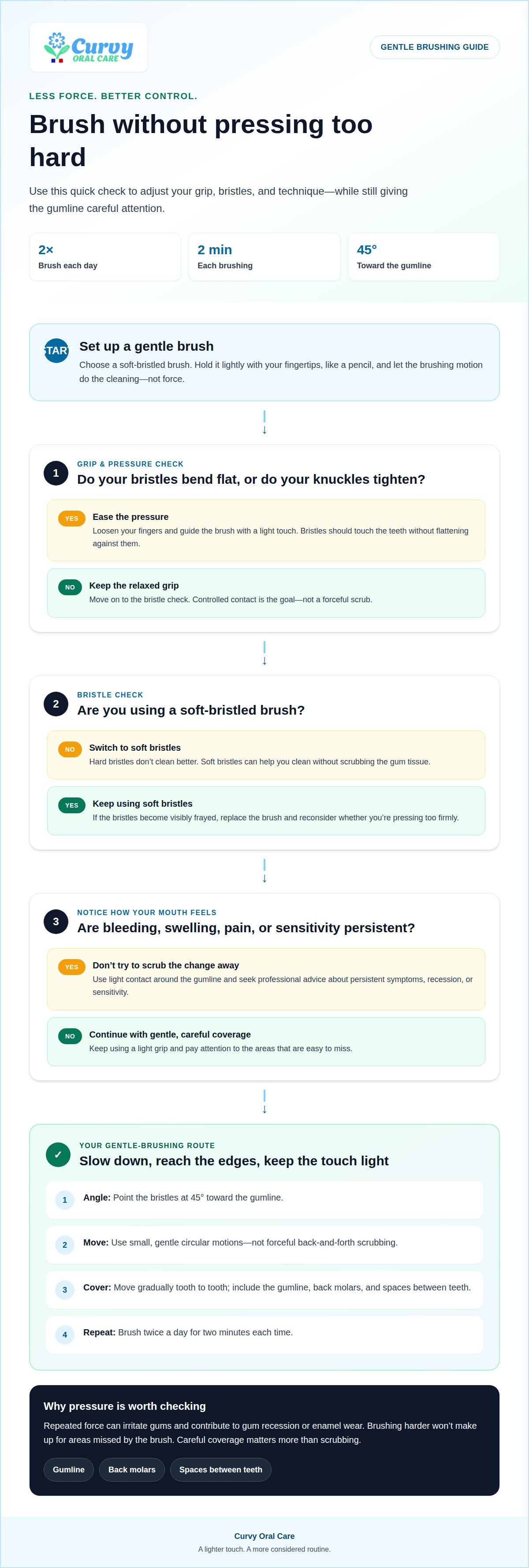
A lighter grip can help reduce the urge to push. Hold the toothbrush with your fingertips, as you might hold a pencil, instead of wrapping your whole hand tightly around the handle. This makes it easier to guide the bristles without driving them into your gums. If your knuckles turn white or the brush bends against your teeth, loosen your fingers. Let the bristles touch the tooth surfaces without flattening them.
At the gumline, angle the brush at 45 degrees toward the gums. Use small, gentle circular motions instead of forceful back-and-forth scrubbing. This position helps the bristles reach the edge where plaque can gather, while a sweeping motion may miss narrow areas. Move gradually from one tooth to the next. Take particular care around the gumline of back molars, where limited access can tempt you to press harder.
The goal is controlled contact, not a forceful scrub. If your gums feel sore after brushing or your bristles splay quickly, consider whether you need to adjust your grip or pressure. The brush’s movement removes plaque; pressing harder doesn’t improve that action. Pair a gentle touch with consistent coverage, and clean the gumline as carefully as the broad tooth surfaces. This makes brushing thorough without treating gum tissue like a surface to scour.
The Science of Brushing Pressure and Oral Health
Gum recession happens when gum tissue moves away from a tooth, exposing more of its surface. Brushing with excessive pressure can contribute to this change, especially when forceful scrubbing repeatedly irritates the gumline. Recession can have other contributing factors, too, so its appearance alone cannot identify the cause. A dentist can examine the gum tissue and assess the recession.
As gums recede, the exposed root surface may reveal dentin, the layer beneath enamel. Unlike the visible crown, the root surface lacks enamel and can look darker. Dentin contains tiny channels that extend toward the tooth’s inner tissues. When exposed, it may react to hot or cold foods and drinks, causing sensitivity. Exposed roots are also more susceptible to bacterial decay than enamel-covered surfaces.
Pressure matters because repeated force can affect both gum tissue and tooth surfaces. Gums may be damaged, and recession can be difficult to reverse without treatment. Enamel can also wear away; once eroded, it cannot repair itself. These changes don’t happen the same way for everyone, and brushing pressure isn’t the only possible influence. Still, easing the force is a practical way to reduce unnecessary stress during daily cleaning.
Notice specific changes rather than trying to diagnose them yourself. For example, a tooth that looks longer than its neighbors, a newly visible root, or sensitivity when sipping a cold drink are details worth mentioning at a dental visit. See a dentist if you notice gum recession or persistent tooth sensitivity. An examination can assess the affected area and help identify appropriate next steps.
Until you have an assessment, avoid scrubbing a sensitive spot harder in an attempt to clean it. Instead, use a soft-bristled brush and light contact around the gumline. Check whether the bristles are splayed, since worn bristles can make controlled brushing harder. If one tooth is sensitive, note whether hot or cold triggers it and whether the feeling continues afterward. These details can help guide a professional evaluation.
What Happens to Teeth and Gums When You Brush Too Hard
Too much force can make brushing less comfortable and harder to sustain. Repeated friction along the gumline can irritate tissue, while concentrated scrubbing may overwork some surfaces and miss others. That doesn’t result in a more complete clean. Plaque can remain where the brush doesn’t reach, including between teeth and around back molars, so balanced coverage matters more than force.
Gums can become sore or bleed when brushing repeatedly irritates them. Plaque buildup can also inflame gum tissue, so bleeding doesn’t automatically mean brushing caused the problem. Avoiding the gumline isn’t a helpful response either. Clean the area carefully, note whether bleeding continues, and discuss persistent bleeding with a dental professional. They can examine your gums and help identify possible causes.
Excessive brushing can contribute to changes at the gumline, including recession. This can alter how much of a tooth is visible and how the gum edge looks across neighboring teeth. These changes may develop gradually, so comparing with an old photograph isn’t a reliable way to diagnose them. A dentist can assess the tissue directly and determine whether it needs further attention.
Repeated force can affect tooth surfaces, too. Hard bristles don’t clean better, and brushing too hard can wear gums and enamel. Enamel doesn’t repair itself after erosion. Treat force as something to reduce, not a shortcut to a cleaner mouth. If the brush head becomes visibly frayed, replace it and consider whether you’re pressing too firmly.
Pay attention to persistent bleeding, swelling, pain, or other noticeable changes instead of trying to solve them by scrubbing more. Brushing pressure is only one possible factor in oral changes, and symptoms alone don’t establish their cause. Continue gentle cleaning around the gumline and between teeth, and arrange a dental evaluation for symptoms that persist. A professional can assess your teeth and gums and explain care suited to what they find.
How to Brush Without Pressing Too Hard
Use a soft-bristled toothbrush with a flat-cut head. Hard bristles don’t clean better and can wear gums and enamel. Hold the handle lightly with your fingertips rather than clenching your fist. If your hand tightens while brushing, pause, relax your grip, and resume with a lighter touch. The bristles should contact your teeth without bending sharply against them.
Angle the bristles at 45 degrees toward the gumline. Then make short, tooth-sized strokes instead of sweeping across several teeth. Work over two to three teeth at a time, moving around the mouth in a steady sequence. Small circular motions help you focus on each area rather than scrubbing back and forth. Include the outer, inner, and chewing surfaces, including the less visible back molars.
If your dominant hand tends to push, try brushing with your non-dominant hand. The unfamiliar movement can make forceful scrubbing less automatic. Keep a gentle touch and slow down around tender or sensitive areas. Tooth sensitivity can have different causes, so don’t assume pressure explains every symptom. If sensitivity persists, arrange a dental assessment rather than avoiding that tooth or brushing it harder.
With an electric toothbrush, guide the brush head across the teeth instead of scrubbing back and forth. Place it at the gumline for a few seconds, then move to the next tooth. Let the brush head do its work; pressing down adds force, not better coverage. Check electric-brush bristles every two to three weeks for splaying. A frayed or bent head is a cue to review your pressure and replace worn bristles.
Manual brush bristles can reveal a brushing habit, too. Bristles that become splayed and worn after one to two months may indicate that you’re brushing too hard. Check the head regularly and replace it when the bristles are worn out. Try this simple routine: soften your grip, angle toward the gums, and move tooth by tooth. If you’re unsure whether your touch is gentle, watch the bristles. They should stay aligned rather than flatten against your teeth with each stroke.
Build a Gentle Daily Oral-Care Routine
Curvy Oral Care offers manual and sonic toothbrushes, angled toothbrushes, and replacement brush heads for everyday oral care. Choose a brush you can guide comfortably with light pressure, especially along the gumline and around hard-to-reach teeth. The right setup should help you maintain a gentle technique, not encourage harder scrubbing.
Consistency matters more than force. Brush twice a day, as the CDC recommends, and allow two minutes for a thorough session. Move through your mouth in a repeatable sequence, such as upper teeth first, then lower teeth. Include the inside and chewing surfaces, not just the parts visible in a mirror. A set route makes it less likely that you’ll rush or press harder to compensate for missed spots.
Pay close attention to the gumline, spaces between teeth, and back molars. Plaque can collect where a tooth meets the gum and in places a brush head struggles to reach. Aim the bristles toward the gumline, then move slowly from one area to the next. Clean between teeth with an appropriate interdental tool, since brushing alone doesn’t reach every contact point. Finish by cleaning your tongue as part of the same routine.
Brush design can also affect access. An angled toothbrush may help you position the bristles in areas that feel awkward to reach with a conventional straight brush, including around back teeth. Curvy Oral Care’s angled soft-bristle toothbrush is one option for users who want an angled head and soft bristles. A sonic toothbrush is another available brush type, but whichever style you choose, guide it gently rather than pushing it against your teeth.
Choose oral-care products that suit your needs, and replace brush heads when their bristles become worn. Watch for persistent bleeding, gum swelling, ongoing sensitivity, pain, or visible recession. These changes can have different causes, so don’t try to diagnose them by changing your brushing pressure alone. A dental professional can assess persistent symptoms and advise you on care. Gentle brushing works best as part of a routine that also cleans between teeth and reaches less accessible surfaces.
Key Takeaway: Gentle, Consistent Brushing Supports Healthy Gums
A useful oral-care habit is one that fits the way you live. Instead of aiming for a perfect routine, make your next brushing session easy to start. Keep the brush where you naturally get ready for bed or begin your morning. A visible reminder can help make brushing an automatic part of getting ready, rather than another task to remember.
Make your routine easier to repeat by removing small obstacles. If a brush is uncomfortable to hold or reaching a particular area feels awkward, notice the problem and adjust your setup. A different handle or brush style may feel more manageable. For travel, keeping oral-care essentials together can also make it easier to maintain familiar habits away from home.
Give yourself time to adapt when changing your technique. A lighter touch may initially feel less effective if you’re used to scrubbing. Judge your routine by whether you can clean deliberately and comfortably, not by how much force you feel. If a change is difficult, focus on making one adjustment at a time rather than overhauling your whole routine at once.
Small choices can make oral care feel less like a chore and more like a dependable act of self-care. Preparing your brush before bed, keeping a replacement head ready, or choosing a brush that feels natural in your hand can help you follow through. These practical details don’t replace good technique, but they can make it easier to maintain the habits you intend to practice.
Oral health is one part of overall well-being, and caring for it can be a steady expression of attention to yourself. Research continues to explore connections between oral health and health elsewhere in the body, but associations alone don’t prove that one causes another. You don’t need a dramatic reset to make a worthwhile change. Choose a gentler approach you can maintain, let it become familiar, and build from there.
Make your next brushing session a chance to build a lighter, more mindful habit. Practicing how to brush without pressing too hard starts with noticing your grip and easing it whenever your hand tenses. Take time to clean along the gumline, reach the back molars, and brush all tooth surfaces. Small adjustments can make careful oral care feel more natural over time.
The right tool can support a manageable routine, but technique matters too. Choose a brush that feels comfortable to hold and lets you reach areas that are difficult to access. Brush gently and deliberately, and clean between your teeth each day to help remove plaque from places a toothbrush may miss. These simple habits support clean teeth and healthy gums.
If you’re exploring ways to reach difficult areas, you can review Curvy Oral Care’s angled toothbrush information. Keep your approach patient and consistent. Brush twice a day, clean between your teeth, and seek professional advice about persistent bleeding, swelling, or pain. A gentle daily routine is a practical step toward caring for your gums and your overall well-being.
Frequently Asked Questions
Why is hard brushing bad?
Hard brushing can injure gum tissue and wear tooth surfaces, but pressure isn’t the only factor in oral health. Plaque can contribute to gum inflammation, and existing dental conditions may also affect symptoms. If a particular area feels uncomfortable, note where it is and when the discomfort occurs. That information can help a dentist assess the area rather than relying on brushing changes alone.
Question 1: How do you hold your brush?
Hold the handle with your thumb and fingertips rather than enclosing it in a tight fist. If you have hand stiffness or limited dexterity, a handle that feels stable and comfortable may be easier to guide. Ask a dental professional for technique suggestions if holding a standard brush is difficult. A comfortable grip can make controlled movements easier throughout your routine.
How much pressure should you use when brushing your teeth?
Use only enough pressure to keep the bristles in contact with your teeth. There isn’t one force level that suits every brush and user, so don’t try to measure pressure by pushing down. If you’re unsure, ask a dental professional to observe your technique during a visit. They can offer feedback based on your brush, gum condition, and oral-care needs.
What toothbrush bristle type is best for gentle brushing?
Soft bristles are suitable for gentle brushing; hard bristles don’t clean better and can wear gums and enamel. The right brush also needs to feel manageable in your hand and reach the surfaces you need to clean. If your mouth has specific needs, such as dental work that affects how you brush, ask a dental professional which brush style suits your routine.
How to hold a toothbrush to avoid pressing too hard
Let the handle rest lightly between your fingertips instead of clenching it in your palm. If you notice your hand tightening, pause, relax your fingers, and resume. You can also pay attention to your wrist and forearm: a rigid arm may signal that you’re using more effort than necessary. If hand discomfort makes brushing difficult, ask a dental professional about practical adaptations.
What brushing technique cleans teeth without scrubbing?
Use controlled movements rather than fast, forceful scrubbing, and make sure your routine covers every surface. A repeatable path through your mouth can help prevent missed spots: for example, start on one side and work around each arch. Check your progress in a mirror if that helps you stay organized. If plaque tends to remain in particular areas, ask a dental professional to demonstrate how to clean them.
Are electric toothbrushes with pressure sensors helpful?
A pressure sensor can offer feedback if your electric toothbrush has that feature, but it doesn’t assess every part of your technique. Follow the instructions for your specific model, since alerts and controls vary. A sensor can’t determine whether you’ve covered all tooth surfaces or reached difficult areas, either. Treat it as one possible cue, not a replacement for careful positioning or professional advice.
What are signs you are brushing too hard?
Splayed bristles, gum tenderness, sensitivity, or changes near the gumline can be reasons to review your habits. These signs don’t prove brushing pressure is the cause, since oral symptoms can have different explanations. Note when you first noticed a change and whether it affects one area or several. Seek professional advice for persistent bleeding, swelling, pain, sensitivity, or visible gum changes.
Health & Medical Disclaimer: This content is for educational purposes and is not a diagnosis or a substitute for professional dental or medical advice. Seek advice from a qualified professional about personal symptoms or treatment. Information is provided on the Site “AS IS” for personal, non-commercial use only. The site is intended for users who are at least 18 years old; persons under 18 are not permitted to use or register.

Article by
Aline Peixe Nebot
Aline Peixe Nebot is a Veterinarian and passionate advocate for better oral health, committed to raising awareness of oral health as a matter of public health. She actively promotes the importance of simple, effective oral care routines and works to educate the public about the often-overlooked link between oral health and overall systemic health. Her mission is to make better oral care knowledge accessible to everyone and encourage healthier habits for life.
Disclaimer
Disclaimer: The information provided in this article is intended for general educational and informational purposes only. It is not intended to replace professional medical, dental, or healthcare advice, diagnosis, or treatment.
Some content may be AI-assisted and is provided to support health education and awareness. While we strive to share accurate and up-to-date information, health recommendations and scientific evidence can evolve, and the information presented may not apply to every individual.
The connection between oral health and overall systemic health is an important and developing area of research. Associations discussed in this article should not necessarily be interpreted as proof of cause and effect.
Always consult a qualified dentist, physician, or other healthcare professional regarding your individual health, symptoms, medications, or treatment decisions. Do not delay or discontinue professional care based on information presented in this article.
This content is for education and awareness—not diagnosis or treatment.