
How Often to Change Toothbrush Head: The Science of a Fresh Clean
Your toothbrush head is likely failing you long before you notice the bristles fraying. Most people treat replacement like a suggestion rather than a requirement, but using a worn-out brush is a liability for your oral health. Understanding how often to change toothbrush head is the difference between a superficial rinse and a professional-level clean that actually protects your smile.
It's common to feel uncertain about hygiene standards when your tools start to look tired. You probably suspect your current routine isn't quite hitting the mark, especially if you've noticed occasional bleeding or a less-than-polished feeling after you finish. It's frustrating to put in the effort every morning only to feel like you're missing the hidden plaque near your gumline.
This guide delivers a clear maintenance framework to ensure your equipment stays effective. You'll discover the ideal replacement schedule for peak performance, the science behind bristle wear, and how to automate your hygiene so you never have to guess again. It's time to move beyond guesswork and embrace a data-driven approach to your daily routine.
Key Takeaways
- Master the 12-week replacement cycle to ensure your sonic technology continues to remove plaque with maximum precision.
- Recognize the physical warning signs, such as bristle splaying, that signal your brush head is no longer capable of protecting your gums.
- Uncover the link between old bristles and systemic health, and find out exactly when microscopic bacteria begin to accumulate.
- Learn how often to change toothbrush head to maintain peak hygiene standards and keep your daily routine efficient and effective.
- Discover how a "set-and-forget" subscription model ensures you always have a fresh, high-performance tool ready for your back molars.
The Three-Month Rule: Timing Your Toothbrush Head Replacement
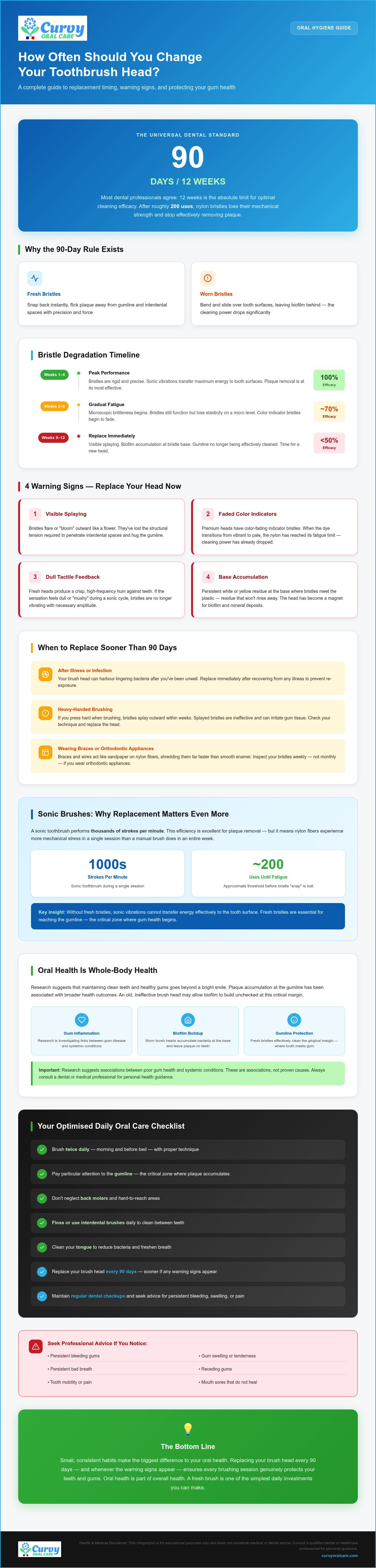
The 90-day benchmark isn't just a suggestion; it's a mechanical deadline for your oral health. Most dental professionals agree that 12 weeks is the absolute limit for optimal cleaning efficacy. If you're brushing more than twice a day, you are accelerating this timeline. Your bristles simply cannot maintain their structural integrity indefinitely under high-frequency use. When the fibers lose their tension, they stop cleaning and start simply moving over the surface of your teeth.
Understanding how often to change toothbrush head depends largely on the intensity of your routine. High-frequency tools like a Y-angled sonic toothbrush perform thousands of strokes per minute. This efficiency is excellent for plaque removal, but it means the nylon fibers experience more stress in a single session than a manual brush does in a week. Fresh bristles are essential for reaching the deep crevices and the gumline where systemic health begins. Without that rigidity, the sonic vibrations cannot transfer energy effectively to the tooth surface.
Why 90 Days is the Dental Standard
Nylon bristles are engineered for precision, but they have a definitive breaking point. After roughly 200 uses, the fibers lose their "snap" and mechanical strength. Instead of flicking plaque away, worn bristles bend and slide over the surface. This mechanical breakdown leaves behind a stubborn layer of biofilm. You might not see the damage with the naked eye, but the loss of mechanical integrity is real. Many modern heads use color-fading indicator bristles to signal when the fibers have lost their ability to sweep effectively. When that color fades, your cleaning power has already dropped significantly.
When to Replace Your Head Sooner
Certain situations demand an immediate swap before the 90-day mark. If you've recently recovered from an illness, your brush head acts as a reservoir for lingering bacteria. Replacing it immediately prevents re-exposure. Technique also plays a massive role in longevity. If you're a "heavy-handed" brusher who applies excessive pressure, your bristles will splay outward. This ruins the brush's ability to hug the contours of your teeth. Splayed bristles are ineffective and can even irritate your gum tissue.
Orthodontic appliances also change the math. Braces and wires act like sandpaper on nylon fibers, shredding them much faster than smooth enamel. If you wear braces, you should inspect your bristles weekly. Learning how often to change toothbrush head requires paying attention to these environmental factors. A fresh head ensures that your sonic technology is actually doing the work it was designed to do, keeping your smile bright and your gums healthy.
4 Warning Signs Your Brush Head Needs Replacing
Waiting for a calendar alert to tell you it's time for a new brush head is a reactive strategy. To stay ahead of plaque, you must be proactive. Your brush head communicates its status through visible and tactile cues. If you're paying attention, you'll know exactly when the mechanical efficiency drops. This awareness is a vital part of mastering how often to change toothbrush head for long-term health.
- Visible Splaying: Bristles should stand tall and uniform. When they begin to flare or "bloom" like a flower, they've lost the structural tension required to penetrate the interdental spaces.
- Faded Color Indicators: Most premium heads feature dyed bristles that act as a visual countdown. When the color transitions from vibrant to pale, the nylon has reached its fatigue limit.
- Tactile Feedback: You should feel a crisp, high-frequency hum against your teeth. If the sensation feels dull or "mushy" during your sonic cycle, the bristles are no longer vibrating with the necessary amplitude.
- Base Accumulation: Look at where the bristles meet the plastic head. If you see a persistent white or yellow residue that doesn't rinse away, the head has become a magnet for biofilm and mineral deposits.
Identifying Microscopic Bristle Fatigue
Bristle fatigue is the loss of elasticity in nylon fibers. This degradation happens on a microscopic level long before you see the bristles flare. High-frequency sonic vibrations put immense stress on the material, causing the fibers to become brittle and dull over time. When this happens, the brush loses its precision. It stops effectively sweeping the gingival margin, which is the critical junction where the tooth meets the gum. If the bristles don't snap back into place instantly, they aren't doing their job.
Technique Check: Are You Brushing Too Hard?
If your brush heads look like a mushroom after only a few weeks, you're likely applying too much manual pressure. This "splay" pattern is a red flag for your enamel. You don't need to scrub when you're using advanced technology. A Y-angled sonic toothbrush is specifically designed to hug the gumline without the need for aggressive force. By letting the sonic vibrations do the heavy lifting, you protect your enamel and extend the life of your brush head. Monitoring your own habits ensures you aren't destroying your tools prematurely.
The Science of Plaque, Bacteria, and Systemic Health
The mouth is the primary gateway to your body. It's a complex ecosystem where bacteria can either thrive or be kept in check by your daily habits. When you neglect the maintenance of your tools, you're inviting pathogens into your system. Research consistently suggests a strong association between periodontal health and general well-being, including cardiovascular health and blood sugar regulation. This is why understanding how often to change toothbrush head is a matter of holistic health, not just cosmetic maintenance. For readers who want to further support their internal health as they age, you can discover Nuradiant and their science-backed supplements for those over 40.
Old bristles don't just lose their shape. They become porous reservoirs for microscopic bacteria and fungal spores. Every time you brush with a three-month-old head, you risk introducing these contaminants back into your gingival tissue. This persistent exposure leads to plaque accumulation, which triggers gum inflammation, also known as gingivitis. If left unchecked, this localized inflammation can signal broader health issues as the body responds to the constant bacterial load.
Bathrooms are damp, high-humidity environments that are far from sterile. Studies on the microbial load of toothbrushes kept in these settings show that bristles can harbor everything from staphylococci to coliform bacteria. Simply rinsing your brush under tap water is insufficient to sanitize old, porous nylon. The material itself begins to degrade over time, creating microscopic pits where biofilm can hide from even the most thorough cleaning. Starting fresh with a new head every 12 weeks is the only way to maintain a healthy oral microbiome and ensure your tools aren't working against you.
Protecting the Gumline and Back Molars
Plaque thrives in the shadows, specifically in hard-to-reach areas like the back molars and the deep gingival margin. Traditional straight brushes often skip over these zones, leaving behind a "plaque trap" that fuels inflammation. Precision is non-negotiable for effective preventative care. A Y-angled sonic toothbrush allows you to maintain direct contact with these difficult spots, ensuring that the vibrating bristles actually disrupt the biofilm. By prioritizing high-performance tools and knowing how often to change toothbrush head, you protect the very areas where systemic inflammation often begins. Don't let a worn-out tool compromise your body's first line of defense.
Optimizing Your Routine for Better Gum Health
Precision in oral care extends far beyond the calendar. While knowing how often to change toothbrush head ensures your tools remain mechanically sound, your daily storage and technique determine how well those tools actually perform. Most people struggle to maintain the recommended 45-degree angle at the gumline because traditional straight brushes aren't built for the mouth's natural, rounded curves. An angled brush head solves this by providing direct, effortless access to the gingival margin. It eliminates the need for manual contortions; instead, the design does the work for you. This allows the sonic vibrations to sweep away plaque from the very spots where gum disease and inflammation begin. Integrating this with tongue cleaning and interdental care creates a comprehensive barrier against biofilm.
The EMF-Free Advantage for Daily Brushing
Modern wellness is shifting toward low-radiation personal care for a reason. Many traditional electric brushes emit electromagnetic fields (EMF) in close proximity to your brain and thyroid twice a day, every day. Choosing an EMF-free sonic toothbrush is a proactive, smart step toward a non-toxic oral care routine. This technology provides peace of mind, ensuring that your pursuit of a cleaner smile doesn't come with unnecessary radiation exposure. It's a necessary evolution in an industry that has remained stagnant for too long. For a deeper dive into this innovation, check out The EMF-Free Sonic Toothbrush guide. It's about combining high-performance cleaning with holistic safety that respects your body's long-term needs.
Maintenance Habits That Matter
Hygiene maintenance doesn't end the moment you turn off the power. Proper rinsing is vital, especially if you've made the switch to modern formulas like hydroxyapatite toothpaste. These toothpastes are excellent for remineralization, but they can leave a mineral film on the bristles that hardens over time. After a thorough rinse, airflow is your best defense. Storing your brush in a closed container, a dark drawer, or a travel cap creates a damp petri dish for bacteria to thrive. Keep your brush upright in an open area to let it air-dry completely between uses. This simple habit slows bacterial colonization and preserves the elasticity of the nylon fibers. Understanding how often to change toothbrush head is the first step, but how you treat it daily matters just as much. When you combine these storage habits with the precision of a Y-angled sonic toothbrush, you are optimizing every second of your routine for better gum health. Regular dental checkups will then serve to validate the success of your enhanced home care framework.
Never Miss a Change: The Benefits of a Subscription
Decision fatigue is a silent killer of good habits. When you're forced to remember a minor task like buying a replacement head, it often gets pushed to the bottom of the list until you're dealing with bleeding gums or a dull cleaning sensation. Remembering how often to change toothbrush head shouldn't be a mental burden. Automation removes this friction entirely, ensuring your oral care remains a high-performance priority rather than a forgotten chore. It's a strategic shift from reactive maintenance to proactive health. Planned maintenance with a subscription is significantly more cost-effective than reactive dental work caused by neglect. By the time a new head arrives at your door, you're already prepared for the next 90 days of peak plaque removal.
The Precision of the Y-Angled Design
Traditional straight brushes are fundamentally limited by their shape. They struggle to navigate the rounded curves of your jaw, often failing to reach the back molars where plaque accumulation is most aggressive. The Curvy Y-angled head is the necessary evolution for this mechanical problem. It naturally mimics the 45-degree tilt that dental professionals have recommended for decades, allowing you to clean without awkward manual contortions. The Y-angled design targets the gingival sulcus for better plaque removal. This precision ensures that the sonic energy is directed exactly where it's needed most, protecting the delicate tissue at the gumline while reaching deep into interdental spaces that straight bristles simply skip over.
Set and Forget Your Oral Health
A fresh start every three months provides a powerful psychological boost to your routine. It reinforces your commitment to a preventative lifestyle and ensures you're never using a tool that has lost its mechanical integrity. When you automate your hygiene, you're taking the first step toward a more efficient, non-toxic daily habit. You don't have to track the weeks or wait for the bristles to fray. You simply swap the head and continue with the confidence that your technology is working at 100% capacity. It's time to stop guessing and start treating your smile with the precision it deserves. Upgrade your routine with the Y-Angled Sonic Toothbrush and experience the relief of a truly automated, professional-grade clean.
Medical Disclaimer: The information provided in this article is for educational purposes only and is not intended as a substitute for professional medical advice, diagnosis, or treatment. Always seek the advice of your dentist or other qualified health provider with any questions you may have regarding a medical condition or oral health routine.
Take Control of Your Oral Health Evolution
Mastering your oral hygiene starts with shifting from a reactive mindset to a proactive one. You now understand that knowing how often to change toothbrush head is about more than just aesthetics; it's about maintaining the mechanical precision required to disrupt biofilm and protect your systemic health. By replacing your brush head every 12 weeks and recognizing the early signs of bristle fatigue, you ensure that your daily routine remains a powerful defense against gum disease.
Don't let a stagnant routine or a worn-out tool compromise your results. Modern oral care demands a solution that is as safe as it is effective. Our patented Y-angled design reaches the difficult back molars where straight brushes fail, while our EMF-free sonic technology provides a non-toxic clean you can trust every day. With flexible subscription options, you can automate your maintenance and never worry about a dull clean again.
Experience the precision of the Y-Angled Sonic Toothbrush and feel the difference of a truly fresh start. Your smile deserves the highest standard of innovation.
Medical Disclaimer: The information provided in this article is for educational purposes only and is not intended as a substitute for professional medical advice, diagnosis, or treatment. Always seek the advice of your dentist or other qualified health provider with any questions you may have regarding a medical condition or oral health routine.
Frequently Asked Questions
How do I know if my sonic toothbrush head is worn out?
Look for physical splaying or fading color indicators. If the bristles look flared or the color has vanished, the mechanical integrity is gone. You might also notice a duller vibration or a less polished feel on your teeth after brushing. Once the nylon fibers lose their elasticity, they can't effectively transfer sonic energy to your enamel, making your cleaning routine far less efficient than it should be. It's a sign your tool has reached its limit.
Can I sanitize my toothbrush head instead of replacing it?
Sanitizing is a temporary measure, not a replacement for new bristles. While UV sanitizers or antimicrobial rinses can kill some surface bacteria, they cannot fix mechanical wear. The nylon fibers physically degrade and lose their ability to sweep plaque away after about 90 days of use. Rinsing doesn't restore the precision needed for a professional-level clean, so a fresh head is always required for optimal oral health and peak performance.
What happens if I don't change my toothbrush head for 6 months?
Waiting six months allows plaque to thrive and bacteria to colonize deep within the porous bristles. Worn bristles become abrasive and ineffective, often leading to gum irritation or even bleeding. You are essentially rubbing a contaminated, dull tool against your teeth twice a day. This neglect compromises your oral-systemic health link, as ineffective cleaning allows biofilm to harden into tartar at the gumline, which can eventually lead to more serious periodontal issues over time.
Do electric toothbrush heads last longer than manual ones?
Electric heads actually wear out faster due to the high-frequency vibrations. A sonic brush performs thousands of strokes per minute, which puts significantly more stress on the nylon fibers than manual scrubbing. While the 12-week rule applies to both, the rapid movement of a sonic motor accelerates bristle fatigue. This makes understanding how often to change toothbrush head even more critical for users of advanced technology who want to maintain peak plaque removal and gum protection.
Should I change my toothbrush head after being sick with a cold or flu?
You should replace your brush head immediately after recovering from an illness. Bristles act as a reservoir for lingering viral and bacterial pathogens, which can survive in the damp environment of your bathroom. Swapping for a fresh head prevents re-exposure and ensures you aren't reintroducing germs into your mouth every morning. It's a simple, proactive step to protect your overall wellness and maintain a healthy oral microbiome while your immune system is still recovering from the infection.
Is it okay to share a toothbrush base but use different heads?
Sharing a sonic base is perfectly safe and hygienic as long as each person has their own dedicated brush head. The base itself doesn't come into contact with saliva or plaque, so there's no risk of cross-contamination between family members. This is an efficient way for households to enjoy high-end sonic technology without needing multiple devices. Just ensure you store the individual heads in an upright, dry position to prevent bacterial growth between uses and maintain hygiene.
Why do the bristles on my new head feel so much stiffer than my old one?
New bristles feel stiffer because they still possess their original mechanical integrity and elasticity. Over time, nylon fibers become soft and mushy as they break down from thousands of vibrations. This loss of tension is exactly why old heads fail to remove plaque effectively. The firm sensation of a fresh head is a sign that the bristles are strong enough to sweep the gingival margin with precision, ensuring your sonic technology is working at its maximum capacity.
Does a worn-out brush head cause receding gums?
Indirectly, yes. Worn-out bristles often lose their rounded tips and become jagged, which can irritate delicate gum tissue. Additionally, because dull bristles are less effective, users often compensate by pressing harder. This excessive manual pressure is a leading cause of enamel wear and gum recession. Learning how often to change toothbrush head helps you avoid this by letting the fresh, flexible bristles do the work without damaging your gums or your sensitive enamel during your routine.
Medical Disclaimer: The information provided in this article is for educational purposes only and is not intended as a substitute for professional medical advice, diagnosis, or treatment. Always seek the advice of your dentist or other qualified health provider with any questions you may have regarding a medical condition or oral health routine.

Article by
Aline Peixe Nebot
Aline Peixe Nebot is a Veterinarian and passionate advocate for better oral health, committed to raising awareness of oral health as a matter of public health. She actively promotes the importance of simple, effective oral care routines and works to educate the public about the often-overlooked link between oral health and overall systemic health. Her mission is to make better oral care knowledge accessible to everyone and encourage healthier habits for life.
Disclaimer
Disclaimer: The information provided in this article is intended for general educational and informational purposes only. It is not intended to replace professional medical, dental, or healthcare advice, diagnosis, or treatment.
Some content may be AI-assisted and is provided to support health education and awareness. While we strive to share accurate and up-to-date information, health recommendations and scientific evidence can evolve, and the information presented may not apply to every individual.
The connection between oral health and overall systemic health is an important and developing area of research. Associations discussed in this article should not necessarily be interpreted as proof of cause and effect.
Always consult a qualified dentist, physician, or other healthcare professional regarding your individual health, symptoms, medications, or treatment decisions. Do not delay or discontinue professional care based on information presented in this article.
This content is for education and awareness—not diagnosis or treatment.