
How Often Should You Replace Your Toothbrush? A Clear, Practical Guide
How often should you replace your toothbrush, and do worn bristles matter more than the calendar? A practical rule is every three to four months, or sooner if the bristles become frayed, splayed, or bent. Worn bristles can make brushing less effective, especially along the gumline and around hard-to-reach teeth.
It’s easy to lose track of time or wait until a brush looks obviously worn. A simple reminder, paired with a quick look at the bristles, makes the decision easier. Oral health is also part of overall health: research has found associations between gum health and some conditions elsewhere in the body, though an association alone doesn’t prove that one causes the other.
This guide explains when to replace a manual toothbrush, how to spot wear, and how electric toothbrush heads follow the same general timing. You’ll also learn whether to replace the whole brush or just its head, and how a small reminder can help you keep your daily routine consistent.
Key Takeaways
- Get a clear answer to how often should you replace your toothbrush, and use the usual interval as a practical reminder.
- Learn which visible signs of bristle wear mean it’s time to replace your toothbrush sooner.
- Know what to replace for a manual brush versus an electric toothbrush, so a durable handle doesn’t distract from a worn-out head.
- Make replacement easier to remember with a simple date-tracking habit and proper brush storage.
- Connect timely brush replacement with consistent brushing, attention to the gumline, cleaning between teeth, and regular dental visits.
How often should you replace your toothbrush? Start with the usual interval
Replace a toothbrush or electric toothbrush head every three to four months, or sooner if the bristles are visibly worn. That’s the American Dental Association’s practical guideline. If you’re wondering how often should you replace your toothbrush, use this interval as a reminder to check its condition, not as a precise moment when the brush suddenly becomes unsafe.
What does the usual replacement schedule mean in practice?
The three-to-four-month recommendation is a useful benchmark for a brush you use regularly. Wear varies with brushing habits and how the brush is handled, so check the bristles as well as the date. If they look frayed, bent, splayed, or matted before your reminder comes around, replace the brush sooner. Don’t wait for the calendar if the bristles are already misshapen.
Passing the three-month mark by a day doesn’t mean your brush has instantly become dangerous. The schedule is a guide to help you maintain a brush that cleans reliably, not a reason to worry about germs or assume it becomes unsafe at a precise deadline. Rinse it after use, let it air-dry upright, and replace it on schedule or sooner if it’s damaged.
Toothbrushes come in different designs, but they share the same basic job: cleaning tooth surfaces and along the gumline. For a general overview of the history and types of toothbrushes, you can explore how brush designs have developed. Whatever style you use, both the brush’s condition and your technique matter.
Why do healthy gums depend on more than replacing a brush?
A fresh brush is only one part of effective daily care. Dental plaque is a soft, sticky film that builds up on teeth. When it remains along and around the gumline, it can irritate the gums. Careful brushing at this edge helps disrupt the buildup. A worn brush may make controlled cleaning less dependable, but replacing it won’t make up for areas your routine regularly misses.
Pay attention to the gumline and less visible surfaces, including the back molars. Plaque can also remain between teeth, where a toothbrush may not reach effectively, so interdental cleaning is an important complement to brushing. Small adjustments to your angle and coverage can help you clean beyond the easy-to-see front surfaces. An angled adult toothbrush with soft bristles is designed to help reach areas that can be difficult to access with a conventional straight brush.
For a broader routine that supports gum health, combine consistent brushing with cleaning between teeth and regular dental visits. A preventive oral-care guide can help you bring these habits together. The goal is steady plaque removal and comfortable, thorough cleaning, not worry about the brush itself. Use the replacement interval as your baseline, then let visible bristle wear tell you when to act sooner.
When should you replace a toothbrush sooner? Look for bristle wear
You don’t need to wait for the usual replacement date if your toothbrush bristles have lost their shape. Check the brush head from time to time, especially if it no longer seems to reach the gumline neatly. Bristle wear is a practical reason to replace the brush sooner, not a sign that it has suddenly become unsafe.
The American Dental Association guidance on toothbrush replacement recommends changing a brush when its bristles become frayed or matted. Worn bristles can make controlled cleaning less dependable, including around the gumline and in hard-to-reach spots. Pressing harder won’t solve the problem. A fresh brush and a gentle, deliberate technique are a better starting point.
How can you tell when bristles are too worn?
Look at the brush head from above and from the side. Bristles that fan outward, bend in different directions, look flattened, or no longer sit in a tidy shape are signs to replace the brush. A few damaged bristles can be easy to miss, so inspect the whole head rather than judging it by one small area.
Some brushes have colored indicator bristles that fade with use. Treat the color change as a helpful reminder, not the only test. Visible damage may mean it’s time to replace the brush even if the color hasn’t faded much.
You can make this check part of another daily habit. After brushing, rinse the head, glance at the bristles, and let the brush air-dry upright. There’s no need to examine each bristle closely every time. Just notice whether they still sit together or have started to spread, bend, or look uneven. This quick visual check can help you replace a worn brush before the damage becomes pronounced.
What if brushing feels rough or your gums keep bleeding?
If brushing feels rough, check whether the bristles are damaged and whether you’re pressing too firmly. Brush gently along the gumline rather than scrubbing back and forth with force. A change in sensation doesn’t reveal its cause on its own, so don’t treat replacing a brush as a diagnosis or a guaranteed fix.
Persistent bleeding, swelling, or pain deserves professional evaluation. These symptoms can have different explanations, so don’t assume the brush’s age is responsible or try to resolve ongoing concerns by changing brushes alone. A dental professional can assess what’s happening and offer advice suited to your needs.
Make the inspection easy to remember by glancing at the brush head during your regular routine. Replace it if the bristles are visibly misshapen. If you’re setting up a consistent brushing routine at home or while travelling, a sonic toothbrush, toothpaste, and travel-case combo is one option for keeping those essentials together. Whichever brush you use, aim for gentle, thorough cleaning rather than extra pressure.
Manual toothbrush or electric brush head: what should you replace?
The part to replace depends on the brush. With a manual toothbrush, the handle and bristles are one unit, so you replace the whole brush. With an electric toothbrush, the handle is designed to be used again, while the brush head holds the bristles that do the cleaning. Keeping the handle doesn’t keep worn bristles effective.
The American Dental Association’s usual three-to-four-month benchmark applies to the bristled part of either type of brush. For a manual brush, that means replacing the whole brush; for an electric model, it generally means changing the head. Replace the bristled part sooner if it becomes visibly worn, and follow the instructions for your brush model, since head designs and fitting requirements can differ.
Does an electric toothbrush head need a different schedule?
The powered handle and brush head have different jobs and different lifespans. The handle may remain usable while the head’s bristles gradually lose their shape. Use the same general dental guidance for the head as for a manual brush, and check the manufacturer’s instructions for model-specific replacement advice.
If remembering to change the head is difficult, a calendar reminder or brush-head subscription can make replacement easier to plan.
Changing a brush head helps maintain a powered-brush routine. It doesn’t mean you need to replace a functioning handle. Curvy Oral Care offers replacement heads through one-time purchases and flexible subscription plans. A subscription can act as a reminder, while a dated note or recurring calendar alert works just as well if you prefer to manage replacements yourself. In either case, check the head itself rather than assuming the handle’s durability means the bristles are still in good condition.
Choose a replacement part that matches your brush. A manual brush needs a complete replacement; an electric brush needs a compatible head. If you’re unsure which part the guidance refers to, focus on the bristles: the goal is to refresh the part doing the cleaning, not to discard a handle that remains usable.
Does getting sick always mean you need a new toothbrush?
Not necessarily. Germs may remain on toothbrush bristles, but that alone doesn’t mean your brush will reinfect you. For a generally healthy person, the risk of reinfection from their own toothbrush is considered low. This doesn’t establish one replacement rule for every illness or health situation.
Good handling is a sensible everyday step: rinse the brush after use, store it upright, and let it air-dry. Avoid keeping a damp brush in a closed container, and don’t let brush heads touch if they’re stored together. These habits support clean storage without treating ordinary toothbrush use as a source of danger.
If you have a specific infection, a weakened immune system, or instructions from a healthcare professional, follow that advice about replacing or handling your toothbrush. Don’t assume the brush caused reinfection, and don’t use a toothbrush change as a substitute for medical guidance. For most people, keeping the head in good condition and following its model instructions is a clear, low-stress approach.
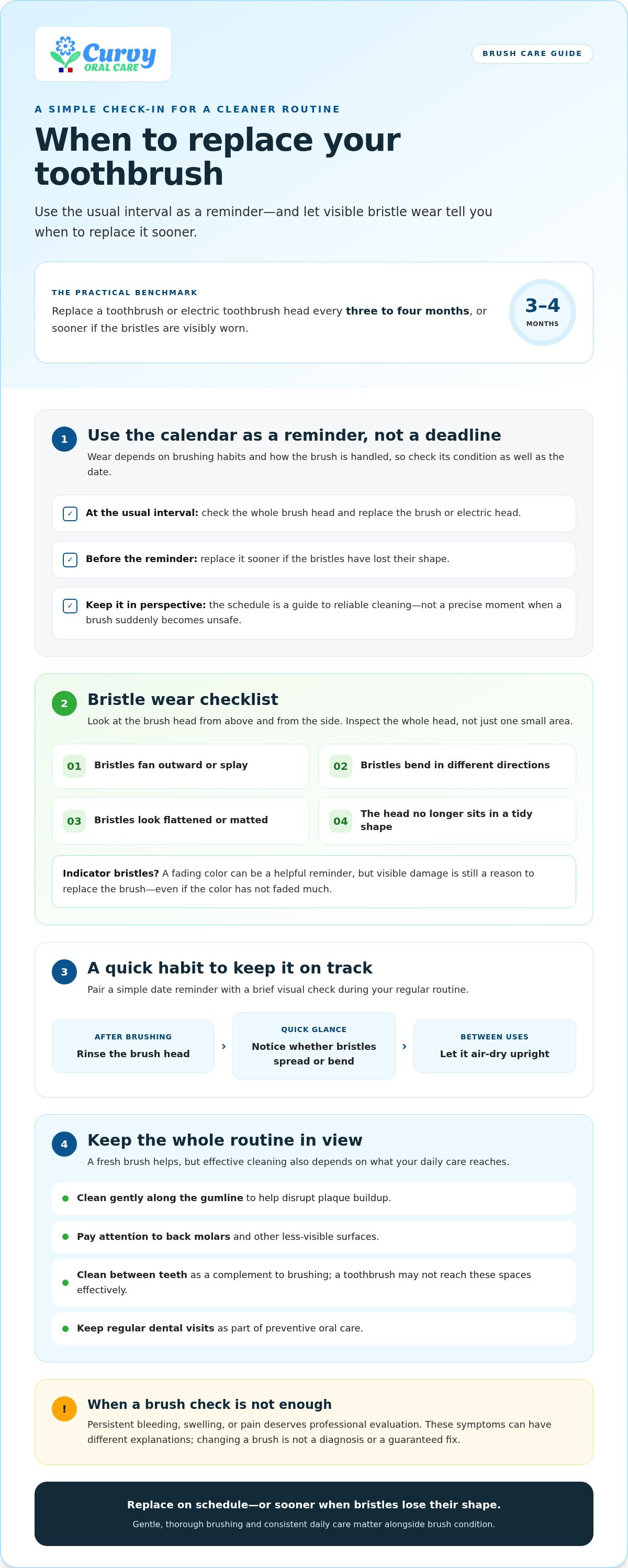
How to keep track of toothbrush replacement without overthinking it
A simple reminder makes brush replacement easier to manage. Use the usual replacement interval as a checkpoint, then look at the bristles. If they become misshapen before the reminder, replace the brush or head sooner. This quick check helps you act on visible wear instead of relying on memory alone.
A simple replacement reminder you can keep
Choose a tracking method that fits your routine. Add a recurring calendar reminder, write the replacement date on a bathroom checklist, or note it in a household calendar. For a manual toothbrush, record when you start using a new one. For an electric toothbrush, note when you change its head. You can pair the reminder with an occasional check of your oral-care supplies so you can plan ahead.
Think of the date as a prompt to inspect, not a strict verdict. If the bristles look spread out, bent, or flattened beforehand, replace the brush or head early. If they still appear in good shape when the reminder comes around, use current dental recommendations and your brush maker’s instructions to guide your decision. There’s no need for a complicated tracking system or a close inspection every day.
How should you care for a toothbrush between changes?
After brushing, rinse the head to remove toothpaste and debris. Store the brush upright in an open area where it can air-dry between uses. If several brushes share a holder, keep their heads from touching when practical. Avoid putting a damp brush in a closed container for long periods. These steps support sensible everyday care, but they don’t sterilize a brush or mean you can replace it less often.
Consider how your brush fits into the rest of your routine, too. Brush deliberately along the gumline and make sure you can reach the back molars and other areas that are easy to miss. If your current brush is awkward to position, consider whether another design would make those spots easier to reach comfortably. Technique and steady coverage matter more than extra force.
Keep the process simple: record the date, rinse and air-dry the brush after use, and check the bristles when the reminder appears. With a powered toothbrush, the reminder is for the replaceable head, not automatically the handle. A subscription may help some people plan head replacements, while a recurring calendar alert or household note can work just as well. Choose the reminder you’re most likely to notice.
Brush care should support your routine, not become another source of worry. A quick check is enough to catch visible damage, and a reminder makes it easier to reassess on time. Pair that with gentle brushing and attention to hard-to-reach areas, and you’ll have a straightforward system for keeping daily oral care on track.
Choose a toothbrush routine you can maintain consistently
Toothbrush replacement works best as part of a steady oral-care routine, not as a task you remember only when the bristles look worn. Brush twice a day with gentle, thorough strokes, check the brush or head regularly, and clean between your teeth. These habits work together: brushing cleans tooth surfaces, while interdental cleaning reaches spaces a toothbrush may miss.
What belongs in a consistent daily oral-care routine?
Give attention to the gumline, where plaque can collect, as well as the back molars and other areas that are easy to overlook. Use a soft-bristled brush and avoid scrubbing forcefully. A practical routine can include:
- Brush twice a day, moving carefully along the gumline and across all tooth surfaces.
- Clean between teeth with an appropriate interdental method.
- Clean your tongue as part of your daily care.
- Replace a manual brush or electric brush head on schedule, or sooner if the bristles are visibly worn.
- Keep regular dental visits and seek professional advice about persistent changes in your mouth.
Healthy gums depend on more than cleaning the visible fronts of your teeth. Plaque left along the gumline can contribute to irritation, so careful coverage matters as much as keeping your brush in good condition. For more on how plaque relates to gum health, explore a preventive oral-care guide that explains the connection and everyday care strategies.
How can brush design support access to difficult areas?
The right brush is one you can use comfortably and consistently, with a design that helps you reach areas you tend to miss. Back molars and the gumline can be awkward to access, particularly if the brush head is difficult to position. An angled toothbrush is designed to help users reach difficult areas, including places a conventional straight brush may miss. It’s an access option, not a treatment for gum disease or a guarantee of plaque removal.
Whether you choose a manual or sonic toothbrush, focus on gentle technique and a complete path around your mouth. Pause briefly at each area instead of rushing across the front teeth, and remember to replace the working bristles when needed. A sonic brush can be part of a consistent routine, but it still needs a fresh brush head at the appropriate time.
Small, repeatable actions add up: brush in the morning and before bed, clean between your teeth, check your bristles, and keep up with dental visits. If an angled powered brush fits the way you like to brush, explore Curvy’s angled sonic toothbrush as one option designed to help reach difficult areas.
Make your next oral-care step an easy one
A healthy routine doesn’t need to be complicated to be worthwhile. Use the answer to how often should you replace your toothbrush as a prompt to build a small act of prevention into everyday life: notice what your mouth needs, make time for consistent care, and seek professional advice if a change persists. Oral health is part of overall well-being, and steady habits can support a healthier mouth without making care a source of worry.
Choose a brush that feels comfortable and makes it practical to care for your teeth. Curvy Oral Care’s angled toothbrushes are designed to help reach areas that can be difficult to access with a conventional straight brush. A well-chosen brush can support your technique, while timely replacement keeps your routine on track.
Looking for a convenient set for your brushing routine? Explore a sonic toothbrush and oral-care travel set. Choose habits and tools that fit your life, then keep showing up for your oral health one day at a time.
Frequently Asked Questions
Is it necessary to replace your toothbrush every three months?
Authoritative dental guidance commonly recommends replacing a toothbrush every three to four months, or sooner if the bristles are visibly worn. How often should you replace your toothbrush? Treat that interval as a practical reminder, not a safety cutoff that changes overnight. Inspect the brush periodically and follow any model-specific care instructions. If your dental professional gives advice based on your needs, follow that guidance too.
Can worn toothbrush bristles hurt your gums?
Frayed or damaged bristles can make comfortable, controlled brushing harder, but they don’t identify the cause of gum irritation. Use gentle pressure and guide the brush along the gumline rather than scrubbing. If bleeding, swelling, or pain continues, arrange an evaluation with a dental professional instead of assuming an old toothbrush is responsible. A replacement brush may improve brushing comfort, but it can’t diagnose or resolve every concern.
How often should children replace their toothbrush?
Children can generally follow the same three-to-four-month replacement benchmark, but active brushing or chewing on the bristles may wear a child’s brush sooner. A caregiver can check the brush during regular bathroom routines and replace it if the bristles are misshapen. A child’s age alone doesn’t set the replacement date. Follow the child’s dental professional’s advice, and remember that a new brush doesn’t replace appropriate supervision of brushing.
Should you replace a toothbrush after strep throat?
Replacing a toothbrush after strep throat isn’t a guaranteed way to prevent reinfection, and illness-specific advice can depend on the person and circumstances. Follow instructions from the healthcare professional treating the infection rather than relying on a blanket toothbrush rule. Keep the brush clean and stored appropriately, then base routine replacement on its condition and usual guidance. If you have questions about your illness, ask your clinician.
Can you keep using a toothbrush if its bristles look fine after four months?
Four months is a useful point to reassess your brush, but a neat appearance alone can’t prove how well it’s working. Check for bristles that are flattened, bent, or uneven, and consider whether the brush has been used regularly. If you’re unsure, use current dental recommendations and the brush maker’s care instructions to guide replacement. For a powered brush, check its replaceable head.
How should you store a toothbrush between uses?
Rinse the brush after brushing, then store it upright in a spot where it can air-dry. If several brushes share a holder, keep their heads from touching when practical. Avoid enclosing a damp brush for long periods, since it needs an opportunity to dry. These are sensible hygiene habits, not a way to sterilize the brush or extend its replacement interval. Follow any care directions supplied with your brush.
Health & Medical Disclaimer: The information in this article is for educational purposes only and is not a substitute for professional dental or medical advice, diagnosis, or treatment. Always seek the advice of your dentist, physician, or other qualified health professional with any questions you may have about a medical or dental condition.

Article by
Aline Peixe Nebot
Aline Peixe Nebot is a Veterinarian and passionate advocate for better oral health, committed to raising awareness of oral health as a matter of public health. She actively promotes the importance of simple, effective oral care routines and works to educate the public about the often-overlooked link between oral health and overall systemic health. Her mission is to make better oral care knowledge accessible to everyone and encourage healthier habits for life.
Disclaimer
Disclaimer: The information provided in this article is intended for general educational and informational purposes only. It is not intended to replace professional medical, dental, or healthcare advice, diagnosis, or treatment.
Some content may be AI-assisted and is provided to support health education and awareness. While we strive to share accurate and up-to-date information, health recommendations and scientific evidence can evolve, and the information presented may not apply to every individual.
The connection between oral health and overall systemic health is an important and developing area of research. Associations discussed in this article should not necessarily be interpreted as proof of cause and effect.
Always consult a qualified dentist, physician, or other healthcare professional regarding your individual health, symptoms, medications, or treatment decisions. Do not delay or discontinue professional care based on information presented in this article.
This content is for education and awareness—not diagnosis or treatment.