
Gentle Sonic Toothbrush for Kids: Guide to Safe Smiles
What if the toothbrush you worry might be too powerful for your child is actually the safest way to safeguard their smile? If your bedtime routine frequently dissolves into tears over ticklish sensations or tender gums, you aren't alone. It is completely natural to fear that motorized bristles might harm delicate gum tissue, even while you worry about sticky plaque hiding on hard-to-reach molars. Investing in a properly designed gentle sonic toothbrush for kids eliminates that guesswork, delivering effective plaque removal without aggressive scrubbing.
You don't have to choose between protecting delicate mouths and preventing early childhood cavities. Discover how gentle sonic technology protects your child's delicate gums and developing enamel while building lifelong oral habits. From understanding calibrated pediatric vibration frequencies to reaching tight spaces along the gumline, this guide covers everything you need to know to create a stress-free, smile-protecting daily routine.
Key Takeaways
- Choosing a gentle sonic toothbrush for kids ensures calibrated micro-vibrations that lift plaque effectively without irritating sensitive gums or delicate enamel.
- Understanding the oral-systemic connection highlights why protecting the gumline early supports both a healthy mouth and your child's developing overall well-being.
- Key safety features, including ultra-soft bristles and ergonomic angled brush heads, make reaching tricky primary molars simple and comfortable.
- A structured daily routine paired with quadrant pacing eliminates bedtime battles while establishing confident, lifelong hygiene habits.
- Consistent preventative home care combined with routine dental checkups provides the best defense against early childhood cavities and gum inflammation.
What Is a Gentle Sonic Toothbrush for Kids and Why Does It Matter?
A true gentle sonic toothbrush for kids is not simply a smaller version of an adult device. It is a precision oral care instrument designed around the specific anatomy of growing mouths. Instead of relying on brute friction, it pairs calibrated micro-vibrations with ultra-soft filaments to dislodge sticky dental plaque. Plaque is a soft, sticky film of bacteria that continually builds up on the enamel and along the gingival margin.
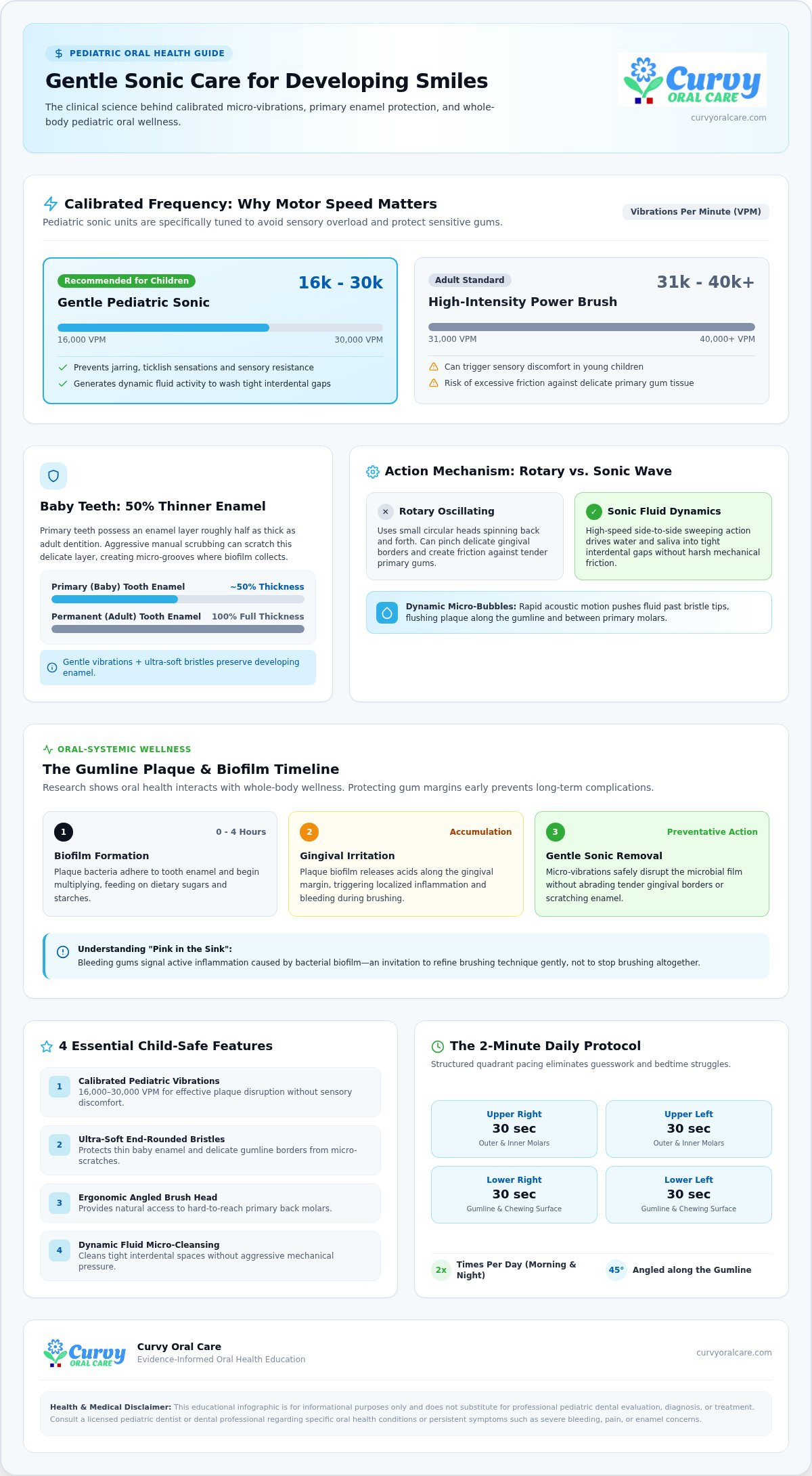
Motor speed makes all the difference. Adult power brushes typically operate at intense thresholds exceeding 31,000 to 40,000 strokes per minute, which can feel jarring and ticklish to young children. In contrast, pediatric sonic units are calibrated to a gentler range between 16,000 and 30,000 vibrations per minute. Reviewing how sonic toothbrushes work reveals that this moderate frequency generates dynamic fluid activity. Rapid bristle motions drive water, saliva, and toothpaste deep into tight interdental gaps, dislodging food debris and bacteria without requiring your child to aggressively scrub sensitive surfaces.
Understanding Sonic Vibration vs. Rotary Oscillating Brushes
Mechanical design directly influences comfort. Rotary oscillating toothbrushes use small, circular brush heads that spin back and forth mechanically. While effective for some adults, that spinning motion can pinch delicate gingival tissue or feel excessively abrasive against tender primary gums. Sonic technology uses high-speed, side-to-side sweeping motions instead. This gentle acoustic wave flushes plaque out from tight contact points between teeth without exerting physical pressure against soft oral tissues.
The Vulnerability of Primary Teeth and Developing Enamel
Children's teeth require extra protection because baby teeth are structurally distinct from permanent dentition. Primary teeth have an enamel layer that is roughly half as thick as adult enamel. Vigorous scrubbing with stiff manual bristles can easily scratch this thinner outer shell, creating microscopic grooves where oral biofilm clings. Pairing calibrated vibrations with ultra-soft, end-rounded bristles preserves developing enamel while keeping emerging gum tissue safe from mechanical irritation. If you are exploring child-friendly options with soft bristle profiles, specialized tools like the mini sonic angled electric toothbrush for kids show how intentional design supports small mouths.
- Calibrated frequencies: 16,000 to 30,000 vibrations per minute prevent sensory overload while maintaining optimal cleaning power.
- Fluid dynamics: Micro-bubbles gently wash into tight crevices that standard straight brushes often miss.
- Enamel preservation: Soft bristle filaments protect thin primary enamel from abrasive micro-scratching.
The Oral-Systemic Connection: Why Healthy Childhood Gums Create Whole-Body Wellness
Your child's mouth serves as the front door to their overall physical well-being. Far from being an isolated zone, oral tissues interact continuously with the rest of the body. When dental plaque builds up undisturbed along the gingival margin, it does more than raise the risk of a cavity. Plaque is a living biofilm, an organized community of bacteria that adheres to enamel surfaces and releases acidic byproducts. Left unchecked, this accumulation triggers localized gingival inflammation, causing pink gums to swell, redden, and bleed easily during routine brushing.
Pink in the sink can alarm parents, but bleeding tissue is an invitation to refine technique, not stop brushing altogether. Tender, swollen gums need thorough, soft contact to clear away the biofilm fueling the reaction. Deploying a gentle sonic toothbrush for kids helps disrupt this microbial film along the gumline without abrading tender gingival borders. The clinical reality is straightforward: protecting gum health early prevents minor childhood gingivitis from advancing into complex periodontal trouble later in life.
What Happens in the Mouth: Biofilm, Plaque, and Gum Sensitivity
Dental plaque begins forming within hours after brushing. Bacteria feed on dietary starches and sugars, generating acids that irritate the marginal gingiva. Because young gums are richly vascularized and actively adapting to erupting teeth, they react quickly to bacterial colonies. Parents often mistake bleeding for mechanical injury and back away, accidentally allowing biofilm to thicken. Instead, targeted micro-vibrations paired with soft bristles soothe inflamed tissue by removing the bacteria causing the distress.
Exploring Associations Between Oral Health and Overall Pediatric Wellness
Scientific literature increasingly explores how oral inflammation interacts with systemic wellness. As detailed by medical researchers studying the oral-systemic health connection, persistent bacterial burdens in the oral cavity can challenge developing immune systems. While research is investigating the relationship between chronic gingival inflammation and childhood systemic health, studies focus on biological associations rather than proving direct causation.
A proactive home routine remains your best defense against childhood oral disease:
- Target the gingival margin: Direct bristles toward the boundary where teeth meet gum tissue.
- Prioritize prevention over repair: Daily plaque removal prevents costly, traumatic restorative procedures.
- Foster positive habits: Comfortable tools establish oral care as a self-care ritual rather than a chore.
Equipping your family with coordinated tools like a sonic toothbrush and toothpaste combination creates a consistent, gentle foundation for total-body wellness.
Essential Features to Look For in a Child-Safe Sonic Toothbrush
Not every electric device sold in the toy aisle protects developing mouths. Finding a reliable gentle sonic toothbrush for kids means evaluating clinical functionality over flashing lights or animated smartphone apps. The right device combines soft materials with smart ergonomic geometry, ensuring clean teeth without causing sensory distress or tissue irritation.
Safe brushing requires precise mechanical limits. Official pediatric brushing guidelines from the American Academy of Pediatrics highlight the need for ultra-soft bristles and careful parental oversight. Because young motor skills are still maturing, the toothbrush itself must compensate for limited manual control while guarding sensitive gingival margins against excessive pressure.
Bristle Softness, Motor Intensity, and Sensory Comfort
End-rounded, ultra-soft nylon filaments are non-negotiable. Stiff bristles or blunt-cut plastics create micro-abrasions along soft gum margins, leading to irritation. Calibrated motors operating below 30,000 vibrations per minute deliver sufficient acoustic energy without overwhelming sensory-sensitive children. Built-in quadrant timers that pulse every 30 seconds guide little brushers through two complete minutes of equal coverage across all four dental quadrants.
Angled Geometry: Reaching the Hard-to-Access Back Molars
Primary molars have deep anatomical grooves that trap food particles, making them prime targets for childhood decay. Standard straight-handled toothbrushes struggle here because rigid shafts bump against tight cheek mucosa before the bristles sit flat against posterior molars. An intentional neck bend allows the brush head to wrap around rear molars effortlessly, ensuring full bristle contact along the crucial gumline without awkward prying.
Non-Toxic Materials and Thoughtful Family Design
Every material entering your child's mouth must meet strict safety standards. Look for BPA-free handles, food-grade silicone grips, and low-EMF internal electronics engineered specifically for developing bodies. Pair smart physical design with enamel-strengthening formulas like hydroxyapatite natural toothpaste to promote remineralization gently during every brush session.
- Ultra-soft nylon filaments: Protect soft tissues while lifting adhesive dental plaque.
- Angled head access: Reaches posterior primary molars where straight brushes fail to clean.
- Integrated pacer timers: Establish structured two-minute brushing habits early.
- EMF-free construction: Delivers clean sonic technology with total peace of mind for families.
How to Build an Effective Pediatric Brushing Routine: A Parent's Practical Guide
Handing an electric handle to a preschooler and walking away rarely produces clean teeth. Pediatric dentists emphasize that parents must actively assist and supervise daily brushing until roughly age seven or eight. That milestone aligns with fine-motor dexterity, like the ability to independently tie shoelaces or write fluidly in cursive. Until then, children lack the wrist coordination to maneuver bristles systematically across every dental arch.
Adopting a gentle sonic toothbrush for kids shifts your role from frantic scrubber to patient coach. Because rapid micro-vibrations handle the mechanical agitation, your primary job is guiding correct placement. Pair this with cleaning between tight primary teeth and brushing the tongue to reduce bacterial load across the entire oral ecosystem.
Step-by-Step Brushing: Guiding the Brush Without Scrubbing
Position the bristle tips at a 45-degree angle pointing gently toward the gingival margin, the modified Bass technique adapted for young jaws. Instead of sawing back and forth, guide the vibrating head slowly across the outer, inner, and chewing surfaces of each tooth without applying heavy downward pressure. Let the sonic vibrations do the work. Dedicate 30 seconds to each quadrant to ensure comprehensive cleaning across the entire arch. For travel days or school sleepovers, keeping a few backup kids' manual angled toothbrushes on hand ensures good habits continue uninterrupted away from home.
Overcoming Sensory Resistance and Brushing Struggles
Sensory resistance often sparks bedtime meltdowns. Demystify the device before placing it inside your child's mouth. Let them hold the powered handle against a fingertip or the palm of their hand to feel the gentle hum first. Turning brushing into a rhyming game or counting rhythm keeps attention focused during the full two minutes. Predictability builds comfort, so maintain strict morning and bedtime schedules to anchor brushing as a non-negotiable wellness routine.
Follow this five-step sequence for predictable, tear-free success twice daily:
- Dispense correct paste: Use a grain-of-rice smear for toddlers under three, or a pea-sized dot for kids aged three to six.
- Angle the bristles: Rest the brush at 45 degrees along the gumline before powering the motor on.
- Glide without scrubbing: Move smoothly from tooth to tooth, letting fluid dynamics flush away biofilm.
- Follow quadrant pulses: Spend 30 seconds on each dental section for two balanced minutes.
- Assist back molar access: Step in to guide the brush over rear chewing grooves and lingual surfaces.
Ready to transform your family routine? Explore the all-in-one pediatric sonic kit with toothpaste and travel protection to give your child a head start on lifelong oral wellness.
Elevating Your Child's Oral Wellness: The Modern Preventative Approach
Modern pediatric dentistry focuses on proactive preservation rather than reactive repair. For years, family oral care centered on fixing cavities after they surfaced. Today, parents understand that daily micro-habits shape dental outcomes for decades to come. By pairing intentional design with steady home supervision, you transform oral hygiene from an evening conflict into an empowering act of whole-body care.
Adopting a gentle sonic toothbrush for kids represents a meaningful step in this preventative philosophy. When tools fit small jaws comfortably, children view oral hygiene with confidence rather than dread. Removing plaque along the gumline consistently protects delicate tissues, minimizes chronic oral inflammation, and encourages your child to take pride in their daily health habits.
Integrating Professional Care with Daily Prevention
Even the most diligent home routine cannot replace clinical observation. Pediatric dental organizations recommend scheduling professional checkups every six months, starting either when the first tooth erupts or by twelve months of age. Professional examinations catch emerging alignment shifts, evaluate soft tissue wellness, and clear hardened tartar that brushing cannot remove. If you observe persistent gum bleeding, visible swelling, chronic bad breath, or unexpected tooth looseness, consult a pediatric dentist promptly for targeted clinical evaluation.
Choosing Thoughtfully Engineered Oral Care for Your Family
Success starts with choosing instruments built around human biology. When brush necks bend to accommodate tight cheek spaces, cleaning posterior molars becomes second nature rather than a daily struggle. Complete preventative bundles, such as a gentle sonic toothbrush and oral care set, simplify family routines by coordinating calibrated vibrations with gentle remineralizing formulas.
Sustaining lifelong oral wellness comes down to consistent, daily commitments:
- Maintain biannual visits: Partner with your child's dental team for cleanings, assessments, and ongoing advice.
- Replace heads regularly: Swap sonic brush heads every three to four months, or immediately after recovery from illness.
- Prioritize the gumline: Ensure daily brushing sweeps along gingival borders where bacteria hide.
- Celebrate small wins: Acknowledge calm, complete brushing sessions to foster lasting dental confidence.
Selecting an effective gentle sonic toothbrush for kids provides peace of mind while establishing daily habits that protect your child's radiant smile for life.
Building Confident, Tear-Free Smiles Every Day
Establishing healthy oral hygiene shouldn't feel like an evening wrestling match. When you switch to thoughtful engineering, daily brushing transforms into an empowering, tear-free ritual. A purpose-built gentle sonic toothbrush for kids pairs calibrated micro-vibrations with ultra-soft bristles, preserving developing enamel while keeping tender gingival tissue completely safe. Add an ergonomic angled neck that sweeps posterior primary molars effortlessly, and plaque biofilm no longer finds a place to hide.
Oral wellness remains one of the simplest preventative gifts you can share with your child. Protecting primary teeth and nurturing healthy gums today builds the foundation for lasting dental confidence tomorrow. Ready to eliminate bedtime battles with low-EMF peace of mind? Upgrade your child's daily routine with the gentle sonic toothbrush set and inspire proud, radiant smiles that last a lifetime.
Frequently Asked Questions
At what age can my child safely begin using a gentle sonic toothbrush?
Most dental professionals and safety guidelines recommend introducing a gentle sonic toothbrush for kids around age three. At this stage, children tolerate the mild sensory hum and can hold the handle alongside a parent. While primary teeth erupt much earlier, standard consumer safety standards designate powered models for ages three and older due to detachable heads. Remember to actively assist and supervise brushing until roughly age seven or eight.
Can the vibrations from a sonic toothbrush damage delicate baby tooth enamel?
No, calibrated sonic micro-vibrations will not damage developing enamel. Pediatric models operate at gentle speeds between 16,000 and 30,000 vibrations per minute, which safely agitate fluids rather than abrasive forces. In fact, aggressive manual scrubbing with stiff bristles poses a much greater risk of scratching thin primary enamel. Sonic vibrations safely lift sticky plaque biofilm without requiring parents or children to press down hard against tooth surfaces.
How does a gentle sonic toothbrush clean better than a standard manual brush?
A gentle sonic toothbrush for kids provides thousands of micro-sweeps every minute, compared to roughly 200 manual strokes. This high-frequency motion creates acoustic fluid dynamics, driving water, saliva, and toothpaste between crowded teeth and along the gumline. These micro-bubbles loosen stubborn food debris and bacterial plaque from tight contact points that flat manual brushes easily glide right over.
What should I do if my child complains that the sonic vibrations tickle their gums?
Tickling sensations are common when toddlers encounter acoustic vibrations for the first time. Start by turning the unit on outside their mouth so they can feel the gentle buzz on a fingertip or cheek. Let them hold the brush like a toy before placing it against their teeth. Starting with short ten-second brushing bursts helps their sensory system adapt quickly, turning early giggles into relaxed bedtime compliance.
Do kids still need to floss if they use an effective sonic toothbrush daily?
Yes, flossing remains essential even with top-tier sonic technology. While acoustic fluid action flushes out loose particles between teeth, it cannot completely replace the mechanical wiping action of dental floss. Once adjacent primary teeth touch together, plaque sticks firmly to these hidden contact surfaces. Cleaning between teeth once daily removes tight biofilm traps that no toothbrush bristle can physically squeeze between.
How often should I replace the brush head on my child's sonic toothbrush?
Replace brush heads every three to four months, exactly as you would with a manual brush. If your child tends to chew on the head or bristles appear flared and bent, switch it out sooner. Frayed filaments lose their cleaning efficiency and can irritate delicate gingival tissue. It is also wise to replace brush heads immediately after your child recovers from a cold, flu, or viral infection.
What should I do if my child's gums bleed slightly when we start using a sonic brush?
Minor bleeding usually indicates localized gum inflammation caused by existing plaque accumulation, rather than injury from the brush. Do not stop brushing. Instead, continue guiding the soft bristles gently along the gumline at a 45-degree angle to remove the irritating biofilm. The bleeding typically resolves within a week as gum health improves. If swelling, redness, or bleeding persists past seven days, schedule an evaluation with a pediatric dentist.

Article by
Aline Peixe Nebot
Aline Peixe Nebot is a Veterinarian and passionate advocate for better oral health, committed to raising awareness of oral health as a matter of public health. She actively promotes the importance of simple, effective oral care routines and works to educate the public about the often-overlooked link between oral health and overall systemic health. Her mission is to make better oral care knowledge accessible to everyone and encourage healthier habits for life.
Disclaimer
Disclaimer: The information provided in this article is intended for general educational and informational purposes only. It is not intended to replace professional medical, dental, or healthcare advice, diagnosis, or treatment.
Some content may be AI-assisted and is provided to support health education and awareness. While we strive to share accurate and up-to-date information, health recommendations and scientific evidence can evolve, and the information presented may not apply to every individual.
The connection between oral health and overall systemic health is an important and developing area of research. Associations discussed in this article should not necessarily be interpreted as proof of cause and effect.
Always consult a qualified dentist, physician, or other healthcare professional regarding your individual health, symptoms, medications, or treatment decisions. Do not delay or discontinue professional care based on information presented in this article.
This content is for education and awareness—not diagnosis or treatment.