
Foaming Mineral Toothpaste with Xylitol for Enamel and Sensitivity
Xylitol plays a different role from the minerals in a foaming mineral toothpaste with xylitol: it adds sweetness, while mineral ingredients are included for enamel care. Oral health is part of overall health, and research continues to explore links between oral conditions and wider health. An association, however, does not prove that one causes the other.
It makes sense to choose toothpaste that feels pleasant to use and supports a consistent routine. Foam, flavor, and an ingredient name do not tell the whole story. Daily habits and attention to hard-to-reach areas matter too.
This guide explains xylitol’s role, what mineral ingredients may contribute, and what to consider for enamel, sensitivity, plaque, and fresh breath. You’ll also learn how to compare flavors and make toothpaste one practical part of an oral-care routine.
Key Takeaways
- Separate xylitol’s role as a sweetener from the role of mineral ingredients, and compare the full toothpaste formula rather than relying on front-label claims.
- When considering enamel support, look at the mineral ingredients and their concentration; sensitivity can also be influenced by the toothpaste’s other ingredients and your brushing habits.
- Foam and flavor can make brushing feel different, but they don’t replace gentle, thorough cleaning along the gumline and between teeth.
- For fresher breath and plaque control, brush carefully, clean your tongue, and pay attention to back molars and other hard-to-reach areas.
- Choose a flavor and texture you’ll use consistently, and seek professional advice for persistent sensitivity, bleeding gums, swelling, or pain.
Enamel remineralization and sensitivity
Enamel loses minerals during acid exposure and can regain some through saliva. Remineralization describes that mineral return to weakened tooth surfaces. Hydroxyapatite, a mineral found in teeth, appears in toothpaste formulas commonly at 5-10%. That range describes a common formulation, not a proven ideal amount or guaranteed result. Check the ingredient list and concentration rather than relying on a “mineral” label alone.
Xylitol and fluoride serve different purposes. Xylitol is a sweetener, while fluoride is an active ingredient used in some cavity-prevention products. The information here does not establish that xylitol or hydroxyapatite outperforms fluoride at preventing cavities. Rather than treating “outperform” as a settled scientific conclusion, compare ingredients by their functions.
Hydroxyapatite is a major mineral component of enamel and dentin. Product descriptions state that it makes up 97% of enamel and 70% of dentin. Those figures describe tooth composition, not the amount toothpaste needs. An in-vitro study using extracted teeth found medical hydroxyapatite penetration to about 500 microns from the enamel surface. That laboratory result doesn’t establish the effect of every toothpaste during daily brushing.
Calcium phosphate is another mineral ingredient. It supplies calcium and phosphate, which are building blocks associated with tooth structure. A formula containing calcium phosphate isn’t automatically equivalent to one containing hydroxyapatite. Compare ingredient panels to see whether each product names calcium phosphate, hydroxyapatite, or both. Ingredient identity and concentration make for a more useful comparison than a broad “mineral” claim.
For sensitivity, consider your brushing technique as well as the formula. Use gentle pressure and controlled movements instead of scrubbing the same area repeatedly. Try these practical steps:
- Use a soft brush and small movements along the gumline.
- Clean inner, outer, and chewing surfaces, including back molars.
- Clean between teeth, where brush bristles may not reach.
These habits help remove plaque without aggressive pressure. If sensitivity persists, note which teeth react and whether cold drinks, sweets, or brushing trigger it. Ongoing pain, receding gums, or persistent sensitivity warrants professional evaluation, since toothpaste alone can’t identify the cause.
Choose toothpaste by its named ingredients and your needs, not by a superiority claim. The hydroxyapatite toothpaste formula is one example to consider when comparing mineral ingredients. Pair a suitable product with careful gumline brushing and interdental cleaning for a more complete routine.
What makes this toothpaste clean?
A “clean” label doesn’t explain how toothpaste works. Read the ingredient list and identify each ingredient’s role. Calcium phosphate, for example, supplies minerals, while xylitol adds sweetness. Abrasives help polish tooth surfaces, and foaming agents help spread paste around the mouth. The full formula matters more than any single appealing label claim.
Sodium lauryl sulfate, or SLS, is used in some toothpastes to create foam. It can cause mouth or gum sensitivity for some users. If brushing leaves your mouth feeling irritated, compare formulas and notice whether the sensation changes with an SLS-free option. Foam itself doesn’t prove stronger cleaning; deliberate brushing along the gumline and back teeth remains essential.
Some homemade toothpaste recipes include calcium phosphate, diatomaceous earth, baking soda, coconut oil, and optional xylitol powder. One recipe uses 2 and ½ tablespoons of calcium phosphate, ½ tablespoon of diatomaceous earth, 1 tablespoon of baking soda, and 1 and ½ tablespoons of xylitol powder. Those amounts describe that recipe, not every foaming mineral toothpaste with xylitol. Don’t assume a homemade mixture has the same texture or cleaning properties as a manufactured formula.
Essential oils can add flavor and aroma. The recipe calls for 10-15 optional drops, but an oil’s name doesn’t establish its suitability for every mouth. Peppermint, for example, creates a cooling taste; a strong flavor may feel intense if your mouth is already sensitive. Skip added oils if a flavor causes burning or irritation, and don’t treat flavor as a measure of plaque removal.
Can children use xylitol foaming toothpaste, and what age guidance applies? Follow the age directions on the specific product and supervise children while they brush. Swallowing toothpaste containing xylitol may cause digestive issues, so teach children to spit rather than swallow.
How much xylitol toothpaste should you use and how often should you brush? Use the amount directed on the product label, and brush at least twice a day. Directions for the formula described also advise avoiding food, drink, or rinsing for 30 minutes after brushing.
To compare ingredients, check the label for the mineral source, sweetener, foaming agent, and added flavor oils. If you prefer a ready-made option, a toothpaste and toothbrush travel set can keep daily essentials together for brushing away from home.
Plaque control and fresh breath
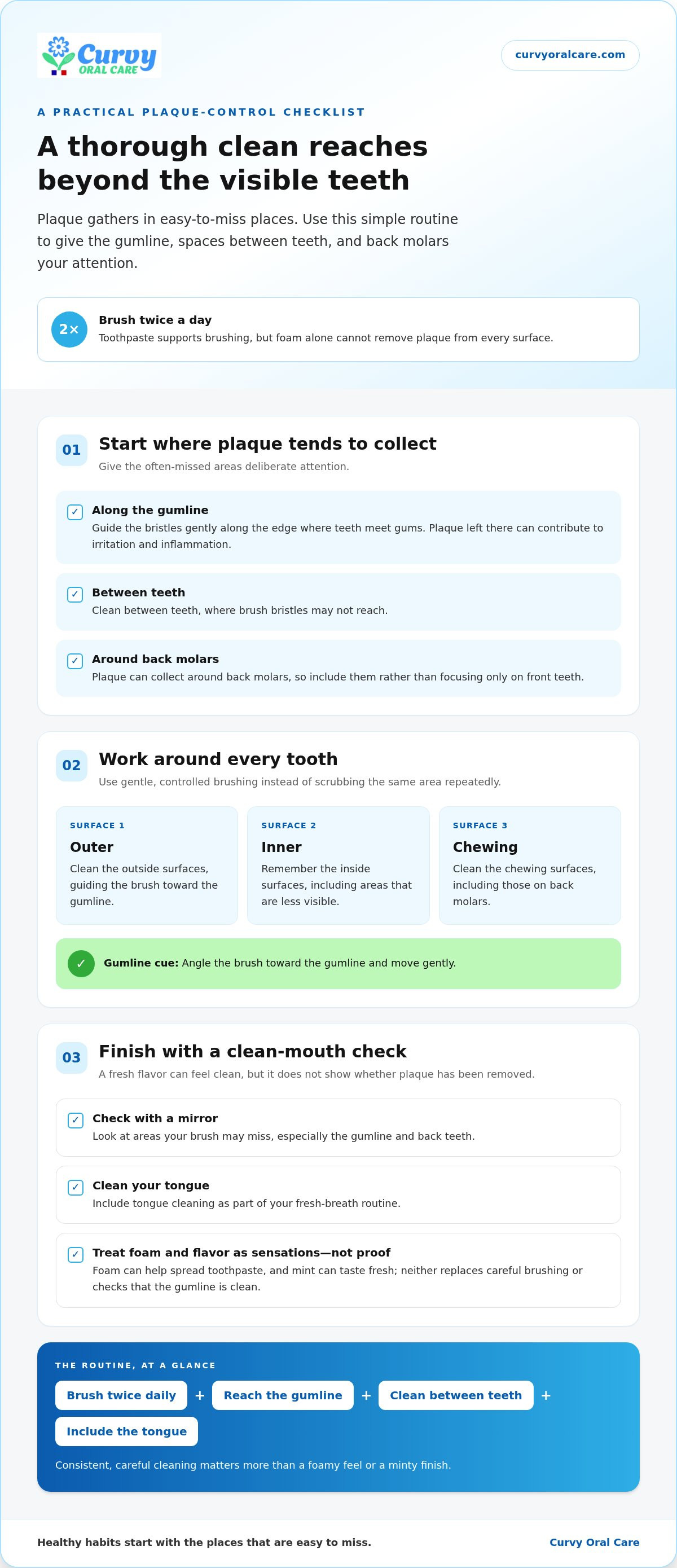
Plaque is a sticky film that forms on teeth throughout the day. It collects especially near the gumline, between teeth, and around back molars. If plaque remains along the gums, it can contribute to irritation and inflammation. Toothpaste supports brushing, but foam alone can’t remove plaque from every surface. A minty taste doesn’t show whether the gumline is clean, so use a mirror to check areas your brush may miss.
Brush twice a day, guiding the bristles gently along the edge where teeth meet gums. Clean the outer, inner, and chewing surfaces instead of focusing only on visible front teeth. Angle the brush toward the gumline and use small movements around each tooth. Reach the last molars, where cheek position can make brushing awkward. Don’t press harder to create more foam; pressure can’t replace careful coverage.
A toothbrush can’t fully clean tight spaces between teeth. Add an interdental cleaning step, such as flossing, to remove debris where bristles can’t reach. Move gently rather than snapping floss against the gums. If food often catches between particular teeth, include those spaces in your regular routine. Persistent bleeding or swelling deserves professional attention, not simply a stronger-flavored toothpaste.
Fresh breath depends on more than a strong toothpaste flavor. Bacteria and food debris on the tongue can contribute to unpleasant odors. Clean your tongue gently with a toothbrush or tongue cleaner, moving from the back toward the front as comfortably as possible. Rinse the tool between passes. If bad breath persists despite brushing, tongue cleaning, and cleaning between teeth, seek professional advice to identify possible causes.
Xylitol adds sweetness to toothpaste, while brushing physically disrupts plaque. A foaming mineral toothpaste with xylitol may make the routine more appealing, but foam and sweetness don’t prove plaque has been removed. Choose a comfortable flavor, then focus on technique. If a formula causes mouth or gum sensitivity, compare its ingredients; SLS, which is added for foaming, can cause sensitivity for some users.
- Brush carefully along the gumline and behind the last molars.
- Clean between teeth to reach spaces a toothbrush misses.
- Clean the tongue gently instead of relying on mint flavor.
- Notice persistent bleeding, swelling, or bad breath and seek advice.
Follow the same route each time: gumline, tooth surfaces, back molars, spaces between teeth, then tongue. This simple sequence makes overlooked areas easier to remember. Toothpaste contributes to the experience, but consistent coverage does the essential work of disrupting plaque. Choose a flavor you can tolerate and focus on the surfaces that need cleaning.
Toothpaste options and flavors
Choose toothpaste based on your priorities, not the brightest label. Compare the named active ingredients, sweeteners, foaming agents, abrasives, and flavorings. A hydroxyapatite formula, for example, differs from a paste that relies on another mineral source. Texture matters too: a smooth paste spreads differently from a grainier one. These details help you choose a product that suits your preferences without treating “natural,” “clean,” or “foaming” as proof of better results.
Flavor can influence whether brushing feels comfortable enough to maintain. Peppermint gives a cooling sensation, while milder mint may feel less intense. Cinnamon offers a warmer taste, and fruit flavors can appeal to people who dislike mint. These are sensory differences, not measures of plaque removal or enamel support. If a flavor leaves your mouth burning or irritated, stop using that formula and try a gentler-tasting option.
Foam is a preference, not a cleaning score. Some people like the spreadable feel of a foaming paste; others prefer a lower-foam texture. SLS is used as a foaming agent in some formulas and can cause mouth or gum sensitivity. Check the ingredient panel if irritation follows brushing. Changing flavors alone may not help if the ingredient causing discomfort remains in the formula.
Mineral toothpastes may contain hydroxyapatite or calcium phosphate, among other ingredients. Read the full label rather than assuming these ingredients work identically. Compare the ingredient lists of two products and note the mineral source each names. Consider your needs, including sensitivity, flavor tolerance, and how easily the paste spreads. Don’t choose a product solely because its packaging promises a fresh or “clean” feeling.
- Choose a flavor you can tolerate consistently, such as mild mint instead of strong peppermint.
- Compare ingredient panels for mineral sources and foaming agents.
- Notice whether a paste’s texture makes careful brushing easier for you.
- Stop and reassess a formula that repeatedly causes irritation.
Make the choice practical. Follow the product directions, then brush each tooth surface and the gumline with controlled movements. When comparing options, change one feature at a time, such as flavor or foaming feel, to identify what suits you. Brush twice a day, and remember that toothpaste can’t reach every space between teeth. Pair your preferred formula with interdental cleaning and regular dental checkups.
A toothpaste’s taste and texture can make daily care more pleasant, but they don’t replace good technique. Choose a formula whose ingredients and feel suit your needs, then give equal attention to the gumline, back molars, and spaces between teeth. Persistent sensitivity, swelling, or bleeding calls for professional evaluation rather than repeated product switching.
Xylitol’s effects on oral bacteria and acid
After a snack, plaque bacteria can use fermentable sugars to produce acids. Those acids can temporarily soften minerals at the tooth surface. Xylitol is a sugar alcohol, not the same kind of fuel as table sugar. Many oral bacteria don’t readily ferment it into acid. That difference explains its potential role, but xylitol doesn’t physically remove plaque or rebuild enamel by itself.
The effect depends on the whole routine, not one ingredient. Toothpaste containing xylitol still needs to be paired with careful brushing to disrupt plaque along the gumline, around back molars, and across chewing surfaces. Cleaning between teeth reaches areas a brush misses. If food catches between two teeth, for example, use an appropriate interdental cleaner rather than expecting toothpaste foam to clear the gap.
Xylitol doesn’t make every sweetened product tooth-friendly. Compare toothpaste with xylitol to a sugary snack: the snack may provide fermentable carbohydrates, while xylitol is used as a sweetener in oral-care products. Read the full ingredient panel, since formulas can include other ingredients with different purposes. A product’s sweet taste alone doesn’t reveal how it affects plaque or acid.
Food and drinks can also expose teeth to acid. Repeatedly sipping an acidic beverage, for example, extends contact with the teeth. Choose water between meals and avoid constant sipping of sugary or acidic drinks. Careful brushing and cleaning between teeth remain essential, because changing the bacteria’s available fuel doesn’t remove the sticky film where they live.
A foaming mineral toothpaste with xylitol combines ingredients with different jobs. Xylitol sweetens; mineral ingredients such as hydroxyapatite are included for enamel care; brushing helps disrupt plaque. Don’t assume one ingredient can do the work of the others. Check the label, follow product directions, and use a soft brush with gentle movements at the gumline.
Take extra care when children use toothpaste containing xylitol. Swallowing it may cause digestive issues, so supervise brushing and teach children to spit. Keep toothpaste out of reach of pets too, because xylitol can be dangerous to dogs. If a child swallows a substantial amount or develops symptoms, seek urgent professional guidance.
Use this simple routine: brush thoroughly, clean between teeth, and reduce frequent sugary snacks. Xylitol can be one part of that pattern, not a substitute for it. For a convenient way to keep brushing essentials together, explore the toothpaste and toothbrush travel set.
Curvy Oral Care: Sonic Toothbrushes
Curvy Oral Care offers sonic and angled toothbrushes for everyday brushing. If reaching the gumline or back molars feels awkward, an angled brush can help access areas that may be harder to reach with a conventional straight brush. A sonic toothbrush is another option for a consistent routine, alongside careful technique and cleaning between teeth.
Explore the angled sonic toothbrush if you’re comparing brush styles for access and daily use. Choose a brush that feels manageable, guide it gently along the gumline, and keep attention on less visible surfaces.
Visit curvyoralcare.com to explore Curvy Oral Care’s oral-care options.
Make your next routine easier to maintain
A useful oral-care routine should suit your needs and feel manageable day after day. If you’re considering foaming mineral toothpaste with xylitol, compare its ingredients and texture with your preferences. Choose a product that supports a routine you can maintain, alongside careful brushing and cleaning between teeth.
Think about the whole experience, not just the flavor. A foaming mineral toothpaste with xylitol may suit someone seeking a particular ingredient combination, while brush access and consistent technique remain important parts of daily care. Curvy Oral Care offers sonic toothbrushes, replacement brush heads, and brush head subscriptions to support your home routine.
Explore the toothbrush and toothpaste travel set if keeping essentials together would make brushing easier away from home. Choose a routine that feels practical, keep up the daily habit, and seek professional guidance for persistent changes in your mouth. Small, steady steps support a healthier smile.
Frequently Asked Questions
How does xylitol work in toothpaste?
Xylitol is a sweetener that oral bacteria don’t readily ferment into acid. In a foaming mineral toothpaste with xylitol, it adds sweetness while other ingredients serve different purposes. It doesn’t replace brushing or remove plaque on its own. After a snack, for example, brush carefully and clean between teeth to remove food debris and disrupt plaque where a toothbrush can’t reach.
What is foaming mineral toothpaste with xylitol?
It’s toothpaste formulated with a mineral ingredient, xylitol, and a foaming agent. The mineral may be hydroxyapatite or another compound, so read the ingredient list to see what a particular product contains. Foam affects the brushing experience, not necessarily cleaning performance. Compare formulas by their ingredients, directions, texture, and flavor instead of assuming all mineral toothpastes work the same way.
Does mineral toothpaste remineralize enamel, and what evidence supports it?
Mineral toothpastes are formulated to support enamel care, but evidence depends on the specific ingredient and formula. Hydroxyapatite has been investigated in laboratory research, which can help explain how it interacts with tooth surfaces. Those findings don’t establish the results of every product in everyday use. A foaming mineral toothpaste with xylitol still belongs in a routine that includes thorough brushing and interdental cleaning.
What are the benefits and risks of sodium lauryl sulfate or other foaming agents in toothpaste?
Sodium lauryl sulfate, or SLS, helps create lather and spread toothpaste during brushing. Some people find that sensation pleasant, while others experience mouth or gum irritation. If discomfort follows use, check the ingredient panel and consider whether the formula contains SLS. Persistent sores, swelling, or pain call for professional evaluation rather than repeated product changes.
How can I compare highly rated mineral toothpastes in the United States?
Ratings can vary between retailers and review groups, so compare the criteria behind them rather than relying on a star score alone. Check the named mineral ingredient, xylitol, foaming agent, directions, and flavor. Also consider whether the product suits your preferences and routine. A clear ingredient list helps you assess a foaming mineral toothpaste with xylitol without treating popularity as proof of effectiveness.
Health & Medical Disclaimer: This content is for general educational purposes only and isn’t a substitute for professional dental or medical advice, diagnosis, or treatment. Consult a qualified healthcare professional about personal concerns, especially persistent pain, bleeding, swelling, or other significant changes in oral health.
How does xylitol toothpaste compare with fluoride toothpaste for cavity prevention?
Xylitol is a sweetener, while fluoride is an active ingredient used in some cavity-prevention products. The information provided does not establish that xylitol prevents cavities better than fluoride.
Which foaming mineral toothpastes contain xylitol and what are their ingredients?
The described homemade recipe includes calcium phosphate, diatomaceous earth, baking soda, coconut oil, and optional xylitol powder and essential oils. The recipe uses 2 and ½ tablespoons of calcium phosphate, ½ tablespoon of diatomaceous earth, 1 tablespoon of baking soda, 2 tablespoons of coconut oil, 1 and ½ tablespoons of optional xylitol powder, and 10-15 optional drops of essential oils.

Article by
Aline Peixe Nebot
Aline Peixe Nebot is a Veterinarian and passionate advocate for better oral health, committed to raising awareness of oral health as a matter of public health. She actively promotes the importance of simple, effective oral care routines and works to educate the public about the often-overlooked link between oral health and overall systemic health. Her mission is to make better oral care knowledge accessible to everyone and encourage healthier habits for life.
Disclaimer
Disclaimer: The information provided in this article is intended for general educational and informational purposes only. It is not intended to replace professional medical, dental, or healthcare advice, diagnosis, or treatment.
Some content may be AI-assisted and is provided to support health education and awareness. While we strive to share accurate and up-to-date information, health recommendations and scientific evidence can evolve, and the information presented may not apply to every individual.
The connection between oral health and overall systemic health is an important and developing area of research. Associations discussed in this article should not necessarily be interpreted as proof of cause and effect.
Always consult a qualified dentist, physician, or other healthcare professional regarding your individual health, symptoms, medications, or treatment decisions. Do not delay or discontinue professional care based on information presented in this article.
This content is for education and awareness—not diagnosis or treatment.