
Fluoride-Free Toothpaste: Benefits, Myths, and What the Evidence Says
Could a toothpaste without fluoride support healthy teeth, or does skipping fluoride leave cavities with an easier opening? It’s a fair question, especially when product claims make fluoride free toothpaste sound either like a smarter, cleaner choice or a risky one. The evidence offers a more useful answer than either extreme: fluoride has a long track record for helping prevent tooth decay, while alternatives such as hydroxyapatite are promising but have a smaller body of research behind them.
If you’re weighing ingredients, you’re right to look beyond bold labels. What matters is how an ingredient works, what the evidence can support, and how your own cavity risk shapes the choice. This guide explains what fluoride does, what may change when it’s absent, and how fluoride-free options compare without fear or hype.
You’ll also learn how to assess claims about hydroxyapatite and other ingredients, and build a steady routine that protects more than the visible surfaces of your teeth. Brushing along the gumline, cleaning between teeth, reaching back molars, and keeping up with dental visits all matter for a healthy mouth. The goal is an informed choice that fits your needs and supports prevention.
Key Takeaways
- Fluoride free toothpaste is formulated without fluoride, but the label alone doesn’t tell you how well a formula fits your needs.
- Compare active ingredients and the strength of the evidence rather than assuming fluoride-free products are all alike.
- Your cavity history and dental advice can help guide whether a fluoride or fluoride-free option suits your routine.
- Brush twice daily with careful attention to the gumline, back molars, and other hard-to-reach areas.
- Support brushing with cleaning between your teeth and regular dental checkups to help care for your teeth and gums.
What Does Fluoride-Free Toothpaste Mean?
Fluoride-free toothpaste is toothpaste formulated without fluoride. The term describes one ingredient’s absence, not a product’s overall quality, safety, or suitability. Formulas vary: they may use different ingredients for cleaning, flavor, or other purposes, so the label alone can’t tell you how a toothpaste may fit your oral-health needs.
Toothpaste is one part of daily oral care, and its ingredients have different roles. For a general overview of common ingredients and fluoride’s role, see Toothpaste. When comparing products, separate ingredient preference from the question of cavity prevention. A preference for a particular formula is valid, but it doesn’t by itself establish what the product can do.
What does fluoride do in toothpaste?
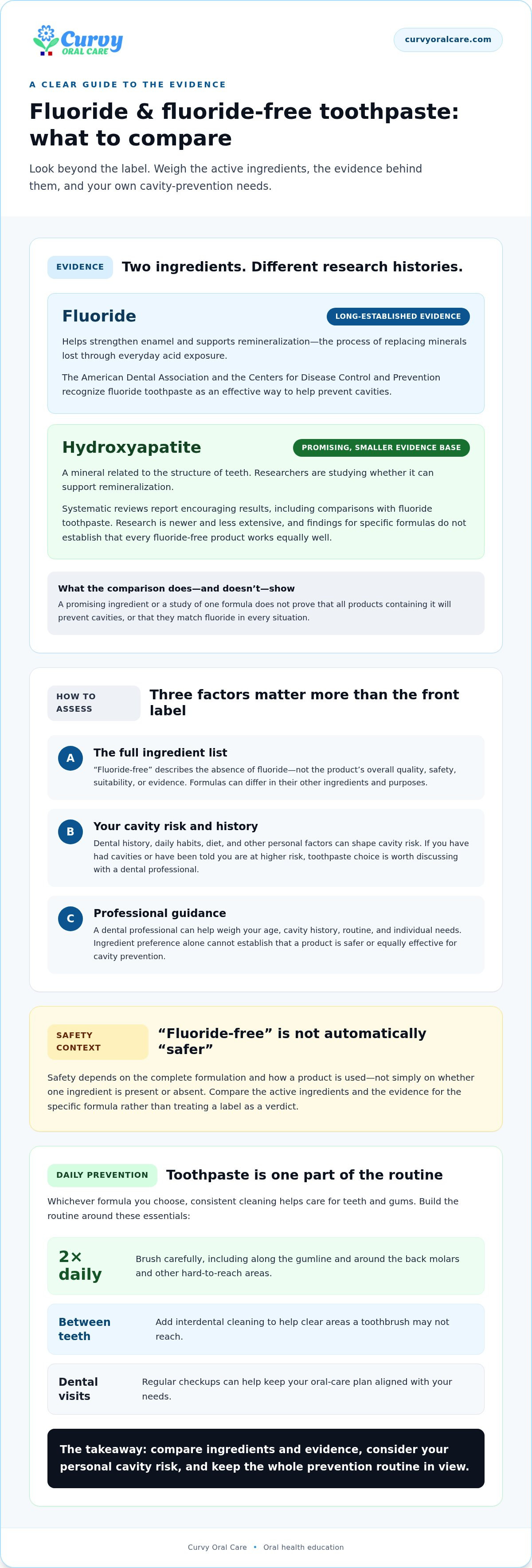
Fluoride works on the tooth surface. It helps strengthen enamel, the hard outer layer of teeth, and supports remineralization, the process that replaces minerals lost through everyday acid exposure. This helps teeth resist decay. The American Dental Association and Centers for Disease Control and Prevention recognize fluoride toothpaste as an effective way to help prevent cavities.
Brushing with fluoride toothpaste provides topical exposure, meaning the fluoride acts directly on the teeth. It’s distinct from other possible sources, such as drinking water. How much fluoride a person encounters depends on their routine and circumstances. Dental professionals can offer guidance based on age, cavity history, and individual needs.
Why do people choose fluoride-free toothpaste?
People may prefer to avoid certain ingredients, seek a formula that matches their personal values, or explore alternatives such as hydroxyapatite. These are understandable reasons to compare products. But a concern or preference alone doesn’t show that a product is safer, risk-free, or equally effective for cavity prevention.
Evidence also varies by ingredient and formulation. Hydroxyapatite, for example, is a mineral found in tooth enamel and is being studied as an alternative ingredient. Research is promising, but its evidence base is smaller than fluoride’s. Curvy Oral Care’s angled sonic toothbrush is one option for reaching areas that can be difficult to access with a conventional straight brush; brushing technique remains important, whatever toothpaste you choose.
The practical takeaway: read the full ingredient list and consider your cavity risk, preferences, and dental guidance together. Choosing a toothpaste is only one step. Consistent brushing along the gumline and cleaning between teeth also help remove plaque, which can contribute to gum inflammation when it builds up.
Fluoride-Free Toothpaste Myths: What the Evidence Actually Says
A common misconception is that fluoride-free automatically means safer. It doesn’t. Safety depends on the full formulation and how a product is used, not simply whether one ingredient is present or absent. Likewise, “fluoride-free” doesn’t tell you what other active ingredients a toothpaste contains or how well they’re supported by evidence.
Fluoride has a long-established role in cavity prevention. The American Dental Association describes fluoride as safe and effective in preventing tooth decay. Alternatives are worth evaluating on their own evidence, but ingredients aren’t interchangeable just because they appear in toothpaste. A label is a starting point, not a verdict.
Does fluoride-free toothpaste prevent cavities as well?
Some fluoride-free formulas contain ingredients being studied for cavity protection, but evidence varies by ingredient and formulation. Fluoride’s benefits are supported by a much larger body of research; that doesn’t mean every individual’s needs are identical. Cavity risk can also reflect dental history, daily habits, diet, and other personal factors. If you’ve had cavities or have been told you’re at higher risk, ask a dental professional which toothpaste best fits your prevention plan.
An association between an ingredient and a possible benefit isn’t, by itself, proof that every product containing it will prevent cavities. That distinction helps separate promising findings from broad marketing claims.
What do we know about hydroxyapatite toothpaste?
Hydroxyapatite is a mineral related to the structure of teeth. Researchers are studying whether it can support remineralization, the process of replacing minerals lost from enamel. Recent systematic reviews report encouraging results, including studies comparing hydroxyapatite formulas with fluoride toothpaste. However, research on hydroxyapatite is newer and less extensive, and results from specific formulations don’t establish that all fluoride-free products work equally well or match fluoride in every situation.
For readers curious about this ingredient, Curvy Oral Care’s hydroxyapatite toothpaste offers one example of a formula built around it. Consider the ingredient alongside your cavity history and professional advice, rather than treating “natural” or “fluoride-free” as a guarantee of safety or performance.
Whichever toothpaste you choose, routine matters: brush consistently and clean the gumline and between teeth, where plaque can collect. If you’re organizing oral-care essentials for travel, a toothbrush-and-toothpaste travel case can keep those daily tools together.
How to Compare Fluoride-Free and Fluoride Toothpaste
Compare what’s in the tube, what evidence supports those ingredients, and how the formula fits your needs. The right choice isn’t universal. Cavity history, dental advice, age, and personal preferences can all shape the decision. Marketing language can point you toward an ingredient, but it can’t replace evidence about the specific formula.
Use this comparison as a starting point, not a ranking:
In the United States, the ADA Seal of Acceptance for a toothpaste making a cavity-protection claim requires fluoride. That’s useful context when reviewing labels, but don’t treat marketing phrases such as “natural,” “clean,” or “mineral-based” as proof of a specific health effect. Nor does the absence of an ADA Seal, by itself, establish that a product is unsafe. Check the active ingredients and distinguish established evidence from emerging research and promotional language.
Which ingredients and claims deserve a closer look?
Read the full label, not just the front of the package. Identify the active ingredient and consider what the product claims it does. Be cautious with promises of guaranteed results or unsupported statements about detoxification or toxicity. A fluoride free toothpaste isn’t automatically safer or more effective; its suitability depends on its formulation and your oral-health needs.
When should you ask a dental professional?
If you have frequent cavities, ongoing dental concerns, or questions about a child’s toothpaste, seek individualized guidance. Age, dental history, and personal circumstances can affect recommendations. A dental professional can help you weigh ingredient preferences against cavity-prevention needs without relying on a symptom or product label alone.
How to Use Fluoride-Free Toothpaste in a Prevention-Focused Routine
Toothpaste supports daily cleaning, but it can’t do the brushing for you. A fluoride-free formula doesn’t change the basics: brush twice a day with a soft-bristled brush, use gentle pressure, and clean every tooth surface. Give the gumline and back molars particular attention, since plaque can collect where the brush may miss.
How can brushing reach more than visible tooth surfaces?
Angle the bristles toward the gumline and move slowly across the outer, inner, and chewing surfaces of each tooth. Small, controlled movements help you clean carefully without scrubbing hard. Reach the back molars by guiding the brush to the farthest teeth and adjusting its angle as needed.
A toothbrush can’t fully clean the tight spaces between teeth, so add interdental cleaning to your routine. Floss or use another suitable tool to clean those spaces, following guidance from your dental professional. For more on brushing access, an angled sonic toothbrush is designed to help reach areas that can be difficult to access with a conventional straight brush. It’s an access option, not a substitute for technique or professional care.
How do you make a consistent routine easier?
Keep the routine simple enough to repeat: brush in the morning and before bed, clean between your teeth, and gently clean your tongue. Choose toothpaste that suits your needs and preferences. If you’re considering hydroxyapatite, remember that formulas and evidence differ; the ingredient doesn’t replace brushing carefully or getting individualized dental advice.
Make brushing a dependable daily habit, and keep regular dental checkups so your oral-care routine can be discussed in light of your history and needs. Balanced eating habits also support general well-being. Pay attention to changes rather than waiting for them to worsen: persistent bleeding, swelling, pain, or other ongoing concerns warrant professional evaluation.
Small, consistent steps matter. If keeping your toothbrush and toothpaste together helps you maintain your routine away from home, explore the toothbrush and toothpaste travel case.
Choosing Your Next Step: A Balanced Fluoride-Free Toothpaste Decision
There’s no single toothpaste that’s right for everyone. Choose based on the evidence for its ingredients, your oral-health needs, and guidance from a dental professional, not fear or blanket claims about what an ingredient can or can’t do. A fluoride free toothpaste may fit some people’s ingredient preferences, while fluoride toothpaste has a long-established evidence base for helping prevent cavities.
A quick decision framework for your toothpaste choice
Before choosing, consider what matters to you and what your dental history suggests. Use these questions to make the comparison clearer:
- What are my priorities? Identify any ingredient preferences, then check the full label and active ingredients.
- What does my dental history tell me? Past cavities or ongoing concerns may affect the guidance that’s right for you.
- What does the evidence support? Separate established findings and emerging research from marketing language. A claim on a package isn’t the same as clinical proof.
- Has my situation changed? Revisit your choice if your dental advice or oral-health needs change.
If you’re unsure, bring the toothpaste label or ingredient list to a dental appointment. A dentist can consider your age, history, and individual circumstances when discussing options. Avoid choosing based on symptoms alone or treating a product claim as a diagnosis or treatment plan.
Keep healthy gums at the center of prevention
Whatever toothpaste you choose, consistency and technique matter. Brush twice daily, clean gently along the gumline, and don’t overlook the back molars. Clean between your teeth with an appropriate interdental method, since a toothbrush can’t fully reach those spaces. Plaque left at the gumline can contribute to inflammation, so keeping this area clean supports gum health as well as clean teeth.
Oral health is part of overall well-being. Research has found associations between oral health and some conditions affecting the rest of the body, but an association alone doesn’t prove that one directly causes the other. Regular dental visits and a steady home routine support prevention without turning product choice into a source of worry.
Curvy Oral Care toothpaste and toothbrushes can be optional parts of that everyday routine, not replacements for professional advice. If you’re exploring a hydroxyapatite formula, take a look at Curvy’s hydroxyapatite toothpaste and consider how its ingredients align with your preferences and dental guidance.
Make Your Next Toothpaste Choice With Confidence
Choosing a toothpaste isn’t about declaring one ingredient universally good or bad. Fluoride has a well-established role in cavity prevention, while evidence for alternatives such as hydroxyapatite is still developing. A fluoride free toothpaste may suit your preferences, but weigh its ingredients and evidence against your dental history and professional guidance.
Whatever formula you choose, keep prevention at the center: brush consistently, clean along the gumline, and clean between teeth. Healthy gums are an essential part of oral health, which contributes to overall well-being, though links between oral and general health don’t always prove cause and effect.
Curvy Oral Care offers toothpaste alongside manual, sonic, and kids’ toothbrushes, including a listed toothpaste powered by hydroxyapatite. These can be considered as optional parts of a daily routine, not replacements for professional advice. Explore the Curvy toothbrush and toothpaste travel combo as one way to keep routine essentials together. Small, steady habits can help you care for your teeth and gums with greater confidence.
Frequently Asked Questions
Is fluoride-free toothpaste as effective as fluoride toothpaste?
Effectiveness depends on the ingredients and the outcome being considered. Fluoride has established evidence for helping prevent cavities, while research on alternatives such as hydroxyapatite continues to develop. Fluoride-free formulas also differ, so don’t assume they all offer the same protection. If you have frequent cavities or specific dental concerns, ask a dental professional which toothpaste fits your needs and prevention routine.
Can fluoride-free toothpaste prevent cavities?
Some fluoride-free formulas contain active ingredients being studied for their role in tooth health, but products and evidence vary. Cavity prevention also depends on brushing technique, cleaning between teeth, diet, and individual risk. A broad label alone can’t tell you how much protection a particular formula offers. If you’re choosing a fluoride free toothpaste, discuss your dental history and daily routine with a dentist.
What is hydroxyapatite toothpaste?
Hydroxyapatite is a mineral related to the mineral structure of teeth. Some toothpaste formulas use it as an active ingredient, and researchers are studying its role in oral care. Evidence can vary depending on the claim and the specific formulation, so check the product information rather than assuming every hydroxyapatite toothpaste performs identically. Research on this ingredient is developing, and it doesn’t replace individualized dental guidance.
Is fluoride-free toothpaste safer?
Fluoride-free toothpaste isn’t automatically safer or more suitable for everyone. Safety depends on the full formulation, how the product is used, and the person’s needs. Fluoride also has an established role in helping prevent cavities. If you have questions about ingredients or fluoride exposure, discuss them with a dental professional and rely on evidence-based advice rather than fear-based claims.
Can children use fluoride-free toothpaste?
Children’s toothpaste choices should reflect their age, cavity risk, and current dental guidance. An adult product or a fluoride-free formula isn’t automatically suitable for every child. A child’s dentist or pediatric dental professional can recommend an appropriate product and routine based on the child’s needs. Caregiver supervision and consistent brushing that removes plaque remain important parts of everyday oral care.
What should I look for on a fluoride-free toothpaste label?
Start by identifying the active ingredients and reading the product’s directions. Check whether claims reflect established evidence, emerging research, or marketing language, and be cautious of promises that sound absolute. Consider your dental history and any professional advice you’ve received. A label can help you compare formulas, but it can’t determine your personal cavity risk or tell you which toothpaste is best for you.
Should I stop using fluoride toothpaste if I want a natural oral-care routine?
A preference for a natural routine doesn’t, by itself, determine whether changing toothpaste is right for you. Compare the ingredients and evidence, and consider your cavity history and dental advice. Keep brushing consistently, cleaning between teeth, and attending regular dental checkups. If you’re unsure, discuss your preferences with a dental professional before changing a routine that works for your oral-health needs.
Health & Medical Disclaimer: This content is for informational and educational purposes only and is not a substitute for professional dental or medical advice, diagnosis, or treatment. Always seek the advice of your dentist, physician, or other qualified health provider with any questions you may have regarding a medical or dental condition.

Article by
Aline Peixe Nebot
Aline Peixe Nebot is a Veterinarian and passionate advocate for better oral health, committed to raising awareness of oral health as a matter of public health. She actively promotes the importance of simple, effective oral care routines and works to educate the public about the often-overlooked link between oral health and overall systemic health. Her mission is to make better oral care knowledge accessible to everyone and encourage healthier habits for life.
Disclaimer
Disclaimer: The information provided in this article is intended for general educational and informational purposes only. It is not intended to replace professional medical, dental, or healthcare advice, diagnosis, or treatment.
Some content may be AI-assisted and is provided to support health education and awareness. While we strive to share accurate and up-to-date information, health recommendations and scientific evidence can evolve, and the information presented may not apply to every individual.
The connection between oral health and overall systemic health is an important and developing area of research. Associations discussed in this article should not necessarily be interpreted as proof of cause and effect.
Always consult a qualified dentist, physician, or other healthcare professional regarding your individual health, symptoms, medications, or treatment decisions. Do not delay or discontinue professional care based on information presented in this article.
This content is for education and awareness—not diagnosis or treatment.