
Enamel Safe Mineral Remineralizing Toothpaste: How to Choose Between Hydroxyapatite and Fluoride
Enamel can regain minerals, but toothpaste can’t reverse every kind of tooth damage. An enamel safe mineral remineralizing toothpaste may help strengthen early enamel damage, including white spots, but it can’t reverse decay that has progressed into dentin. The key is understanding what the active ingredients can do, and what they can’t.
If you’re comparing hydroxyapatite with fluoride or looking for an enamel safe mineral remineralizing toothpaste for sensitive teeth, the ingredient list is only part of the decision. This guide explains how hydroxyapatite supports enamel, how fluoride works differently, and why abrasives and acidity matter. You’ll also learn what to consider in a daily routine and when sensitivity or signs of decay call for advice from a dental professional.
Key Takeaways
- Learn how hydroxyapatite and fluoride support enamel in different ways, and what to consider when comparing them.
- Look beyond the active ingredient: abrasive level and toothpaste pH also matter when choosing a formula with enamel in mind.
- Understand how exposed dentin tubules can contribute to sensitivity and why the right toothpaste may help address discomfort.
- Recognize the difference between early enamel damage, which remineralizing toothpaste may help, and decay that needs dental attention.
- Build a more thoughtful daily routine by brushing gently and consistently, while keeping the gumline and hard-to-reach areas in view.
How does nano hydroxyapatite compare to fluoride for enamel repair?
Both ingredients relate to enamel mineral, but they work differently. Compare their role, formula, and age guidance rather than treating “remineralizing” as a guarantee of repair.
Fluoride and Enamel Remineralization
Fluoride supports enamel remineralization by helping form fluorapatite, a compound more resistant to acid. Hydroxyapatite, by contrast, is a mineral found in natural enamel. For adults, the appropriate fluoride concentration depends on the toothpaste’s intended use and the person’s dental needs. Concentration alone doesn’t describe every feature of a formula.
Fluoride safety also depends on using toothpaste as directed and preventing young children from swallowing it. For children under six, choose an age-appropriate formula and supervise brushing. These steps help keep toothpaste use controlled while a child is learning to spit.
Hydroxyapatite as a Fluoride-Free Option
Hydroxyapatite is a calcium-phosphate mineral; nano-hydroxyapatite uses particles at a very small scale. The mineral is the same type that makes up about 97% of natural tooth enamel. Synthetic nano-hydroxyapatite can bind to enamel surfaces and help fill microscopic imperfections. Unlike fluoride, it doesn’t work by forming fluorapatite.
Calcium phosphate ingredients may appear in fluoride-free formulas alongside hydroxyapatite. Check the active ingredient and full ingredient list instead of relying only on front-label terms. Some formulas are also SLS-free. Sodium lauryl sulfate, or SLS, is a foaming ingredient; choosing a formula without it is a preference, not proof that the toothpaste repairs enamel better.
Nano-Hydroxyapatite Safety and FDA Status
Is nano-hydroxyapatite toothpaste safe and FDA-approved in the United States? The ingredient alone doesn’t establish FDA approval; regulatory status depends on a product’s intended use and claims. The available facts describe hydroxyapatite toothpaste as suitable for children and adults, but age-appropriate use and supervision still matter.
Possible unwanted effects depend on the formula and the person using it. Toothpaste ingredients can cause irritation or sensitivity for some people, while overly forceful brushing can add mechanical wear. If a product causes ongoing discomfort, stop using it and seek dental advice. Don’t assume that “mineral” or “natural” means a formula suits everyone.
| Option | Enamel-related role | What to consider |
|---|---|---|
| Fluoride | Helps form acid-resistant fluorapatite | Concentration, intended use, and age guidance |
| Nano-hydroxyapatite | Binds to enamel and helps fill tiny imperfections | Ingredient list and product claims |
| Other calcium phosphate | Provides calcium-phosphate ingredients | Whether it is the formula’s active ingredient |
For a fluoride-free option, hydroxyapatite toothpaste can fit a routine focused on mineral-based ingredients. Choose based on your needs, and remember that toothpaste cannot reverse decay that has reached dentin.
Ingredients and abrasive agents
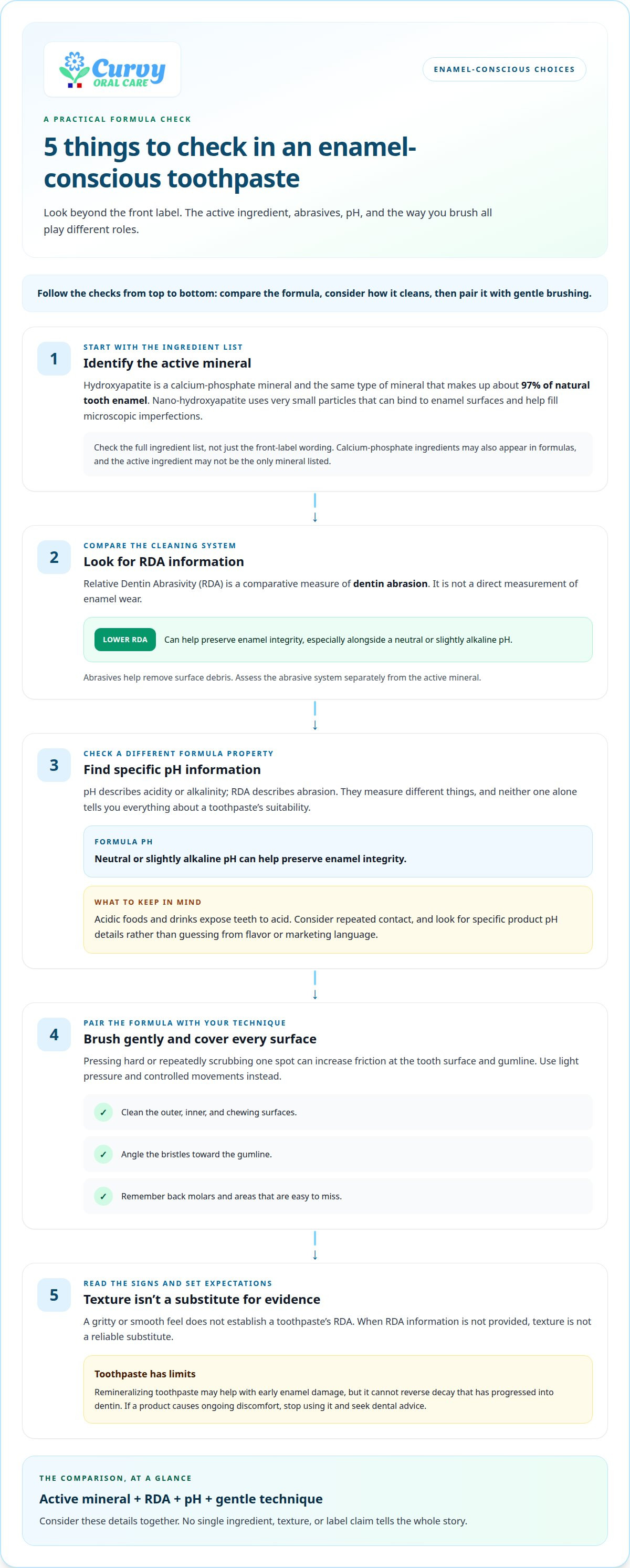
Toothpaste does more than deliver its active mineral. Its base also contains cleaning agents, flavorings, and ingredients that shape texture. For enamel-conscious choices, look beyond the front label. Check the ingredient list, product pH information, and any available Relative Dentin Abrasivity (RDA) information. These details help explain how a formula cleans and what to consider for daily use.
RDA is a comparative measure of dentin abrasion, not a direct measurement of enamel wear. A lower RDA can help preserve enamel integrity, especially alongside a neutral or slightly alkaline pH. The measures describe different properties: RDA concerns abrasion, while pH describes acidity or alkalinity. Neither alone tells you everything about a toothpaste’s suitability.
Labels can emphasize a featured ingredient while giving less space to the rest of the formula. Read the complete ingredient list, including the active mineral and cleaning agents. For example, a product may highlight hydroxyapatite while also containing abrasives that remove surface debris. The active ingredient and abrasive system have separate roles, so assess both.
Brushing technique matters as much as toothpaste composition. Pressing hard or scrubbing repeatedly can increase friction at the tooth surface and gumline. Instead, use gentle, controlled movements and guide the brush across each tooth. Pay attention to the gumline, back molars, and other areas where plaque can remain. A carefully chosen formula cannot compensate for forceful brushing.
Toothpaste pH is another useful comparison point. A neutral or slightly alkaline formula can help preserve enamel integrity. Acidic foods and drinks expose teeth to acid, so consider repeated contact when choosing daily products. A product’s flavor or “mineral” label doesn’t reveal its pH. Look for specific pH information instead of guessing from marketing language.
Texture can affect the brushing experience. Some formulas feel gritty, while others feel smoother; that sensation alone doesn’t establish their RDA. Don’t assume that a smooth paste is nonabrasive or that a gritty one is harmful. RDA information offers a more relevant comparison. When it isn’t provided on the label, don’t treat texture as a reliable substitute.
Consider your routine, too. If you brush around sensitive areas, use light pressure and avoid repeatedly scrubbing one spot. Clean the outer, inner, and chewing surfaces, then angle the bristles toward the gumline. Include the back molars and spaces that are easy to miss. These steps support plaque removal without aggressive brushing or a highly abrasive feel.
Compare formulas using several details together: the active ingredient, RDA information, pH, and how the paste feels during brushing. An enamel-conscious choice weighs these features instead of treating one label claim as decisive. If your teeth feel persistently sensitive or you notice a change in your gums, seek professional dental advice. Toothpaste can support daily care, but it doesn’t explain every symptom.
If you prefer to pair toothpaste with a brush and travel case, the sonic toothbrush and toothpaste travel case offers one option for organizing those routine essentials. Whichever products you use, keep pressure gentle and reach the gumline and back molars. Consistent technique and a considered formula work together in everyday oral care.
Tooth sensitivity and dentin tubules
A sharp twinge from cold water can start at exposed dentin. Dentin is the layer beneath enamel, with tiny channels called dentin tubules. Those channels connect the tooth surface with tissues inside the tooth. When dentin becomes exposed, temperature changes or touch can trigger discomfort. Sensitivity is a symptom, not an explanation, so the cause matters.
Enamel protects the crown, while gums cover dentin near the roots. Acid exposure can soften enamel, and brushing too forcefully can add wear. Receding gums can also expose root surfaces. For example, pressing a brush hard along the gumline can irritate tissues and abrade vulnerable areas. A gentle approach protects both the tooth surface and gum margin.
Dentin tubules help explain why a brief stimulus can feel intense. Cold air, a spoonful of ice cream, or brushing near an exposed root can provoke a quick response. Tubules provide pathways through dentin, so exposed surfaces can transmit sensation more readily. A dental professional can assess whether sensitivity relates to exposed dentin, decay, a crack, or another concern.
Toothpaste ingredients matter, but the label alone cannot identify the cause of discomfort. Hydroxyapatite toothpaste is a mineral-based option for enamel support. A remineralizing formula can be part of daily care, but it cannot diagnose a painful tooth. Note the trigger, such as cold drinks or brushing, and whether discomfort continues after the stimulus ends. Share those details at a dental visit.
Small technique changes can reduce unnecessary friction. Use a soft-bristled brush, hold it gently, and guide it along the gumline. Avoid scrubbing back and forth with heavy pressure over exposed areas. Brush all tooth surfaces, including back molars, with steady, light movements. Clean between teeth as part of your routine, since a toothbrush cannot reach every contact point.
For best results, brush with remineralizing toothpaste for at least 2 minutes twice a day. Hot-and-cold sensitivity should decrease within several weeks of using remineralizing toothpaste. Keep the routine consistent rather than switching products after a few uses. If discomfort continues, worsens, or occurs in one specific tooth, arrange a dental evaluation instead of relying on toothpaste alone.
Watch for patterns. A brief response to cold differs from pain that lingers or appears without an obvious trigger. Persistent pain, swelling, or sensitivity during chewing deserves professional attention. Avoid repeatedly testing a painful tooth with ice or very hot drinks. Choose comfortable foods while arranging care, and brush gently around the affected area.
Dentin tubules are one part of the sensitivity puzzle, not a complete diagnosis. Exposed dentin, acid wear, brushing pressure, and dental problems can produce similar sensations. Pair suitable toothpaste with gentle brushing and regular dental care. If hot or cold triggers still bother you after several weeks, a dentist can examine the tooth and recommend care for the underlying cause.
Toothpaste for sensitivity and acid erosion
Acid erosion happens when acids soften tooth surfaces over time. Citrus drinks, soda, and frequent acidic snacks are everyday examples. As enamel wears, teeth may react to hot or cold foods. Suitable toothpaste supports daily care, but it cannot replace an assessment of ongoing sensitivity or visible tooth changes.
Start with brushing technique. Use a soft-bristled toothbrush and gentle pressure, especially near the gumline and exposed roots. Brush for at least 2 minutes twice a day with remineralizing toothpaste. Cover the outer, inner, and chewing surfaces, including back molars. Forceful scrubbing can add friction to surfaces already affected by wear.
Hydroxyapatite toothpaste offers a mineral-based option for daily enamel support. Synthetic nano-hydroxyapatite can bind to enamel surfaces and help fill microscopic imperfections. This differs from simply scrubbing away surface debris. The active ingredient, abrasive level, and pH all matter when choosing toothpaste for a routine involving sensitivity or acid exposure.
Look for low Relative Dentin Abrasivity information and a neutral or slightly alkaline pH. RDA compares how toothpaste abrasives affect dentin, while pH describes acidity or alkalinity. These measures address different properties. Don’t infer either value from a paste’s texture or flavor. A product that feels smooth doesn’t automatically have low abrasivity.
Acid exposure isn’t the only factor. Receding gums can reveal root surfaces, and brushing too hard can irritate the gumline. Plaque left near the gums can also contribute to inflammation. Clean gently along the gum margin and between teeth. A remineralizing paste supports brushing, but it doesn’t remove the need for careful plaque control.
Consistency matters. Hot-and-cold sensitivity should decrease within several weeks of using remineralizing toothpaste. Use the product as directed and keep your brushing routine steady. Avoid switching formulas repeatedly after only a few uses. Track whether cold drinks, warm foods, or brushing trigger discomfort, then share persistent patterns with a dental professional.
Acid-related enamel changes and tooth decay are not the same process. Remineralizing toothpaste may help reverse early-stage enamel damage, often seen as white spots. It cannot reverse decay that has progressed into dentin. A visible change or continuing pain needs professional evaluation, because toothpaste alone cannot determine what is happening beneath the surface.
Choose a formula by weighing its active ingredients alongside its abrasivity and pH. Pair it with gentle brushing, attention to the gumline, and cleaning between teeth. If sensitivity persists despite consistent use, discuss your symptoms with a dentist. That step helps distinguish surface wear from other causes and keeps your routine suited to your teeth.
How remineralizing toothpaste supports enamel
Tooth enamel constantly loses and gains minerals. Acid from food, drinks, and plaque can pull minerals from its surface. Saliva helps return minerals, while remineralizing toothpaste supports the process. Hydroxyapatite toothpaste adds a mineral ingredient designed to interact with enamel. It supports early surface repair, not every kind of tooth damage.
Which enamel-safe mineral remineralizing toothpastes are available in the U.S., and how much do they cost? U.S. options include hydroxyapatite formulas and other calcium-phosphate products. Prices vary by formula, size, and retailer, so compare the label and package rather than assuming all products cost the same.
Hydroxyapatite is the same mineral type found in natural enamel. Synthetic nano-hydroxyapatite can bind to enamel and help fill microscopic imperfections. Researchers tested hydroxyapatite toothpaste on samples from teeth affected by molar incisor hypomineralization. The in-situ study used samples worn by participants during brushing, then examined them with microcomputed tomography. This adds evidence for investigation, but it doesn’t show that toothpaste repairs every lesion.
Early enamel damage can appear as white spots. Remineralizing toothpaste can help reverse this early-stage damage, but it cannot reverse decay that has progressed into dentin, the layer beneath enamel. That distinction matters: a mineral formula supports surface care, while a cavity needs professional assessment. Don’t use a toothpaste label to diagnose a spot or toothache.
How should remineralizing toothpaste be used for best results? Brush for at least 2 minutes, twice a day, using a soft-bristled toothbrush. Spit after brushing, and don’t rinse immediately. Avoid food and drink for 30 minutes afterward. Brush gently around the gumline, then cover inner, outer, and chewing surfaces, including back molars.
Daily technique matters because toothpaste cannot reach every area by itself. Clean between teeth with an appropriate interdental method, and keep the brush angled toward the gumline. Plaque left along the gums can contribute to inflammation. A consistent routine combines careful brushing with cleaning the spaces a toothbrush misses.
Choose an enamel-safe mineral remineralizing toothpaste by checking its active mineral, ingredient list, and abrasivity information. A low Relative Dentin Abrasivity value and neutral or slightly alkaline pH can help preserve enamel integrity. These details describe different formula properties, so consider them together. If sensitivity persists or a white spot changes, seek dental evaluation instead of relying on toothpaste alone.
For a hydroxyapatite toothpaste option, explore the toothpaste and sonic toothbrush travel case. Pair a suitable formula with gentle brushing, gumline attention, and regular dental visits. Small daily steps support enamel while helping keep plaque from accumulating where brushing often misses.
Curvy Oral Care: Toothpaste
Curvy Oral Care offers Curvy Natural Toothpaste, a fluoride-free, SLS-free formula containing hydroxyapatite and xylitol, for a mineral-focused daily routine. Use it as part of consistent brushing, alongside gentle technique and attention to the gumline, back molars, and other hard-to-reach areas. Toothpaste supports everyday care, but it doesn’t replace a dental evaluation for persistent pain, sensitivity, or visible tooth changes.
Explore hydroxyapatite toothpaste if this ingredient suits your routine. Pair your choice with careful brushing and regular dental visits, and seek professional guidance for concerns that continue or change.
Contact Curvy Oral Care if you have questions about its toothpaste.
Make your next oral-care step intentional
Your routine should fit your mouth, habits, and comfort. Choose an enamel-safe mineral remineralizing toothpaste by considering its role in your broader care, not as a stand-alone fix. Consistency is easier when products feel manageable and your brushing habits are realistic enough to maintain.
Use your next dental visit to discuss ongoing sensitivity or changes you’ve noticed. Bringing the toothpaste ingredient list can make that conversation more specific. A dental professional can help you consider your individual needs and decide whether your routine needs adjusting.
For a practical way to bring daily care essentials together, explore the sonic toothbrush and toothpaste travel case. Keep building habits that support a comfortable, healthy mouth, one day at a time.
Frequently Asked Questions
What does remineralizing toothpaste actually do?
Remineralizing toothpaste helps support the return of minerals to tooth surfaces after everyday acid exposure. Saliva also contributes minerals, so toothpaste works within a broader process rather than acting as a patch. For example, after sipping an acidic drink, saliva and regular brushing habits help support oral balance. These products help with early surface changes, not every form of tooth damage.
What else helps?
Daily plaque removal helps protect enamel and gums. Brush gently along the gumline, clean between teeth, and reach the back molars rather than focusing only on visible front surfaces. Limiting frequent sugary or acidic snacks can also reduce repeated acid exposure. Water between meals supports a simple routine, while regular dental visits help identify changes that toothpaste alone can’t assess.
What’s effective?
A routine works best when it consistently cleans all tooth surfaces without forceful scrubbing. Brush for two minutes, twice daily, using gentle movements and a soft-bristled brush. Clean between teeth with an appropriate interdental method, since bristles can’t reach every contact point. Consider a toothpaste’s active ingredients and abrasivity together, then keep the routine steady rather than changing products frequently.
What minerals help remineralize tooth enamel in toothpaste?
Hydroxyapatite is a calcium-phosphate mineral used in some toothpastes. Calcium phosphate ingredients can also appear in remineralizing formulas. Fluoride supports enamel through a different mechanism, helping form fluorapatite, a more acid-resistant compound. These ingredients aren’t interchangeable by name alone. Read the active ingredient information and intended use, and consider your needs rather than assuming every product labeled “mineral” works identically.
How effective are hydroxyapatite and fluoride toothpastes for enamel remineralization?
Both ingredients support enamel in different ways. Hydroxyapatite can bind to enamel surfaces and help fill microscopic imperfections; fluoride helps form fluorapatite. Hydroxyapatite toothpaste was also studied in situ on samples from teeth affected by molar incisor hypomineralization. That study adds evidence for this ingredient, but it doesn’t establish that either formula repairs every type of damage.
Which toothpaste ingredients are safe for weakened or sensitive enamel?
Look for clear active-ingredient information and, where available, low Relative Dentin Abrasivity information. A neutral or slightly alkaline pH can help preserve enamel integrity. Hydroxyapatite is a mineral-based ingredient used in toothpaste; formulas may also contain cleaning agents, flavorings, and binders. Check the full ingredient list, especially if you know a particular ingredient causes irritation. Persistent sensitivity deserves dental assessment.
Can abrasive whitening ingredients or charcoal damage enamel?
Whitening claims don’t tell you a toothpaste’s abrasivity. Charcoal on the label also doesn’t reveal how abrasive the finished formula is. Repeated forceful brushing can add friction, especially near exposed roots or weakened surfaces. Compare available RDA information and use light pressure instead of scrubbing. If whitening products make teeth uncomfortable, pause use and ask a dental professional about the sensitivity.
Can toothpaste repair cavities or only early enamel demineralization?
Remineralizing toothpaste can help reverse early enamel damage, such as some white-spot changes, but it can’t reverse decay that has progressed into dentin. A cavity may require treatment beyond home brushing. Don’t try to judge a suspected cavity by appearance or wait for toothpaste to resolve it. Arrange a dental examination for a visible hole, persistent toothache, or pain when chewing.
Health & Medical Disclaimer: This content is for informational purposes only and isn’t a substitute for professional dental or medical advice, diagnosis, or treatment. Consult a qualified professional about individual health concerns.

Article by
Aline Peixe Nebot
Aline Peixe Nebot is a Veterinarian and passionate advocate for better oral health, committed to raising awareness of oral health as a matter of public health. She actively promotes the importance of simple, effective oral care routines and works to educate the public about the often-overlooked link between oral health and overall systemic health. Her mission is to make better oral care knowledge accessible to everyone and encourage healthier habits for life.
Disclaimer
Disclaimer: The information provided in this article is intended for general educational and informational purposes only. It is not intended to replace professional medical, dental, or healthcare advice, diagnosis, or treatment.
Some content may be AI-assisted and is provided to support health education and awareness. While we strive to share accurate and up-to-date information, health recommendations and scientific evidence can evolve, and the information presented may not apply to every individual.
The connection between oral health and overall systemic health is an important and developing area of research. Associations discussed in this article should not necessarily be interpreted as proof of cause and effect.
Always consult a qualified dentist, physician, or other healthcare professional regarding your individual health, symptoms, medications, or treatment decisions. Do not delay or discontinue professional care based on information presented in this article.
This content is for education and awareness—not diagnosis or treatment.