
Electric vs Manual Toothbrush: Compare Effectiveness and Cost
An electric toothbrush can offer an advantage, but a manual brush can still clean effectively. The electric vs manual toothbrush decision depends on more than the handle: technique, consistency, access to the gumline, and replacement costs all matter.
Both types can support a healthy mouth when you brush carefully and reach plaque-prone areas, including between teeth and around the back molars. Evidence suggests some powered brushes may improve plaque removal and gum health, while a manual brush can work well with effective technique.
This comparison explains what research says, how each type may fit your routine, and how to consider the ongoing cost of brush heads and replacements. Use these practical criteria to choose a toothbrush that helps you brush consistently and care for your gums without overcomplicating your routine.
Key Takeaways
- Understand where powered brushes may offer an effectiveness advantage, and why careful technique still matters with either type.
- Learn how cleaning along the gumline and reaching back molars can help remove plaque where it tends to collect.
- Choose a brush based on your comfort, access needs, and ability to use it consistently, rather than assuming one type suits everyone.
- Compare the ongoing cost factors, including how often a brush or replacement head needs changing.
- Explore how a portable toothbrush designed for braces and implants may fit into an oral-care routine.
Why Your Toothbrush Choice Matters
For electric brushing, guide the powered head tooth by tooth; with a manual brush, use gentle, short strokes angled toward the gumline. This website is intended for users aged 18 or older, so this comparison doesn’t recommend toothbrush products for children; parents can seek age-appropriate brushing guidance from a dental professional.
Electric Brushing
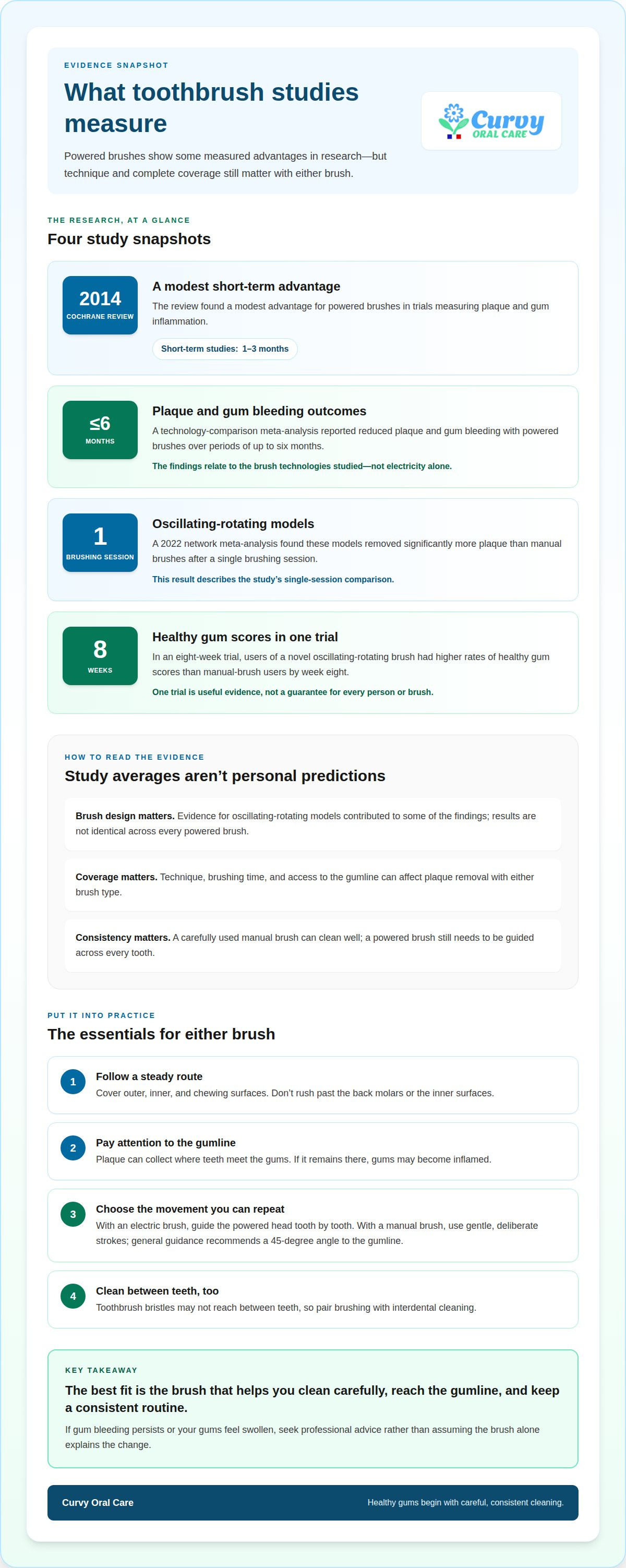
An electric toothbrush supplies the brushing movement, but you still need to guide its head across every tooth. Pause around the gumline and back molars rather than sweeping quickly over visible surfaces. In an eight-week trial, users of a novel oscillating-rotating brush had higher rates of healthy gum scores than manual-brush users by week eight.
Manual Brushing
A manual toothbrush gives you direct control over the pressure and direction of each stroke. The ADA’s general guidance recommends holding it at a 45-degree angle to the gumline. Move gently across outer, inner, and chewing surfaces, including behind the last molars. A steady route helps prevent missed spots during a two-minute brushing session.
Plaque can collect where teeth meet the gums. If it remains there, gums may become inflamed, a condition called gingivitis. The brush type affects how you move, but careful coverage is essential with either option. An electric brush moves its bristles for you; a manual brush relies on your hand. In both cases, reach the gumline and the areas that are easy to overlook.
Research provides useful comparisons, not a universal winner. One published clinical trial lasting eight weeks measured healthy gum scores, while other studies assess plaque removal and gingivitis over different periods. Study results may report group averages, but your daily technique determines whether the bristles reach each surface. Follow the same route each morning and evening, checking inner surfaces and back molars before you finish.
If you’re choosing between brush types, consider which makes a complete routine easiest to repeat. If your gums bleed persistently or feel swollen, seek professional advice rather than assuming the brush alone explains the change. Healthy gums depend on regular, careful cleaning, not simply on choosing a powered handle.
What the Research Says About Electric and Manual Toothbrushes
The 2014 Cochrane review compared powered and manual toothbrushes in clinical trials measuring plaque and gingivitis, or gum inflammation. It found a modest short-term advantage for powered brushes. “Short term” meant studies lasting one to three months. That timeframe describes early changes, not proof that every powered brush performs better over years.
Brush design matters, too. Evidence for oscillating-rotating models, whose heads turn back and forth, contributed to the findings. A technology comparison meta-analysis reported reduced plaque and gum bleeding with powered brushes over periods of up to six months. The electric vs manual toothbrush comparison therefore depends partly on the powered brush’s mechanism, not simply whether it uses electricity.
Study averages are not predictions for individuals. Technique, brushing time, and access to the gumline affect plaque removal. Someone who rushes with a powered brush may miss inner surfaces and back molars, while a person using a manual brush carefully may clean those areas more thoroughly. The electric vs manual toothbrush decision should account for how reliably you can cover every surface.
Separate brush movement from brushing habits. An electric model supplies the motion, but you still guide it tooth by tooth. A manual brush depends on deliberate hand movements and a steady route around your mouth. Either option can support a consistent routine. Choose the one that helps you clean along the gumline and reach difficult spots without rushing.
How Plaque Removal Supports Healthy Gums
Plaque left along the gumline can irritate gum tissue and contribute to inflammation. Brush thoroughly along the gumline and in other easily missed areas.
Electric Toothbrushes
Powered brushes create their own movement. A 2022 network meta-analysis found oscillating-rotating models removed significantly more plaque than manual brushes after a single brushing session. For braces or limited dexterity, the powered movement may make brushing easier to manage. Gum recession and enamel wear can have multiple contributing factors; use gentle pressure and discuss concerns with a dental professional.
Manual Toothbrushes
A manual brush relies on your hand to move the bristles across each surface and can remove plaque with deliberate, consistent brushing. With braces, clean around brackets and along the gumline; limited dexterity can make these areas harder to reach. Soft bristles may feel more comfortable for sensitive gums. Either brush type should be paired with interdental cleaning, since bristles may not reach between teeth.
Plaque is a soft film that builds up on teeth. If it remains near the gumline, gums can become inflamed. Brush the outer, inner, and chewing surfaces, then angle the bristles toward the gumline. Pay extra attention to the back molars, where a quick sweep can miss plaque. Interdental cleaning reaches spaces a toothbrush can’t.
| Brush option | Plaque removal | Technique focus | Potential fit |
|---|---|---|---|
| Electric | Oscillating-rotating models showed an advantage after one session | Guide the head tooth by tooth | May ease controlled movement |
| Manual | Can remove plaque with thorough brushing | Use gentle, deliberate strokes | Offers direct hand control |
When choosing a brush, consider comfort, access needs, and which option you can use consistently.
How to Choose and Use a Toothbrush
Choose a brush you can guide comfortably across every tooth, including the gumline and back molars. An electric model supplies the brushing movement; a manual brush relies on your hand. Neither replaces a careful routine. Compare comfort and control, and consider whether you can reach awkward areas without pressing hard. In an electric vs manual toothbrush comparison, the key question is which option helps you brush thoroughly and consistently.
The American Dental Association’s general brushing guidance recommends holding a manual toothbrush at a 45-degree angle to the gumline. That gives you a practical starting point, not a reason to assume every mouth needs an electric brush. With either type, make small, controlled movements and follow a route covering outer, inner, and chewing surfaces. Your electric vs manual toothbrush decision should reflect how comfortably you can follow that routine.
With an electric brush, place the head against each tooth and move slowly from one tooth to the next. Let the brush supply the movement rather than scrubbing back and forth. With a manual brush, angle the bristles toward the gumline and use gentle, short strokes. Both methods require careful attention around the last molars and where teeth meet gums.
Brush for two minutes at least twice daily. A timer can help pace your routine, especially if you tend to stop early. Some electric models include timers or pressure sensors, but the available evidence doesn’t establish that either feature is essential. Focus on steady coverage and light pressure rather than choosing a brush for extra functions alone.
Soft bristles can be a helpful choice for sensitive gums. If you have braces, ask your orthodontist about a technique that cleans around brackets and wires. For children, an adult can guide brushing and check missed spots. Replace a toothbrush every three months or when bristles splay, whichever comes first. After acidic foods, wait 30 minutes before brushing. Seek professional advice for persistent bleeding, swelling, or pain.
Toothbrush Costs and Replacement Heads
A manual toothbrush is replaced as a whole, while an electric toothbrush keeps its handle and uses replacement heads. These options therefore have different spending patterns. Replace a manual brush or electric brush head every three months, or sooner if the bristles splay. This gives you a practical way to plan recurring purchases instead of considering only the initial cost.
With a manual brush, each replacement means buying another complete toothbrush. With an electric brush, the recurring purchase is generally a compatible brush head, while you keep using the handle. The total cost depends on how often you replace heads and which type fits the handle. The initial price alone doesn’t reflect ongoing costs.
Head design matters, too. Oscillating-rotating and sonic brushes use different head formats, so replacement heads aren’t automatically interchangeable. Before choosing an electric model, find out which head it uses and consider whether you can keep replacements on hand. A clinical trial can compare brushing outcomes, but it doesn’t determine the household cost of maintaining a brush.
Compare costs across repeated replacement cycles. For a manual brush, count each complete replacement. For an electric model, include the handle purchase and the heads needed over time. Then weigh the ongoing expense against comfort, ease of use, and your ability to clean the gumline and back molars thoroughly. The lowest initial cost may not mean the lowest cost to maintain.
How often should you replace a manual toothbrush? Replace it every three months or sooner if its bristles splay. Worn bristles can make controlled brushing less reliable, so don’t wait for the scheduled date if the brush shows wear. Replace an electric brush head on the same schedule, and keep using the handle only while it works properly.
Planning ahead helps prevent a worn brush from disrupting your routine. Mark the replacement date on a calendar, or check the bristles when restocking bathroom supplies. Whether you use a manual brush or an electric handle with replaceable heads, include replacements in your oral-care budget and keep a suitable one available.
Build a Better Daily Oral-Care Routine
Think of oral care as a set of complementary habits, not just a toothbrush. Cleaning between teeth reaches places brush bristles may miss. Choose floss or an interdental cleaner that fits your spaces and feels manageable. If you’re unsure how to use one around tight contacts or dental work, ask a dental professional to demonstrate. A comfortable method is easier to maintain.
Give your tongue attention, too. Gently brush it or use a tongue cleaner, moving from back to front without scraping forcefully. Rinse the tool after use. This simple step cleans a surface that brushing your teeth doesn’t cover.
Choose oral-care products to suit your needs and preferences. Soft bristles, for example, may feel more comfortable for sensitive gums. People with braces or implants may need advice on cleaning around their dental work. A dentist or hygienist can help tailor product choices and demonstrate techniques for difficult-to-reach areas. No product replaces careful daily cleaning.
Small lifestyle choices support preventive care. Drink water regularly and be mindful of frequent sugary snacks or drinks. These habits complement brushing and interdental cleaning, but don’t replace them. Make your routine easy to repeat by keeping your brush, toothpaste, and interdental tool together, then returning each item to its place after use.
Keep regular dental visits as part of your ongoing care. A dental professional can assess your gums, identify areas your home routine may be missing, and suggest practical adjustments. Seek professional advice for persistent bleeding, swelling, pain, receding gums, or other lasting changes. A simple routine covering teeth, gums, tongue, and the spaces between teeth supports oral health and overall well-being.
Curvy Oral Care: Portable Toothbrush for Braces and Implants
Curvy Oral Care offers a portable toothbrush for people with braces and implants. Brackets, wires, and implant restorations can make some surfaces harder to reach, so a consistent routine should include careful cleaning along the gumline and around dental work. A toothbrush supports daily care but doesn’t replace professional guidance about your teeth or restoration.
For braces, move the brush around brackets and along the gumline, checking that food and plaque aren’t left near the hardware. A toothbrush for braces can be part of that routine. If you have implants, clean the surrounding teeth and gumline carefully, and follow the cleaning instructions provided for your restoration. Ask your dental professional to demonstrate a suitable technique if access is difficult.
Curvy Oral Care also offers sonic toothbrushes and replacement brush heads. If you prefer powered brushing, guide the sonic brush patiently across each tooth, including the back molars. Keep compatible replacement heads available and replace them every three months, or sooner if the bristles splay. A brush-head subscription can help you plan replenishment as part of your regular oral-care routine.
The best choice is the one that helps you brush thoroughly and comfortably every day. Consider where you struggle to reach, how easily you can guide the brush, and whether you can keep replacement parts on hand. With braces or implants, make cleaning around the gumline and dental work part of your daily routine. Persistent bleeding, swelling, or pain calls for professional evaluation, not just a toothbrush change.
Curvy Oral Care’s products are intended to support everyday oral care, not diagnose or treat dental conditions. If you’re deciding whether its portable toothbrush for braces and implants fits your routine, explore the toothbrush for braces from Curvy Oral Care.
Frequently Asked Questions
Is There A Clear Winner?
No single toothbrush suits everyone. Choose one you can use comfortably and consistently while reaching all tooth surfaces. Someone who finds hand movements tiring, for example, may prefer powered brushing, while someone who likes direct control may choose a manual brush. Consider comfort, ease of handling, and whether you can maintain a thorough routine.
Are electric toothbrushes more effective than manual toothbrushes at removing plaque and reducing gingivitis?
Some evidence favors powered brushes for gum outcomes. A meta-analysis reported roughly half as many bleeding sites with oscillating-rotating brushes as with manual controls. Bleeding sites are areas that bleed during a gum assessment, so this finding offers another way to compare gum health beyond plaque measurements. It describes results across study groups, not an individual diagnosis or a substitute for professional dental care.
How much do electric toothbrushes and manual toothbrushes cost in the United States?
There’s no single price for every brush type. Manual brushes require replacing the whole brush, while powered models may involve an initial handle purchase followed by replacement heads. Compare both the upfront expense and the recurring parts needed to keep brushing. Features, brush design, and replacement-head format affect the overall budget, so consider the cost of the full routine rather than the handle alone.
Do electric toothbrushes cause gum recession or damage enamel when used correctly?
Gum recession and enamel wear can have multiple contributing factors. Use gentle pressure and discuss concerns with a dental professional.
Which is better for children: an electric or manual toothbrush?
The best choice depends on a child’s comfort and ability to brush thoroughly. Parents can seek age-appropriate brushing guidance from a dental professional.

Article by
Aline Peixe Nebot
Aline Peixe Nebot is a Veterinarian and passionate advocate for better oral health, committed to raising awareness of oral health as a matter of public health. She actively promotes the importance of simple, effective oral care routines and works to educate the public about the often-overlooked link between oral health and overall systemic health. Her mission is to make better oral care knowledge accessible to everyone and encourage healthier habits for life.
Disclaimer
Disclaimer: The information provided in this article is intended for general educational and informational purposes only. It is not intended to replace professional medical, dental, or healthcare advice, diagnosis, or treatment.
Some content may be AI-assisted and is provided to support health education and awareness. While we strive to share accurate and up-to-date information, health recommendations and scientific evidence can evolve, and the information presented may not apply to every individual.
The connection between oral health and overall systemic health is an important and developing area of research. Associations discussed in this article should not necessarily be interpreted as proof of cause and effect.
Always consult a qualified dentist, physician, or other healthcare professional regarding your individual health, symptoms, medications, or treatment decisions. Do not delay or discontinue professional care based on information presented in this article.
This content is for education and awareness—not diagnosis or treatment.