
Electric toothbrush options for better gumline access
The best electric toothbrush for gum recession isn’t necessarily the one with the strongest vibration. An electric toothbrush for better gumline access should make it easier to guide soft bristles gently along the gumline, where plaque can collect. A pressure sensor can help you avoid brushing too hard, while a brush head that’s easy to maneuver can help you reach awkward spots.
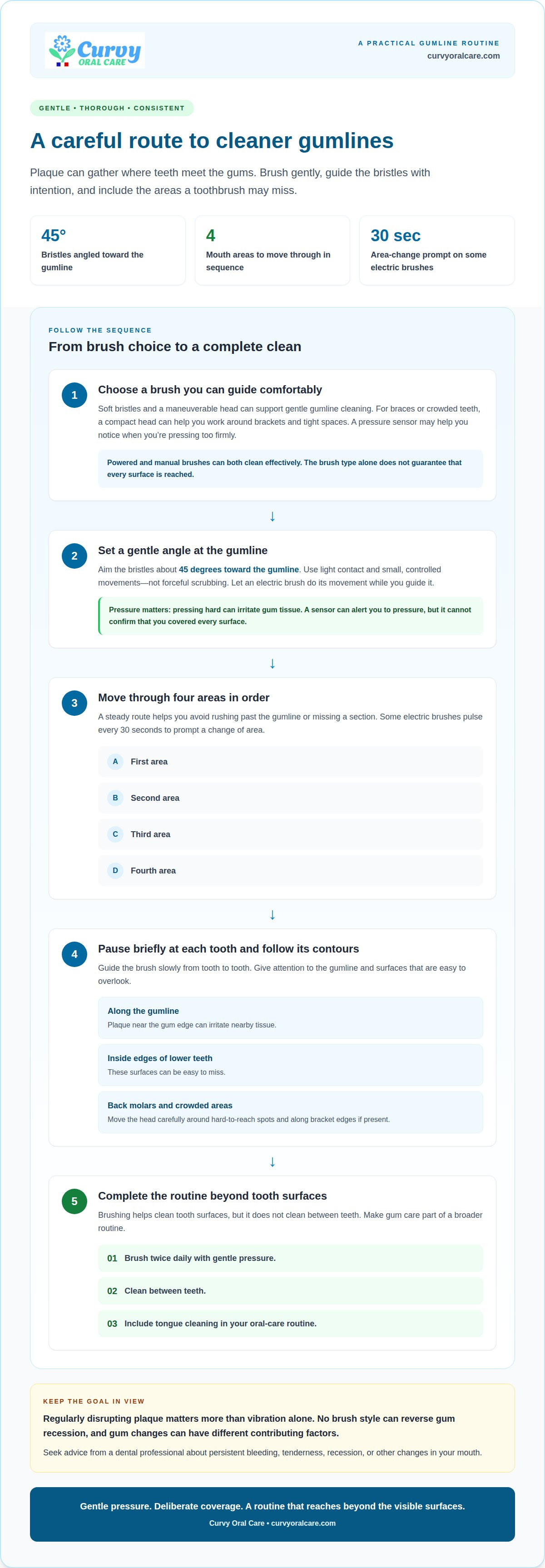
Technique matters, too. Hold the bristles at a 45-degree angle toward the gumline and use small, gentle movements rather than scrubbing. Brushing pressure and the areas you reach may matter more for gum recession than choosing an electric or manual brush. This guide explains which brush features and head shapes can support careful gumline cleaning, how to use an electric brush effectively, and where plaque-control habits such as cleaning between your teeth fit into a preventive routine.
Key Takeaways
- Prioritize gentle, thorough brushing along the gumline; brushing pressure and coverage matter more than choosing an electric or manual brush alone.
- Look for a brush head that’s easy to guide around back molars and other hard-to-reach areas, plus features that support steady brushing.
- Clean between teeth and along the tongue as part of a routine that goes beyond brushing visible tooth surfaces.
- Choose oral-care products that suit your needs, support healthy habits with balanced nutrition, and keep regular dental visits.
- Seek professional advice about persistent bleeding, swelling, pain, or other changes in your mouth.
Why Gumline Access Matters
Plaque can collect where teeth meet the gums, including behind back molars and along the inside surfaces. If it stays there, gums may become inflamed, tender, or prone to bleeding. A practical starting point is to angle the bristles 45 degrees toward the gumline and move gently, covering every tooth surface. Brushing twice daily helps make gum care a consistent habit, but brushing alone doesn’t clean between teeth.
Both manual and electric toothbrushes can clean teeth effectively when you use gentle pressure and cover all surfaces. An electric brush moves its head for you, while a manual toothbrush relies on your hand to guide each stroke. Neither type automatically reaches every area. With a manual brush, use small, controlled movements; with an electric brush, guide the head slowly from tooth to tooth instead of scrubbing back and forth.
Sonic and oscillating-rotating brushes use different motions. Sonic toothbrushes vibrate rapidly, while oscillating-rotating heads turn back and forth around individual teeth. Either style can support gumline cleaning when you position the bristles carefully and follow each tooth’s contours. Choose a brush you can control comfortably, including around crowded teeth and the far sides of back molars.
For braces or crowded teeth, choose an electric brush with a compact head and soft bristles that can maneuver around brackets and tight spaces. A pressure sensor can help you notice when you’re pressing too firmly. These features support access, but careful positioning still matters: guide the bristles around the gumline and along the edges of brackets.
Can an electric toothbrush damage gums or cause recession if used incorrectly? Pressing hard or scrubbing aggressively can irritate gum tissue, so use a gentle touch and let the brush do the work. Receding gums can have several contributing factors, and brushing habits alone don’t establish the cause. If you notice persistent bleeding, recession, or other changes, seek advice from a dental professional.
The Science of Gum Health and Toothbrushes
Gum health depends on regularly disrupting plaque, the sticky film of bacteria that gathers on teeth. When plaque remains near the gumline, the surrounding tissue can become inflamed. Brushing helps remove plaque from tooth surfaces, but the tool’s movement is only part of the process. Coverage, contact with the gumline, and gentle technique all affect how thoroughly you clean.
Research comparing powered and manual toothbrushes points to a useful distinction: an electric brush can make brushing motions for you, but it cannot position itself over every surface. An 11-year cohort study comparing seven types of powered toothbrushes with manual brushing found better plaque control among powered-brush users. A cohort study follows groups over time, but it cannot show that the brush alone caused the difference. Habits and brushing technique also matter.
Sonic and oscillating-rotating brushes move differently. Sonic brushes vibrate rapidly, while oscillating-rotating heads turn back and forth. Both styles can help remove plaque when their bristles reach the tooth surface and gumline. Neither style is necessarily best for every mouth, and neither can reverse gum recession. The practical test is whether you can comfortably guide the brush around your teeth, including crowded areas and back molars.
Powered brushes may help people who find steady, thorough brushing difficult. Manual brushes can also clean effectively with small, controlled strokes and light pressure. Either way, avoid forceful scrubbing. Gum recession can have different contributing factors, so don’t assume a change in gum position is caused by toothbrush type alone. A dental professional can assess persistent bleeding, tenderness, or receding gums and discuss suitable brushing habits.
Gum care is one part of a broader daily routine, not a single-device solution. Brushing cleans tooth surfaces; cleaning between teeth addresses spaces a brush may miss. For a consistent setup, a sonic toothbrush and toothpaste travel set pairs everyday oral-care essentials. Use gentle pressure, aim the bristles carefully, and choose a brush you can maneuver around your whole mouth.
How Plaque Affects the Gumline
Plaque is a soft film of bacteria that continually forms on teeth. Along the gumline, it can irritate nearby tissue and contribute to inflammation. If plaque remains and hardens, everyday brushing becomes less effective at removing it. The inside edges of lower teeth and the back molars, for example, can be easy to miss. Thorough daily cleaning helps disrupt plaque before it builds up in these areas.
Powered toothbrushes can support plaque control by making brushing movements for you. Evidence indicates powered brushes can be more effective than manual brushing at reducing plaque and gingivitis, which means gum inflammation. But the brush still needs to reach the surfaces where plaque gathers. Move the head methodically across each tooth, especially where the tooth meets the gum, rather than relying on vibration alone.
Pressure matters. Pressing too hard can irritate sensitive gums, while light contact lets the bristles work without forceful scrubbing. A pressure sensor may alert you when you’re pushing too firmly, helping you adjust your grip and protect gum tissue from unnecessary friction. It can’t tell whether you’ve cleaned every surface, so pair the alert with a deliberate route around the mouth.
Try dividing your mouth into four areas and moving through them in sequence. Some electric brushes pulse every 30 seconds to prompt a change of area. At each tooth, pause briefly and angle the bristles toward the gumline; then continue to the next surface. This steady approach can help prevent rushing past the gumline or overlooking the outer sides of back molars.
Battery life affects whether a powered brush is ready for routine use, but it doesn’t determine plaque removal on its own. A fully charged brush with worn bristles may clean less effectively than one with a fresh head, used gently and consistently. Replace a head when its bristles become visibly splayed, and choose soft bristles if your gums feel tender. If bleeding or sensitivity persists despite gentle brushing, seek professional advice rather than increasing pressure.
Choosing an Electric Toothbrush for Better Gumline Access
Start with the brush head. A compact, rounded head can make it easier to guide bristles around individual teeth, tight spaces, and back molars. An elongated head covers more surface at once, but still needs careful positioning beside the gumline. Choose a shape you can maneuver comfortably, especially around areas that feel difficult to reach.
Angled handles or necks may offer a different approach to positioning the bristles. For example, an angled sonic toothbrush is designed to help users reach areas that can be awkward with a conventional straight brush. The angle doesn’t replace technique: guide the bristles gently toward the gumline, then move along each tooth surface.
In the US, electric toothbrush cost depends on the brush type and features, such as a timer or pressure sensor. Consider which features support your routine rather than choosing by feature count alone. A sensor can alert you to brushing too hard, while a timer can help you brush consistently; neither confirms that every surface is clean.
For gumline brushing, hold the bristles at a 45-degree angle toward the gums. Use light pressure and move the brush slowly along the teeth instead of scrubbing. This method works with a sonic toothbrush or another powered style. If your gums are sensitive or receding, gentle contact matters; ask a dental professional about persistent changes.
A full brushing session should last two minutes. Divide the mouth into four quadrants and spend 30 seconds on each, including the inner surfaces and back molars. Some brushes pulse every 30 seconds to prompt a move to the next quadrant. Treat the signal as a pacing cue, then make sure you’ve covered the gumline in that area.
Features that support access include a manageable brush-head shape, a pressure sensor, and a timer. Soft bristles can feel more comfortable for sensitive gums, while a battery that holds its charge helps keep a powered brush ready for regular use. Replace a brush head when its bristles become worn or splayed, since damaged bristles are harder to guide precisely.
Keep the goal simple: position the bristles, use gentle pressure, and follow a steady route around your mouth. If brushing causes ongoing discomfort or you notice gum recession, get personalized advice from a dental professional instead of pressing harder or repeatedly changing brush modes.
Build a Daily Routine for Healthier Gums
Make your routine easy to repeat by keeping your toothbrush, toothpaste, and interdental cleaner together. Before brushing, use floss or an interdental brush to remove anything caught between teeth, choosing a size that fits without forcing it. This gives you a separate step for spaces a toothbrush may not reach. If cleaning between teeth is uncomfortable or difficult, ask a dental professional to demonstrate a suitable method.
After brushing, gently clean your tongue with a toothbrush or tongue cleaner, moving from the back toward the front without scraping forcefully. Rinse the tool after use. Choose toothpaste based on your oral-care needs and preferences; if you’re unsure what suits you, discuss it with a dental professional. Replace worn brush heads to keep using bristles in good condition.
Food and drink choices can complement daily cleaning. Water is a useful choice between meals, while frequent sugary snacks and drinks expose teeth to sugar repeatedly. Try having sweet foods with a meal rather than grazing throughout the day. A balanced eating pattern supports general well-being as well as habits that help care for your mouth.
Keep dental checkups on your calendar and follow the visit schedule recommended for your needs. Appointments allow a professional to assess changes in your mouth and answer practical questions about your routine. Bring up persistent bleeding, swelling, bad breath, pain, receding gums, loose teeth, or sores that don’t heal. These changes need an individual evaluation, not guesswork or a more forceful brushing approach.
Notice what makes your routine easier to maintain. Some people prefer to keep a spare brush head with their oral-care supplies; others use a reminder to replace it. Curvy Oral Care offers replacement brush heads and brush head subscriptions for keeping replacements on hand. For daily brushing essentials, explore a sonic toothbrush and toothpaste set.
Think of gum care as a series of manageable habits, not a single product or a perfect morning. Adjust your setup when a step feels awkward, and seek professional guidance for ongoing changes. A routine that fits your life is easier to maintain.
Curvy Oral Care: Portable Toothbrush for Braces and Implants
Curvy Oral Care offers the OrthoKing Sonic Toothbrush for braces and implants. Brackets, wires, and implant-supported restorations can make some surfaces trickier to reach, so a careful brushing route still matters. Guide the bristles around each tooth and along the gumline, taking extra care near brackets and around the edges of restorations. A toothbrush supports daily cleaning; it doesn’t replace personalized dental advice.
Powered toothbrushes, including Curvy Oral Care’s Y Angled Sonic Toothbrush, are one option for daily brushing. Its angled head is a design feature, but brushing still depends on guiding the bristles carefully around your mouth. Spend time on the gumline, inner surfaces, and back teeth, where access can be awkward. A toothbrush cannot clean between teeth; use an interdental cleaner for those spaces. Use gentle pressure and follow any brushing instructions from your orthodontic or dental professional.
Braces create small spaces around brackets and wires where plaque can collect. Move the brush head around each bracket rather than sweeping only across the front of the teeth. For implants, clean nearby teeth and the gumline gently, and follow your dental professional’s instructions for caring for your specific restoration. Persistent bleeding, swelling, pain, or other changes warrant professional attention rather than harder brushing.
Replace a brush head when its bristles are worn or splayed, since damaged bristles can be harder to position carefully around braces and gumlines. Replacement brush heads and subscriptions are available from Curvy Oral Care. Match replacement heads to the compatible toothbrush, and use a soft touch during cleaning.
When choosing a toothbrush for everyday use or brushing around braces and implants, consider what suits your routine and follow your dental professional’s advice. Toothbrushes don’t treat gum disease, prevent gum recession, or take the place of dental care. For a specific concern about an implant, orthodontic appliance, or persistent gum change, your dental professional can recommend an appropriate cleaning approach.
Careful daily brushing, cleaning between teeth, and following professional guidance can support your oral care routine. Choose a toothbrush that feels comfortable to use consistently.
Make Gumline Care Easier to Keep Up
Oral health is part of overall health, so caring for your gums is one practical way to support your well-being. Research continues to explore connections between gum health and health elsewhere in the body, but an association alone doesn’t prove that one causes the other. Your next step can be simple: choose a routine and toothbrush that feel manageable. An electric toothbrush for better gumline access should support your technique, not replace it.
If you’re ready to explore a sonic toothbrush and toothpaste pairing for daily care, browse the set from Curvy Oral Care. Keep building habits that fit your needs, and seek professional advice about persistent oral-health changes.
Small, consistent choices can make caring for your mouth feel more achievable. Take the next step at a pace that works for you.
Frequently Asked Questions
Which Electric Toothbrush Is Best For Gum Recession?
No single electric toothbrush is best for everyone with gum recession. A dental professional can assess where the gums have receded, check for inflammation, and review your brushing habits before advising on a brush style. Choose a brush you can control comfortably without forcing it against your teeth. A toothbrush can support daily cleaning, but it cannot identify why recession has occurred or replace an oral examination.
How often should I replace the brush head?
Curvy Oral Care recommends replacing brush heads every three months. Note the installation date on a calendar to track the replacement interval. You can also inspect the bristles between changes: if they look damaged or splayed, the head may no longer be in good working condition. Use a replacement head made for your specific toothbrush model.
Are oscillating-rotating or sonic toothbrushes better for cleaning along the gumline?
There isn’t a universal winner between these brush styles. Choose the one whose head and movement you can guide accurately around your teeth. If you have braces or an implant, consider how comfortably you can maneuver the brush around that area, and follow your dental professional’s care instructions. A familiar brushing style that you can use consistently may suit you better than switching solely for a different motion.
Which electric toothbrushes have small or angled brush heads for gumline access?
Curvy Oral Care’s Y Angled Sonic Toothbrush has an angled brush head, while its OrthoKing Sonic Toothbrush includes a soft end-tuft brush head and is designed for braces and implants. These are distinct options for different brushing needs. Check that a replacement head matches your handle model. Curvy Oral Care’s website is intended for users aged 18 or older.
Do pressure sensors and timers improve gumline cleaning?
They can make brushing cues easier to notice, especially if you tend to rush or grip the handle tightly. A pressure sensor responds to forceful brushing, while a timer helps structure your brushing session. Treat both as reminders, not as an assessment of gum health. If a sensor alerts you often, try relaxing your grip and ask a dental professional to review your brushing technique.
How often should you replace an electric toothbrush head for effective gumline cleaning?
Use the replacement interval recommended for your toothbrush; Curvy Oral Care’s guidance is every three months. Before fitting a new head, check that it is designed for your handle. Curvy’s replacement method is to twist and pull off the old head. A new head may feel light, so handle it gently as you attach it.
Health & Medical Disclaimer: This content is for general educational purposes only. It is not a substitute for professional dental or medical advice, diagnosis, or treatment. Consult a qualified professional about persistent bleeding, swelling, pain, receding gums, or other changes in your oral health.
How much do electric toothbrushes designed for precise gumline cleaning cost in the US?

Article by
Aline Peixe Nebot
Aline Peixe Nebot is a Veterinarian and passionate advocate for better oral health, committed to raising awareness of oral health as a matter of public health. She actively promotes the importance of simple, effective oral care routines and works to educate the public about the often-overlooked link between oral health and overall systemic health. Her mission is to make better oral care knowledge accessible to everyone and encourage healthier habits for life.
Disclaimer
Disclaimer: The information provided in this article is intended for general educational and informational purposes only. It is not intended to replace professional medical, dental, or healthcare advice, diagnosis, or treatment.
Some content may be AI-assisted and is provided to support health education and awareness. While we strive to share accurate and up-to-date information, health recommendations and scientific evidence can evolve, and the information presented may not apply to every individual.
The connection between oral health and overall systemic health is an important and developing area of research. Associations discussed in this article should not necessarily be interpreted as proof of cause and effect.
Always consult a qualified dentist, physician, or other healthcare professional regarding your individual health, symptoms, medications, or treatment decisions. Do not delay or discontinue professional care based on information presented in this article.
This content is for education and awareness—not diagnosis or treatment.