
Compact Sonic Toothbrush Replacement Heads: Buying Guide
A smaller brush head isn’t automatically the better choice. Compact replacement heads for sonic toothbrush users may be easier to maneuver around back teeth and along the gumline, but the benefits depend on a secure fit and a comfortable brushing feel. If you’ve struggled to reach your molars or wondered whether a replacement head will work with your handle, those details matter more than size alone.
It’s reasonable to want a head that reaches tricky spots without feeling awkward. This guide explains how to compare compatibility, head size, and bristle feel, and how to choose an option that suits your mouth and routine. You’ll also learn what a compact design can change during brushing, how to clean the gumline and hard-to-reach areas gently, and when to replace a worn head. A well-matched brush head may make access more comfortable, but consistent technique is still essential for cleaning the surfaces where plaque tends to collect.
Key Takeaways
- Identify your toothbrush handle and match it to a head designed for its attachment system.
- Compare head profile, bristle feel, handling, and replacement options to find a comfortable fit for your routine.
- Compact replacement heads for sonic toothbrush models may feel easier to maneuver, but size alone doesn’t determine how well you brush.
- Use gentle pressure and a deliberate technique, paying attention to areas that are easy to miss.
- Curvy Oral Care offers EMF-free angled toothbrushes, sonic toothbrushes, and replacement brush heads to support your daily routine.
What Makes a Compact Replacement Head for a Sonic Toothbrush Different?
A compact replacement head is a smaller-format brush head, not a universal size with one fixed measurement. Its smaller profile may make it easier to position around individual teeth, but the word “compact” doesn’t tell you whether it will fit your handle or feel comfortable in your mouth. Start with the attachment system: replacement heads are made for compatible toothbrush handles, and systems can differ between brands and models.
Head size is only one part of effective brushing. Plaque, a sticky film of bacteria, can collect along the gumline, between teeth, and around the back molars. Brushing only the easy-to-see front surfaces leaves other plaque-prone areas untouched. A compact head may feel easier to maneuver, but it doesn’t guarantee a more thorough clean. Your ability to guide the bristles carefully across each area remains central to daily care.
How does compact head size affect everyday brushing?
A smaller head may feel easier to position in a smaller or crowded mouth, or to angle around the back teeth. Some people find it simpler to guide along the gumline; others prefer a different head profile. Comfort and access depend on your mouth, brushing technique, and toothbrush design, so there’s no single size that works best for everyone.
Notice where brushing feels awkward. Is it difficult to reach the last molars, or to move the brush around closely spaced teeth? Those observations can help you decide whether a compact format is worth trying. Don’t assume that a smaller head removes more plaque. Choose a shape you can control, then brush methodically instead of rushing over the surfaces that are easiest to see.
What should shoppers know about sonic toothbrush compatibility?
Match a replacement head to the attachment system intended for your toothbrush handle. “Sonic” describes how a toothbrush moves, not a universal connection standard. Two brushes can both be sonic and still use different attachments, so the word alone can’t confirm fit. Find the handle’s model information and compare it with the replacement head’s compatibility details before buying.
For broader context on how electric brushes differ in movement and design, see this overview of electric toothbrush types and features. Curvy Oral Care’s EMF-free angled sonic toothbrush is designed to help users access difficult-to-reach areas. The angled design can influence access and handling, while head fit depends on the intended toothbrush system.
Whatever head you choose, include gentle gumline brushing, cleaning between teeth with an appropriate interdental method, and focused attention to the back molars. A comfortable head can make it easier to guide the brush, but consistent, careful coverage is what matters.
How Compact Sonic Brush Heads Relate to Gumline and Back-Molar Care
Good gumline care depends on more than brush-head size. Plaque can collect where teeth meet the gums, especially in spots that are easy to skim past during a quick brushing session. If plaque remains along the gumline, it can irritate gum tissue and contribute to inflammation. A compact head may help some people position the bristles more precisely, but it can’t guarantee a particular health outcome or replace careful brushing.
Plaque is a sticky film of bacteria that can build up on teeth and irritate the gums when it collects along the gumline. Cleaning only the visible front surfaces leaves other areas to consider, including the inner surfaces, spaces between teeth, and back molars. Oral health is part of overall health: research has found associations between gum disease and some systemic conditions, but an association doesn’t prove that one causes the other. These relationships are still being studied.
Can a smaller brush head help reach back molars?
For some people, a compact profile may be easier to position behind the last teeth or guide around crowded areas. For others, the difference may be small. Direct the bristles gently toward the gumline and work across one small area at a time. Pause to reposition the brush around each back molar instead of stretching to reach it with a rushed or forceful stroke.
Toothbrush angle can also affect access. Curvy’s angled adult toothbrush design is intended to help users reach areas that can be difficult to access with a conventional straight brush. An angled design and a compact head are different features. Consider which one helps you handle the brush comfortably and reach the areas you tend to miss.
What a compact head cannot replace in a complete routine
Even well-positioned bristles don’t clean every space between teeth. Brushing doesn’t replace flossing or another suitable method of interdental cleaning, which helps address narrow gaps a brush may not reach. A consistent routine also includes brushing twice daily, cleaning the tongue, and keeping regular dental checkups. The ADA recommendations for toothbrush replacement advise replacing brush heads approximately every three to four months, or sooner if bristles become visibly frayed.
Pay attention to changes rather than trying to address them by switching head sizes alone. Persistent bleeding, swelling, pain, or other ongoing changes are reasons to seek professional dental advice. A compact head can be one part of your routine, but comfortable brushing, consistent coverage, and care between teeth matter too. For a convenient way to keep brushing essentials together when travelling, consider Curvy’s sonic toothbrush and toothpaste travel set.
How to Compare Compact Replacement Heads Before You Buy
A useful comparison starts with fit, not the word “compact.” Replacement heads are made for specific attachment systems, and sonic toothbrushes aren’t automatically compatible with one another. First identify your handle’s brand and model, then use the manufacturer’s compatibility guidance to narrow your options. Once fit is clear, compare the head profile, bristle feel, handling, and how you’ll keep replacement heads on hand.
Separate details you can verify from preferences you can judge through everyday use. Compatibility and listed product specifications should come from product information. Comfort and maneuverability are personal: what feels easy to guide for one person may feel awkward for another. Use this checklist to compare options without assuming a smaller head is automatically more effective or gentler.
| Criterion | What to compare | How to assess it |
|---|---|---|
| Fit | Whether the head is intended for your handle or attachment system | Check the model and manufacturer compatibility details first. |
| Head profile | The shape and size described in the product information | Consider whether it seems manageable around crowded areas and back teeth. |
| Bristle feel | Verified descriptions of the bristles, if provided | Don’t infer softness, stiffness, or a clinical benefit from the head’s size. |
| Handling | How comfortably you can angle and guide the brush | Think about gumline access without forcing your jaw or wrist. |
| Replacement options | How heads are offered and how you prefer to restock | Compare one-time purchases with subscription plans. |
Which replacement-head details matter most?
Compatibility comes first. A head that doesn’t match the handle’s intended system isn’t a practical choice, whatever its profile. Next, consider the head’s listed shape and whether you can guide it into the areas you find difficult, such as along the gumline or around back teeth. Treat bristle descriptions as specific to the product: use the information for that exact head rather than making assumptions based on appearance.
How to weigh compact size against comfort and control
Picture your usual brushing motion. Can you reach the surfaces you need without twisting the handle sharply, stretching your jaw, or pressing hard? These are more useful measures than compactness alone. Head size can influence how a brush feels and moves; effective brushing depends on fit, control, and consistent technique. Choose an option that lets you guide the bristles comfortably and deliberately, then notice how it feels as part of your routine.
When comparing compact replacement heads for sonic toothbrush handles, use this order: confirm the attachment system, compare verified specifications, then weigh comfort and restocking preferences. Don’t assume that a similar-looking connector or a sonic label means two heads are interchangeable. Checking the fit first keeps your decision focused on a head that suits your handle and a routine you can maintain.
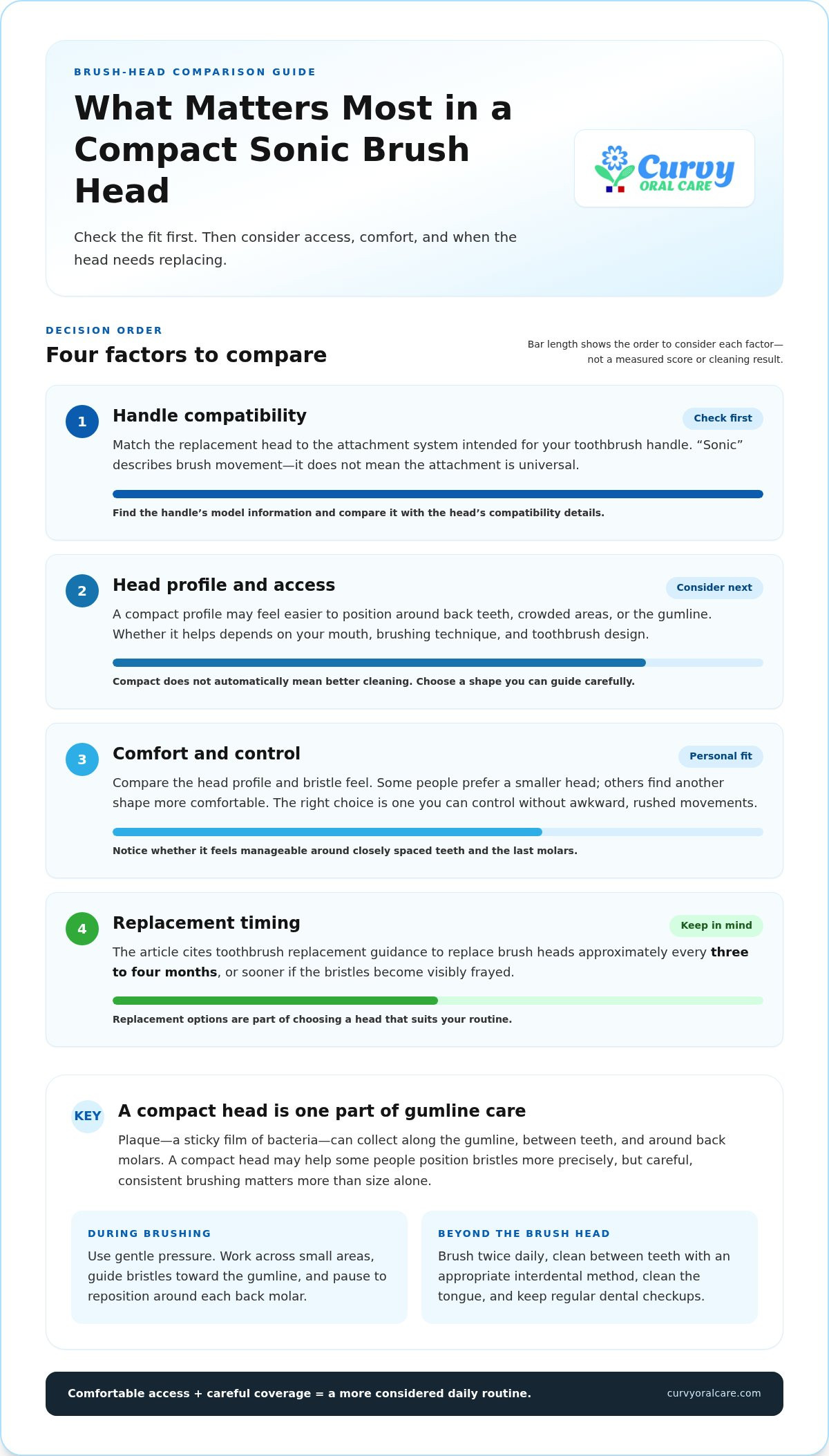
How to Choose and Use a Compact Sonic Replacement Head
Start with your toothbrush handle, then consider the details that affect everyday use. Follow these steps before buying:
- Identify the handle. Find its brand and model on the handle or in its original product information.
- Verify the fit. Match the replacement head to the attachment system and compatibility guidance for that specific handle. Don’t rely on appearance alone.
- Compare the details. Review the head profile and any bristle information provided for that product.
- Consider comfort and control. Think about whether you can position the head without straining your jaw or wrist.
- Follow care guidance. Use the manufacturer’s directions for cleaning, storage, and replacement.
This order separates essentials from personal preferences. Fit is essential; compact size and feel are individual considerations. Curvy Oral Care’s EMF-free angled sonic toothbrush is designed to help users reach difficult areas. Its angled design is another feature to consider when thinking about access, but it doesn’t mean every replacement head fits every sonic toothbrush.
A simple compatibility and comfort checklist
Before choosing, note your handle model and compare it with the replacement head’s stated attachment guidance. Then picture your usual brushing motion: can you guide the head toward the gumline, around crowded areas, and behind the back teeth without forcing your grip? Product specifications can tell you about fit; your own experience tells you how comfortable the brush feels in your mouth.
Build the replacement head into a preventive routine
A new head is one part of care, not the whole routine. Follow the toothbrush manufacturer’s replacement guidance rather than assuming one interval applies to every product. During each brushing session, guide the bristles gently along the gumline and across each tooth surface. Avoid forceful back-and-forth scrubbing or pressing hard. Small, deliberate movements make it easier to stay in control.
Brush twice a day, clean between teeth with floss or another suitable interdental method, and clean your tongue. Give the back molars focused attention instead of assuming the brush has reached them just because it’s moving. Regular dental visits also help keep oral care on track. A dental professional can advise you on techniques or tools suited to your needs.
Persistent bleeding, swelling, pain, or other significant oral changes deserve professional advice. Don’t rely on changing head size to explain or resolve ongoing symptoms. A well-fitting head may make brushing feel more manageable, while steady habits support thorough day-to-day care. To keep brushing essentials together for travel, explore Curvy’s sonic toothbrush and toothpaste travel set.
Explore Curvy Oral Care’s Sonic Toothbrush and Replacement-Head Options
Choosing a brush head comes down to practical questions: does it fit your handle, can you guide it comfortably, and does your routine reach the areas you mean to clean? Curvy Oral Care offers sonic toothbrushes and replacement brush heads as part of its oral-care range. A product should support a consistent routine, not replace careful brushing or advice from a dental professional.
Curvy’s toothbrush range includes an EMF-free angled design intended to help users access difficult-to-reach areas. The angle relates to positioning and handling, not a claim that the brush treats or prevents a dental condition. The EMF-free sonic toothbrush page shares more information about this brush.
Replacement-head fit still matters. “Sonic” describes a type of toothbrush movement, not a guarantee that heads and handles from different systems are interchangeable. Use the compatibility guidance for your specific handle, then consider the feel and access that matter to you. Don’t infer head size, bristle type, or cross-model compatibility from a product name alone.
How Curvy’s angled sonic approach fits the selection criteria
An angled handle may be worth considering if it helps you position the brush more comfortably around back teeth or other awkward-to-reach areas. Focus on whether you can guide it gently along the gumline without straining your jaw or pressing hard. Fit, comfort, and technique remain central, whatever handle shape you choose.
Keep your own needs in view. If you already have a sonic toothbrush, start with the replacement head intended for its attachment system. If you’re choosing a toothbrush too, consider how the handle feels in your hand and whether its shape helps you reach surfaces you tend to miss. A comfortable design can support a routine you’re more likely to follow, but it can’t do the brushing for you.
Choose a next step that supports your daily routine
Curvy’s sonic toothbrush and replacement-head options can be considered alongside your fit and comfort checklist. The brand also offers toothpaste and replacement brush heads through one-time purchases and subscription plans. Review the product details and choose an option that suits your routine rather than inferring compatibility or features from a product name alone.
If you’re ready to explore a toothbrush option for your routine, view Curvy’s sonic toothbrush set. Whichever products you choose, steady habits matter: brush twice daily with a gentle technique, clean between teeth, pay attention to the gumline and back molars, and keep regular dental visits. Small, repeatable steps are a practical foundation for caring for your mouth.
Make Your Next Brushing Habit Easier to Keep
Your next step doesn’t have to be a major change. Notice what makes your routine comfortable enough to repeat, and choose oral-care tools that fit both your handle and your habits. The right compact replacement heads for sonic toothbrush models are the ones that suit your specific system and help you brush with steady control, not simply the ones with the smallest profile.
Think of brushing as a small daily investment in your wellbeing. Consistent care gives your mouth regular attention without turning oral health into a complicated project. If you’re considering a new setup, Curvy’s sonic toothbrush set is one option to explore.
Keep showing up for your oral health, one thoughtful brush at a time. A routine that feels manageable today is a strong place to begin.
Frequently Asked Questions
Is a compact replacement head better for a sonic toothbrush?
It depends on what feels manageable for you. A compact head may suit someone who finds a larger brush awkward around individual teeth, while another person may prefer a different shape. Notice whether you can move the head comfortably without changing your usual grip or rushing through brushing. If brushing is difficult because of dental work, limited jaw movement, or another personal concern, ask a dental professional for guidance.
Can replacement heads from different sonic toothbrush brands fit the same handle?
Sometimes, but don’t assume compatibility. Before ordering, note the toothbrush’s brand and model, then compare those details with the replacement head’s product information. If the handle came with a manual, its model details may be printed there; otherwise, look for identifying information on the handle or packaging. Clear identification helps you choose a head intended for your toothbrush system.
How do I know if a compact brush head can reach my back molars?
Try your usual brushing position in front of a mirror and notice whether you can reach the last teeth without discomfort. A dental professional can demonstrate how to position the brush for your mouth if the area is hard to see or manage. Don’t force your jaw open or twist the handle sharply to reach a spot. If access remains difficult, ask for technique advice tailored to you.
What happens if I use an incompatible replacement head?
A head that doesn’t attach or operate as intended may be inconvenient and could make it difficult to follow the toothbrush’s instructions. Don’t force a connection or modify the head to make it fit. If the head feels loose or the toothbrush behaves differently after attaching it, stop using it and consult the manufacturer’s guidance for that handle and head.
Should I choose soft bristles for a compact sonic toothbrush head?
Check the bristle description for the specific head and choose a feel that’s comfortable for your mouth. A compact profile doesn’t tell you how firm the bristles are. Use light pressure and let the bristles do the work rather than pressing into the teeth or gums. If sensitivity, bleeding, or discomfort continues, a dental professional can help you decide whether to change your brushing technique or tool.
Can a compact sonic toothbrush head clean between teeth?
No toothbrush head cleans every space between teeth, so include a separate interdental method in your routine. Floss is one option; another tool may suit some spaces better. Use it gently and avoid snapping floss against the gums. If you’re unsure how to clean a particular gap, or have a bridge, braces, or other dental work, ask a dental professional to show you an appropriate approach.
When should I ask a dentist about bleeding or swollen gums?
Seek professional evaluation if bleeding or swelling persists, or if you notice ongoing pain, receding gums, tooth mobility, persistent bad breath, or another significant change. These signs don’t establish a diagnosis, and their cause can’t be determined from an article. A dentist can assess your situation and discuss suitable care. Make a note of when the change began and what seems to affect it, so you can describe it clearly.
Health & Medical Disclaimer: This article is for general educational purposes and isn’t a substitute for professional dental or medical advice, diagnosis, or treatment. Consult a qualified healthcare professional about personal symptoms or health concerns.

Article by
Aline Peixe Nebot
Aline Peixe Nebot is a Veterinarian and passionate advocate for better oral health, committed to raising awareness of oral health as a matter of public health. She actively promotes the importance of simple, effective oral care routines and works to educate the public about the often-overlooked link between oral health and overall systemic health. Her mission is to make better oral care knowledge accessible to everyone and encourage healthier habits for life.
Disclaimer
Disclaimer: The information provided in this article is intended for general educational and informational purposes only. It is not intended to replace professional medical, dental, or healthcare advice, diagnosis, or treatment.
Some content may be AI-assisted and is provided to support health education and awareness. While we strive to share accurate and up-to-date information, health recommendations and scientific evidence can evolve, and the information presented may not apply to every individual.
The connection between oral health and overall systemic health is an important and developing area of research. Associations discussed in this article should not necessarily be interpreted as proof of cause and effect.
Always consult a qualified dentist, physician, or other healthcare professional regarding your individual health, symptoms, medications, or treatment decisions. Do not delay or discontinue professional care based on information presented in this article.
This content is for education and awareness—not diagnosis or treatment.