
Clean Ingredient Whitening Toothpaste: Compare Key Ingredients
A “natural” label doesn’t guarantee gentler or more effective whitening. Natural whitening usually means polishing away surface stains with ingredients such as baking soda, not changing a tooth’s underlying color. If you’re considering a clean ingredient whitening toothpaste subscription, compare the whitening method, enamel-supporting ingredients, and any components you’re sensitive to, rather than relying on the label alone.
It makes sense to want a brighter smile without ingredients you’d rather avoid. But “clean” and “natural” can mean different things from one product to another, so read the ingredient list closely. Coconut-derived ingredients, flavorings, abrasives, and peroxide-based whiteners serve different purposes. Even familiar or plant-derived ingredients can be unsuitable if you have an allergy or sensitivity.
This guide explains what natural whitening can and can’t do, how to compare common whitening ingredients, and what to consider for enamel protection. You’ll also learn how to spot potential allergens and ingredients that may be too abrasive, so you can choose toothpaste that fits your oral-care needs and daily routine.
Key Takeaways
- Look beyond “natural” or “clean” claims and compare what each ingredient actually does in the formula.
- Distinguish ingredients that polish away surface stains from those that bleach tooth color, and consider how each may affect sensitivity.
- Review ingredient labels for potential allergens, including flavorings and plant-derived components that may not suit everyone.
- Choose gentle brushing habits and pay attention to enamel protection when using whitening products.
- Check what a subscription includes: toothpaste and replacement brush heads are different products with different purposes.
Fluoride and enamel protection
Clean whitening formulas can suit enamel and sensitive teeth. Their effects depend on abrasive strength, whitening agents, and individual sensitivity.
Mild Abrasives and Enamel
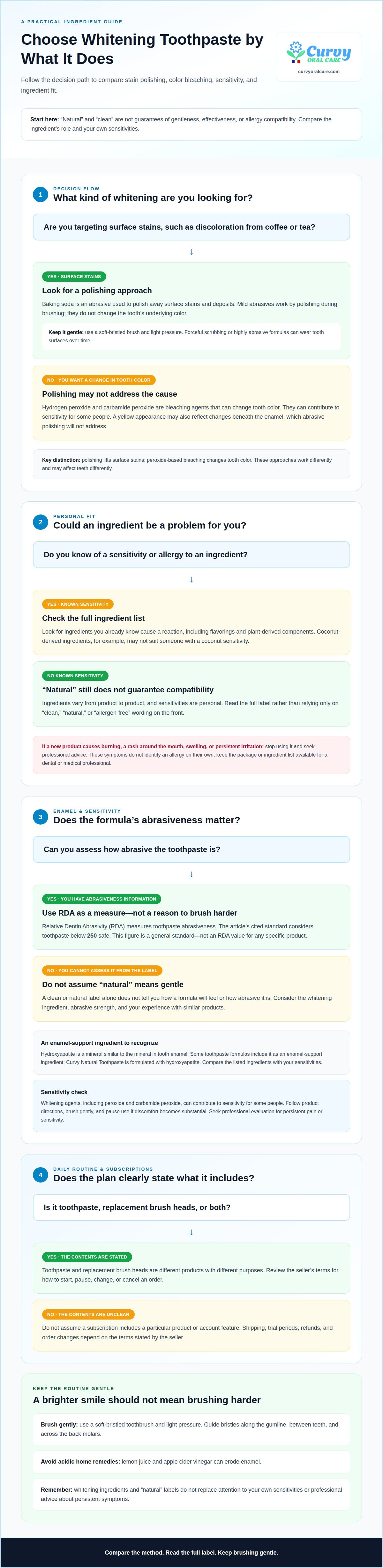
Mild abrasives are particles that polish away surface deposits during brushing. Their strength matters because forceful scrubbing or highly abrasive formulas can wear tooth surfaces over time. Relative Dentin Abrasivity, or RDA, measures toothpaste abrasiveness; toothpaste below 250 is considered safe by the cited standard. Whitening formulas may use abrasives to lift surface stains, but a brighter surface doesn’t justify aggressive brushing.
Baking soda is one ingredient used to polish surface stains. Use a soft-bristled brush and gentle pressure rather than pressing harder to chase stains. Coffee and tea can leave visible discoloration, but brushing technique still matters: guide the bristles along the gumline and across the back molars. This helps clean beyond the front teeth without relying on force.
Enamel Safety and Tooth Sensitivity
Tooth sensitivity is discomfort triggered by things such as temperature or brushing. Whitening agents, including peroxide and carbamide peroxide, can contribute to sensitivity for some people. A “clean” label alone can’t predict how a formula will feel. Consider its active whitening ingredient, abrasiveness, and your past experience with similar products.
Fluoride appears in toothpaste as sodium fluoride, sodium monofluorophosphate, or stannous fluoride, and is used to strengthen enamel. This article doesn’t recommend fluoride toothpaste. When comparing fluoride-free options, consider the rest of the formula too, including whitening agents and abrasives. The label can distinguish stain-polishing formulas from those using peroxide to bleach tooth color.
Nano-hydroxyapatite is a finely sized form of hydroxyapatite, a mineral similar to the mineral in tooth enamel. Some toothpaste formulas include it as an enamel-support ingredient. Curvy Natural Toothpaste is formulated with hydroxyapatite; its ingredient profile appears in the hydroxyapatite toothpaste details. Compare listed ingredients with your sensitivities rather than treating “natural” as a guarantee of compatibility.
Oral health is part of overall health, and gum inflammation is one reason researchers study links between oral conditions and the rest of the body. An association between conditions doesn’t prove that one causes the other. Cleaning along the gumline and between teeth supports oral care; discuss personal health concerns with a healthcare professional.
After using whitening toothpaste, pay attention to sensitivity rather than increasing brushing pressure. Some toothpastes polish away surface stains, while peroxide agents bleach tooth color. These approaches affect teeth differently, and repeated whitening may make sensitivity more noticeable. Follow the product directions, brush gently, and pause use if discomfort becomes substantial. Seek professional evaluation for persistent pain or sensitivity.
For an enamel-conscious routine, brush gently with a soft-bristled toothbrush, reaching the gumline, spaces between teeth, and back molars. Avoid acidic home remedies such as lemon juice or apple cider vinegar, which can erode enamel. A yellow appearance can also reflect changes beneath the enamel, so abrasive polishing won’t address every cause of discoloration. Choose ingredients according to the kind of stain you’re addressing.
Clean and allergen-free toothpaste ingredients
“Clean” and “allergen-free” don’t guarantee that a toothpaste will suit everyone. Ingredients vary, and sensitivities are personal. Someone who reacts to a flavoring, for example, may tolerate baking soda or hydroxyapatite, while another person may be irritated by a different component. Read the full ingredient list, not just the front-label claims.
Knowing what ingredients do makes the label easier to understand. Baking soda is an abrasive that polishes surface stains, while hydrogen peroxide is a bleaching agent that can change tooth color. Coconut oil contains lauric acid, which can break down bacteria. These ingredients have different roles, so one doesn’t automatically replace another or suit every dental concern.
Review a product’s label carefully before using a new formula. Look for ingredients you already know cause a reaction, including flavorings and plant-derived ingredients. If a product lists coconut oil, for example, consider whether coconut is a known sensitivity for you. “Natural” doesn’t reflect your allergy history or guarantee against irritation.
Pay attention to changes after trying a new toothpaste. If brushing causes burning, a rash around the mouth, swelling, or persistent irritation, stop using the product and seek professional advice. These symptoms don’t identify an allergy on their own, but they’re a reason not to repeat exposure without guidance. Keep the package or ingredient list available for a dental or medical professional.
Toothpaste subscriptions don’t follow one universal set of account steps. Read the seller’s terms to find out how to start, pause, change, or cancel an order. Shipping, trial periods, and refunds also depend on the stated terms, so review them before enrolling. A subscription label alone promises none of these features.
Keep your routine simple while assessing a formula. Use toothpaste as directed, brush gently, and avoid adding separate whitening agents until you know how the product feels. Hydrogen peroxide, carbamide peroxide, and abrasives can affect teeth differently. If you notice new sensitivity or irritation, don’t scrub harder: forceful brushing can damage tooth surfaces and irritate gums.
For a clearer comparison, note the ingredient that concerns you, its listed name, and the reaction you’ve experienced. This can help distinguish a known personal trigger from an unfamiliar ingredient. Curvy Natural Toothpaste contains hydroxyapatite, and its ingredient list is a useful example of why it’s worth checking a formula ingredient by ingredient instead of relying on “clean” wording alone.
If you want toothpaste alongside a travel case in one oral-care set, explore the sonic toothbrush, toothpaste, and travel case combo. For any toothpaste, ingredient transparency and your own response matter more than a broad label claim.
Comparing toothpaste ingredients and label claims
Compare toothpaste by its active ingredients and intended effect, not just by “natural” or “whitening” claims. Some formulas polish away surface stains; others use bleaching agents to change tooth color. The ingredient list shows what the formula contains, while the directions explain how it’s meant to be used. A dentist can help you weigh those details against your oral-health needs.
Check the role of each ingredient. Glycerol helps toothpaste retain moisture and maintain a consistent texture, but it doesn’t whiten teeth. Baking soda can help remove stains with continued use. Carbamide peroxide breaks down into hydrogen peroxide, a bleaching agent that works differently from ingredients that lift deposits from the tooth surface. These functions differ, even when products make similar whitening claims.
Timeframes can also help distinguish claims. Toothpaste with baking soda can help remove tooth stains after four weeks of use. Carbamide peroxide may whiten faster than hydrogen peroxide during the first two weeks, while results from both were the same after 12 weeks of use. Whitening toothpaste can help with surface stains, but deeper discoloration may need a different approach.
- For surface stains: Look for polishing ingredients such as baking soda, and follow the label directions.
- For bleaching: Check whether the formula contains hydrogen peroxide or carbamide peroxide.
- For sensitivity: Potassium nitrate is used to help reduce tooth sensitivity.
- For texture: Glycerol supports consistency, but doesn’t provide whitening action.
Whitening toothpaste contains a lower concentration of hydrogen peroxide than whitening pens, gels, or strips. The American Dental Association says it has approved the small amount of hydrogen peroxide in adult toothpaste for regular use. That doesn’t mean every formula is right for everyone. Follow the product’s directions and stop using it if substantial sensitivity develops.
The American Dental Association recommends choosing toothpaste brands that have earned its ADA Seal of Approval where possible. Treat the seal as one comparison point, not a substitute for reading ingredient lists or considering personal sensitivities. The label can clarify whether a formula targets surface stains, uses bleaching, or includes an ingredient such as potassium nitrate.
Subscription plans can differ in delivery frequency, quantity, and discounts. Compare the stated shipment schedule and amount with your household’s toothpaste use, then read the terms for any discount. Don’t assume one subscription offers the same quantity or savings as another.
Ingredients to avoid in whitening toothpaste
“Whitening” describes a goal, not one formula or level of risk. Check the ingredient list for charcoal, microplastics, peroxide, and baking soda, then consider their roles. Some ingredients polish surface stains; others bleach tooth color. This distinction matters because abrasives and bleaching agents affect teeth differently. Labels help with comparisons, but they can’t predict everyone’s response.
Where possible, look for toothpaste that has earned the American Dental Association Seal of Approval. The Seal is a useful comparison point, but it doesn’t mean every product suits every person. Read the label for whitening ingredients and directions, especially if you have sensitive teeth or existing dental concerns. A dentist can help interpret the details for your needs.
Charcoal, peroxide, and baking soda have different considerations. Charcoal and microplastics may be highly abrasive and can cause lasting tooth damage. Peroxide can bleach stains on enamel, but may also cause sensitivity in teeth and gums. Baking soda can help remove stains after four weeks of use; the available facts don’t identify it as carrying the same risks as charcoal.
Charcoal’s dark color doesn’t make it a more effective or gentler whitening option. Abrasive particles can wear tooth surfaces, particularly if you brush with heavy pressure. If a formula lists charcoal, consider its potential for abrasion before using it to target stains. A soft-bristled brush and gentle technique help avoid adding unnecessary force to your routine.
Consider peroxide formulas carefully if brushing already triggers sensitivity. Hydrogen peroxide changes tooth color by bleaching stains rather than simply polishing deposits from the surface. Whitening toothpaste contains less hydrogen peroxide than whitening pens, gels, or strips, but sensitivity can still occur. Follow the product’s directions and don’t use it more often than the label recommends.
Baking soda offers a different approach: it can polish away surface discoloration over time. It may help with stains from food and drinks, but won’t necessarily change deeper discoloration. Don’t pair any whitening formula with hard scrubbing. Brush gently along the gumline, between teeth, and around the back molars.
Existing dental work matters, too. If you have crowns or fillings, speak with a dentist before using whitening products. Whitening may not change the color of restorations as it does natural teeth. If a formula causes major sensitivity, stop using it until symptoms improve. Seek professional evaluation for persistent pain or irritation.
Match the ingredients to the problem. For surface stains, consider whether a polishing ingredient fits your needs. For bleaching, review the peroxide type and directions. If you have sensitive teeth, consider past reactions and avoid ingredients that have caused discomfort. Careful selection can help prevent an avoidable mismatch without relying on “natural” or “clean” claims alone.
Which clean-ingredient whitening toothpastes are available by subscription in the US?
A toothpaste subscription describes how a product is delivered, not what its ingredients do. In the US, compare each seller’s product listing and subscription terms separately. Look for the full ingredient list, whitening method, and delivery details. Recurring shipments don’t make a formula cleaner, safer for sensitive teeth, or more effective against every kind of discoloration. A clean ingredient whitening toothpaste subscription still needs to match your ingredient preferences and oral-care goals.
Start with your whitening goal. Baking soda toothpaste can help remove tooth stains after four weeks of use, while peroxide ingredients bleach stains rather than simply polishing them away. These approaches address different concerns. A product marketed as “natural whitening” may focus on surface stain removal, so check the ingredients to understand its method.
Next, review the full formula for ingredients that matter to you. Coconut oil, for example, contains lauric acid, which can break down bacteria. That’s a different function from whitening. If you’re avoiding an ingredient because of a sensitivity or allergy, search the full ingredient list for its name and related forms rather than relying on front-label claims.
Subscription listings should clearly describe the delivery arrangement. Compare shipment frequency, quantity per order, and any stated discount before choosing. Then consider how quickly your household uses toothpaste and whether the delivery amount fits that routine. Don’t assume a toothpaste subscription includes replacement brush heads or that a brush-head plan includes toothpaste.
Check whether the product is actually identified as a whitening toothpaste. A toothpaste containing hydroxyapatite or xylitol may be positioned around other oral-care goals, but those ingredients alone don’t establish a whitening effect. Look for a clearly identified whitening ingredient and directions. The label should help distinguish a stain-polishing formula from one that uses bleaching agents.
Ingredient transparency matters more than broad claims such as “clean,” “natural,” or “whitening.” Check for charcoal and microplastics, which may be highly abrasive and can cause lasting tooth damage. If peroxide is listed, note that whitening toothpaste contains a lower concentration than whitening pens, gels, or strips. Use the product only as directed, especially if sensitivity develops.
Before choosing a clean ingredient whitening toothpaste subscription, review the seller’s terms for starting, changing, pausing, or cancelling shipments. Shipping, trials, and refunds depend on the stated terms, so don’t treat them as standard subscription features. Compare the formula, quantity, delivery schedule, and terms together to choose a recurring delivery that fits your routine.
If you prefer a coordinated oral-care set rather than a toothpaste subscription, explore the sonic toothbrush, toothpaste, and travel case combo. Compare its included items with your needs, then choose a whitening formula based on its ingredients and stated purpose.
Subscription terms vary by seller. Compare how often shipments arrive, how much toothpaste each order contains, and any stated discount. Choose a quantity and schedule that fit your household’s toothpaste use.
Curvy Oral Care: Brush Head Subscriptions
Curvy Oral Care offers brush head subscriptions for people who want replacement brush heads as part of their oral-care routine. This is separate from a toothpaste subscription. Curvy also offers toothpaste and sonic toothbrushes, so you can consider each product for its specific role: replacement heads support your brushing routine, while toothpaste determines which formula you use.
Choose a brush that helps you reach the gumline, back molars, and other difficult spots, then pair it with toothpaste suited to your preferences. Curvy’s angled toothbrushes are designed to help access areas that can be harder to reach with a conventional straight brush. For questions about Curvy Oral Care’s toothpaste or brush head options, contact Curvy Oral Care.
Make your next oral-care choice a practical one
A product label is useful when it helps you choose a routine you’ll maintain. Before your next order, decide what matters most: the whitening method, ingredient preferences, or convenient replenishment. A clean ingredient whitening toothpaste subscription may fit a regular routine, but review its terms and formula before enrolling.
Keep the rest of your daily care in view, too. Brush gently along the gumline, clean between teeth, and reach the back molars. Curvy Oral Care offers sonic toothbrushes, replacement brush heads, and brush head subscriptions to support these everyday habits. Toothpaste and a toothbrush have different roles, so choose each for its purpose.
If you’re looking for a coordinated option, explore the sonic toothbrush, toothpaste, and travel case set. Take the next step that fits your routine, and keep building healthy habits one brush at a time.
Frequently Asked Questions
What does “natural whitening” mean?
“Natural whitening” usually describes formulas that use ingredients such as baking soda to polish surface discoloration rather than peroxide to bleach teeth. The phrase doesn’t identify a specific ingredient or guarantee how a product will feel. Compare the full ingredient list and directions, then consider whether you want to address everyday surface stains or a deeper change in tooth color.
Does a whitening toothpaste work any differently from a regular one?
Yes. Whitening formulas may include ingredients that polish away stains or bleach tooth color. Regular toothpaste can clean teeth and remove plaque without making whitening its main purpose. Check the active ingredients and directions to understand what the formula is designed to do. If you want a brighter smile, first distinguish surface staining from discoloration that isn’t on the tooth surface.
Is there a peroxide-free whitening toothpaste?
Yes. A peroxide-free formula can use polishing ingredients such as baking soda to help remove surface stains without bleaching tooth color. If you’re avoiding peroxide, check the ingredient list for hydrogen peroxide and carbamide peroxide. Also review the abrasives and directions: peroxide-free doesn’t automatically mean suitable for everyone or every sensitivity concern.
What ingredients should you look for in whitening toothpastes?
Match ingredients to your goal. Baking soda can polish surface stains, while hydrogen peroxide and carbamide peroxide are bleaching agents. Potassium nitrate is used to help reduce tooth sensitivity. Glycerol keeps toothpaste moist and consistent but doesn’t whiten. Read the full label, since formulas may combine ingredients with different functions, and follow the directions instead of using extra toothpaste for faster results.
What is silica doing in a whitening toothpaste?
Hydrated silica is an abrasive used to polish tooth surfaces and help lift deposits during brushing. Its presence alone doesn’t show how abrasive the finished toothpaste is; the full formula and brushing pressure matter, too. For example, brush gently with a soft-bristled toothbrush rather than pressing harder to remove a stubborn stain. Check the product directions if you’re unsure how often to use it.
What ingredients qualify as clean in whitening toothpaste?
“Clean” doesn’t identify a specific whitening ingredient. Decide what the term means for you, such as avoiding an ingredient you’re sensitive to or choosing a formula without peroxide. Then check the complete label, including flavorings and abrasives. A toothpaste may use baking soda to polish surface stains, for example, but that doesn’t establish whether every other ingredient suits you.
Which whitening toothpaste ingredients effectively remove surface stains?
Baking soda can help remove surface stains with continued use, while abrasives such as hydrated silica polish deposits during brushing. Peroxide works differently: it bleaches stains rather than simply polishing them from the surface. Coffee or tea discoloration may respond differently from deeper changes in tooth color. Choose a formula for the type of discoloration and follow its directions.
Health & Medical Disclaimer: This content is for educational purposes only and isn’t a substitute for professional dental or medical advice, diagnosis, or treatment. Consult a qualified dental or healthcare professional about personal health concerns. Seek professional evaluation for persistent pain, bleeding, swelling, or other significant changes in oral health.

Article by
Aline Peixe Nebot
Aline Peixe Nebot is a Veterinarian and passionate advocate for better oral health, committed to raising awareness of oral health as a matter of public health. She actively promotes the importance of simple, effective oral care routines and works to educate the public about the often-overlooked link between oral health and overall systemic health. Her mission is to make better oral care knowledge accessible to everyone and encourage healthier habits for life.
Disclaimer
Disclaimer: The information provided in this article is intended for general educational and informational purposes only. It is not intended to replace professional medical, dental, or healthcare advice, diagnosis, or treatment.
Some content may be AI-assisted and is provided to support health education and awareness. While we strive to share accurate and up-to-date information, health recommendations and scientific evidence can evolve, and the information presented may not apply to every individual.
The connection between oral health and overall systemic health is an important and developing area of research. Associations discussed in this article should not necessarily be interpreted as proof of cause and effect.
Always consult a qualified dentist, physician, or other healthcare professional regarding your individual health, symptoms, medications, or treatment decisions. Do not delay or discontinue professional care based on information presented in this article.
This content is for education and awareness—not diagnosis or treatment.