

Best Way to Brush Back Teeth: Reaching the Danger Zone for Total Oral Health
The back of your mouth is a curve, not a line. Reaching it effectively requires an evolution in toothbrush geometry rather than just more pressure. It's a common frustration for many who spend the recommended two full minutes at the sink, only to find their back molars still feel fuzzy or their gums bleed when they try to navigate a bulky brush head into tight corners. You aren't alone in feeling like your current tools aren't quite up to the task of reaching those hidden areas.
Finding the best way to brush back teeth shouldn't feel like a tactical mission. We're here to bridge the gap between traditional habits and modern, science-backed precision. You'll discover the specific techniques and tools needed to eliminate plaque in the hardest-to-reach areas for better long-term wellness. Research suggests that maintaining a clean gumline in these "danger zones" is associated with better overall health, making this small change a vital part of your daily routine. We will break down the 45-degree angle technique, the importance of angled access, and a simple, repeatable routine that leaves your whole mouth feeling truly clean.
Key Takeaways
- Identify why the "molar gap" makes back teeth a danger zone for plaque and how traditional straight brushes often fail to reach these critical areas.
- Master the best way to brush back teeth using the Relaxed Jaw technique to create the necessary space for a thorough, effective clean.
- Transition from manual scrubbing to sonic technology that disrupts stubborn biofilm at the gumline without causing irritation or recession.
- Learn how angled toothbrush geometry provides the precision needed to navigate the curves of your mouth where straight handles hit a physical wall.
- Understand the vital connection between consistent gum health in hard-to-reach spots and your long-term systemic well-being.
Why Your Back Teeth Are the Danger Zone for Oral Health
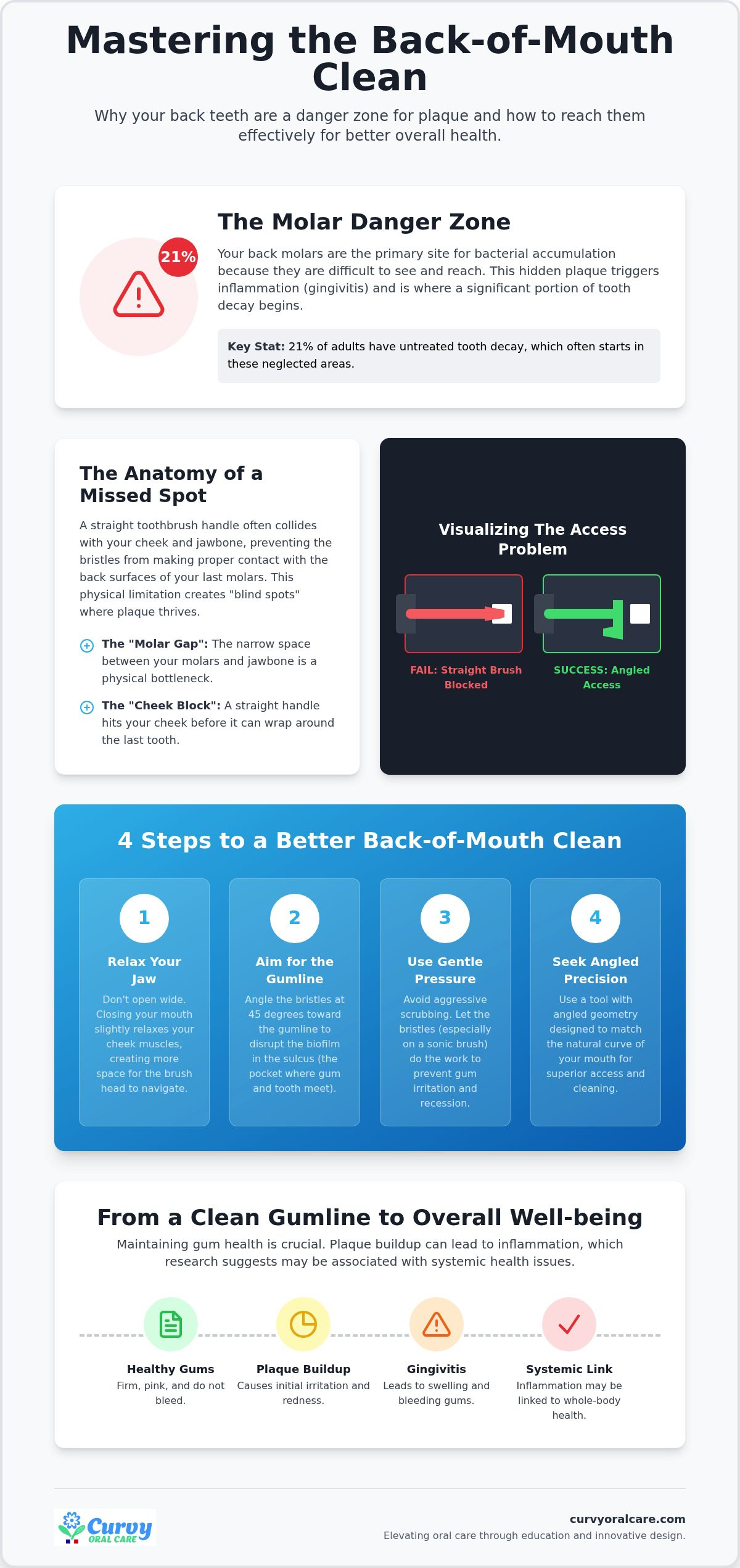
The back of your mouth is a hidden ecosystem where plaque thrives undisturbed. While the front of your smile gets the most attention, your back molars are the primary site for bacterial accumulation. This happens because these teeth are difficult to see and even harder to reach. When plaque sits along the gumline at the back of the mouth, it triggers a silent inflammatory response. This inflammation can lead to gingivitis, the early stage of gum disease, if you don't manage it daily. Keeping this "back door" clean is essential for your overall well-being. Data from 2026 shows that 21% of adults have untreated tooth decay, which often begins in these neglected zones.
The Oral-Systemic Health Connection
Your mouth is the gateway to your entire body. Research suggests that the health of your gums may be linked to your general wellness. When gum tissues are chronically inflamed, oral bacteria can enter the bloodstream through microscopic openings in the tissue. Studies have found an association between chronic gum inflammation and various systemic health issues. Taking a proactive approach to your daily routine is the proper tooth brushing technique for supporting whole-body health. Prevention is always more effective and less invasive than treating advanced periodontal issues after they develop.
Why Traditional Brushing Fails the Molars
Standard oral care often hits a physical wall. Your cheeks, jawbone, and even a sensitive gag reflex create barriers that make it nearly impossible for a straight brush to navigate. Most people rely on a "feeling" of cleanliness, but feeling smooth isn't the same as being clinically plaque-free. These blind spots are where the majority of dental problems begin. Finding the best way to brush back teeth requires acknowledging that your current tools might be forcing you to miss the most vulnerable areas of your mouth.
A standard twice-daily routine often leaves these zones untouched. You might think you've cleaned every surface, yet plaque continues to mineralize into tartar in the back. This buildup occurs in the narrow spaces between your teeth and the back of your jaw. It's a physical limitation of traditional design, not a lack of effort on your part. Identifying these gaps is the first step toward a more effective, holistic oral care strategy. Mastering the best way to brush back teeth means evolving your technique to match the actual geometry of your mouth.
The Anatomy of a Missed Spot: Why Straight Brushes Struggle
The "molar gap" represents a significant physical bottleneck in your oral care routine. This is the narrow space between your back molars and the ascending branch of your jawbone. Most people assume a straight brush can navigate this area easily. It can't. The straight handle of a standard brush forces the head to hit your cheek before it reaches the back-most tooth. This collision prevents the bristles from making full contact with the tooth surface. When plaque biofilm remains undisturbed in these tight corners, it quickly mineralizes into tartar. This hard substance acts as a foundation for further bacterial growth and cannot be removed by simple brushing alone.
The Geometry of the Jaw
The mechanics of your jawbone are often misunderstood. A common mistake is opening your mouth as wide as possible to reach the back. This action actually moves the Coronoid Process forward. This bony part of the jaw narrows the gap between your teeth and your cheek. Closing your mouth slightly creates more room for a toothbrush to reach the back molars. It relaxes the facial muscles and allows for better maneuverability. A straight brush head often skips the distal surface of the last molar because it lacks the necessary angle to wrap around the tooth. This physical limitation is why finding the best way to brush back teeth is so difficult with traditional tools. Understanding this anatomy helps you realize that the struggle isn't your fault; it's a design failure.
Plaque Accumulation and the Gumline
The back of the mouth is a perfect breeding ground for bacteria that prefer low-oxygen environments. These microbes settle into the sulcus. This is the shallow pocket where the tooth and gum tissue meet. To effectively disrupt this biofilm, you must follow American Dental Association guidelines by angling your bristles at 45 degrees toward the gumline. If you miss this area, inflammation follows a predictable path:
- Healthy gums appear firm and pink.
- Plaque buildup causes irritation and redness.
- Gingivitis leads to swelling and frequent bleeding.
- Untreated inflammation can eventually compromise the bone structure.
Effective cleaning requires a gentle, precise touch rather than aggressive scrubbing. Using the best way to brush back teeth involves adapting to these curves rather than fighting them. If you're struggling with traditional designs, an angled sonic toothbrush can provide the necessary geometry to reach these hidden zones safely and effectively.
Comparing Techniques: Manual vs. Sonic vs. Angled
Choosing the right tool is just as important as the motion you use. A manual brush requires significant manual dexterity to navigate the curves of the jaw. Most people struggle to maintain consistent pressure when their hand is at an awkward angle. This often leads to over-brushing the front teeth while neglecting the back molars. The proper brushing technique demands precision that manual handles simply don't provide for most users. It's a mechanical limitation that even the most diligent brushers can't always overcome.
Sonic technology changes the equation. Instead of relying on physical friction, high-frequency vibrations disrupt the biofilm that clings to your enamel. This creates a more thorough clean without the need for aggressive scrubbing that can damage sensitive gum tissue. For those concerned about radiation in their daily routine, a low-radiation, EMF-free electronic option offers a modern, health-conscious solution. You can find more details in our EMF-free sonic toothbrush guide.
The Role of Sonic Vibrations
Sonic energy doesn't just clean where the bristles touch. It creates "non-contact" cleaning through fluid dynamics. The rapid vibrations agitate the liquids in your mouth, such as saliva and water, sending them into the narrow gaps between teeth and under the gumline. This process is much more effective than the friction-based cleaning of manual or oscillating brushes. It allows you to reach deep into the sulcus where bacteria hide, even when the brush head isn't perfectly positioned. This vibrational energy is a key component of the best way to brush back teeth effectively.
Manual Angled vs. Straight Brushes
The best way to brush back teeth involves more than just a vibrating head; it requires the right geometry. A standard straight handle forces your hand into a position that limits your reach. In contrast, an ergonomic angled handle allows the brush head to wrap around the back of the molars effortlessly. Dentists often recommend a specific "tilt" to reach the inner surfaces of the lower teeth, but a straight brush makes this physically difficult. It's a struggle against your own anatomy.
At Curvy Oral Care, we believe tools should adapt to the human mouth, not the other way around. A tilted head allows for a natural 45-degree placement against the gumline without requiring you to contort your wrist. This design ensures that every surface, even the distal side of your wisdom teeth, receives the same level of care as your front smile. By combining sonic power with angled precision, you eliminate the guesswork and physical barriers that lead to plaque accumulation.
Step-by-Step Guide to Mastering the Back-of-Mouth Clean
The best way to brush back teeth requires a shift from aggressive scrubbing to intentional positioning. Your first step is the Relaxed Jaw technique. Instead of opening wide, keep your mouth slightly closed. This simple adjustment loosens your cheek muscles and creates the room your brush head needs to move. Once you've created space, position the bristles at a 45-degree angle toward the gumline. This is the foundation of effective plaque removal in the high-risk zones of your mouth.
Don't rush the process. Use the Slow Scan method by letting the sonic vibrations do the work on each tooth surface for several seconds before moving to the next. Gliding the brush head slowly allows the high-frequency energy to break apart the biofilm effectively. Finally, target the Hidden Wall. This is the very back surface of your final molar. It's a common place for tartar to form because most people stop at the side of the tooth. Wrap the brush head around that back corner to ensure a total clean. Pause here for an extra moment to let the bristles reach every crevice.
The 45-Degree Angle Technique
The Modified Bass Technique is the gold standard for preventative care. It involves tilting the brush head so the bristles reach slightly under the gumline. You should feel the bristles just touching the tissue without applying heavy pressure. The sulcus is the critical area where plaque hides and inflammation starts. By maintaining this precise angle, you disrupt the bacterial colonies that lead to gum recession and bone loss. It's about precision; not force.
Cleaning the Tongue and Inner Surfaces
The tongue-side of your back teeth is a high-tartar zone. Saliva often pools in these lower areas, which contributes to faster mineralization of plaque into hard tartar. Navigating these inner surfaces can be tricky if you have a sensitive gag reflex. Try breathing through your nose or tucking your chin slightly to reduce the urge to gag. Remember that total oral care also includes cleaning the tongue surface to reduce the total bacterial load in your mouth. A cleaner tongue means fewer bacteria are available to migrate back to your molars.
If you find it difficult to maintain these angles with a standard handle, you can simplify your daily routine. You can upgrade to an angled sonic toothbrush to reach those hidden zones with ease and ensure a professional-level clean every day.
Elevating Your Routine with Angled Precision
Traditional brushes often force you to fight your own anatomy. The Y Angled Sonic Toothbrush resolves this conflict through intentional design. It serves as the primary tool for mastering the best way to brush back teeth because it eliminates the physical reach problem once and for all. Beyond simple access, the EMF-free technology supports a holistic, non-toxic lifestyle. This ensures your daily routine contributes to your whole-body wellness without unnecessary radiation exposure. It's a modern solution for those who prioritize both efficacy and long-term health safety.
Consistency is the final piece of the preventative puzzle. Even the most advanced technology loses its edge if the bristles are worn or frayed. Research shows that toothbrush heads should be replaced every three to four months to maintain peak plaque removal performance. Frayed bristles are less effective at reaching into the sulcus and can harbor unwanted bacteria. By keeping your tools fresh, you ensure that every two-minute session delivers the maximum benefit to your gum health and systemic well-being.
The Curvy Advantage
The ergonomic handle of the Y Angled brush naturally guides your hand to the correct 45-degree angle. You no longer need to guess if you're reaching the gumline; the tool does the positioning for you. Soft, precision bristles are specifically chosen to be gentle on the sensitive back gums while remaining firm enough to disrupt stubborn biofilm. We act as a mentor in your journey toward better oral health, providing a science-backed evolution in a stagnant industry. This design doesn't just clean teeth; it empowers you to maintain a professional level of care at home.
Building a Sustainable Habit
Small daily actions create the foundation for a healthier life. Managing your routine is easier with a brush head subscription, ensuring you never use a worn-out tool that compromises your results. While an effective home routine is vital, it works best when paired with regular dental checkups. Professional cleanings can remove any mineralized tartar that may have formed in those hard-to-see areas despite your best efforts. Research suggests that maintaining healthy gums is associated with better overall health outcomes, making your commitment to these "danger zones" a vital investment.
A cleaner mouth leads to a more vibrant quality of life. By adopting the best way to brush back teeth and utilizing tools that match your mouth's geometry, you take a proactive step toward total wellness. The relief of a truly clean feeling across all your teeth is just the beginning. Long-term prevention is the goal, and with the right angled precision, that goal is finally within reach. Embrace this evolution in your daily habits and experience the satisfaction of a healthier, more confident smile.
Master Your Long-Term Oral Health
The back of your mouth shouldn't be a mystery or a source of frustration. You now understand that the physical limitations of straight brushes often leave your most vulnerable teeth at risk. By relaxing your jaw and utilizing a precise 45-degree angle, you can finally disrupt the plaque biofilm that hides in the sulcus. Mastering the best way to brush back teeth is a simple but powerful evolution in your daily routine that supports your systemic well-being.
Small changes in your tools lead to massive gains in prevention. Our patented angled design reaches the areas where traditional brushes fail, providing superior plaque removal for healthier gums. You can enjoy total peace of mind with our EMF-free technology, ensuring your high-tech routine remains non-toxic and safe for daily use. Upgrade to the Y Angled Sonic Toothbrush for a deeper, safer clean and experience the satisfaction of a truly comprehensive routine. Your future self will thank you for the proactive care you start today.
Frequently Asked Questions
How do I know if I am missing spots on my back teeth?
You can identify missed spots by running your tongue over your molars after brushing. If the surface feels fuzzy or rough rather than smooth like glass, plaque biofilm is still present. Disclosing tablets are another effective tool as they stain remaining plaque a bright color for easy visibility. Persistent bleeding or localized bad breath often signals that your current routine isn't reaching these critical danger zones effectively.
Is it better to use a small or large toothbrush head for molars?
A smaller toothbrush head is far superior for cleaning molars because it maneuvers easily in the narrow space between your teeth and jawbone. Large brush heads often collide with the cheek, preventing the bristles from reaching the very back of the mouth. A compact, angled head provides the precision required to wrap around the distal surface of the last molar and maintain a 45-degree angle against the gumline.
Why do my gums bleed only at the back when I brush?
Bleeding gums at the back of the mouth typically indicate gingivitis. This is inflammation caused by undisturbed plaque. Because these areas are physically difficult to access, bacteria thrive in the low-oxygen environment of the sulcus. This bleeding is your body's response to infection. It's a clear sign that you need to adjust your technique or tools to ensure you're effectively disrupting the biofilm in these neglected areas.
Can an angled toothbrush really prevent cavities in the back?
Yes, an angled toothbrush is a powerful tool for prevention. It provides the necessary geometry to reach surfaces that straight brushes often miss. By effectively disrupting biofilm in these areas, you reduce the acid production that leads to enamel decay. It's the best way to brush back teeth for those who struggle with the physical limitations of traditional straight-handled brushes.
What is the best way to reach behind wisdom teeth?
Reaching behind wisdom teeth requires creating space by slightly closing your mouth to relax the cheek muscles. This allows you to slide a small, angled brush head into the tightest corners of your jaw. The tilted design is essential here, as it can hook around the back of the last tooth to clean the "hidden wall" where plaque often mineralizes into tartar due to lack of access.
How often should I replace my sonic toothbrush head for maximum effectiveness?
Replace your sonic toothbrush head every three to four months to ensure peak performance. Over time, bristles become frayed and lose their ability to vibrate at the necessary frequency to disrupt plaque. Worn bristles can also become abrasive to your gum tissue. A fresh head is vital for maintaining the fluid dynamics that provide the deep, non-contact clean necessary for reaching the danger zones at the back of your mouth.
Does a sonic toothbrush help with plaque more than a manual one?
A sonic toothbrush is generally more effective than a manual one because it produces thousands of strokes per minute. These vibrations create a cleaning action that extends beyond where the bristles actually touch. It reaches deep into the gumline. While manual brushing depends entirely on your dexterity, sonic technology provides a consistent, high-energy clean that is much more effective at disrupting stubborn biofilm.
Can I use an angled brush if I have a small mouth or tight jaw?
Using an angled brush is the best way to brush back teeth if you have a small mouth or limited jaw mobility. The tilted head allows you to reach the back molars without opening your mouth as wide, which keeps your cheek muscles relaxed and out of the way. It provides the necessary geometry to navigate narrow gaps that straight brushes simply can't enter, making your daily routine much more comfortable.

Article by
Aline Peixe Nebot
Aline Peixe Nebot is a Veterinarian and passionate advocate for better oral health, committed to raising awareness of oral health as a matter of public health. She actively promotes the importance of simple, effective oral care routines and works to educate the public about the often-overlooked link between oral health and overall systemic health. Her mission is to make better oral care knowledge accessible to everyone and encourage healthier habits for life.
Disclaimer
Disclaimer: The information provided in this article is intended for general educational and informational purposes only. It is not intended to replace professional medical, dental, or healthcare advice, diagnosis, or treatment.
Some content may be AI-assisted and is provided to support health education and awareness. While we strive to share accurate and up-to-date information, health recommendations and scientific evidence can evolve, and the information presented may not apply to every individual.
The connection between oral health and overall systemic health is an important and developing area of research. Associations discussed in this article should not necessarily be interpreted as proof of cause and effect.
Always consult a qualified dentist, physician, or other healthcare professional regarding your individual health, symptoms, medications, or treatment decisions. Do not delay or discontinue professional care based on information presented in this article.
This content is for education and awareness—not diagnosis or treatment.