
Best Toothbrush for Crowded Teeth: Precision Plaque Removal
A standard straight toothbrush is fundamentally ill-equipped to clean a mouth with dental crowding. If you struggle with bleeding gums when you floss or feel like you can never quite reach the plaque in those tight, V-shaped gaps, you aren't alone. Finding the best toothbrush for crowded teeth is about more than just picking a brand. It's about selecting a tool that respects the complex geometry of your mouth. You likely already know that traditional brushing often leaves your back molars feeling fuzzy and your gums sensitive despite your best efforts.
In this guide, you'll discover why the specific angle of your toothbrush is the missing link to protecting your long-term gum health and achieving a clean-mouth feeling that actually lasts. We'll explore how precision plaque removal can reduce inflammation and why research suggests that a healthy mouth is a cornerstone of your overall well-being. From understanding the oral-systemic connection to mastering a simple routine for overlapping teeth, we're going to show you how to turn your daily habit into a proactive health strategy that works with your unique smile.
Key Takeaways
- Understand why standard straight toothbrushes often miss the tight, V-shaped gaps where plaque tends to accumulate in crowded mouths.
- Discover why choosing the best toothbrush for crowded teeth is a vital step in managing oral biofilm and protecting your systemic well-being.
- Learn the importance of high-frequency sonic vibrations and soft bristles for disrupting plaque without causing damage to your enamel or gums.
- Master the 45-degree brushing technique to effectively clean along the gumline and reach hidden areas around your back molars.
- Explore how a patented angled brush head design provides the precision needed to navigate complex dental alignments and improve your daily routine.
Why Crowded Teeth Require a Specialized Approach to Cleaning
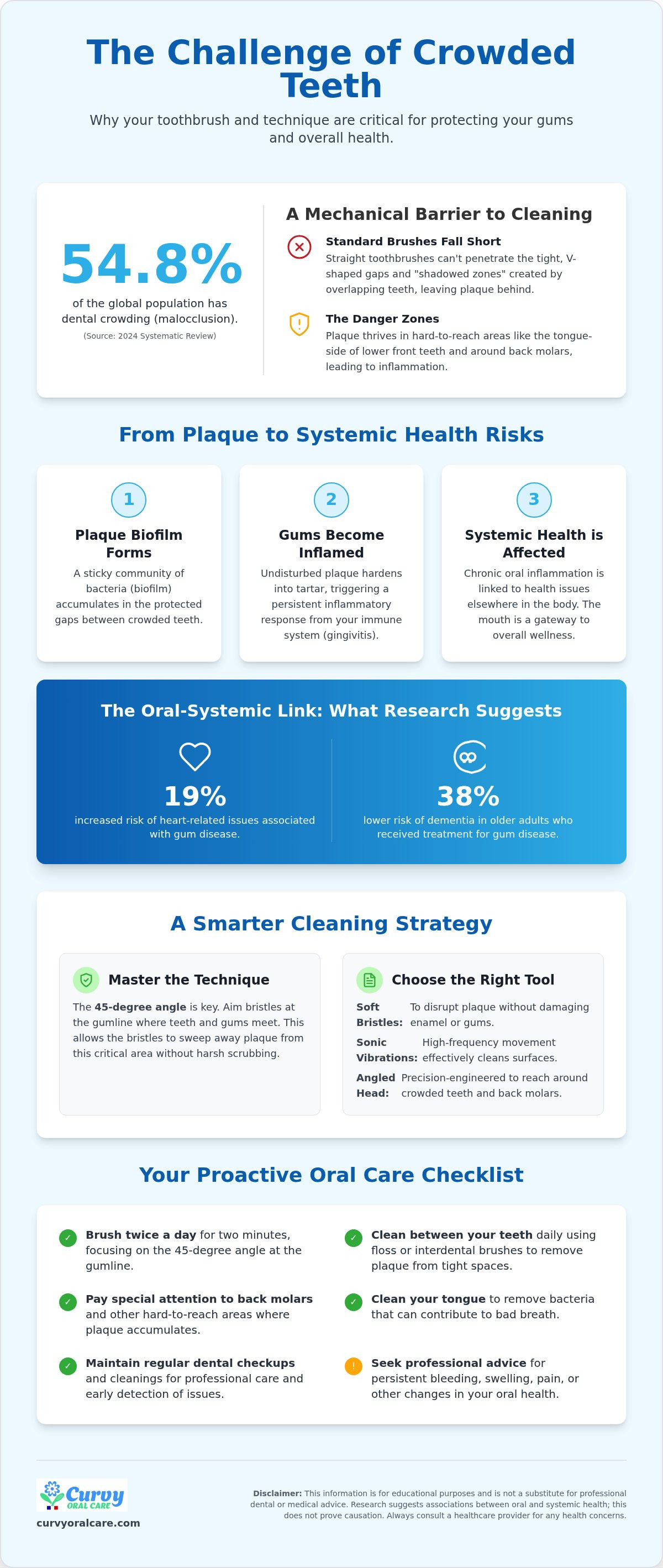
Dental crowding, known professionally as malocclusion, affects a staggering 54.83% of the global population according to a 2024 systematic review. It's more than just a cosmetic concern; it's a significant mechanical barrier to effective hygiene. When teeth overlap or twist, they create tight, V-shaped gaps that standard brushes simply can't penetrate. While the history of the toothbrush shows centuries of straight-handled designs, these traditional tools often skip the most critical areas where bacteria thrive. Finding the best toothbrush for crowded teeth requires a shift in perspective. It isn't about raw power; it's about geometry.
Cleaning only the visible surfaces of your teeth is a dangerous half-measure. Plaque is a sticky biofilm that loves to hide in the recesses created by misalignment. If your toothbrush design doesn't account for these physical obstacles, you're leaving behind the very material that leads to inflammation and long-term gum issues. You need a tool that solves for access, not just surface scrubbing.
The Challenge of Overlapping Surfaces
Overlapping teeth act as physical shields. They protect plaque from a flat bristle array, creating "shadowed" zones. These are areas where the adjacent tooth blocks the bristles from making direct contact with the enamel. Traditional brushing techniques often fail here because they rely on a flat plane of contact. In a crowded mouth, that plane is constantly broken. You ends up cleaning the high points of the teeth while the recessed gaps stay untouched, allowing plaque to harden into tartar.
Identifying the 'Hard-to-Reach' Danger Zones
Certain areas are notoriously difficult to navigate when space is at a premium. The lingual (tongue-side) surfaces of the lower front teeth are the most common victims of crowding. The limited space and the curve of the jaw make a straight brush handle feel clumsy and ineffective. Back molars present a similar challenge; there is often very little room to maneuver a bulky brush head. These zones are the primary breeding grounds for gum inflammation because they're so frequently neglected. This is why a specialized tool, such as an angled sonic toothbrush, is so effective. It bypasses the physical limitations of a straight handle, allowing you to reach deep into the "shadows" and protect your gum health with precision.
The Science of Plaque: How Crowding Impacts Your Whole-Body Health
Plaque is more than a simple food residue. It's a complex, living community of bacteria known as a biofilm. In a mouth with dental crowding, this biofilm finds perfect hiding spots in the narrow, V-shaped gaps where teeth overlap. These areas are notoriously difficult to reach, meaning the bacteria stay undisturbed for longer periods. This isn't just a dental inconvenience. It's a biological challenge that affects your entire system.
Biofilm Accumulation in Tight Spaces
When soft plaque isn't removed daily, it begins to mineralize. This process turns it into tartar, also called calculus, which acts as a permanent anchor for more bacteria. In the tight spaces between crowded teeth, oxygen levels are low. This creates an ideal habitat for anaerobic bacteria, which are microbes that thrive without oxygen. These specific bacteria are often linked to more severe gum inflammation because they trigger a persistent immune response. The gumline acts as a gateway. If the barrier between your gums and your teeth is compromised by inflammation, it can affect your broader wellness.
The Oral-Systemic Link: Beyond the Mouth
The connection between your mouth and your body is supported by growing evidence. Research suggests an association between periodontal disease, also known as gum disease, and systemic conditions like cardiovascular disease. A 2026 report found that gum disease is associated with a 19% increased risk of heart-related issues. This happens through an inflammatory pathway. Chronic inflammation in the mouth releases chemical signals that can travel through the bloodstream, potentially affecting other organs.
Research in 2025 also found associations between gum disease and slower cognitive decline. One study noted a 38% lower risk of developing dementia in older adults who received treatment for their gum health. These findings suggest that the mouth is a mirror of your internal health. You aren't just cleaning your teeth; you're managing your systemic inflammatory load. Taking a proactive approach to your oral hygiene is a whole-body investment.
Healthy gums are an essential foundation for long-term health. Finding the best toothbrush for crowded teeth is a simple, practical step to ensure you're reaching the plaque that standard brushes leave behind. An angled sonic toothbrush provides the precision needed to disrupt these hidden biofilms before they impact your health.
Evaluating the Best Toothbrush Features for Malocclusion
Choosing a tool for misaligned teeth isn't just about picking a premium brand; it's about evaluating the mechanical design. When teeth are crowded, the surface area you need to clean is often hidden behind physical barriers. The best toothbrush for crowded teeth must solve for access, vibration safety, and bristle geometry to ensure you aren't leaving plaque behind in the "shadow zones" of your mouth.
Manual vs. Sonic: Which Wins for Crowding?
Manual brushes offer a sense of control, yet they require a level of dexterity that crowding makes nearly impossible to execute. To clean overlapping teeth with a manual brush, you'd need to adjust your hand position constantly to reach every recessed gap. Most people simply don't have the time or technique for that level of precision.
Sonic technology changes the equation. Sonic vibrations create fluid dynamics, where the movement of water and toothpaste helps dislodge plaque in tight gaps that bristles can't physically touch. This is a massive advantage for malocclusion. By using a tool like the angled sonic toothbrush, you combine this high-frequency cleaning power with a patented angle that reaches the back molars and gumline without the struggle of a straight handle.
Bristle Geometry and Head Size
The "entry angle" is the most overlooked feature in dental tools. Most straight brushes hit the protruding part of an overlapping tooth, which prevents the bristles from ever reaching the V-shaped gap next to it. An angled head naturally aligns with the 45-degree Bass brushing technique, allowing the bristles to slide into those recesses with minimal effort. This geometry is essential for a clean-mouth feeling that lasts all day.
Head size and bristle softness are equally critical. A smaller, tapered head is essential for navigating crowded arches and reaching the tongue-side surfaces of your lower front teeth. You also need soft bristles. Crowding often creates uneven pressure points where a firm brush can cause "toothbrush abrasion" or gum recession. Soft bristles, as recommended by the ADA, protect your enamel and sensitive gum tissue while still providing effective plaque removal. For those prioritizing holistic wellness, EMF-free sonic technology ensures your modern routine is as safe as it is effective, removing the worry of electromagnetic exposure during your daily habit.
Daily Habits for Maintaining Tight Spaces and Back Molars
Owning the best toothbrush for crowded teeth is a significant first step, but your daily technique determines your long-term success. Crowded dental geometry requires more than just a quick pass. It demands a deliberate routine that targets the gumline and those narrow overlapping zones where bacteria thrive. By shifting your focus from surface cleaning to precision access, you can prevent the inflammation that often accompanies misaligned teeth.
The Angled Brushing Technique
To clean effectively, you must master the 45-degree angle. This technique, often called the Bass method, involves angling your bristles toward the gumline rather than flat against the tooth surface. For V-shaped gaps, tilt the brush head slightly to allow the bristles to penetrate the recess. You should replace the traditional scrubbing motion with gentle, precise movements. Scrubbing can lead to gum recession and enamel wear, especially on the uneven pressure points created by crowding. Short, vibrating strokes are much more effective at disrupting the sticky biofilm without damaging your tissue.
Reaching the back molars is often the hardest part of the process. Space is limited at the end of the arch, making it easy to miss the distal surface of the last tooth. A smaller, angled head allows you to navigate this tight corner without straining your jaw. By focusing on each tooth individually, you ensure that no shadowed plaque is left behind to harden into tartar. It's about being thorough in the areas you can't see.
Total Mouth Maintenance
A complete routine extends beyond the teeth. Tongue cleaning is a vital habit for reducing the overall bacterial load in your mouth. Bacteria on the tongue can easily migrate back to your gumline, contributing to persistent inflammation. Using a dedicated scraper helps maintain a healthier environment for your gums. Interdental tools are also non-negotiable. While a sonic brush disrupts plaque with fluid dynamics, flossing physically clears the tightest contact points where teeth overlap.
Choosing a toothpaste that supports remineralization and gum health provides an extra layer of protection. Look for ingredients that strengthen enamel to prevent cavities in those hard-to-reach spots. Finally, maintain regular dental checkups. A professional can monitor areas your brush might miss and provide early intervention for any signs of swelling or bleeding. If you're ready to upgrade your routine, you can buy the Y Angled Sonic Toothbrush to make precision cleaning a natural part of your morning habit.
Curvy Oral Care: Precision Engineering for Difficult Dental Alignments
Most modern toothbrushes are designed for perfectly straight teeth. This creates a massive gap in care for the 57.2% of people dealing with dental crowding. You don't need more vibration; you need a tool that understands your mouth's geography. The Y Angled Sonic Toothbrush is the best toothbrush for crowded teeth because it treats access as a priority, not an afterthought. It bypasses the physical barriers that stop standard brushes in their tracks.
The Ergonomic Advantage
The Curvy design eliminates the guesswork. Traditional straight handles force your wrist into awkward, strained positions to reach the gumline of your back molars. This difficulty leads to user error and missed plaque. Our patented angle does the work for you by naturally aligning the bristles at the 45-degree Bass angle. It slides into the "impossible" spots behind overlapping teeth where standard brushes simply bounce off the surface. You can feel the difference immediately as the bristles penetrate the V-shaped gaps that have been neglected for years.
Safety is a cornerstone of our innovation. We've removed the worry of electromagnetic exposure by creating a design that is entirely EMF-free. This ensures your modern routine is as safe as it is effective. For a deeper look at why this matters for your long-term well-being, explore The EMF-Free Sonic Toothbrush: A Complete Guide to Non-Toxic Oral Care. We believe that high-tech oral care should never come at the expense of your holistic health.
A Healthier Routine, Simplified
Consistency is the secret to protecting your gum health. We simplified the process with a subscription model that delivers replacement brush heads directly to your door. The ADA recommends replacing your brush every three to four months, but crowded teeth demand even higher standards. Frayed or matted bristles lose their ability to navigate tight spaces. A fresh head ensures maximum plaque removal efficiency every time you brush. It's a small habit that yields significant results for your systemic wellness.
This approach transforms your daily routine from a source of frustration into a science-backed health strategy. You're no longer fighting against your dental alignment; you're using a tool engineered to master it. Precision plaque removal reduces inflammation and provides a clean-mouth feeling that lasts all day. It's time to stop settling for "good enough" and start using a brush that works with your unique smile. Start your journey to better gum health today.
Transform Your Daily Routine for Long-Term Health
Managing a crowded smile doesn't have to be a source of daily frustration. You've learned that the secret to precision plaque removal lies in geometry, not just effort. By targeting the V-shaped gaps and the gumline with an angled approach, you disrupt the biofilm that traditional brushes skip. This proactive habit is a vital investment in your systemic wellness; it's a simple step that supports your body's natural defenses against inflammation. Choosing the best toothbrush for crowded teeth is the foundation of this routine.
Our patented design does the difficult work for you, ensuring superior access to your back molars and overlapping surfaces. With EMF-free technology for peace of mind and a convenient subscription model to keep your bristles effective, you can maintain a professional level of clean every single day. Upgrade to the Y Angled Sonic Toothbrush for better reach and safer cleaning. Your journey to a healthier, more confident mouth starts with the right tools. Take that first step today and feel the difference that precision engineering makes for your well-being.
Frequently Asked Questions
Can a sonic toothbrush really clean between crowded teeth better than a manual one?
A sonic toothbrush is highly effective for malocclusion because its high-frequency vibrations create fluid dynamics. This movement agitates water and toothpaste, allowing the mixture to reach into narrow gaps that manual bristles cannot physically enter. While manual tools offer control, they require perfect dexterity that overlapping teeth often obstruct. Switching to the best toothbrush for crowded teeth ensures you're disrupting sticky biofilms before they can mineralize into tartar and cause long-term inflammation.
Is it harder to prevent gum disease if my teeth are crowded?
Crowded teeth create physical barriers that make standard hygiene more complex. Overlapping surfaces provide ideal, low-oxygen hiding spots where bacteria can thrive undisturbed. This accumulation can lead to gum inflammation and eventual periodontal disease, also known as gum disease. Because these areas are difficult to clean, staying proactive with specialized tools is essential. Maintaining healthy gums is a vital foundation for your overall systemic well-being and a healthier lifestyle.
What is an EMF-free toothbrush and why does it matter for my health?
An EMF-free toothbrush is designed to provide modern cleaning power without exposing you to electromagnetic fields. For many health-conscious users, reducing unnecessary EMF exposure is a key part of a holistic wellness strategy. We prioritize this safety differentiator to ensure your daily routine remains as non-toxic as possible. It's about combining innovation with peace of mind, allowing you to focus on your oral health without worrying about electromagnetic interference during your morning habit.
How often should I replace my brush head if I have crowded teeth?
You should replace your brush head every three to four months, or sooner if the bristles appear frayed. Crowded teeth often create uneven pressure points that can wear down bristles faster than a straight alignment. Frayed bristles lose their ability to navigate tight spaces and effectively clean along the gumline. A fresh head ensures maximum plaque removal efficiency. Our subscription model makes this habit simple by delivering replacements directly to your door before they lose effectiveness.
Why do my gums bleed more in areas where my teeth overlap?
Bleeding in overlapping areas is a common sign of inflammation caused by trapped plaque. When teeth are crowded, it's easy to miss the V-shaped gaps where bacteria accumulate and irritate the tissue. This irritation leads to gingivitis, which makes the gums sensitive and prone to bleeding during cleaning. It isn't a signal to stop; it's a sign that those specific spots need more precise attention and a tool that can reach the hidden gumline.
What is the best brushing technique for reaching back molars?
The best technique for reaching back molars involves using a tool with a compact, angled head. In a small mouth, the jaw bone and cheek tissue often block a straight handle from reaching the very end of the arch. By using a brush that does the angling for you, you can clean the distal surfaces of the last teeth without straining your jaw. This ensures no plaque is left behind in these frequently neglected danger zones.
Are soft bristles effective enough to remove plaque from tight gaps?
Soft bristles are actually more effective for crowded teeth because they're flexible enough to mold to irregular surfaces. They can slide into narrow gaps and reach under the gumline where harder bristles would simply bounce off the tooth's high points. Soft bristles also protect your enamel from abrasion, which is common when users try to "scrub" tight spots too hard. When paired with sonic vibrations, they provide a thorough clean that is both gentle and precise.
Can an angled toothbrush help if I have a small mouth and crowded teeth?
An angled design is specifically engineered to solve the problem of limited maneuverability. If you have a small mouth, there's often very little room to fit a standard brush head and handle into the back corners. The patented angle allows the bristles to reach the correct position without requiring you to open your mouth uncomfortably wide. This makes it much easier to maintain a consistent, effective routine across every surface of your teeth, regardless of space constraints.
Health & Medical Disclaimer: The information provided in this article is for educational and informational purposes only and is not intended as medical or dental advice. Always seek the advice of your dentist, physician, or other qualified health provider with any questions you may have regarding a medical or dental condition. Never disregard professional medical advice or delay in seeking it because of something you have read in this article. If you are experiencing persistent bleeding, swelling, pain, or significant changes in your oral health, please consult a professional immediately.

Article by
Aline Peixe Nebot
Aline Peixe Nebot is a Veterinarian and passionate advocate for better oral health, committed to raising awareness of oral health as a matter of public health. She actively promotes the importance of simple, effective oral care routines and works to educate the public about the often-overlooked link between oral health and overall systemic health. Her mission is to make better oral care knowledge accessible to everyone and encourage healthier habits for life.
Disclaimer
Disclaimer: The information provided in this article is intended for general educational and informational purposes only. It is not intended to replace professional medical, dental, or healthcare advice, diagnosis, or treatment.
Some content may be AI-assisted and is provided to support health education and awareness. While we strive to share accurate and up-to-date information, health recommendations and scientific evidence can evolve, and the information presented may not apply to every individual.
The connection between oral health and overall systemic health is an important and developing area of research. Associations discussed in this article should not necessarily be interpreted as proof of cause and effect.
Always consult a qualified dentist, physician, or other healthcare professional regarding your individual health, symptoms, medications, or treatment decisions. Do not delay or discontinue professional care based on information presented in this article.
This content is for education and awareness—not diagnosis or treatment.