
Best Manual Toothbrush for Gum Health: How to Choose the Right Brush
What makes the best manual toothbrush for gum health? It’s not the boldest product claim, but a brush you can guide gently to the gumline and other areas where plaque collects. Soft bristles matter, as do a head you can position comfortably and a handle you can control. Brushing harder isn’t a shortcut to cleaner teeth and may irritate your gums.
If you’re unsure which bristle softness or head shape to choose, start with how the brush feels in your hand and whether you can reach your gumline, spaces around your teeth, and back molars. A brush that feels manageable is easier to use carefully and consistently. Technique and thorough coverage matter more than force.
This guide explains how to compare manual toothbrush features and brush effectively. You’ll find practical ways to assess bristles, head shape, and handle comfort, plus steps for using short, gentle strokes along the gumline. We’ll also cover when persistent bleeding, swelling, or other changes warrant a dental professional’s attention. The goal is to help you choose based on comfort and access, not guesswork or promises of a particular health outcome.
Key Takeaways
- Look beyond visible tooth surfaces: plaque can collect along the gumline and in areas that are harder to reach.
- Compare soft bristles, head size, handle comfort, and brush access to find a brush that suits your needs.
- The best manual toothbrush for gum health is only part of the picture; gentle, thorough brushing technique matters too.
- Check product claims against practical features, and consider whether an angled head could help you reach awkward areas.
- Curvy’s angled adult manual toothbrush has soft bristles and is designed with access in mind, but it isn’t a substitute for professional dental advice.
Why the Best Manual Toothbrush for Gum Health Must Reach Beyond Visible Teeth
Cleaning the broad, visible surfaces of your teeth can make brushing feel complete, but plaque can also collect where teeth meet the gums, between teeth, and around back molars. These areas may be easy to miss, especially if you rush or follow the same path without checking that you have covered every surface. Gum health refers to the condition of the tissues that surround and support your teeth, so daily care means cleaning beyond the areas you can easily see in the mirror.
The National Institute of Dental and Craniofacial Research describes dental plaque as a sticky film of bacteria that forms on teeth. If plaque remains along the gumline, it can irritate nearby gum tissue. The gums may become inflamed, meaning red, tender, or swollen. This describes a general process, not what any one person’s symptoms mean. A toothbrush supports daily hygiene, but it can’t diagnose or treat gum disease.
Brush design is one part of the routine. A modern toothbrush can have different forms and bristle textures, but no design replaces deliberate brushing and cleaning between teeth.
How plaque at the gumline relates to gum inflammation
Plaque is a normal, continually forming bacterial film. Regular, careful cleaning helps disrupt it before it builds up. If plaque stays near the gum edge, the body’s response can cause local inflammation. This relationship between plaque and gum irritation is established oral-health guidance, but it doesn’t mean every instance of bleeding or redness has the same cause. Persistent symptoms deserve an assessment by a dental professional.
Research also explores links between oral health and health elsewhere in the body. Studies have found associations between gum disease and some systemic conditions, but an association alone doesn’t prove that one causes the other. Keeping the mouth clean is a practical part of general well-being. Questions about individual health belong with qualified healthcare professionals.
Why the gumline, between-teeth spaces, and back molars matter
Brush along the gumline as well as across the broad tooth surfaces. The spaces between teeth need attention too: toothbrush bristles don’t reliably replace floss or another appropriate interdental cleaner. Back molars may need extra care because their position can make them harder to see and reach. Move methodically around your mouth, rather than brushing only the surfaces that are easiest to access.
Regular dental checkups add another layer of prevention. A dental professional can assess areas that are difficult for you to inspect or clean and advise on a routine suited to your needs. Checkups don’t replace home care, just as brushing doesn’t replace professional evaluation when symptoms persist. The best manual toothbrush for gum health is one you can use comfortably to reach the gumline and difficult areas as part of a consistent routine.
What Makes a Manual Toothbrush a Better Fit for Gentle Gum Care?
A gum-friendly brush should make careful cleaning manageable, not encourage harder scrubbing. Bristle softness, head size, handle comfort, and access to different areas are practical factors to compare. None guarantees a particular result on its own. The best manual toothbrush for gum health is one you can comfortably guide around your mouth and use to give each area attention.
Soft bristles and pressure: what shoppers should look for
The American Dental Association recommends soft-bristled toothbrushes to help reduce the risk of gum abrasion. Gentle pressure matters too. Pressing hard or scrubbing vigorously isn’t a substitute for thorough coverage and may irritate gum tissue. Use controlled movements rather than bearing down.
Check the product description for an explicit bristle-softness label instead of trying to judge softness from a photo or a general marketing phrase. The American Dental Association recommendations offer guidance on toothbrush selection and brushing. If you have sensitive gums, dental work, or another individual concern, ask your dental professional which brush and technique suit you.
Brush-head shape, handle comfort, and access
A head that feels easy to position may help you guide the bristles along the gumline and around back teeth. A compact head may feel more maneuverable in a smaller mouth or in tight areas, but comfort and control are personal. A handle that feels secure in your hand can also make deliberate brushing easier, particularly if gripping a narrow or slippery handle is difficult.
An angled design is another option to consider for access. Its shape may help some people approach areas that feel awkward with a conventional straight brush, but the angle alone doesn’t prove that it removes more plaque. Focus on whether you can place and move the bristles carefully where you need them. Curvy offers an angled adult manual toothbrush with soft bristles, which may be worth considering if access is a priority.
Before buying, compare the stated bristle softness, head size and shape, handle comfort, and how easily you can reach the gumline and back teeth. Then judge the brush by how comfortably you can use it, not by claims of guaranteed gum-health outcomes.
If you’re also weighing manual and powered options, Curvy’s sonic toothbrush and toothpaste travel-case bundle is an electric alternative to consider separately. A different brush type doesn’t change the basics: comfortable control and consistent, thorough brushing remain central to daily care.
Best Manual Toothbrush for Gum Health: Compare Four Practical Brush Features
There isn’t one brush shape that suits every mouth. A practical comparison starts with what you can assess: whether you can brush gently, reach the gumline and back teeth, and hold the brush comfortably enough to use it consistently. Use these features to compare options, not to assume that a particular design guarantees healthier gums.
| Feature | Practical purpose | Possible limitation |
|---|---|---|
| Soft bristles | Support gentle daily brushing; the American Dental Association recommends soft bristles to help minimize gum abrasion. | Soft bristles still need careful positioning and thorough coverage. Bristle softness alone doesn’t determine your technique. |
| Compact head | May feel easier to maneuver around crowded areas or toward back teeth. | A smaller head isn’t automatically more comfortable or suitable for every mouth. |
| Angled head | Offers another way to approach areas that are awkward to reach with a straight brush. | An angle may not feel natural to every user, and its shape alone doesn’t prove better cleaning. |
| Comfortable handle | Can make it easier to hold and guide the brush with deliberate movements. | Grip preferences differ, so a handle that feels secure to one person may not suit another. |
The American Dental Association recommendations support choosing soft bristles. Weigh other design details against your comfort and access needs rather than treating them as a universal ranking. The best manual toothbrush for gum health is a brush you can use consistently and carefully across all tooth surfaces.
Soft-bristled and compact-head manual brushes
Soft bristles and a manageable head can help you guide the brush without relying on force. When comparing head sizes, consider whether you can comfortably reach your back teeth, including surfaces that are harder to see. A compact head can be useful for some people, while a larger head may feel easier to control for others. Fit matters more than a one-size-fits-all rule.
Angled manual brushes and ergonomic handles
A conventional straight brush may feel familiar; an angled brush may offer a different approach to hard-to-reach spots. Neither is the universal winner. Curvy’s angled adult manual toothbrush is described as soft-bristled and designed with access in mind. Consider it alongside other options, focusing on whether its shape feels easy to guide around the areas you find difficult to reach.
Whichever brush you choose, make it part of a steady preventative oral care routine that includes gentle brushing and attention to areas that are easy to miss. If you’re also comparing brush types, Curvy’s sonic toothbrush and toothpaste travel-case bundle is an electric alternative, not a manual brush.
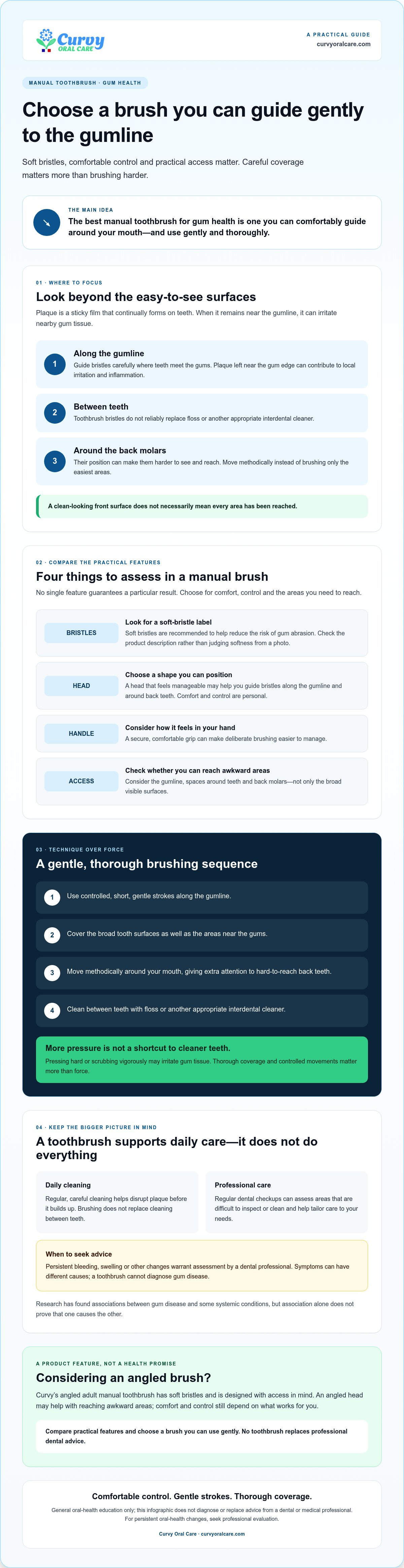
How to Choose and Use a Manual Toothbrush for Gum Health
Choose a brush for comfort and access, then use a gentle, consistent technique. The following steps can help you compare options without relying on bold claims alone.
A simple checklist for choosing your brush
- Start with comfort. Consider how the handle feels in your hand and whether you can guide it without gripping tightly.
- Check the bristles. Look for a clear soft-bristle description rather than trying to judge softness from an image.
- Assess access. Consider whether the head feels manageable at the gumline and around your back molars. No one shape suits everyone.
- Compare claims. Promises to treat or prevent gum disease, or claims of guaranteed results, are a reason to look for reliable supporting evidence. Ask a dental professional about brush features if you have individual concerns.
A gentle daily routine that supports gum health
The American Dental Association recommends brushing twice a day for two minutes with a soft-bristled toothbrush. Use fluoride toothpaste and a light touch. Angle the bristles toward the gumline and move them in short, gentle strokes rather than scrubbing back and forth with force. Work around your mouth in a deliberate pattern, including the inner and outer tooth surfaces, chewing surfaces, and back teeth. Reach along the gumline without pressing the bristles into the gums.
Brushing doesn’t clean every space between teeth. Add floss or another suitable interdental cleaner to your routine, following guidance from your dental professional. You can also clean your tongue as part of daily oral care. Regular dental visits give you an opportunity to discuss your technique and any areas you find difficult to reach.
Persistent bleeding, swelling, pain, receding gums, or other noticeable changes shouldn’t be self-diagnosed. Arrange an evaluation with a dental professional, especially if a symptom persists or worsens. A brush supports everyday hygiene; it can’t identify the cause of symptoms or treat gum disease.
If you’re also considering powered brushing, explore Curvy’s sonic toothbrush and toothpaste travel-case bundle as an electric alternative. It’s a different brush type, so compare it separately from manual options and choose what fits your routine.
Choosing a Curvy Angled Manual Toothbrush: A Practical Next Step
A brush that feels easy to guide can make it simpler to give every area of your mouth attention. Curvy Oral Care offers an angled adult manual toothbrush described as having soft bristles. Its angled design is intended to help users reach areas that may be difficult to access with a conventional straight brush. Consider it if reaching back teeth or other awkward spots is a challenge.
When an angled manual toothbrush may suit your routine
An angled head doesn’t guarantee better cleaning or improved gum health. Consider how it feels in your hand and whether you can comfortably guide the bristles along the gumline and around your back molars. A straight brush may feel more natural to some people, while an angled one may offer a different approach to others. Choose based on comfort and access, not promises to treat or prevent a condition.
Curvy’s angled adult manual toothbrush with soft bristles is one product example to compare. Review its product details and consider whether its design fits your needs. If you have specific gum concerns or dental work, ask your dental professional for advice about choosing and using a brush.
Compare manual and sonic options without confusing their benefits
A manual toothbrush and a sonic toothbrush are different product types. A manual brush relies on your hand to move it; a sonic brush is powered. The CTA below leads to a sonic toothbrush bundle, not the angled manual toothbrush. Consider it only if you’re also exploring a sonic routine, and compare each option according to your preferences and brushing habits.
Whichever brush you use, prevention starts with a complete routine: brush twice daily with fluoride toothpaste and gentle, deliberate strokes; clean between your teeth; pay attention to the gumline and back molars; and clean your tongue. Keep regular dental visits, too. Persistent bleeding, swelling, pain, receding gums, or other noticeable changes deserve professional evaluation.
If you’re considering a powered option, explore the sonic toothbrush bundle. It’s a separate electric alternative, not a manual brush or a substitute for professional dental guidance.
Health & Medical Disclaimer: This content is for general educational purposes only and isn’t a substitute for professional dental or medical advice, diagnosis, or treatment. Consult a qualified dental or medical professional about questions or concerns regarding your health.
Make Gentle, Consistent Gum Care Your Next Step
The best manual toothbrush for gum health is one you can use comfortably and carefully, with soft bristles and access to the gumline, back teeth, and other hard-to-reach areas. Brush design can help you guide your routine, but gentle technique and thorough coverage matter just as much. Cleaning between teeth and keeping regular dental visits complete the picture.
Curvy offers both manual and sonic toothbrushes. Its adult manual option is described as angled and soft-bristled, a design to consider if reaching certain areas is difficult. An angled brush isn’t a treatment for gum problems, and the right fit depends on your comfort and needs.
If you’re considering a powered option, explore the sonic toothbrush bundle. It’s an electric alternative, not a manual brush. Whichever type you choose, keep brushing gently, clean between your teeth, and ask a dental professional about persistent bleeding, swelling, pain, or other changes.
Frequently Asked Questions
Is a soft-bristled manual toothbrush better for gum health?
Yes. The American Dental Association recommends soft-bristled toothbrushes to help minimize the risk of gum abrasion. The best manual toothbrush for gum health is one you can use gently and thoroughly, rather than one that encourages forceful scrubbing. Check the product description for a clear bristle-softness label, and consider whether the brush feels comfortable to guide along your gumline. If you have specific dental concerns, ask your dental professional for personalized advice.
Can an angled manual toothbrush help reach the gumline and back molars?
An angled manual toothbrush may offer a different way to approach areas that feel awkward to reach with a conventional straight brush, such as back molars. It doesn’t guarantee better cleaning or a particular gum-health outcome. What matters is whether you can comfortably guide the bristles along the gumline and around each tooth. Curvy Oral Care offers an angled adult manual toothbrush with soft bristles, which is one option to consider based on your comfort and access needs.
How should I brush along the gumline without irritating my gums?
Use a soft-bristled brush and light pressure. The American Dental Association suggests holding the bristles at about a 45-degree angle toward the gumline and moving them gently in short strokes. Work methodically around your mouth, including the outer, inner, and chewing surfaces, without scrubbing hard. Aim to brush twice daily for two minutes. If your gums feel sore or brushing causes ongoing irritation, ask a dental professional to review your technique.
What happens if my gums bleed when I brush?
Bleeding can have different causes, including gum irritation or inflammation, and it can’t diagnose a condition on its own. Don’t respond by scrubbing harder. Use gentle brushing and clean carefully along the gumline. If bleeding continues, or you notice swelling, pain, receding gums, or other changes, arrange an evaluation with a dental professional. They can assess what’s happening and suggest appropriate care. Avoid relying on a toothbrush or an online article to identify the cause.
Do manual toothbrushes clean as well as sonic toothbrushes?
Both manual and sonic toothbrushes can be part of an effective routine. A manual brush relies on your hand to guide the bristles, while a sonic brush is powered. Results depend on using the brush consistently and covering all tooth surfaces, including the gumline and back teeth. A powered option isn’t automatically the right fit for everyone, just as manual brushing isn’t ineffective by default. Choose a brush you can use comfortably, and ask your dentist for advice if needed.
Do I still need to floss if I use a manual toothbrush?
Yes, brushing doesn’t reliably clean the narrow spaces between teeth. Use floss or another suitable interdental cleaner to clean those areas as part of your daily routine. A toothbrush, whether manual or powered, shouldn’t be treated as a replacement for cleaning between teeth. If you’re unsure which interdental option fits your teeth or how to use it, ask a dental professional to demonstrate a suitable technique.
Can brushing improve overall health as well as gum health?
Brushing supports oral hygiene and healthy gums, which are important parts of overall well-being. Research has found associations between gum health and some health conditions elsewhere in the body, but an association doesn’t prove that one causes the other, and research is ongoing. A practical approach is to maintain consistent oral care and regular dental visits. If you have questions about how oral health relates to a medical condition, discuss them with your healthcare professional.

Article by
Aline Peixe Nebot
Aline Peixe Nebot is a Veterinarian and passionate advocate for better oral health, committed to raising awareness of oral health as a matter of public health. She actively promotes the importance of simple, effective oral care routines and works to educate the public about the often-overlooked link between oral health and overall systemic health. Her mission is to make better oral care knowledge accessible to everyone and encourage healthier habits for life.
Disclaimer
Disclaimer: The information provided in this article is intended for general educational and informational purposes only. It is not intended to replace professional medical, dental, or healthcare advice, diagnosis, or treatment.
Some content may be AI-assisted and is provided to support health education and awareness. While we strive to share accurate and up-to-date information, health recommendations and scientific evidence can evolve, and the information presented may not apply to every individual.
The connection between oral health and overall systemic health is an important and developing area of research. Associations discussed in this article should not necessarily be interpreted as proof of cause and effect.
Always consult a qualified dentist, physician, or other healthcare professional regarding your individual health, symptoms, medications, or treatment decisions. Do not delay or discontinue professional care based on information presented in this article.
This content is for education and awareness—not diagnosis or treatment.