
Best Lighter Electric Toothbrush for Daily Comfort
The lightest toothbrush isn’t automatically the most comfortable. A lighter electric toothbrush should feel balanced and easy to guide, helping you reach the gumline and back teeth without gripping too tightly or brushing with excessive pressure. Comfort depends on more than weight alone.
If a toothbrush feels awkward in your hand, it can make a daily habit feel like a chore. Look for one that feels manageable to hold and maneuver while still helping you brush thoroughly. Weight, grip, balance, and access to hard-to-reach areas all shape comfort, as does brushing technique. These factors can help you decide which features matter and how to make a lighter brush part of a consistent oral-care routine.
Key Takeaways
- Choose a brush that feels comfortable to guide, and consider balance and control alongside its weight.
- Allow 2 to 3 minutes for brushing so you can give each area of your mouth attention.
- Pay attention to the gumline and avoid pressing or scrubbing too hard.
- Good technique matters: a manual brush can also clean effectively when used properly.
- If you have braces or implants, Curvy Oral Care’s portable toothbrush for braces and implants is an option to explore.
Lighter electric toothbrush
A lighter electric toothbrush can feel easier to guide, but low weight alone doesn’t guarantee comfort. Grip, balance, handle shape, and control matter, too. A brush that feels light but slips in your hand may be harder to direct than one with a steadier hold. Judge the whole brushing experience, not a single feature.
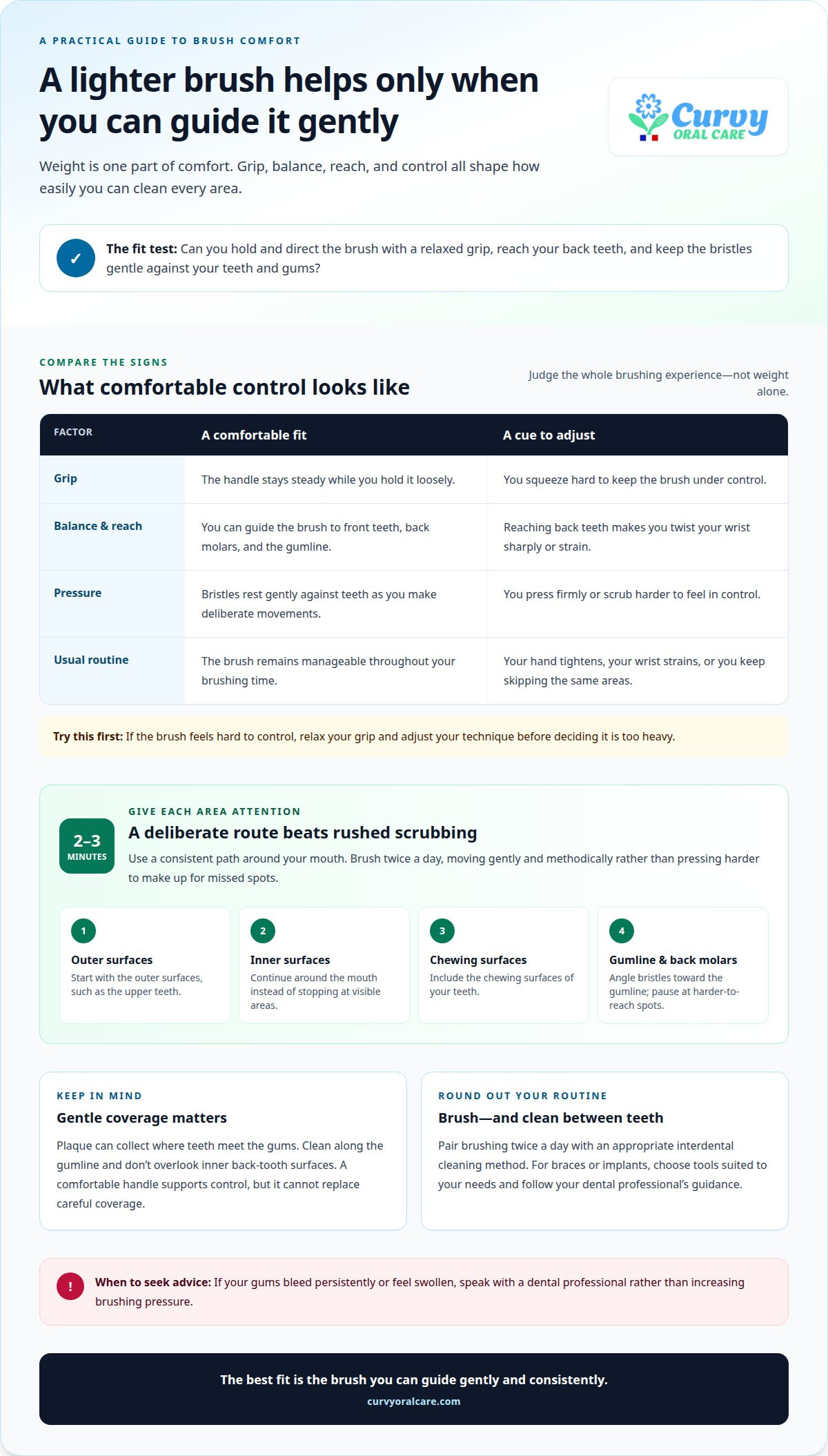
Start with a simple hand test. Hold the brush as you normally would, then move it slowly toward your front teeth, back molars, and gumline. Notice whether your wrist stays relaxed and whether you can reach each area without tightening your grip. If reaching your back teeth makes you twist your wrist sharply, for example, the handle’s balance or shape may not suit your technique.
Comfort is about control
Weight affects how a brush feels during repeated movements, but control determines where the bristles go. A comfortable handle lets you guide the brush gently without squeezing hard or tiring your hand. Hold it with a relaxed grip and make small, deliberate movements. If you find yourself pressing firmly to stay in control, adjust your grip before deciding the brush is too heavy.
- Check your grip: Hold the handle loosely and see whether it stays steady.
- Test your reach: Guide the brush to the back molars without forcing your wrist.
- Notice your pressure: Keep the bristles against the teeth gently rather than pushing into the gums.
- Assess your routine: Consider whether the brush remains comfortable throughout your usual brushing time.
That last step matters because brushing should cover every tooth surface, not just the easy-to-reach front teeth. A forum recommendation suggests brushing for 2 to 3 minutes. Use that time to move systematically around your mouth, rather than rushing through the visible surfaces. A lighter handle may make the motion feel more manageable, but it can’t replace careful coverage.
Use a consistent brushing path
Choose a starting point, such as the outer surfaces of your upper teeth, and work around your mouth in sequence. Then clean the inner and chewing surfaces, including the back molars. Angle the bristles toward the gumline and use controlled movements on each area. This step-by-step path helps prevent missed spots without requiring a firm grip or hurried scrubbing.
Pay close attention to the gumline. Plaque can collect where teeth meet the gums, so brushing only the broad, visible surfaces leaves important areas unattended. Guide the bristles gently along the gumline, then pause at difficult-to-reach spots, such as the inner surfaces of back teeth. If your gums bleed persistently or feel swollen, seek advice from a dental professional rather than increasing brushing pressure.
Electric brushing still depends on technique. Aim for thorough, gentle coverage with controlled movements. Avoid pressing hard, as forceful brushing can irritate the gums. Let the brush’s movement and a deliberate route do the work; don’t compensate for missed areas by scrubbing harder.
Consider how the handle feels during both your morning and evening routines. A brush that feels manageable in a brief test should also be easy to guide around every tooth. Revisit your grip if your hand tightens, your wrist strains, or you keep skipping the same back molars. These are signs to adjust your technique or brush fit, not to apply more force.
Pair a comfortable brush with a repeatable routine: brush twice a day, follow a consistent path, and clean between your teeth with an appropriate interdental method. Comfort supports consistency, while careful coverage supports cleaner teeth and healthier gums. The best fit is a brush you can control gently across the gumline, tooth surfaces, and hard-to-reach areas every day.
Curvy Oral Care: Portable toothbrush for braces and implants
Curvy Oral Care offers a portable toothbrush for braces and implants, designed for people looking for an oral-care option suited to those needs. Brackets and implant areas can make careful daily cleaning more involved, so choose a brush that supports a routine you can maintain. Guide it around the gumline and harder-to-reach areas without pressing forcefully.
For everyday brushing, Curvy Oral Care offers sonic toothbrushes and replacement brush heads, with subscriptions for replacement heads. They can support a routine of regular brushing and attention to plaque-prone areas, but don’t replace individual dental advice about caring for braces or implants. Explore Curvy Oral Care’s oral-care products to find options for your routine.
Make comfort part of your routine
Your next brush should fit the way you care for your mouth, not make your routine harder to maintain. Use comfort as a practical guide: notice whether you can hold and direct the brush without tension and whether its shape helps you reach areas your routine tends to miss. A lighter electric toothbrush may suit your preferences, but the right choice is one you can use with gentle, deliberate control.
Think beyond the handle, too. If your oral-care needs change, such as when you have braces or implants, choose tools suited to those needs and follow your dental professional’s guidance. Curvy Oral Care offers sonic toothbrushes, replacement brush heads, and brush head subscriptions as part of its oral-care range.
Explore Curvy Oral Care’s sonic toothbrush and travel case option as you consider what fits your routine. A comfortable, consistent approach is a worthwhile step toward caring for your teeth and gums every day.

Article by
Aline Peixe Nebot
Aline Peixe Nebot is a Veterinarian and passionate advocate for better oral health, committed to raising awareness of oral health as a matter of public health. She actively promotes the importance of simple, effective oral care routines and works to educate the public about the often-overlooked link between oral health and overall systemic health. Her mission is to make better oral care knowledge accessible to everyone and encourage healthier habits for life.
Disclaimer
Disclaimer: The information provided in this article is intended for general educational and informational purposes only. It is not intended to replace professional medical, dental, or healthcare advice, diagnosis, or treatment.
Some content may be AI-assisted and is provided to support health education and awareness. While we strive to share accurate and up-to-date information, health recommendations and scientific evidence can evolve, and the information presented may not apply to every individual.
The connection between oral health and overall systemic health is an important and developing area of research. Associations discussed in this article should not necessarily be interpreted as proof of cause and effect.
Always consult a qualified dentist, physician, or other healthcare professional regarding your individual health, symptoms, medications, or treatment decisions. Do not delay or discontinue professional care based on information presented in this article.
This content is for education and awareness—not diagnosis or treatment.