
Best Angled Toothbrushes for Superior Plaque Removal
Your mouth isn't a collection of flat surfaces, so cleaning it with a straight stick is a fundamental design flaw. If you struggle with persistent plaque on your back molars or notice bleeding gums despite regular care, the problem probably isn't your effort; it's your equipment. Traditional brushes often fail to navigate the tight corners and complex curves of the human jaw. This is where angled toothbrushes change the game. By utilizing a specific 45-degree geometry, these tools allow you to maintain the precise contact needed to disrupt biofilm without the awkward wrist gymnastics.
It's frustrating to put in the work and still feel like your oral health is lagging behind. We believe that a professional-clean feeling should be a daily reality at home, not just a twice-a-year treat at the dentist. In this guide, we'll break down the science of reach and show you how a simple shift in brush angle can transform your gum health. You'll discover the best options for accessing difficult areas and learn how better geometry leads to a healthier, more vibrant smile.
Key Takeaways
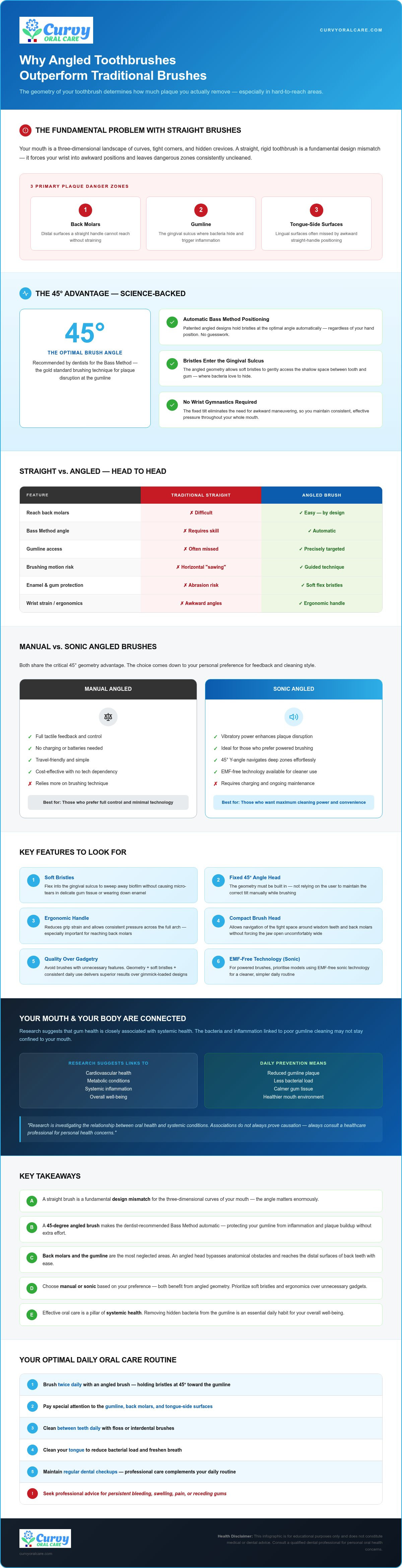
- Traditional straight-handle brushes often struggle to reach back molars, but a 45-degree geometry ensures you never miss a spot.
- Using angled toothbrushes makes the dentist-recommended Bass Method automatic, protecting your gumline from inflammation and plaque buildup.
- Effective oral care is a pillar of systemic health, making the removal of hidden bacteria essential for your overall well-being.
- Choose between manual and sonic models based on your preference for tactile feedback or vibratory power, prioritizing EMF-free technology for a cleaner routine.
- Focus on soft bristles and ergonomic handles rather than unnecessary gadgets to maintain a simple, highly effective daily habit.
Why Traditional Toothbrushes Miss the Mark (and How Angled Brushes Fix It)
Your mouth is a complex landscape of curves, tight corners, and hidden crevices. Most people use a straight, rigid toothbrush to clean this three-dimensional space, but that design is fundamentally flawed. It's a struggle to navigate the dental arch when your tool doesn't match the architecture of your jaw. This mismatch is why even diligent brushers often face persistent plaque or bleeding gums. Angled toothbrushes provide the necessary evolution, designed specifically to mimic the 45-degree angle dentists recommend for optimal plaque disruption. An angled head naturally aligns with the gumline for better debris removal, turning a difficult chore into a precise, efficient routine.
The Anatomy of a Missed Spot
Plaque doesn't accumulate evenly. It thrives in the dark, neglected corners where a straight brush simply cannot reach. There are three primary danger zones: the distal surfaces of your back molars, the lingual (tongue-side) surfaces of your teeth, and the delicate gumline. A straight handle forces your wrist into awkward, strained positions. When you're struggling to maneuver, you lose the ability to apply consistent, effective pressure. This lack of access leads to localized plaque buildup. Over time, these hidden deposits trigger inflammation, which is often the first step toward more serious gum concerns. It's not a lack of effort; it's a lack of reach.
How Geometry Improves Plaque Removal
The shift from a straight brush to an angled design is the difference between scrubbing a surface and precision engineering. While straight brushes often encourage a horizontal "sawing" motion that can damage gums, the fixed tilt of an angled head facilitates better technique. The 45-degree orientation allows bristles to gently enter the gingival sulcus, the shallow space between the tooth and the gum tissue. This is where bacteria love to hide. By letting the geometry of the brush do the work, you achieve a deeper clean without needing to apply aggressive force. This protects your tooth enamel from abrasion while ensuring that every surface, even the back of those hard-to-reach molars, gets the attention it needs for a professional-clean feeling every day.
The 45-Degree Advantage: Science-Backed Benefits for Your Gums
Your mouth isn't an isolated system. Research suggests that the health of your gums is closely associated with your systemic health, meaning a clean gumline supports your entire body. The gold standard for maintaining this health is the Bass Method. This technique requires holding bristles at a precise 45-degree angle toward the gumline to disrupt plaque in the shallow spaces where bacteria thrive. While this is notoriously difficult to execute with a straight handle, angled toothbrushes make this posture automatic. Patented designs ensure the brush head stays at the optimal angle regardless of your hand position, removing the guesswork from your morning routine.
Effective cleaning doesn't require aggression. Scrubbing too hard with stiff bristles often leads to gum recession and permanent enamel wear. High-quality angled brushes prioritize soft bristles that flex into the gingival sulcus, the space between the tooth and gum. They sweep away biofilm without causing micro-tears in the delicate tissue. This combination of precise geometry and gentle pressure creates a superior cleaning experience that respects your mouth's natural biology.
Reaching the Back Molars with Ease
The "wisdom tooth area" is a notorious hotspot for cavities and gum disease. It's a cramped space where the cheek and jawbone limit the movement of a standard, straight brush. An angled neck provides the necessary clearance to bypass these anatomical obstacles without straining your jaw. To get the best results, use the built-in tilt to "wrap" the bristles around the very last surface of your back molar. This ensures you're cleaning the distal surface, an area often neglected by traditional tools. For those looking to upgrade their routine, the Y-angled sonic toothbrush offers the perfect geometry to navigate these deep zones effortlessly.
Protecting the Gumline from Inflammation
Plaque accumulation at the gumline is the primary trigger for gingivitis, which is an early, reversible stage of gum disease. If you notice persistent bleeding when you brush, it's a clear signal that your current tool isn't reaching the right spots effectively. Angled bristles are designed to sweep away these bacterial colonies without causing "toothbrush trauma" to the soft tissues. This targeted approach reduces inflammation and helps you achieve a healthier gumline over time. By making plaque removal easier in difficult areas, you're taking a proactive, simple step toward better long-term well-being.
Manual vs. Sonic Angled Toothbrushes: Which is Right for You?
The choice between manual and sonic tools often focuses on power, but the most sophisticated motor in the world won't help if the bristles aren't reaching the plaque. While high-frequency vibrations offer specific advantages, the geometry of angled toothbrushes remains the single most important factor in your routine. Whether you prefer the simplicity of a manual brush or the advanced tech of a sonic model, that 45-degree tilt is what ensures you're actually cleaning the gumline. The right choice depends on your personal goals, sensitivity levels, and how much you value high-tech efficiency over tactile control.
The Precision of Manual Angled Brushing
Manual angled brushes excel in providing tactile feedback. You feel exactly where the bristles land and how much pressure you're applying. This total control is ideal for those with sensitive teeth or individuals who prefer to master their technique without the distraction of vibrations. An ergonomic handle on a manual model helps maintain the correct 45-degree orientation through simple hand positioning. It's a reliable tool that trains your hand to respect the mouth's architecture. In many cases, a high-quality manual angled brush is far superior to a standard straight electric brush simply because it can actually reach the distal surfaces of your back molars. They're also the perfect choice for kids building dexterity or for health-conscious travelers who want a lightweight, effective option.
The Power of EMF-Free Sonic Technology
For those who want maximum plaque disruption, sonic technology adds another layer of efficiency. Sonic vibrations create fluid dynamics, a process where the rapid movement of water and toothpaste creates micro-bubbles. These bubbles can clean areas slightly beyond where the bristles physically touch, reaching deep between teeth. However, many traditional electric brushes emit electromagnetic radiation near the head and neck. For health-conscious users, switching to EMF-free sonic toothbrushes is a vital step in creating a non-toxic routine.
The Y Angled Sonic Toothbrush Emf Free solves this dilemma by combining patented geometry with high-frequency cleaning. You get the benefit of thousands of strokes per minute without exposing your brain and mouth to unnecessary electromagnetic fields. It's a modern solution that prioritizes both high-tech performance and holistic well-being. By combining the 45-degree advantage with safe, sonic power, you're giving your gums the best possible defense against inflammation and plaque buildup.
Key Features to Consider When Buying an Angled Toothbrush
Choosing the right tool for your oral health is a strategic decision that impacts your long-term well-being. Many brands distract you with Bluetooth apps, complex timers, or flashy lights, but these bells and whistles don't actually remove plaque. Effective angled toothbrushes succeed because they prioritize core engineering over marketing gimmicks. You need a brush that feels like a natural extension of your hand, allowing you to focus on the technique rather than the gadgets. By evaluating a few essential features, you can ensure your routine is both efficient and comfortable.
Bristle Softness and Gum Sensitivity
Bristle quality is your frontline defense for enamel protection. Soft bristles are generally the standard for healthy gums, providing enough resistance to disrupt biofilm without causing damage. If you're currently dealing with inflammation or gum recession, extra-soft bristles offer a more compassionate clean. You should always avoid hard bristles. They act like sandpaper on your teeth, leading to permanent enamel abrasion and increased sensitivity. High-quality bristles on an angled head are designed to maintain their structural integrity longer, ensuring every stroke remains effective throughout the life of the brush head.
Ergonomics and Handle Design
A toothbrush is only as effective as your ability to hold it correctly. In a wet bathroom environment, a non-slip grip is essential for maintaining that critical 45-degree angle. If your handle is too slim or lacks texture, your hand will naturally revert to a flat, straight position, which defeats the purpose of the angled design. A balanced handle reduces hand fatigue, helping you complete the full two-minute brushing cycle without discomfort. This is particularly vital for those with limited dexterity who need extra reach without straining their joints.
Maintaining your tools is just as important as choosing them. Even the best bristles fray and lose their effectiveness after about three months of use. Frayed bristles can't reach the gumline effectively, which is why a subscription model is a smart way to ensure you always have a fresh, effective brush head. It removes the mental load of remembering when to swap, keeping your routine consistent and your oral health proactive.
If you have specialized dental work, your requirements are even more specific. Braces create countless new nooks for plaque to thrive, while crowns and implants require gentle but thorough cleaning at the base to prevent inflammation. Consider this checklist when evaluating your options:
- Choose a compact head size to navigate around brackets and wires easily.
- Select soft bristles to avoid scratching the surfaces of expensive crowns or porcelain.
- Look for tapered filaments that can reach under the gumline around dental implants.
- Prioritize an ergonomic reach for the distal surfaces of crowned molars where bacteria often hide.
For a solution that hits all these markers, you can experience the precision of an angled sonic brush designed for both safety and effectiveness.
The Curvy Collection: Finding Your Perfect Patented Match
Choosing a toothbrush shouldn't be a gamble. Curvy Oral Care has spent years refining a range of tools that transform oral hygiene from a chore into a precise science. Our mission is rooted in education and prevention, providing you with the geometry needed to take control of your gum health. Every product in our lineup features a patented 45-degree angle and EMF-free technology, ensuring that your daily routine supports your overall well-being. We invite you to browse the full angled toothbrush collection to find the design that fits your specific dental architecture.
Top Picks for Adult Oral Care
Our flagship sonic toothbrushes are designed for those who want a professional-grade clean without the risk of electromagnetic radiation. These models combine high-frequency vibrations with our signature angled head, making it easier than ever to reach the distal surfaces of your back molars. If you prefer the tactile feedback of a manual routine, our manual angled toothbrushes offer the same geometric precision with total user control. To maintain peak performance, we offer replacement brush head subscriptions. This ensures you're never cleaning your teeth with frayed, ineffective bristles, keeping your prevention strategy on track year-round.
Gentle Angled Solutions for Kids
Developing good habits early is the foundation of lifelong oral health. Children often struggle with the dexterity required to clean their back teeth, leading to early plaque buildup in the "wisdom tooth" zones. Our toothbrushes for kids are engineered to make "getting it right" automatic. The built-in angle guides their hand into the correct position, allowing them to reach deep into the arch even while their motor skills are still developing. Starting these EMF-free habits early protects their developing bodies from unnecessary exposure while making brushing a more rewarding experience. It's a simple, proactive way to empower the next generation with a healthier lifestyle.
At the heart of the Curvy collection is a commitment to your long-term health. We don't believe in adding unnecessary gadgets that distract from the core goal of plaque removal. Instead, we focus on the physics of the mouth. By combining gum-focused engineering with a warm, educational approach, we help you understand the "why" behind your routine. This isn't just about selling a brush; it's about providing the tools for a healthier, more vibrant life. Whether you're upgrading to a sonic model or choosing a first brush for your child, you're investing in a science-backed solution for superior oral care.
Take the Next Step Toward a Healthier Smile
Superior plaque removal isn't about brushing harder; it's about brushing smarter. By switching to angled toothbrushes, you're choosing a tool that respects the natural architecture of your mouth. You've seen how a patented 45-degree tilt makes the Bass Method automatic, ensuring you reach the back molars and the gumline every single time. Combining this geometric precision with EMF-free technology creates a safer, more effective daily routine that supports your whole-body well-being. With our flexible subscription options, maintaining peak hygiene becomes a seamless part of your lifestyle.
Don't let hidden plaque compromise your oral health. Small daily habits lead to significant long-term results, and the right equipment is the foundation of that success. You deserve a professional-clean feeling that lasts long after you leave the dentist's chair. It's time to experience the difference that modern, gum-focused engineering can make for your smile and your health.
Ready to transform your routine? Explore the Patented Angled Toothbrush Collection and start your journey toward optimal wellness today.
Frequently Asked Questions
Are angled toothbrushes really better than straight ones?
Yes, because they remove the human error of trying to manually tilt a straight brush to reach the gumline. Angled toothbrushes provide a fixed geometric advantage that ensures bristles stay in constant contact with the tooth-gum interface. This design is particularly effective for navigating the curves of the dental arch. It transforms a complex technique into a simple, automatic movement, leading to more consistent plaque removal with less physical effort.
How do I use an angled toothbrush correctly?
You use it by letting the brush's geometry do the work, placing the head against your teeth and following the natural curve of your jaw. Unlike straight brushes, you don't need to twist your wrist awkwardly to reach the back. Simply hold the handle comfortably and glide the bristles along the gumline. The pre-set angle ensures that the bristles are already positioned to disrupt plaque in the most difficult areas.
Can I use an angled toothbrush if I have braces or dental implants?
Absolutely, as the angle provides superior access around the brackets of braces and the base of dental implants. These areas are notorious for trapping food and bacteria, which can lead to inflammation if not addressed. An angled head allows you to navigate around orthodontic hardware without the bristles getting stuck or missing the gumline. For implants, the precise reach ensures that the transition zone between the crown and the gum stays clean.
Is a sonic angled toothbrush safe for sensitive gums?
Yes, it's safe because the angled design prevents you from applying too much pressure directly against the gum tissue. Sonic vibrations work with the brush's geometry to gently disrupt biofilm through fluid dynamics. This means you get a deep clean without the aggressive scrubbing that often causes toothbrush trauma. When paired with soft bristles, a sonic model provides a high-tech solution that is both powerful and protective for sensitive mouths.
How often should I replace the head on my angled toothbrush?
You should replace your brush head every three months to ensure the bristles remain effective and hygienic. Over time, bristles fray and lose their ability to reach deep into the gingival sulcus. Frayed bristles can also become abrasive to your enamel. Utilizing a subscription plan is the easiest way to stay consistent. It ensures that a fresh, high-performance head arrives exactly when you need it, keeping your oral care routine proactive.
Why does Curvy Oral Care emphasize EMF-free toothbrushes?
We prioritize EMF-free technology because your oral health is linked to your overall well-being. Standard electric brushes often emit electromagnetic fields very close to your brain and mouth. While research into the long-term effects of these fields is ongoing, we believe in a precautionary, holistic approach. By removing electromagnetic radiation from the equation, we provide a safer, non-toxic routine that focuses purely on the mechanical and sonic benefits of effective cleaning.
Do dentists actually recommend angled toothbrushes?
Dentists frequently recommend tools that help patients achieve the Bass Method, which is the most effective technique for cleaning the gumline. Angled toothbrushes are highly regarded because they solve the common problem of poor dexterity. Most people struggle to maintain a 45-degree tilt with a straight handle. Professionals value designs that make proper technique easier for the average user, as consistent plaque disruption is the foundation of preventing gum disease.
What is the "45-degree angle" rule for brushing?
The rule refers to the physics of cleaning the gingival sulcus, the small gap where your teeth meet your gums. Holding bristles at this angle allows them to slip slightly under the gumline to sweep away hidden bacteria. This is where the majority of plaque accumulates and where inflammation begins. By maintaining this specific orientation, you're targeting the root cause of most dental issues rather than just cleaning the visible, flat surfaces of your teeth.

Article by
Aline Peixe Nebot
Aline Peixe Nebot is a Veterinarian and passionate advocate for better oral health, committed to raising awareness of oral health as a matter of public health. She actively promotes the importance of simple, effective oral care routines and works to educate the public about the often-overlooked link between oral health and overall systemic health. Her mission is to make better oral care knowledge accessible to everyone and encourage healthier habits for life.
Disclaimer
Disclaimer: The information provided in this article is intended for general educational and informational purposes only. It is not intended to replace professional medical, dental, or healthcare advice, diagnosis, or treatment.
Some content may be AI-assisted and is provided to support health education and awareness. While we strive to share accurate and up-to-date information, health recommendations and scientific evidence can evolve, and the information presented may not apply to every individual.
The connection between oral health and overall systemic health is an important and developing area of research. Associations discussed in this article should not necessarily be interpreted as proof of cause and effect.
Always consult a qualified dentist, physician, or other healthcare professional regarding your individual health, symptoms, medications, or treatment decisions. Do not delay or discontinue professional care based on information presented in this article.
This content is for education and awareness—not diagnosis or treatment.