
Angled Toothbrush for Plaque: Gumline to Molars Guide
What if the hardest parts of brushing aren’t the surfaces you can see, but the gumline and back molars your brush can be awkward to position around? An angled toothbrush for plaque removal may make it easier to guide the bristles into these spots, but the angle alone isn’t a complete cleaning routine. It also helps to know how an angled toothbrush differs from an angled interdental brush, because each tool has a different job.
It’s easy to brush the front and chewing surfaces and still miss plaque near the gums or between teeth. A gentle, repeatable sequence can help you cover each area, while an angled head may make some positions more comfortable. This guide explains what an angled toothbrush can and can’t do, how to clean around the gumline and back molars, and how it differs from tools designed to clean between teeth.
You’ll also find practical ways to build a daily routine that includes interdental cleaning and regular dental visits. Small, consistent habits can support healthy gums and a cleaner mouth without making brushing more complicated.
Key Takeaways
- Learn where plaque tends to collect, including along the gumline, between teeth, and around the back molars.
- Use an angled toothbrush for plaque removal as an aid to access, not a substitute for gentle, thorough brushing.
- Follow a calm, repeatable sequence that covers the outer, inner, and chewing surfaces of every tooth.
- Build a fuller routine with twice-daily brushing using fluoride toothpaste and regular cleaning between teeth.
- Choose a brush for comfort, reach, and control. Technique and consistent coverage matter more than the angle alone.
How an Angled Toothbrush Fits Into Plaque Removal
Dental plaque is a soft, sticky film of bacteria that forms on teeth and builds up again after cleaning. Brushing regularly helps remove it from tooth surfaces. The gumline, the sides and backs of the back molars, and other hard-to-reach spots can be easy to miss. An angled toothbrush may help you position the bristles in these areas, but its shape alone doesn’t ensure thorough cleaning. Careful coverage and a gentle technique still matter.
What plaque is and where it tends to collect
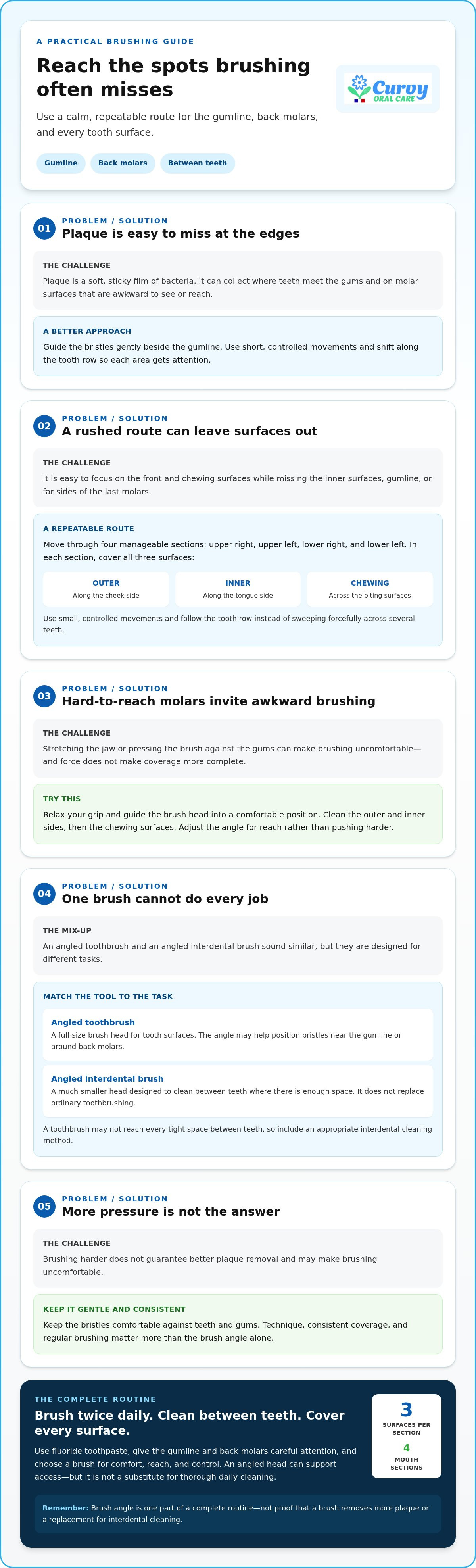
Plaque can gather where teeth meet the gums and on molar surfaces that are awkward to see or reach. If plaque remains along the gumline, the gums may become irritated or inflamed. Persistent bleeding, swelling, or other changes should be assessed by a dental professional. A consistent brushing sequence can help you give less visible areas the same attention as the front teeth.
A full-size toothbrush cleans tooth surfaces, including the outer, inner, and chewing surfaces. Its bristles may not reach all the tight spaces between teeth, so pair brushing with an appropriate interdental cleaning method. For general guidance on toothbrushes and brushing, see the American Dental Association’s toothbrush recommendations.
Angled toothbrush or angled interdental brush?
The names sound similar, but the tools do different jobs. An angled toothbrush has a regular brush head for cleaning tooth surfaces. An angled interdental brush has a much smaller head designed to clean between teeth where there’s enough space. It doesn’t replace ordinary toothbrushing, just as brushing alone may not clean every interdental space.
Curvy Oral Care offers manual and sonic angled toothbrushes designed to help users reach difficult areas. The angled design may make it easier to position bristles near the gumline or around back molars, but you still need to guide the brush across each surface. Explore a soft-bristled angled adult toothbrush as one option for your routine. An angled head can support access; complete daily care also includes cleaning between teeth.
How to Brush With an Angled Toothbrush at the Gumline and Back Molars
A steady brushing pattern helps you use an angled head well: position the bristles where they need to reach, then work methodically around the mouth. Give the gumline and back molars the same attention as the front teeth. Use gentle contact rather than pressing hard or scrubbing quickly. More force doesn’t make your coverage more complete and may make brushing uncomfortable.
A repeatable brushing sequence for the whole mouth
Move through the mouth in manageable sections, such as upper right, upper left, lower right, and lower left. In each section, brush the outer, inner, and chewing surfaces. Use small, controlled movements, shifting the brush along the tooth row as you go instead of sweeping forcefully across several teeth. A consistent route makes it easier to notice areas you tend to skip.
For the back molars, relax your grip and guide the angled head into a comfortable position. Brush the outer and inner sides, then the chewing surfaces. If the area is hard to see, adjust the brush angle to improve your reach rather than stretching your jaw or pressing the head against your gums. Follow any technique recommended by your dental professional, especially if you have individual needs or dental appliances.
How to clean beside the gumline without brushing too hard
Position the bristles gently beside the gumline, where each tooth meets the gum. Make short, controlled movements, then shift along the tooth row so you cover the next area. Keep the pressure light and the bristles comfortable against your teeth and gums. The American Dental Association recommendations for brushing offer further guidance on toothbrush choice and brushing technique.
Before you finish, check that you’ve covered the inner surfaces and the far sides of your last molars. If your gums bleed persistently, feel swollen, or you notice ongoing pain or another significant change, arrange a professional dental evaluation instead of trying to solve it by brushing harder. For more ideas to complement your brushing technique, read our guide to building an effective plaque-removal routine. A toothbrush-and-toothpaste combination can be one part of that routine, alongside careful coverage and interdental cleaning.
What an Angled Toothbrush Can, and Cannot, Do for Plaque
An angled head changes how you can position a full-size toothbrush; it doesn’t change what a complete oral-care routine involves. Its shape may make it easier for some people to guide bristles toward the gumline or around back molars. A conventional toothbrush can also clean tooth surfaces effectively when used with careful, consistent technique. Neither design reaches every space between teeth.
Does an angled brush head remove more plaque?
The practical benefit to consider is access. If the angle helps you place the bristles comfortably on a surface you tend to miss, it may help you clean that area more consistently. Curvy Oral Care’s manual and sonic angled toothbrushes are designed to help users reach difficult-to-access areas. That design purpose is different from evidence that a particular brush removes more plaque than another in clinical use.
To show that one design removes more plaque than another, researchers would need appropriate comparative clinical evidence. Don’t treat the shape alone as a guaranteed improvement or as a way to prevent gum disease. Your technique, the areas you cover, and how regularly you brush all matter. Brush angle is one part of a complete routine, not a replacement for thorough daily cleaning.
Think of each tool by its job: a full-size angled or conventional toothbrush cleans tooth surfaces, while interdental cleaning targets spaces the bristles may not reach. For broader oral-care guidance, MedlinePlus shares tips for preventing and removing plaque and tartar.
Why brushing does not replace interdental cleaning
Teeth sit close together, and their contact areas can shield plaque from a toothbrush. Even careful brushing of the outer, inner, and chewing surfaces may leave some of these narrow spaces untouched. Cleaning between teeth is a separate step, not simply another pass with the brush head.
Depending on your teeth and individual needs, floss or an appropriately sized interdental brush may help clean between teeth. An interdental brush is made for those spaces; it doesn’t replace brushing the rest of each tooth. A dental professional can help you choose an interdental method and show you how to use it comfortably. A well-positioned angled toothbrush can support cleaning tooth surfaces, while regular interdental care completes the routine.
Build a Daily Plaque-Removal Routine Beyond the Brush
A useful routine depends on repeatable steps, not on expecting one toothbrush to do everything. Brush twice daily with fluoride toothpaste, using a gentle technique that reaches the gumline, back molars, and other tooth surfaces. An angled toothbrush may make it easier to position the bristles in awkward areas, but it works best as one part of consistent whole-mouth care.
Oral health is part of overall health. Research has found associations between gum health and some broader health conditions, but an association alone doesn’t show that one causes the other. Researchers continue to study these relationships. Daily care supports a healthy mouth and can be one practical part of looking after your general well-being.
Pair brushing with between-teeth and tongue cleaning
Brushing cleans tooth surfaces, while floss or an appropriately sized interdental brush can help clean between teeth. These steps complement each other rather than duplicate each other. Your dental professional can advise which interdental method suits your teeth and how to use it comfortably.
You can also gently clean your tongue as an optional part of mouth care. Choose tools and toothpaste that feel comfortable and fit your needs, then keep the routine simple enough to repeat each day.
When to seek advice from a dental professional
Regular dental visits offer a chance to get individualized preventive guidance and have changes in your mouth assessed. An article can’t identify the cause of symptoms. Seek professional evaluation for persistent bleeding, swelling, pain, loose teeth, receding gums, or other significant changes.
Small habits work together: brush thoroughly, clean between teeth, and keep up with dental visits. Balanced eating habits and choosing water regularly can also support general well-being. If you’re putting together everyday brushing essentials, explore this sonic toothbrush and toothpaste combo as one option for your routine. No single product guarantees disease prevention, but steady daily care can help you look after your mouth.
Choosing an Angled Toothbrush for Your Plaque-Removal Routine
The right brush is one you can guide comfortably and use consistently. An angled toothbrush for plaque removal may make it easier to reach areas that feel awkward, but the angle doesn’t guarantee a better clean. A well-used conventional brush can also clean tooth surfaces effectively. Focus on fit, control, and a gentle brushing feel rather than expecting a particular design to do the work for you.
What to look for in a comfortable angled toothbrush
Consider whether the head is easy to position around your back molars and along the gumline, and whether the handle feels steady in your hand. Bristles should feel gentle against your teeth and gums. If you’re exploring a manual option, Curvy Oral Care’s soft-bristled angled adult toothbrush is designed to help reach difficult areas. Comfort and control matter: if you can guide the brush calmly across each surface, it’s easier to maintain a consistent routine.
Make the brush part of a routine you can maintain
Choose a brush you’ll use twice daily, then pair brushing with cleaning between your teeth and regular dental visits. Check the bristles periodically; worn or frayed bristles may be less comfortable and harder to control. Replace the brush or brush head in line with current dental guidance and the product’s care instructions, and follow your dental professional’s advice if your needs differ.
Curvy Oral Care also offers sonic angled toothbrushes for people interested in that format. The angled design is intended to support access, while effective cleaning still depends on guiding the brush carefully. If you’d like to explore that option, view the angled sonic toothbrush and consider whether its format feels right for the routine you can maintain.
A comfortable brush won’t replace good technique or interdental cleaning, but it can be a practical fit for your daily care. Choose a design that helps you reach your teeth with a light touch, then keep the habit steady.
Make Every Part of Your Routine Count
An angled toothbrush for plaque removal can make it easier to position bristles around the gumline and back molars, but no brush angle replaces careful, gentle coverage. Brush twice daily, clean between your teeth, and keep up with regular dental visits to support healthy gums and overall oral care.
Curvy Oral Care offers manual and sonic angled toothbrush options designed to help reach difficult areas. Think of them as tools that can support access, not treatments or guarantees of plaque removal. Technique and consistency still matter.
Build a routine that feels comfortable enough to maintain. If you’d like to explore a sonic toothbrush and toothpaste option, explore the sonic toothbrush and toothpaste combo.
Small, steady habits add up. Keep reaching the areas that are easy to miss, and give your gums thoughtful care every day.
Health & Medical Disclaimer: This article is for general educational purposes only and does not replace advice, diagnosis, or treatment from a dental or healthcare professional. Seek professional evaluation for persistent symptoms or significant changes in your oral health.

Article by
Aline Peixe Nebot
Aline Peixe Nebot is a Veterinarian and passionate advocate for better oral health, committed to raising awareness of oral health as a matter of public health. She actively promotes the importance of simple, effective oral care routines and works to educate the public about the often-overlooked link between oral health and overall systemic health. Her mission is to make better oral care knowledge accessible to everyone and encourage healthier habits for life.
Disclaimer
Disclaimer: The information provided in this article is intended for general educational and informational purposes only. It is not intended to replace professional medical, dental, or healthcare advice, diagnosis, or treatment.
Some content may be AI-assisted and is provided to support health education and awareness. While we strive to share accurate and up-to-date information, health recommendations and scientific evidence can evolve, and the information presented may not apply to every individual.
The connection between oral health and overall systemic health is an important and developing area of research. Associations discussed in this article should not necessarily be interpreted as proof of cause and effect.
Always consult a qualified dentist, physician, or other healthcare professional regarding your individual health, symptoms, medications, or treatment decisions. Do not delay or discontinue professional care based on information presented in this article.
This content is for education and awareness—not diagnosis or treatment.