
5 Daily Habits for Cleaner Teeth Between Dental Cleanings
What if the spaces between your front teeth are the spots your brushing routine keeps missing? Learning how to keep teeth clean between dental cleanings starts with more than polishing visible surfaces: brush twice a day and clean between your teeth daily, including the narrow gaps at the front.
It’s easy to focus on the broad, easy-to-reach parts of your smile. But plaque can collect along the gumline and between teeth, where a toothbrush may miss it. A few practical adjustments can help you clean more thoroughly without brushing harder or making your routine a chore.
This guide covers five practical habits for cleaner teeth between visits: brush gently and thoroughly, clean between teeth, use mouthwash only as a supporting step, reduce staining from everyday foods and drinks, and pay attention to the spaces between your front teeth. Reaching difficult spots matters for gum health, but daily home care does not replace professional cleanings, which remove buildup that brushing and interdental cleaning can’t fully address.
Key Takeaways
- Use gentle, deliberate brushing to clean the gumline and reach the back molars.
- Choose a daily between-teeth cleaning method that fits your spaces and feels manageable.
- Treat mouthwash as a possible addition to brushing and interdental cleaning, not a replacement.
- Reduce stain exposure with simple choices around drinks and tobacco.
- Give the narrow spaces between your front teeth focused attention as part of your routine.
Why Daily Oral Care Matters Between Dental Cleanings
A professional cleaning gives your teeth and gums a thorough reset, but keeping your mouth clean continues at home. Plaque, a soft film of bacteria, builds up on teeth throughout the day. Brushing twice daily and cleaning between teeth every day help remove it before it lingers around the gumline or in spaces a toothbrush can miss. Consistent habits help keep teeth cleaner between visits.
Gum health depends on more than brushing visible tooth surfaces. Plaque around the gumline can irritate gum tissue, while buildup between teeth can contribute to dental problems. Give these areas regular attention, including the back teeth, which can be harder to reach. Research continues to examine links between oral health and overall well-being, but an association does not by itself prove that one condition causes another. Gentle, consistent cleaning is more useful than an occasional forceful scrub and can help you notice changes in your mouth. If bleeding, swelling, pain, or another change persists, seek professional advice.
Home care and professional visits serve different purposes. Daily brushing and interdental cleaning remove plaque, but they can’t replace a dental exam or professional cleaning. Dental professionals can assess your teeth and gums, identify concerns, and remove hardened buildup that home care can’t address. According to Cleveland Clinic, many people need a dental cleaning every six months, though the right interval depends on individual needs and professional guidance.
Think of daily care as maintenance between appointments. A routine you can repeat morning and night supports oral health day by day. Keep regular dental visits on your calendar, too. Home habits and professional care work together: one supports ongoing cleanliness, while the other provides evaluation and cleaning beyond what you can do yourself.
How Plaque Affects Teeth and Gums
Plaque is a community of bacteria attached to tooth surfaces, not simply loose food debris. As these bacteria use sugars from food and drinks, they produce acids that can weaken enamel. Repeated acid exposure may create conditions for cavities to develop. A key part of how to keep teeth clean between dental cleanings is disrupting plaque regularly, before it becomes harder to remove.
The gums can respond to bacterial plaque as they would to a persistent irritant. This response may cause inflammation, showing up as tenderness, redness, or bleeding. These signs don’t identify a specific condition on their own, but persistent changes are worth discussing with a dental professional. The aim of daily care is to limit plaque, not to scrub gum tissue aggressively.
Plaque that remains on teeth can absorb minerals from saliva and harden into tartar. A toothbrush can remove soft plaque, but it can’t reliably remove hardened deposits. Dental professionals use specialized instruments to clear tartar and assess gum health, making regular visits an important complement to home care.
How quickly plaque hardens and how gums respond can vary with oral-care habits and individual needs. Sugary foods provide bacteria with fuel, while thorough brushing and interdental cleaning disrupt plaque. These everyday actions help keep tooth surfaces cleaner and gums healthier, but they don’t replace professional evaluation.
Think of plaque control as a regular routine, not a one-time reset. To learn how to keep teeth clean between dental cleanings, focus on gentle, consistent cleaning and keep dental appointments for assessment and tartar removal. Seek professional advice if bleeding, swelling, or other changes persist.
1. Daily Brushing with a Soft-Bristled Toothbrush
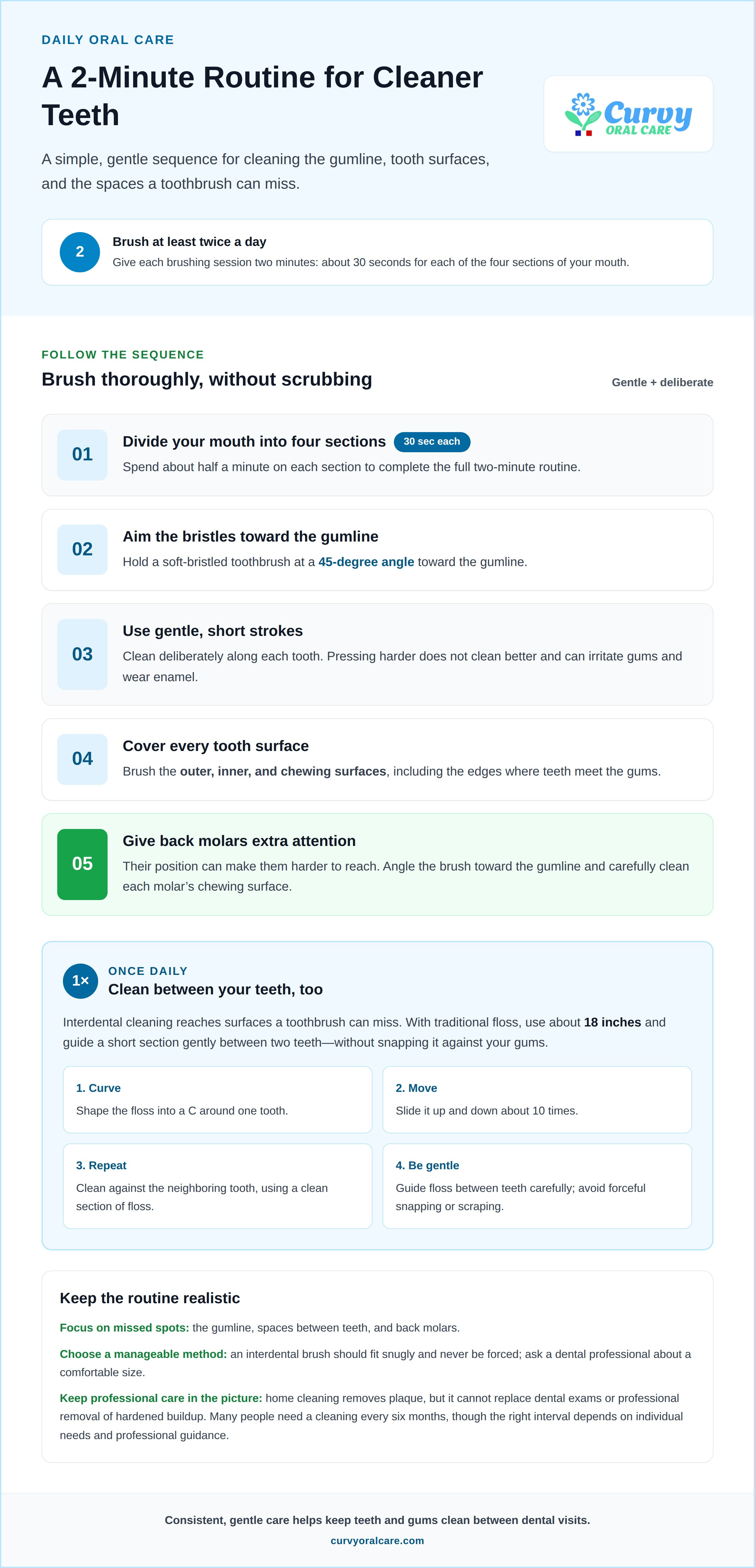
Brush at least twice a day with a soft-bristled toothbrush. Give the full routine two minutes, spending about 30 seconds on each of the four sections of your mouth. Hold the brush at a 45-degree angle toward the gumline, then use gentle, short strokes across each tooth surface. Pressing harder doesn’t clean better; it can irritate gums and wear enamel. Cover the outer, inner, and chewing surfaces, including the edges where teeth meet the gums.
Back molars need deliberate attention because their position can make them harder to reach. Angle the brush head toward the gumline and carefully clean each molar’s chewing surface. Ask your dentist to watch your technique and point out areas you may miss. A demonstration can help tailor brushing and flossing advice to your mouth, especially if you have braces, sensitivity, or crowded teeth.
How often should you schedule professional dental cleanings? According to Cleveland Clinic, many people need a cleaning every six months to keep their teeth and gums healthy. Your dentist may recommend a different interval based on your oral health and buildup.
For spaces between teeth, an interdental brush should fit snugly, with its bristles touching the tooth and gum, but never be forced. You may need different sizes for different gaps, so ask your dentist to help find a comfortable fit. Gently move the brush back and forth a few times in each suitable space. A floss pick can help guide floss between teeth, while a wooden toothpick can injure gum tissue and shouldn’t be used for this purpose. A dentist can also show you how to use these tools alongside brushing, so you clean close to the gumline without scraping or pushing hard.
2. Daily Flossing and Interdental Cleaning
Clean between your teeth once daily to reach surfaces a toothbrush can miss. For traditional floss, use about 18 inches and wind most around your middle fingers. Guide a short section between two teeth gently, without snapping it against your gums. Curve it into a C shape around one tooth, then slide it up and down about 10 times. Repeat against the neighboring tooth with a clean section. If you’re figuring out how to keep teeth clean between dental cleanings, make this careful step part of your everyday routine.
Flossing helps remove plaque and trapped food where bacteria can gather near the gumline. If the gaps are wider, an interdental brush may fit better. Choose one that passes snugly, with its bristles touching the teeth and gum tissue. Never force it into a tight space. If you’re unsure about the size, ask your dentist to help you find a suitable one.
A water flosser may help loosen food debris in hard-to-reach areas. It doesn’t remove biofilm attached to tooth surfaces, so use it as a supplement, not a replacement for brushing and interdental cleaning. For braces, dentures, or dental implants, follow your dentist’s cleaning instructions. They can show you how to clean around brackets, implant-supported teeth, or removable dentures with tools suited to your mouth.
Food choices matter, too. Water, crunchy fruits and vegetables, and calcium-rich foods such as yogurt support oral health. Frequent sugary snacks and acidic drinks can challenge teeth. After an acidic drink, rinse with water.
Keep cleaning gentle and consistent. If flossing causes soreness or bleeding that doesn’t improve within a few days, seek professional advice. Pairing daily interdental care with brushing is a practical way to keep teeth clean between dental cleanings and support healthier teeth and gums.
3. Using Mouthwash Appropriately
Mouthwash can support oral hygiene, but it doesn’t replace brushing or cleaning between teeth. An antibacterial rinse may help reduce bacteria, while alcohol-free formulas can be a suitable choice if alcohol-based rinses cause dryness. According to Cleveland Clinic, antibacterial mouthwash is recommended every day. Follow the product label, including its directions for how long to swish; one common instruction is 30 seconds.
Fluoride mouthwash is an optional step, not a necessity for everyone. If your dentist recommends it for your needs, follow their instructions. Don’t rinse with mouthwash immediately after brushing, since that can wash away toothpaste residue. Mouthwash also can’t remove plaque attached to tooth surfaces, so keep brushing and interdental cleaning at the center of your routine.
To clean your tongue and help reduce bad breath, gently brush its surface after brushing your teeth. Bacteria can collect there, so use light strokes from the back of the tongue toward the front, then rinse the brush. Stop if this causes discomfort, and avoid pressing hard against your tongue.
Choose a rinse for a clear purpose, such as freshening breath or following a dentist’s advice about gum health. Check the label for directions and warnings, and don’t swallow mouthwash. Persistent bad breath can have different causes. If it continues despite brushing, tongue cleaning, and cleaning between teeth, mention it at your next dental visit. A dental professional can assess whether your hygiene routine needs adjusting or another concern needs attention. Healthy teeth depend on consistent cleaning, not mouthwash alone.
4. Preventing Stains and Avoiding Tobacco
Coffee and red wine can stain tooth surfaces over time. If you drink them, sip water afterward or use a straw to reduce contact with your front teeth. Rinsing with water is a simple step, not a substitute for brushing. Limit frequent sugary snacks and acidic drinks, too, since they can affect oral health beyond tooth color.
Timing matters after coffee. Wait 30 minutes before brushing, rather than scrubbing immediately. Acidic drinks can temporarily soften the tooth surface, and brushing straight away may be hard on enamel. Later, use a soft-bristled brush and gentle technique. Aim the bristles toward the gumline at a 45-degree angle, rather than pressing firmly against the teeth.
A fresh-from-the-dentist look isn’t the only goal. Avoid tobacco products as part of a routine that supports healthy teeth and gums. After a dental cleaning, avoid smoking for 24 hours to give the gums time to recover. If you’re unsure how this applies to your appointment, ask your dental team for guidance before you leave.
Keep your routine practical: choose water more often, rinse after coffee or wine, and don’t use mouthwash to mask persistent bad breath. Mouthwash can freshen breath, but it won’t prevent stains from repeated exposure or replace daily brushing. If you notice a new or persistent change in tooth color, mention it at your next dental visit. A dentist can assess whether it’s surface staining or another issue and discuss suitable next steps.
5. Cleaning Between the Front Teeth
Cleaning between your front teeth takes a deliberate step because their narrow contact points can hide plaque from a toothbrush. Stand before a mirror and check the spaces where your central incisors meet, then move to each neighboring gap. Include these areas in your daily oral hygiene routine instead of focusing only on visible tooth surfaces.
For a tight space, guide floss between the teeth gently, without snapping it against the gums. Curve it around one tooth in a C shape, then slide it up and down against the tooth surface. Repeat along the neighboring tooth with a clean section of floss. This helps remove plaque from both sides of the gap, not just the point where the teeth touch.
If an interdental brush fits comfortably between your front teeth, insert it straight and gently. Move it its full length back and forth a few times, then rinse it. The bristles should touch the tooth surfaces and gum tissue, but never force the brush into a tight gap. If it won’t pass easily, use floss instead and ask a dentist which tool suits your teeth.
These small spaces deserve attention because plaque left between teeth can contribute to cavities, gum inflammation, and bad breath. Persistent plaque along the gumline may also contribute to gum disease. Add the gaps between your front teeth to your daily brushing and interdental-cleaning routine, using a mirror to guide careful movements. If flossing repeatedly causes bleeding or discomfort, or bad breath persists despite cleaning, seek advice from a dental professional. A consistent routine reaches surfaces that brushing alone can miss.
Curvy Oral Care
Curvy Oral Care provides oral-health education and toothbrush options for people refining their daily home-care routine. Its angled toothbrushes are designed to help users position the brush to reach difficult areas, including the gumline and back molars. That shape may make brushing those surfaces more manageable, but technique still matters: use gentle, small movements and avoid pressing harder to compensate. Sonic toothbrushes are another brush format to consider as part of a consistent routine.
If a conventional straight brush feels awkward around certain teeth, an angled adult toothbrush with soft bristles may help you approach those areas with more control. Focus on placing the bristles near the gumline and moving deliberately across each surface. No toothbrush replaces cleaning between teeth or regular dental visits, and a dental professional can advise you about technique for your needs.
Whichever toothbrush you choose, aim to make brushing a consistent part of your routine. Pay attention to the gumline and back molars, where it can be difficult to position the brush, and use gentle movements rather than pressing harder. Pair brushing with cleaning between your teeth and regular dental visits. A toothbrush supports daily care; it doesn’t treat gum problems or replace professional advice.
Make these habits your foundation: brush twice daily, clean between your teeth, pay attention to hard-to-reach spots, and keep regular dental appointments. Choose a toothbrush that feels practical for daily use, and ask a dental professional for advice if you have questions about your technique.
Frequently Asked Questions
What is oral hygiene?
Oral hygiene is the care of your teeth, gums, tongue, and other parts of your mouth. It includes daily cleaning and professional checkups. Notice changes such as persistent soreness or a new mouth sore, and seek dental advice rather than trying to diagnose the cause yourself. Good oral hygiene supports a healthy mouth but doesn’t replace care from a dental professional.
What is the best daily brushing routine between dental cleanings?
Choose a repeatable routine that covers every area, rather than brushing only the teeth that are easiest to see. For example, follow the same path around your mouth each time and use a mirror to spot missed surfaces. Pay attention to teeth with dental work or areas that feel harder to reach. Ask your dentist to review your technique if you’re unsure whether your routine suits your mouth.
How often and how long should you brush your teeth?
Brush at least twice a day for two minutes each time. A timer can help you brush for the full period instead of stopping when your mouth feels fresh. If you miss spots, divide your mouth into sections and follow the same sequence each time. Use a soft-bristled toothbrush with gentle pressure. Ask your dentist for technique advice if brushing causes discomfort or your gums keep bleeding.
How to floss properly and how often should you floss?
Clean between your teeth once daily. If string floss is difficult to hold, a floss holder may make the task easier, especially if your hands have limited dexterity. For crowded teeth or dental work, ask your dentist to demonstrate a suitable approach rather than forcing floss through a tight space. If cleaning causes persistent soreness or bleeding, seek dental advice to understand what may be contributing.
Are water flossers or interdental brushes as effective as string floss?
The most suitable tool depends on your tooth spacing, dexterity, and dental work. An interdental brush may work where there’s enough space for it to pass comfortably; floss can suit tighter contacts. A water flosser may be easier for some people to handle, including around orthodontic appliances. Ask your dental professional to demonstrate options for your mouth, particularly around bridges, implants, or braces.
Which toothpaste and toothbrush should you use to prevent plaque and tartar?
A soft-bristled brush and toothpaste suited to your oral-care needs are practical starting points. Manual and electric toothbrushes can both clean effectively when used thoroughly. Choose a brush that feels comfortable and lets you reach all tooth surfaces. If you have sensitivity, dental restorations, or specific concerns about cavities or tartar, ask your dentist which products and brushing approach suit your needs.
Do mouthwashes help prevent plaque, cavities, or gum disease?
Mouthwash can be an additional step, but its usefulness depends on the formula and your oral-health needs. Don’t rely on it as the only way to clean your teeth or manage gum concerns. Follow the product label, and ask your dentist whether a particular rinse is appropriate for you. Persistent bad breath, bleeding, or swelling calls for professional assessment rather than simply switching mouthwash.
Health & Medical Disclaimer: This content is for general educational purposes only and is not a substitute for professional dental or medical advice, diagnosis, or treatment. Seek advice from a qualified professional about individual concerns. Information is provided on the Site “AS IS” for personal, non-commercial use only. The site is intended for users who are at least 18 years old; persons under 18 are not permitted to use or register.

Article by
Aline Peixe Nebot
Aline Peixe Nebot is a Veterinarian and passionate advocate for better oral health, committed to raising awareness of oral health as a matter of public health. She actively promotes the importance of simple, effective oral care routines and works to educate the public about the often-overlooked link between oral health and overall systemic health. Her mission is to make better oral care knowledge accessible to everyone and encourage healthier habits for life.
Disclaimer
Disclaimer: The information provided in this article is intended for general educational and informational purposes only. It is not intended to replace professional medical, dental, or healthcare advice, diagnosis, or treatment.
Some content may be AI-assisted and is provided to support health education and awareness. While we strive to share accurate and up-to-date information, health recommendations and scientific evidence can evolve, and the information presented may not apply to every individual.
The connection between oral health and overall systemic health is an important and developing area of research. Associations discussed in this article should not necessarily be interpreted as proof of cause and effect.
Always consult a qualified dentist, physician, or other healthcare professional regarding your individual health, symptoms, medications, or treatment decisions. Do not delay or discontinue professional care based on information presented in this article.
This content is for education and awareness—not diagnosis or treatment.